Publication date: 7 januari 2025
University: Vrije Universiteit Amsterdam
ISBN: 978-94-6510-358-7

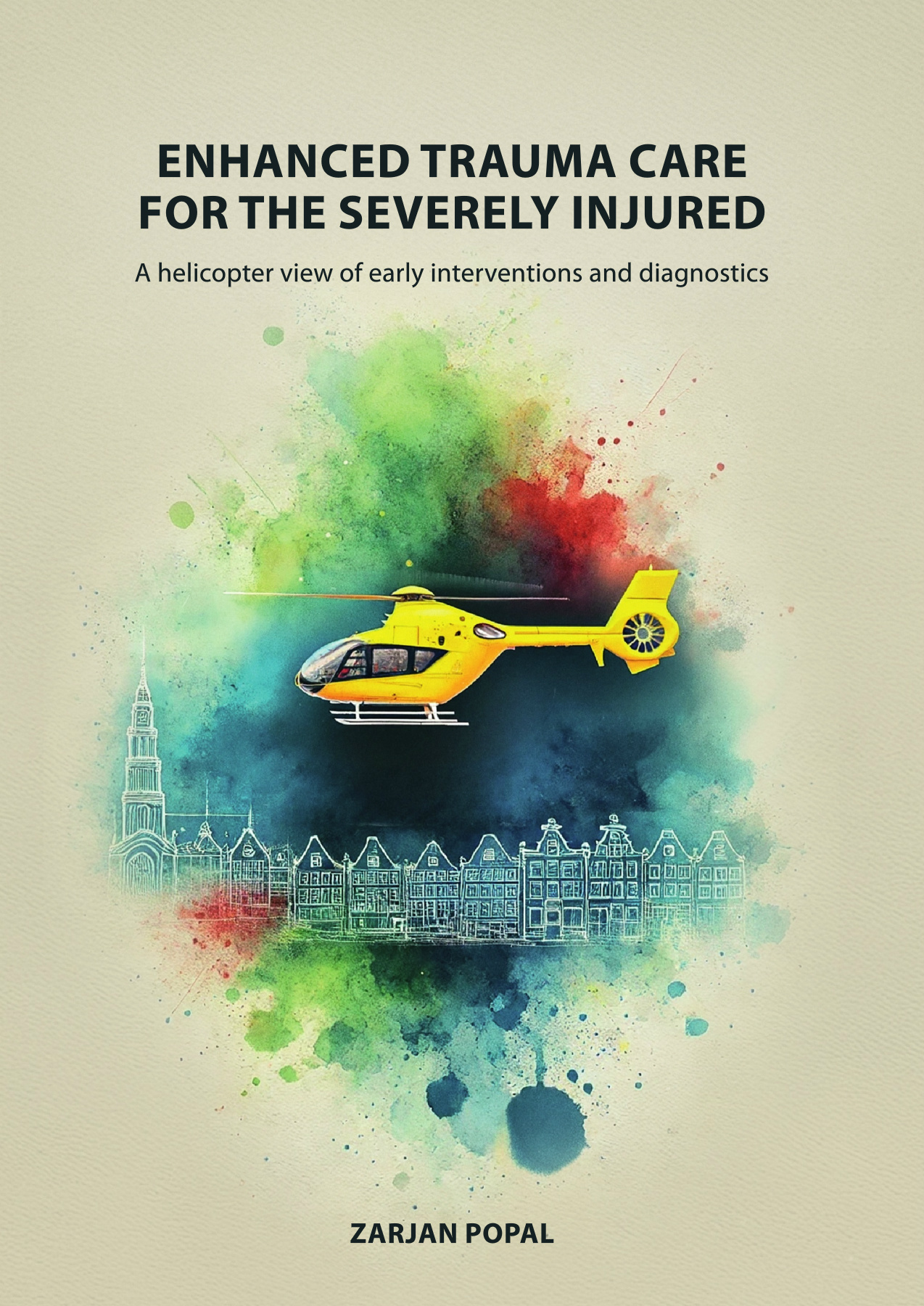
Enhanced trauma care for the severely injured

Summary

The main objective of this dissertation was to enhance the understanding and management of patients with severe injuries. Several related topics were explored with the aim to offer valuable insights and to improve trauma care. Part I mainly focused on predictive factors for the outcome after severe traumatic injury, while part II underlined the diagnostics and interventions in the prehospital and inhospital setting.

PART I
Chapter 2 discusses the key elements for an appropriate definition of the severely injured, as it is fundamental for decision-making in trauma patient triage, assessment, and management, for both prehospital and inhospital care. Current approaches predominantly rely on anatomical injury scoring systems like the Injury Severity Score (ISS), which may not fully capture patient outcomes. Moreover, limited consideration is given to the mechanism of injury and physiological responses. This review suggests a holistic approach encompassing the mechanism of injury, anatomical injuries, and physiological effects after trauma. Integrating all three components provides a more comprehensive understanding, enabling healthcare providers to better predict outcomes and tailor interventions to improve patient outcome after trauma.

Chapter 3 investigates the influence of socioeconomic status (SES) on trauma patient outcome. The study included 967 patients with an ISS of 16 or higher from two level 1 trauma centers in The Netherlands. SES was determined based on the postal code of the patient and was represented with a status score, retrieved from Statline Netherlands. Univariate and multivariate analyses were conducted to assess the mortality between SES and mortality, as well as the length of stay in the hospital and at the Intensive Care Unit (ICU). Results showed that patients with lower SES were more likely to have penetrating injuries, were younger on average, and had longer ICU stays. However, no association was found between SES and mortality or between SES and length of hospital stay.

In Chapter 4, a retrospective study was performed to investigate the correlation between prehospital time and outcomes after trauma. Polytrauma patients from a Dutch level 1 trauma center were included, using data from the Dutch trauma registry. Logistic regression analyses revealed a mortality rate of 25.7% in a study group of 342 polytrauma patients (n = 88). The prehospital time for both the surviving and non-surviving cohort was approximately 45 minutes. The p-value of 0.156 indicated, however, no statistically significant difference between prehospital time and mortality.

PART II
The retrospective cohort study in Chapter 5 aimed to assess survival rates among patients with traumatic cardiac arrest (TCA) treated by the Dutch physician-staffed Helicopter Emergency Services (P-HEMS) between 2014 and 2018. In total, 915 patients with confirmed TCA were analyzed, with return of spontaneous circulation (ROSC) achieved in 28.5% of cases (n = 261). Thirty-six patients (3.9%) survived, with 17 of them (47.2%) having a good neurological outcome. Factors associated with increased odds of survival included age < 70 years (0.7% versus 5.2%; p=0.041) and the presence of a shockable rhythm on the initial electrocardiogram (OR 0.65 95% CI 0.02-0.28; p < 0.001). Chapter 6 assessed the diagnostic accuracy and effects of prehospital ultrasound in trauma patients with a comprehensive literature review. Five of the nine included studies, encompassing 2,889 patients, demonstrated that prehospital ultrasound led to significant changes in polytrauma management, ranging from 6% to 48.9%. Eight of the nine studies had adequate diagnostic accuracy, and high sensitivity and high specificity were observed for various endpoints both on site and during transport, including pneumothorax, free abdominal fluid, and hemoperitoneum. The findings suggest a positive influence of prehospital ultrasound, but further research with standardized accuracy endpoints and consistent training for healthcare providers is emphasized. In Chapter 7, the effect of P-HEMS on patients with severe traumatic brain injury (TBI) was compared to non-physician staffed Emergency Medical Services (EMS). Literature searches in PubMed, EMBASE and The Cochrane Library, yielded fourteen relevant studies, focusing primarily on mortality rates and secondarily on neurologic outcome, hypotension, hypoxia, length of hospital stay and length of ICU stay, and the need for neurosurgical intervention. Mortality was decreased in three out of fourteen studies after the implementation of P-HEMS. One study found only decreased mortality in patients with Glasgow Coma Scale (GCS) 6-8. Conversely, two studies presented higher mortality rates after P-HEMS. Neurologic outcome was improved in five studies but was less favorable after P-HEMS in one study. The results of the other outcome measures differed widely. Chapter 8 aimed to create more insight into the distribution of normal and abnormal laboratory values in trauma patient management. A total of 1287 patients from a level 1 trauma center were included in this retrospective analysis. Parameters such as age, gender, injury severity scores, vital signs, and laboratory values were examined. The study found that trauma patients with unstable vital signs or those requiring emergency intervention often exhibited abnormalities in D-dimer, pO2, glucose, creatinine, and alcohol. By contrast, MCV, INR, amylase, fibrinogen, and thrombocytes are regularly obtained as well, while they are only abnormal in a small number of trauma patients. The findings suggest that there may be room for reconsideration in the performance of laboratory testing, especially for patients with stable vital signs. Discussion and future perspectives This dissertation endeavors to provide a comprehensive overview of prehospital and inhospital considerations regarding the management of severely injured patients. In a utopian scenario, possessing X-ray vision and a crystal ball to predict the future would be invaluable. For a severely injured patient, timely action is crucial. Nevertheless, the foremost priority remains the prompt recognition of the site of the injury and its severity. Chapter 2 elucidates the significance of assessing mechanisms of injury (MOI), the anatomy of injuries, and the pathophysiology in the evaluation of injured patients, as these factors collectively determine patient outcomes. Despite their critical importance, analyzing all three components within a feasible timeframe poses practical challenges. For instance, determining the MOI often relies on bystander accounts or imaging techniques, which may not always be readily available. Nonetheless, this component might hold the greatest potential for improvement. The government partly addresses several preventive measures with regulations and policies, but additional targeted public awareness campaigns hold promise for further reduction of injury rates. Knowledge about injury risks and aid individuals in making safer choices, for example regarding substance abuse and the use of protective gear during activities such as bicycling. Leveraging modern technologies, particularly artificial intelligence (AI) can further bolster injury prevention efforts. Implemented driver assistance systems equipped with onboard cameras and sensors can detect potential collision risks, analyze driver behavior (such as fatigue), and intervene to prevent accidents through automatic braking or steering assistance. Furthermore, AI-powered intelligent traffic management can optimize traffic flow by dynamically adjusting traffic signals and speed limits based on real-time information, among many other technologies. The mentioned preventive measures are also crucial for the second component, anatomical injury, where bystanders could assist by stopping bleeding or immobilizing the neck. For example, in the neighboring country Germany, it is mandatory to have completed a first aid course before obtaining a driver’s license. As a result, as much as 80% of the German population holds a first aid certificate, while in the Netherlands, it is only 20%. Investments in this area could also save lives in the Netherlands and reduce healthcare costs. The analysis in Chapter 3, conducted at two level 1 trauma centers in the Netherlands, aimed to investigate whether patients’ socioeconomic status (SES) was linked to mortality, length of hospital stay, and length of stay in the Intensive Care Unit (ICU) following traumatic injury. Contrary to initial hypotheses, the study did not find a direct association between SES and mortality among severely injured patients. The Dutch social security system, characterized by compulsory health insurance and a robust social safety net, appears to significantly contribute to this outcome, resulting in less vulnerability in Dutch neighborhoods compared to other countries. However, patients from lower SES backgrounds did experience prolonged stays in the ICU, even after adjusting for potential confounders. Moreover, disparities between anticipated and actual survival rates were noted, particularly within the lowest SES group, suggesting potential limitations in existing survival prediction models. Nevertheless, it is essential to acknowledge that the analysis relied on postal codes, assuming homogeneity within these areas, which may not accurately reflect the diversity within neighborhoods. To address these limitations and gain a more comprehensive understanding of the relationship between SES and traumatic injury outcomes, further research in larger and more diverse populations is warranted. Additionally, it remains crucial to prioritize first aid education, including Basic Life Support (BLS) and Stop the Bleed training, particularly for individuals from lower socioeconomic backgrounds who are more prone to experiencing severe (penetrating) injuries at a younger age. Furthermore, minimizing energy transfer during the accident and limiting anatomical damage are pivotal in preserving physiological integrity and improving trauma outcomes. The pathophysiology offers crucial insights into the condition of trauma patients but becomes discernible only during the inhospital phase through blood gas analyses. Chapter 8 demonstrates that the trauma patients who were presented at the emergency department suffered mainly from abnormalities in pO2, glucose, D-dimer, creatinine, and alcohol values. Despite the insights provided by this study, several limitations warrant consideration. The retrospective nature of the analysis and the reliance on data from a single level 1 trauma center may limit the generalizability of the findings. Additionally, the study’s focus on short-term outcomes and laboratory values at admission may overlook the long-term implications and clinical trajectories of trauma patients. While routine testing may offer valuable information in certain cases, the findings suggest the potential for overutilization and inefficiency in current practices. Ideally, it would be advantageous to identify disruptions in pathophysiology at the scene to implement targeted interventions at an earlier stage. These may include administering blood products or clotting factors and initiating early advanced airway management to optimize ventilation and oxygenation. Regrettably, diagnostic tools for analyzing blood values in the prehospital phase are currently lacking, although ultrasound methods such as (extended) Focused Assessment with Sonography in Trauma (FAST) can aid in detecting life-threatening abnormalities. This innovative and safe diagnostic modality can detect the presence of intra-abdominal free fluid, pericardial fluid, pneumothorax, or pleural fluid, which is crucial in assessing trauma patients. Chapter 6 demonstrates that the use of ultrasound on scene changed patient management in more than half of the studies. As a result of these findings, the patient received a different diagnosis or treatment, was referred to another level trauma center, or the receiving hospital was informed to make additional preparations (such as preparing blood products or an operating room). It is important to acknowledge the challenges associated with prehospital ultrasound implementation. Performing ultrasound in the prehospital environment presents logistical and technical challenges, including time constraints, environmental factors, and patient-related obstacles such as obesity or patient positioning. These challenges may impact the quality and interpretation of ultrasound images, potentially affecting diagnostic accuracy and subsequent patient management decisions. Moreover, the heterogeneity among the included studies poses challenges in synthesizing the findings and drawing definitive conclusions. Variability in patient populations, injury severity, ultrasound protocols, operator training and exposure, and study methodologies contribute to the complexity of interpreting the results. AI has the potential to contribute to a more accurate interpretation of ultrasound images with advanced algorithms and machine learning techniques, but adoption in clinical settings is still in developmental stages. As earlier highlighted, time is often a critical factor for severely injured patients. Despite the inherent time sensitivity in managing severely injured patients, Chapter 4 could not find a definitive correlation between prehospital time intervals and mortality in the Dutch population. The absence of a clear association between prehospital time and mortality challenges the conventional wisdom that shorter prehospital times lead to improved outcomes for trauma patients. Previous studies have yielded conflicting results, with some suggesting a benefit of shorter prehospital times in certain patient categories while others, consistent with this study, found no such association. The short distances, along with a well-developed road network and a proficient ambulance system, contribute to these favorable outcomes. Despite the comprehensive analysis and adjustment for potential confounders, including age, comorbidity, injury severity, and physician-based helicopter emergency medical services (P-HEMS) assistance, some limitations remain. The retrospective observational design introduces inherent biases, and unobserved variables may confound the association between prehospital time and mortality. Additionally, the single-center design limits the generalizability of the findings to other trauma systems with different logistical and geographic characteristics, along with disparities in the quality of the (advanced) medical care offered in the field. Although the optimal approach—whether to stabilize on-site or expedite transfer, also known as ‘stay and play’ versus ‘scoop and run’— is not confirmed with this dissertation, individual patients may still benefit from timely transport to a trauma center. Future research should explore additional factors influencing prehospital time and outcomes such as mortality, with a particular focus on physiological parameters in severely injured patients. Chapter 5 focuses on the survival rates of patients who experienced traumatic cardiac arrest (TCA) and received prehospital treatment from Dutch P-HEMS. The overall survival rate to discharge was found to be 3.9%, with 13.7% survival among patients transported to a hospital after restoration of spontaneous circulation (ROSC) on scene. Among the 36 survivors, two patients had undergone a prehospital thoracotomy with decompression of the pericardium for the treatment of cardiac tamponade. Prehospital thoracotomy for patients with blunt trauma did not result in any survivors, but young age (median age 36 years versus 48 years) and initial shockable ECG rhythm were associated with increased survival. While survival percentages in the Dutch context were somewhat lower than those reported in studies from the US, Canada, the UK, and Sweden, the neurological outcomes of survivors were consistent with previous research. The discussion delves into the implications of the study’s findings for prehospital care practices. Gender, prehospital endotracheal intubation, type of receiving hospital (trauma center versus non-trauma center), and duration between HEMS dispatch and arrival on scene were not associated with survival. Still, the importance of early intervention and addressing reversible causes of TCA on scene should be emphasized. The high-quality healthcare system of the Netherlands being capable of facilitating complex interventions even in prehospital settings is invaluable. The proven efficacy of the P-HEMS, staffed with healthcare professionals proficient in conducting these interventions, has been affirmed in numerous studies. Den Hartog et al. and Giannakopoulos et al. concluded that at least 5 lives were saved per 100 P-HEMS dispatches. Even a twofold better chance of survival was presented by Frankema et al., with odds ratio 2.2 for all injuries and odds ratio 2.8 for blunt injuries. In addition, findings from Moors et al. indicated the potential for an extra 2.5 lives to be saved after pediatric trauma per 100 P-HEMS dispatches. Despite the documented efficacy of trauma systems, the utilization of specialized resources such as P-HEMS for particularly patients with severe traumatic brain injury (TBI) lacks consensus. The review in Chapter 7 synthesizes findings regarding this subject from 14 studies, assessing outcomes like mortality, neurological status, hypotension, hypoxia, length of stay, and neurosurgical interventions after severe TBI. The study acknowledges the complexity of conducting research in this field due to various factors such as the heterogeneity of EMS systems, differences in study populations, and limitations in data availability. Despite these challenges, the review suggests that P-HEMS may offer certain benefits in managing patients with severe TBI. Preventing secondary brain damage by improved tissue oxygenation, better maintenance of physiological parameters, and timely interventions by physicians could contribute to enhanced patient outcomes. The discussion underscores the importance of careful consideration of patient selection criteria and the need for adjustments to account for variations in injury severity. While the available evidence does not provide a definitive answer regarding the superiority of P-HEMS in prehospital TBI management, it suggests a potential benefit that warrants further investigation. All in all, the main objective of this thesis was to enhance the understanding and management of patients with severe injuries. This was achieved by addressing several relevant aspects, such as the importance of a multifactorial assessment after trauma with a focus on physiological parameters next to MOI and anatomical injuries. Despite the inherent challenges and complexities in trauma care, this dissertation furthermore underscores the importance of targeted public awareness campaigns to create knowledge regarding injuries and prevention methods, next to training for non-healthcare professionals to improve patient outcomes (e.g. with BLS courses for bystanders). Moreover, this dissertation advocates for collaborative efforts aimed at enhancing trauma care in both prehospital and inhospital setting. Lastly, emphasis is placed on the need for continued research into innovative diagnostic modalities and interventions, including larger and more diverse populations, as well as the integration of AI for more accurate interpretations.

See also these dissertations

We print for the following universities