Nadine Van Westrhenen
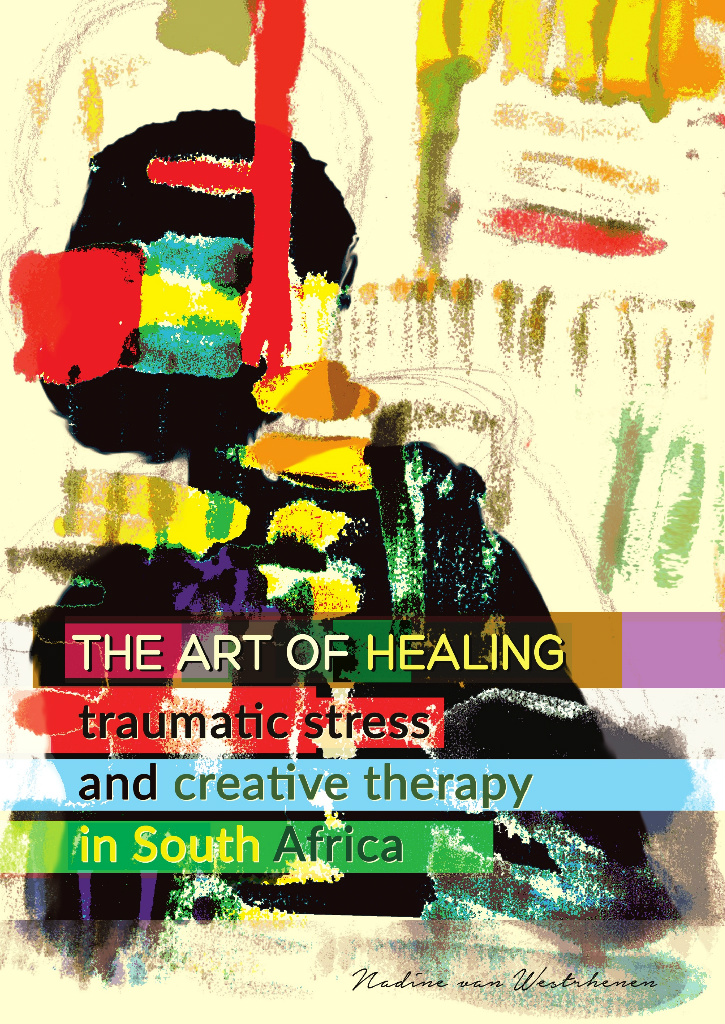


The art of healing
Chapter 1. Traumatic stress and specifically child trauma is a ubiquitous problem, and in South Africa rates of abuse and trauma exposure are one of the highest worldwide. Considering these high figures, there is actually limited theories available that can help us understand the long-term consequences of posttraumatic stress in children or knowledge of long term evidence-based treatment thereof. Moreover, previous studies are primarily based in a high-income context; in low and middle income countries studies are even more scarce. This dissertation described the psychological impact of traumatic events in South Africa, analysed current barriers in mental health care through the experiences of social workers, and evaluated the potential suitability and effectiveness of a creative arts in psychotherapy intervention that was developed, implemented and evaluated in the South African context. The knowledge gap on child trauma and creative arts therapy, and the alarming figures of children exposed to traumatizing events, served as motivation for this current dissertation. The overall aim was to contribute to an improvement in mental health care offered to children after trauma, specifically in a context characterized by high levels of abuse, violence, crime and poverty. Chapter 2. A review of studies published between 2000 and 2012 identified 38 articles describing the effect of creative arts therapy for children after trauma. Evaluation of the methodology concluded that only 21 articles were considered empirical and 17 articles were merely descriptive of the therapist’s or the child’s personal experience. These non-empirical articles were using an unstructured method of data collection and were often lacking a detailed description of the case, resulting in these studies not adding in a pragmatic way to the already scarce knowledge base of creative arts therapy interventions with children after trauma. These review findings highlighted the need for more studies and improved research methodologies, which can be accomplished through increased collaboration of art therapists and researchers, resulting in the refinement of a theoretical framework and better alignment of evidence-based treatment approaches in the field of creative arts therapies. Chapter 3. In order to explore the experiences of social workers working in the field of trauma, eight semi-structured interviews were conducted with social workers. Results highlighted that compassion fatigue, or in this specific case the burden of the high case load in combination with the traumatic nature of the work, was considered a key barrier in their work. It was found that there was a severe lack in training and supervision impacting on the ability for social workers to cope with this case load and being effective in their work. Moreover, certain contradicting cultural values and traditions between the social workers and their clients, some of which were doing injustice to children’s rights, complicated treatment adherence and efficiency and formed an additional source of distress. It was concluded that there is an urgent need for continuous professional development, including supervision and context specific knowledge. This is considered a key step towards achieving high quality mental health care for the many victims of child trauma in South Africa. Chapter 4. One of the initiatives in South Africa trying to support social workers at risk for compassion fatigue was evaluated. This programme included nineteen social workers from nine different NGO’s, who were trained as trainers in creative arts therapy workshops over eleven days in total. Qualitative evaluation was conducted using interviews, observations, and a research journal. Findings showed that the training provided a platform for communication and creativity, and through the arts the social workers explored their own traumatic experiences, discovered the need for self-care, the importance of setting personal boundaries to protect against burning out, and they found support within the group. Evaluation of the workshops illustrated that through activities embedded in indigenous systems, effective support could be provided to social workers, as well as their clients. Chapter 5. In order to explore the psychological consequences of experiencing adversity in South Africa, a survey was conducted with 157 university students who had experienced a traumatic event. Findings showed that these students reported relative high levels of resilience and posttraumatic growth after experiencing adversity, but also relative high levels of posttraumatic stress with half of the group meeting the diagnostic criteria for posttraumatic stress disorder (PTSD). Students put a lot of emphasis on individual coping, scored high on avoidant behaviour, and scored low on social care and peer support. Results supported findings from previous studies in different contexts about the positive relationship between PTSD and PTG, and between PTSD and resilience. It was concluded that traumatic stress in South Africa is severe and negative consequences should be addressed in suitable treatments. The high levels of resilience and the positive relationship between resilience and PTG could be used as resources and strengths in interventions, in order to improve mental health in this population. Chapter 6. Based on the results describing the experiences of social workers and the responses of students to adversity in South Africa, and in collaboration with local social workers, psychologists and creative therapists, the creative arts in psychotherapy (CAP) treatment protocol has been developed. This protocol aimed to enhance children’s psychological wellbeing and strengthen positive development after trauma. The protocol combined principles of group dynamics and multimodal arts activities in order to facilitate healing through the three stages of the trauma recovery model; creating a safe space, telling the trauma story, and preparing the children to return to the community. The programme prescribed ten 90-minute sessions for groups of six to eight children in the age between 8 to 12 years, and can be considered an addition to the available (creative) treatments for traumatized children. Treatment rationale, outline and session breakdown are provided, supported by relevant literature, practical examples and a case study. Chapter 7. Subsequently, the potential suitability of this programme was further explored in a pilot study, implementing the CAP treatment in a child abuse clinic in Johannesburg, South Africa. Three major challenges were identified; dropout was high (58.7%) based on limitations with accessibility of the therapy, some facilitator’s lacked skills and commitment to the programme impeding the quality of delivery, and the suitability of the instruments used to evaluate the programme was questioned. Moreover, it was discussed how therapeutic interventions such as the CAP treatment fit in an environment with chronic problems such as extreme poverty and ongoing stress. Lessons learned would further inform the continuous improvement of the protocol and implementation thereof. Chapter 8. The potential effects of this creative arts therapy treatment (CAP) were evaluated in a non-randomized controlled trial with 125 children in the age between 7 and 13 years, comparing creative arts therapy with a low-level supportive programme without treatment. In total 47 children completed the programme and questionnaires assessing posttraumatic stress, posttraumatic growth and behaviour problems both at baseline and follow-up; 23 in the treatment group and 24 in the control group. In spite of severe challenges implementing and executing this pioneering study in underprivileged areas of South Africa, support was found for creative arts therapy significantly reducing hyperarousal and avoidance symptoms, more than in the control group. Behavioural problems also reduced and posttraumatic growth slightly increased, but there was no significant difference between the two conditions. These results added to the debate on the efficiency of non-trauma-focused, or stabilizing treatments for traumatised children, and the potential positive outcomes of such treatments in a context characterized by violence and continuous trauma. Chapter 9. In conclusion, it seems that high levels of traumatic exposure in the South African society do indeed place the population at risk for developing posttraumatic stress disorder and other negative mental health consequences. There are several barriers to providing proper mental health care, pointing to a need for better support and training for the health care professionals and stronger collaboration within the communities to make treatments work. At the same time, opportunities were pointed out such as high levels of resilience, transdisciplinary collaboration, and using strategies that are embedded in indigenous systems such as creative arts therapy. This study contributed knowledge and experience towards the evidence-base on creative arts therapy for child trauma. The positive findings laid a first foundation for similar work that can be followed-up and improved in future, and hopefully inspire much more work in this area.
| Publicatiedatum | 15 september 2017 |
| Universiteit | Universiteit Utrecht |
| Auteur | Nadine Van Westrhenen |
| Order nummer | FTP-202604081031 |
| ISBN nummer | 9789462956919 |