Jantine Posthuma De Boer
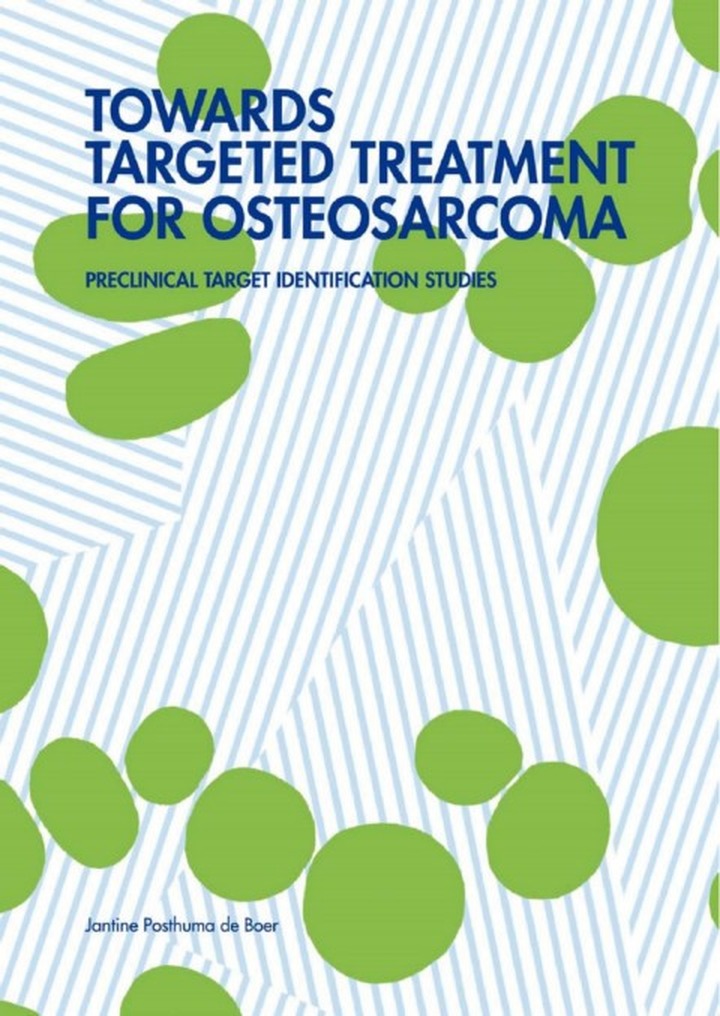
Towards targeted treatment for osteosarcoma
3 juli 2014
Vrije Universiteit Amsterdam
Open Ebook
Share this project
Summary
Early in 1961, L-asparaginase (ASNase), originated from guinea pig serum, was found to have anti-lymphoma effect and later on it was approved by the Food and Drug Administration (FDA), and incorporated for acute lymphoblastic leukemia treatment. So far, the progress of ASNase in childhood ALL is quite impressive, with an overall survival rate of ~90%. This had greatly encouraged further application of ASNase in other tumor types. However, several clinical trials indicated severe toxicity of ASNase due to increasing dosage. Asparagine synthetase (ASNS) was canonically proposed to be responsible for ASNase resistance. However, we thought the general nutrient sensing machinery (GCN2-ATF4-ASNS axis) as a common and essential response to nutrient starvation but not sufficient to induce this resistance. Hence, it was of great interests to investigate if other genes or pathways were involved in ASNase response besides the GCN2-ATF4-ASNS axis.
In this thesis, we initiated a genome-wide CRISPR functional screen in PC3 cells and identified SLC1A3 as a contributor to ASNase resistance. SLC1A3 was normally and restrictedly expressed in brain tissues. Interestingly, high SLC1A3 expression was also observed in some tumor types. This specific expression pattern might benefit drug target effectivity. Meanwhile, we also validated the loss of function of EP300, a well-known histone acetyltransferase p300 coding gene, could promote PC3 cell proliferation in the presence of ASNase. By combining RNA-seq and Chip-seq analysis, we are trying to depict the role of p300 under nutrient depleted conditions.
Notably, except for amino acid, lipid-related metabolites could also be imported by corresponding transporters, indicating investigation on transporter(s) mediated nutrient convey might be urgent for our understanding of cancer metabolism and malignancy. And the pathways of endogenous synthesis of onco-amino acids or other nutrients that support cancer progression could also be critical targets for therapeutic purpose.
Besides, we also explored the development of inhibitors targeting proline endogenous synthesis and examined their effects on cancer cell proliferation.
In summary, restricting the availability of onco-amino acids might impair cancer cell malignancy and thus provide further clues for clinical research.