Janke Van Dijk


Greening Schoolyards
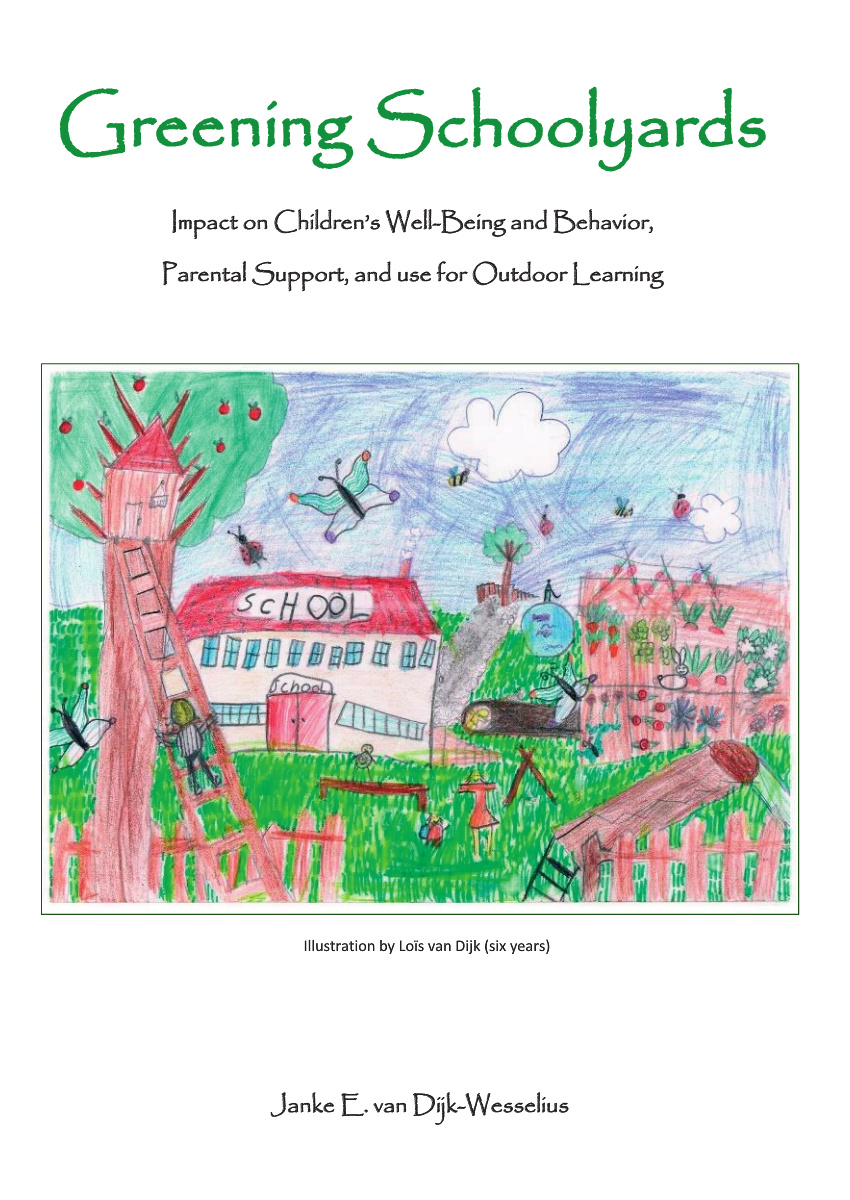
A growing number of primary schools across the globe have taken the initiative to re-design their schoolyard with natural features such as trees, flowers, sand, water, grass hills, and bushes to create a more attractive, so-called, ‘green schoolyard’. The emergence of greening schoolyards is a response to a growing concern regarding children’s loss of access to nature and fits within a broader context of environmental awareness and urban sustainability and health (Danks, 2010). In the past few decades, the number of studies indicating multiple benefits of greening schoolyards for children’s physical, cognitive and social-emotional well-being and development has risen (Chawla & Nasar, 2015; Dadvand et al., 2019). Furthermore, green schoolyards hold promise to afford a rich play experience, where children show more diverse forms of play, and that is sensitive to the needs of both boys and girls (Dyment & Bell, 2007a; Lucas & Dyment, 2010; Samborski, 2010). Besides, green schoolyards thought to provide an enriching outdoor learning environment. Not only to learn about nature, but also for lessons in, for instance, mathematics, language, or arts (Ballantyne & Packer, 2009; Barfod et al., 2016). Assumptions and expectations regarding benefits of green schoolyards for children’s well-being and behavior are rooted in a multidimensional theoretical framework of cognitive, affective, and behavioral explanations. Within this framework, Attention Restoration Theory (ART; Kaplan, 1995), and Stress Recovery Theory (SRT; Ulrich, 1983) posit that an unthreatening natural environment elicits a soft fascination and immediate positive response that fosters attention restoration and relaxation which could explain a positive impact of greening schoolyards on children’s cognitive and emotional well-being. Furthermore, the biophilia hypothesis (Kellert & Wilson, 1995) states that all human beings have a need to affiliate and connect with life and life-like forms. Playing on a green schoolyard can fulfill this need, and thereby foster a sense of connectedness to nature. This connectedness stimulates
| Publicatiedatum | 6 juli 2020 |
| Universiteit | Vrije Universiteit Amsterdam |
| Auteur | Janke Van Dijk |