Linda Remijn Nelissen
Symptomatic treatment of myasthenia gravis
3 september 2026
Universiteit Leiden
Open Ebook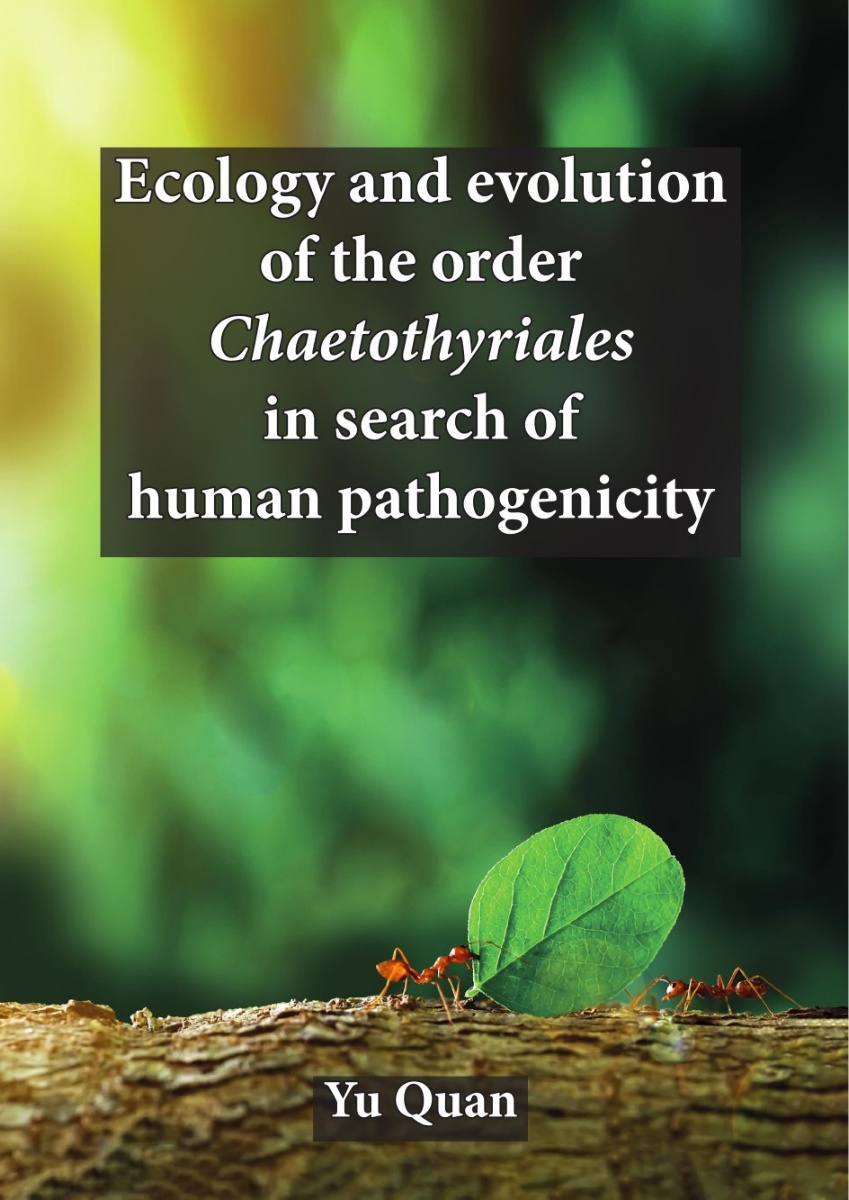
Share this project
Summary
In this PhD thesis, data on ecology, phylogeny, and genomics were collected and analyzed
in order to try to understand the evolutionary route of the species of Chaetothyriales,
especially the route towards infection and human pathogenicity. We hypothesize that black
fungi associated with ants provide an important starting point for these studies, because ant
nests are among the few natural habitats which have certain antibiotic properties.
In Chapter 1, a general introduction to the whole thesis from five aspects: Taxonomy,
ecology, genomics, and pathogenicity of Chaetothyriales, and especially the relationship
between toxic compounds and infection.
In Chapter 2, three methods which have been used to isolate black fungi are compared.
Enrichment on aromatic hydrocarbon appears effective in inhibiting growth of ubiquitous
microbial species and allows appearance of black fungi. We miniaturized the method for
high-throughput purposes. The new procedure saves time, consumes less space and can
process multiple samples simultaneously.
Chapter 3 applied all available species with representative sequences of LSU and ITS to
constructed an order level phylogenetic tree, combined with ecological information,
divergence time and evolutionary rate, ancestral character state reconstruction divergence
to re-evaluate the order Chaetothyriales and provided an overview of nomenclature
Chapter 4 describes two new species isolated from ant carton nests. Two strains collected
from ant carton in Thailand and Malaysia were found to represent hitherto undescribed
species. Morphological, physiological, phylogenetic data and basic genome information are
provided for their classification. In conclusion, Incumbomyces delicatus and I. lentus were
described as new species based on morphological, physiological and phylogenetic analysis.
Chapter 5 describes a genomic comparison between some domatia and carton fungi. The
genomic data of these ancestral species may help to improve the early evolutionary route
of the order Chaetothyriales and establish the possible relationship of ant association and
aromatic hydrocarbon degradation.
In Chapter 6, final conclution and discussion are provided. Overall, this paper conducts
an in-depth exploration of Chaetothyriales, the results of this study provide evidence for
speculation on the evolutionary path and the emergence of pathogenicity in the order
Chaetothyriales.