Xuecong Li
Nanoscale Chemical Characterization of Polymers and Functional Surfaces
3 september 2026
Wageningen University
Open Ebook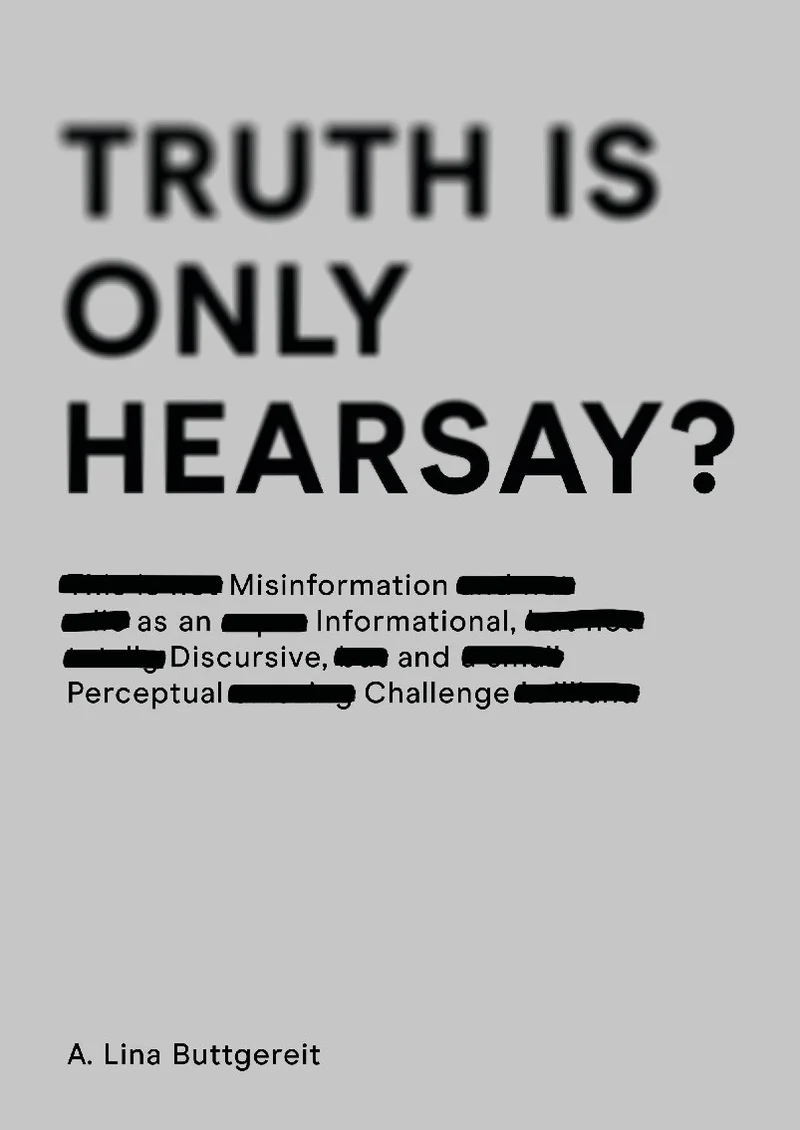
Share this project
Summary
In the digital era, the foundations of shared facts in democracies seem increasingly fragile. Terms like factual relativism and disinformation order point to a growing prevalence of opposing narratives, false information, and an increasing reliance on political resonance and identity over evidence and verification. Yet, the challenge may not just lie in exposure to falsehoods. Citizens are additionally challenged with political disputes over what counts as true, who may legitimately establish factual claims, and with complex information types that cannot be neatly placed in a binary of true or false information. Beyond extensive research on the prevalence, effects, and corrections of misinformation as outright falsehoods, this dissertation argues that we need an integrated account of how misinformation content, misinformation as discourse over the legitimacy of information and sources, and perceptions of misinformation from everyday audiences interact to shape the state of the information environment. This dissertation addresses this intersection by examining misinformation as a three-dimensional phenomenon, including its informational, discursive, and perceptual elements to analyze how these faces intersect to shape the state of facts.
This dissertation includes an introductory chapter, a concluding chapter, and three cross-cutting empirical studies addressing the three faces of misinformation to give a comprehensive understanding of the complex informational genre in its discursive and perceptual dimension. In doing so, the chapters draw on different data sets. To map out the discursive dimension, I rely on Tweets of German politicians across the political spectrum and multiple years to understand the severity and facticity of media criticism. To better understand how audiences perceive misinformation, I conducted an experience sampling method (ESM) study on the messenger app WhatsApp in which participants sent screenshots of perceived misinformation in situ and responded to subsequent questions about the encounter dynamics and their misinformation identification rationale. Last, I conducted a survey experiment to understand how misinformation as a discursive label in the shape of community notes can affect judgments and behavioral intentions across true, misleading, and false social media news items.
In the introduction, I introduce the challenges of the current information landscape, and propose that misinformation discourse and perceptions could be equally important to understanding contemporary phenomena such as a perceived factual relativism. I discuss the state of the literature of the three dimensions and identify several blind spots that this dissertation addresses. This includes a need to understand misinformation as a spectrum rather than a binary, to go beyond isolated message effects, and to dive deeper into the subjective nature of audience perceptions of misinformation.
Chapter 1 begins with a focus on the discursive element, utilizing media criticism as a case study. While media criticism is an important accountability tool, politicians also employ it strategically to dismiss disliked opposing narratives. This study set out to explore the nuances between the often studied fake news label and good-faith media criticism to better understand the boundaries between supportive and disruptive media criticism. The chapter analyzes how information and its sources are discursively referenced, challenged, and delegitimized, highlighting the role of the verifiability of criticism. The final typology reveal a nuanced understanding of how the media as an epistemic authority are referenced in political discourse, and the challenges journalism faces when these accusations transgress the boundaries of supportive criticism.
Chapter 2 emphasizes the perceptual angle of misinformation. Responding to the idea that audiences may employ a much broader conceptualization of misinformation than what is captured in academic definitions, this chapter coins and explores the concept of misinformation experiences. This three-dimensional concept entails the encounter dynamics, the perceived false content, and the judgments that led to the perception that the content is supposedly misinformation. With this approach, the chapter offers a first account of in-situ perceived encounters with misinformation, giving insights into the much broader boundaries audiences associate with the concept than misinformation definitions in the literature. Additionally, it offers novel insights into the many heuristic and systematic routes audiences take when encountering and assessing (mis)information, and maps out the prevalent spaces in which these encounters occur.
Chapter 3 combines the three faces by testing the effects of community notes misinformation labels attached to true, misleading, and false social media news items on credibility perceptions and subsequent behavioral intentions to engage with the item. Community notes are increasingly replacing professional fact-checking on big social media platforms, but their reliability is seemingly still mixed. The survey experiment reveals that community notes, both attached immigration and environment news items, successfully decreased the perceived credibility of the news items and subsequent intentions to engage with it. This is equally the case for true, misleading, and false information, suggesting that discursive labels of misinformation can indeed shape perceptions even when the news item is accurate.
The concluding chapter comes back to the question surrounding the state of facts in light of misinformation as an informational, discursive, and perceptual challenge. I argue that the strain on a shared factual ground cannot be explained by the volume of misinformation as falsehoods alone, but by the interplay of the three dimensions. The content presents a broad range from outright falsehoods to more nuanced decontextualization and even transgresses the boundaries of verifiability in discourse and perceptions. Additionally, there exists a broad range of accusations challenging the legitimacy of traditionally reliable media outlets.
This dissertation offers novel insights into the many challenges different actors face beyond being exposed to falsehoods. It underscores the importance of strong, trusted media outlets and a civil and rational political discourse. If we want to sustain the ability to debate with the same set of facts, we need a shared accountability to strengthen public trust and to challenge those who aim to disrupt the political order.