Simon Isaiah
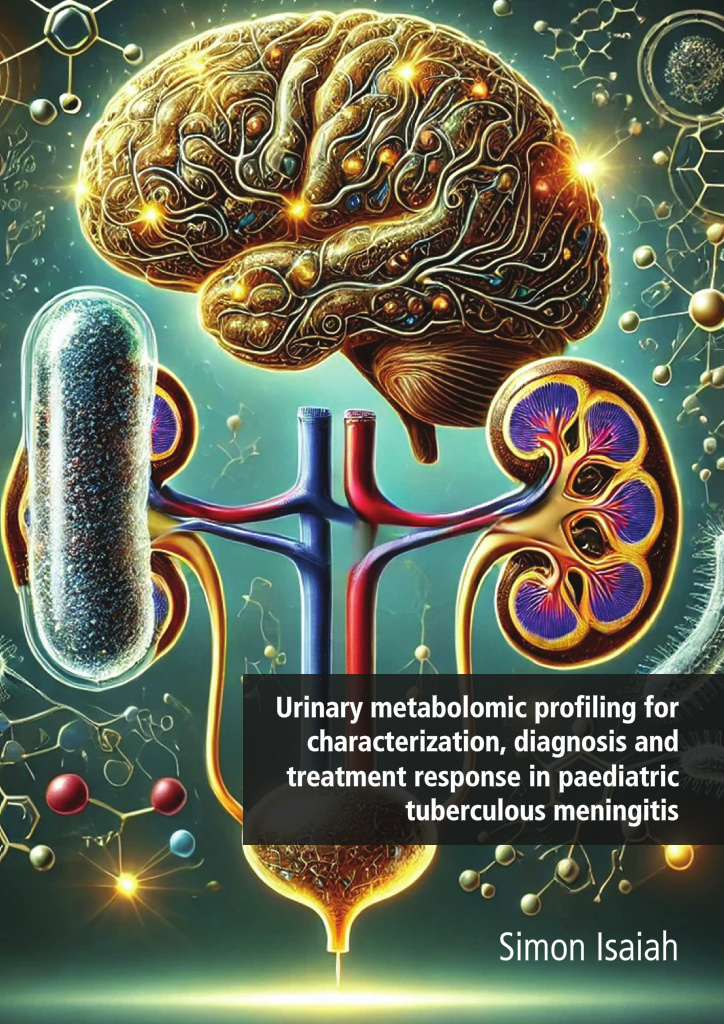


Urinary metabolomic profiling for characterization, diagnosis and treatment response in paediatric tuberculous meningitis
In dit proefschrift doen we verslag van verschillende studies over tuberculeuze meningitis (TBM) bij kinderen. Onze focus ligt bij het in kaart brengen van het zogenaamde urine metabool (= stofwisseling) profiel van kinderen met deze ziekte. Het doel is om de behandelingsrespons beter te begrijpen, evenals de interacties tussen de ziekteverwekker Mycobacterium tuberculosis (M. tb) en de gastheer, en hoe dit verband houdt met de ernst van de infectie. Om deze pathogeen-gastheerinteracties te begrijpen, is het belangrijk om te erkennen dat het moeilijk is om TBM in een vroeg stadium te diagnosticeren, vanwege de aspecifieke symptomen van algemene malaise, koorts en gewichtsverlies. Met het urine metaboloom van de geïnfecteerde gastheer, trachten we specifieke metabolieten toe te wijzen aan metabole routes van zowel de gastheer als de ziekteverwekker. Volgens de Wereldgezondheidsorganisatie (WHO) vond 23% van de nieuwe gevallen van tuberculose wereldwijd plaats in de Afrikaanse regio, het op één na hoogste percentage wereldwijd. Zuid-Afrika is een van de landen met de hoogste prevalentie van tuberculose ter wereld. TBM is de ernstigste vorm van tuberculose en is verantwoordelijk voor naar schatting 20% van de tuberculose-gerelateerde sterfgevallen in Zuid-Afrika (Hoofdstuk 1). Er is echter momenteel een gebrek aan kennis over de wereldwijde impact van pediatrische TBM. Leeftijd wordt beschouwd als de belangrijkste risicofactor voor de ontwikkeling van TBM en komt het meest voor bij kinderen van 0 tot 4 jaar. Kinderen jonger dan 2 jaar met onbehandelde tuberculose ontwikkelen doorgaans TBM. De reden waarom kinderen kwetsbaarder zijn voor TBM, is hun nog onderontwikkelde immuunsysteem. Kinderen kunnen afhankelijk van de ziektestadia verschillende symptomen vertonen. Deze verschillen zijn een reflectie van verschillen in immuunrespons en andere gastheerfactoren. TBM is dus een ernstig gezondheidsprobleem in Zuid-Afrika en vormt een bijzonder gevaar voor zuigelingen en jonge kinderen. Het is bekend dat TBM bij kinderen gepaard gaat met neurologische complicaties. Vroege diagnose en behandeling kunnen echter de overlevingskansen aanzienlijk verhogen. De gouden standaard voor een zekere of definitieve diagnose van TBM vereist een positieve kweek van M. tb uit cerebrospinale vloeistof (CSV), verkregen via een lumbaalpunctie. De afwezigheid van een detecteerbare hoeveelheid bacteriën en de beperkte mogelijkheid om bij ernstig zieke kinderen CSV af te nemen, bemoeilijken de bevestiging van M. tb. Daarom blijft de diagnose van TBM een uitdaging, waarbij veel gevallen indirect worden vastgesteld via klinische beoordelingen, biochemische afwijkingen in CSV en hersenbeeldvorming. We noemen dat, in tegenstelling tot definitieve TBM, waarschijnlijke TBM. Dit benadrukt de noodzaak van een niet-invasieve betrouwbare diagnostische aanpak om snel tot een zekere diagnose te komen, vooral voor kinderen.
| Publicatiedatum | 24 juni 2025 |
| Universiteit | Vrije Universiteit Amsterdam |
| Auteur | Simon Isaiah |
| Order nummer | FTP-202604091429 |
| ISBN nummer | 978-94-6510-652-6 |