Mmapatla Senyolo
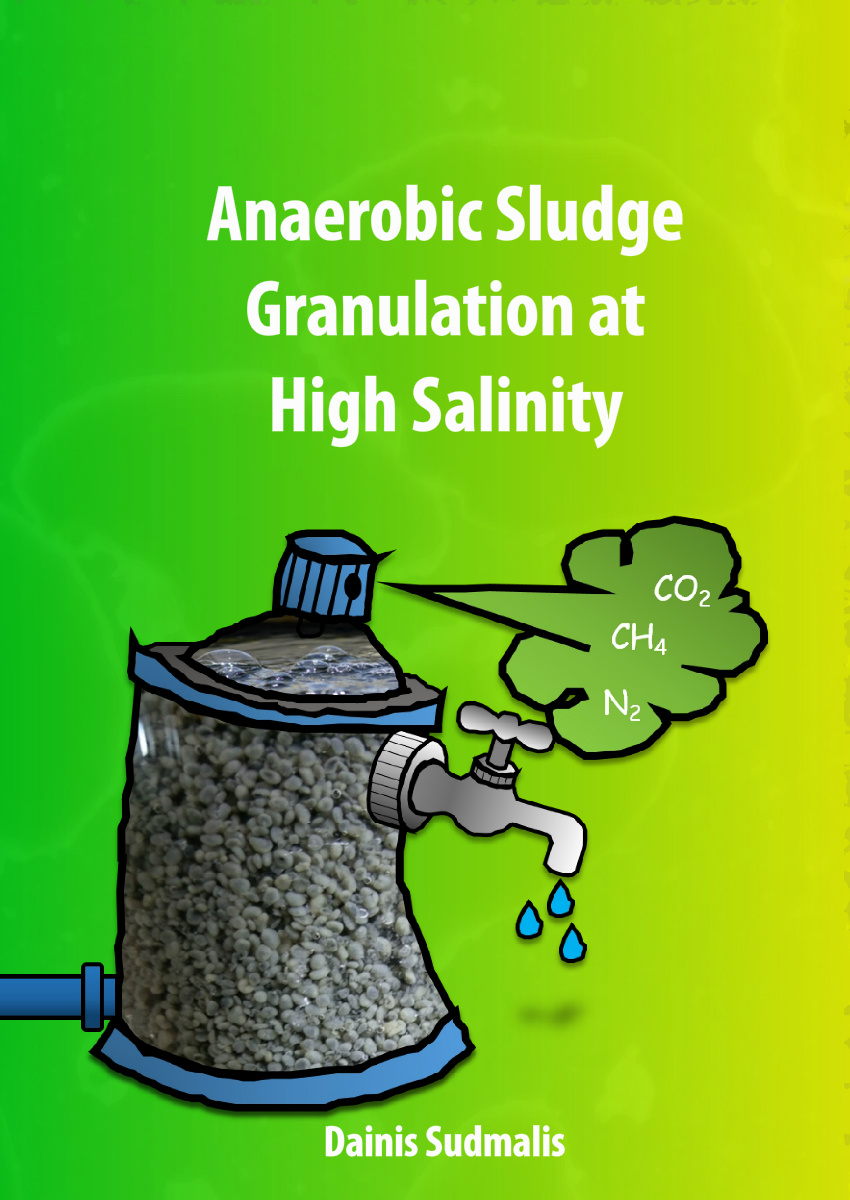


Anaerobic Sludge Granulation at High Salinity
Many industries, such as leather tanning, agro-food, fisheries, petroleum, petrochemical and textile dyeing industries generate highly polluted saline wastewater. It is estimated that approximately 5% of the globally generated wastewater is hypersaline (salinity above 3.5%). For example, it has been assessed that the petroleum industry alone already generates approximately 39.5 million m3 of wastewater per day. Because salts have a negative effect on microbial activity, biological treatment processes usually are not considered for such wastewaters. Such wastewater streams therefore are generally treated with physical-chemical processes. However, physical-chemical methods are energy intensive and require a lot of chemicals. Hence, there is a need to explore possibilities to replace them by more sustainable biological treatment methods. In particular anaerobic biological treatment should be considered because it: i) converts the organic pollutants in the wastewater into energy-rich biogas, consisting mainly of CH4 and CO2; ii) only requires a small amount of energy for operation; iii) produces a small amount of bio-solids requiring further disposal. Amongst the anaerobic biological treatment technologies those based on formation of granular sludge are of special interest for treatment of industrial wastewater. Sludge granules are spherically shaped biofilms in which microorganisms are entangled in a matrix of extracellular polymeric substances (EPS) providing the structural integrity of these biofilms. Because they have superb settling velocities and a high methanogenic activity, these granules allow for a compact reactor design with high concentrations of active biomass, i.e. can handle high volumetric organic loading rates. Before this research, anaerobic granular sludge was reported to be unsuitable for treatment of highly saline wastewater because methanogens are inhibited by the high osmotic pressure caused by the salinity and sludge granulation was impossible, probably because of the negative effects of monovalent ions on the structural integrity of the EPS matrix. However there is increasing evidence that salt inhibition of methanogens can be overcome by inoculating bioreactors with moderately halophilic inocula and/or by gradual adaptation to higher salinity levels. Also, some evidence in literature showed that anaerobic granules could increase in size in upflow anaerobic sludge bed (UASB) reactors at saline conditions, although these reactors were operated at upflow velocities lower than those typically applied in UASB reactors, the strength of the granules decreased and methanogenic activity became lower. Still, these observations indicated sludge granulation at saline conditions might be possible and justified further research. In fact, research on sludge granulation at high salinity had not been yet been performed from scratch, i.e. starting with dispersed biomass. The main objective of this thesis was to accomplish anaerobic granulation at high salinity from dispersed biomass and to find ways to stimulate osmoprotection of anaerobic biomass. Earlier microbiology studies had shown that most prokaryotic microbial cells, including those expected to occur in anaerobic wastewater treatment systems, cope with osmotic stress by accumulating small, highly soluble organic molecules called osmolytes which balance the osmotic pressure between cell cytoplasm and the environment. Methanogens can synthesize or take up from the environment (mainly) nitrogen containing osmolytes, such as amino acid derivatives. Uptake from the environment of such compounds energetically is much more favourable than synthesis de novo. It was also shown that these molecules can be synthesized from amino acids as the starting substrate. Additionally, under fresh water conditions EPS – the gluing material of granules – are often reported to contain up to 90% weight fraction of proteins and granulation proceeds faster with wastewaters containing complex energy rich substrates. Based on these observations we hypothesized that at saline conditions proteinaceous substrates in wastewater could enhance sludge granulation by providing energetically favourable EPS “building blocks” and after hydrolysis improve microbial adaptation to high salinity by providing precursors for osmolyte synthesis (amino acids). In Chapter 2 we investigated the possibility to form granules at low (5 g Na+/L) and high salinity (20 g Na+/L) in UASB reactors, starting with moderately halophilic dispersed biomass, while operating the reactors at conditions (e.g., organic loading rate and upflow velocity) known to improve fresh water granulation. The wastewater contained a complex, energy rich and proteinaceous substrate – a mixture of glucose, acetate and tryptone. This allowed a surprisingly fast development of anaerobic granules, even at 20 g Na+/L (~ 50 g/L NaCl). The sludge bed already turned granular after 45 days of continuous reactor operation. Although the COD (chemical oxygen demand, a measurement for organic pollution) removal efficiency was slightly better at 5 g Na+/L compared to 20 g Na+/L, at both salinities the removal efficiency exceeded 98% at organic loading rates as high as 16 g COD/L/d. Inhibition of anaerobic activity and granule disintegration at high monovalent salt concentrations has been reported, even in very recent publications. Thus, further exploration in this thesis was dedicated to factors and mechanisms allowing for the successful but somewhat surprising outcome of Chapter 2. The focus was on testing the abovementioned hypothesis that amino acids and proteinaceous substrates may play an important role in both, osmoadaptation and granulation at high salinity. In Chapter 3 proteins and amino acids were inspected for their potential to alleviate osmotic shock stress of acetoclastic methanogens in granular sludge sampled from two full scale high rate anaerobic treatment reactors (so called IC or internal circulation reactors) and from laboratory scale reactors operated at 5 and 20 g Na+/L. Aspartate, glutamate, gelatine and tryptone all could alleviate the negative effects of high salinity on methanogens. For example, addition of glutamate to batch experiments with an abrupt increase in salinity enhanced the methanogenic activity of full-scale granular sludge by 115%. Similarly, addition of the peptide tryptone raised the methanogenic activity in granules from the full scale reactors by 48% and 179%. These results indicated osmoadaptation of methanogens may be faster if saline wastewater contains soluble proteinaceous substrates. Analysis of nitrogen containing osmolytes accumulated by the 20 g Na+/L adapted granular sludge revealed glutamate and N-acetyl-β-lysine as the major osmolytes. This could in part explain the positive effect of amino acids on methanogenic activity: glutamate could be taken up directly from the bulk liquid, while N-acetyl-β-lysine could be synthesized from aspartate after uptake in the cell. Hydrolysis of a protein (gelatine) and a peptide (tryptone) potentially could also provide both of these amino acids, thereby explaining their positive effect on methanogenic activity. In Chapter 4 the (positive) effect of proteinaceous substrates on anaerobic sludge granulation was further explored. In all reactor experiments glucose and acetate were present in the wastewater, together with a third substrate (at 16.7% contribution to the wastewater COD) that was different for each reactor. If proteinaceous compounds (tryptone or gelatine) were added as the third substrate granulation at 20 g Na+/L already was observed after 40-50 days. With starch as the third substrate also formation of dense, well settling granule-alike aggregates took place and this was accompanied with more than 98% soluble COD removal at a loading rate of 7.5 gCOD/L/d. However, this was only possible after a much longer period (~180 days) than with the proteinaceous substrate. Still, apparently methanogenic adaptation and sludge granulation can be achieved at high salinity even without addition of proteins. This implies a broad spectrum of saline wastewaters is amenable for treatment by anaerobic granular sludge reactors without the need to dose proteins. However, inoculation with saline adapted anaerobic sludge is not always possible, and in these cases the start-up period can be significantly reduced by (temporary) addition of proteinaceous substrate. In Chapter 5, the minimum amount of proteinaceous substrate (tryptone in this case) needed to support sludge granulation and process performance at 20 g Na+/L was found to be 1.8% of the wastewater COD. It was also shown this amount can be easily estimated from relatively simple osmotic pressure calculations. It should be remarked that in many cases wastewaters, in particular those related to the food industry, already contain such small amounts of proteins. In fresh water granules acetoclastic methanogenic archaea belonging to the genus Methanosaeta are often reported to be the most abundant methanogens performing the conversion of acetate into methane. In its filamentous form Methanosaeta also positively influences the sludge granulation by forming 3D webs and acting as a granulation nucleus on which other bacteria can grow. An elaborate study on the development of the microbial community in anaerobic granular sludge exposed to high salinity was still lacking. The microbial molecular and microscopy analyses in Chapter 6 revealed that in reactors supplied with proteinaceous substrate (16.7% as COD tryptone) the dominant methanogenic archaea at both 5 and 20 g Na+/L belonged to Methanosaeta, which was growing in its filamentous form. The dominant bacteria at 5 g Na+/L were Streptoccoccus whereas at 20 g Na+/L the dominant bacteria belonged to the family Defluvitaleaceae. Interestingly, also these dominant bacteria were present as filaments. An experiment was also performed in which the granulation at 20 g Na+/L from dispersed biomass was studied without a proteinaceous substrate, but with amino acids leucine (8.3% COD fraction) and proline (8.3% COD fraction) instead. In this reactor, the bacteria belonging to Defluvitaleaceae disappeared. Consequently, also filaments of bacteria did not form in this reactor and the granulation was not achieved after 120 days. These outcomes suggested the importance of filamentous bacteria for granulation at saline conditions. As a response to high salinity microbial cells can produce increased amounts of EPS, suggesting EPS help to alleviate osmotic stress. A confocal laser scanning microscopy (CLSM) study of granules grown during the experiments of Chapter 2 suggested that EPS rich in mannose residues can bind sodium ions and in this manner reduce the osmotic stress on the microorganisms. However, microbial cells need to cope not only with cations but also with anions. To examine if EPS could also act as a protective barrier against high concentrations of anions, ion exchange membranes were prepared with EPS extracted from high salinity adapted granules and their selectivity to transport cations and anions was tested (Chapter 7). The EPS acted as cation exchange membranes which selectively transported sodium and potassium cations and partially repelled anions (chloride). With Scanning Electron Microscopy coupled to Energy Dispersive X-ray Spectroscopy (SEM-EDX) and ionic composition measurements of granules it was shown that the concentration of anions was significantly lower in granules compared to the bulk liquid. Together these observations imply that EPS can indeed act as a protective barrier against high concentration of anions. Interestingly, EPS exhibited a higher selectivity for potassium than for sodium ions, even though potassium and sodium have the same valence and similar physical-chemical properties. As potassium selectivity has commercial relevance, future studies focusing on the reason for this selectivity perhaps can result in the development of commercial potassium selective membranes. For microbial cells such improved transport of ions through EPS seems to have a negative effect. In methanogenic activity assays potassium was much more toxic compared to sodium suggesting that cation toxicity may be influenced by properties of EPS, i.e. the better the ion can diffuse through the EPS, the more toxic it is (Chapter 7). Finally, in Chapter 8 the results of this research are discussed in a broader context and future research directions are proposed.
| Publicatiedatum | 6 maart 2020 |
| Universiteit | Wageningen University |
| Auteur | Mmapatla Senyolo |
| ISBN nummer | 978-94-6395-223-1 |