Linda Remijn Nelissen
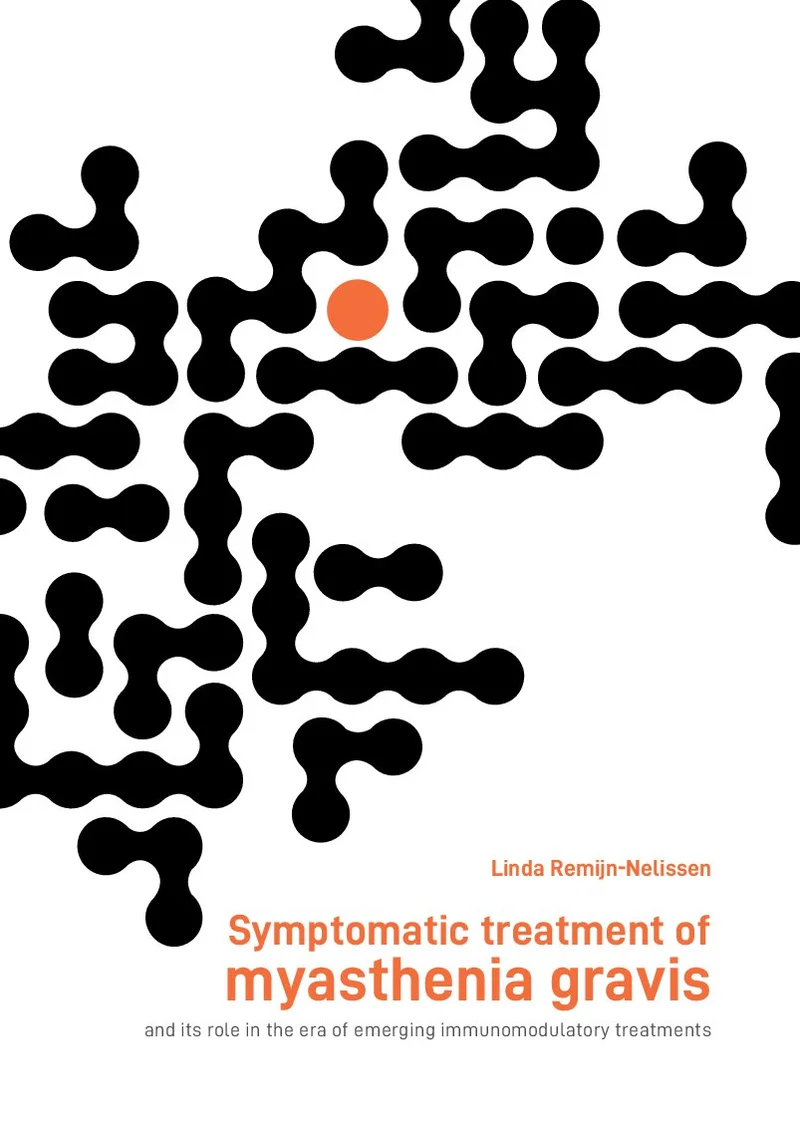
Symptomatic treatment of myasthenia gravis
3 september 2026
Universiteit Leiden
Open Ebook
Share this project
Summary
Epilepsy surgery is currently the only potentially curative treatment for patients with drug-resistant focal epilepsy. Preoperative decision-making is traditionally based on a combination of clinical seizure description (semiology), EEG, and imaging. A demonstrated structural abnormality, preferably visible on MRI and consistent with electro-clinical data, serves as the primary starting point for assessing suitability for epilepsy surgery.
Until recently, genetic diagnostics played almost no role in the presurgical trajectory. Genetic testing was sometimes considered only in children with epileptic encephalopathies or a syndromic presentation, but was generally deemed irrelevant in focal epilepsy without clear syndromic features.
Thanks to new DNA analysis techniques, such as next-generation sequencing, and a better understanding of both congenital and acquired causes of epilepsy, this mindset has changed. Genetic abnormalities are now regularly found in children with focal epilepsy, even when MRI or tissue examination shows no abnormalities. Consequently, the traditional distinction between a 'structural' and a 'genetic' cause is losing clinical value, and genetic research is playing an increasingly important role in understanding and classifying epilepsy.
The clinical added value of genetic research within presurgical decision-making has not yet been unambiguously established. Important questions include: when is genetic research indicated, how should genetic findings be interpreted in relation to other diagnostic data, and does a genetic diagnosis have predictive value for the outcome of epilepsy surgery? There is also the question of whether genetic research can contribute to a faster and more thorough presurgical trajectory, and how this relates to the pursuit of early intervention (as early intervention is known to lead to better outcomes).
This dissertation examines if, how, and when genetic diagnostics can be meaningfully used in the presurgical evaluation trajectory of patients with drug-resistant focal epilepsy, aiming to optimize the timing, selection, and outcome of epilepsy surgery.
Part I. The role of genetic research in epilepsy surgery
Chapter 2 outlines the genetic basis of epilepsy and the technological developments that have shaped this field over the past decades. Variants in genes involved in various biological mechanisms (such as ion channel and synapse function, transcriptional regulation, metabolism, and the mTOR signaling pathway) can underlie both focal and generalized epilepsies, with or without structural abnormalities. The previous classification into 'idiopathic' and 'symptomatic' epilepsies has thus been replaced by an etiology-based classification. While it is now certain that genetic research can yield valuable etiological and prognostic information, genetic diagnostics are still barely part of the presurgical evaluation.
Chapter 3 describes a systematic review of 36 studies on surgical outcomes in patients with drug-resistant epilepsy and a genetically confirmed diagnosis. Results varied greatly per gene: surgery was almost never successful for variants in ion channel and synapse genes (such as SCN1A); conversely, epilepsy surgery frequently appears successful in patients with variants in the mTOR signaling pathway (such as DEPDC5, NPRL2, and NPRL3). These findings highlight the added value of genetic research during preoperative evaluation.
Chapter 4 comprises a retrospective cohort study of genetic diagnostics in 2385 patients evaluated for epilepsy surgery at UMC Utrecht between 1990 and 2016. Genetic testing was primarily performed in MRI-negative patients, but for nearly half, only after a surgical decision had already been made. Pathogenic variants were mainly found in ion channel and synapse genes and in the mTOR signaling pathway. Seizure freedom after surgery occurred exclusively in patients with an mTOR variant, in both MRI-positive and MRI-negative cases. Notably, in some patients, including children with an SCN1A variant (associated with a diffuse pathophysiological mechanism), the genetic diagnosis was only established after invasive diagnostics. The findings make clear that genetic diagnostics, if performed timely, can be valuable for distinguishing patients with a high chance of a favorable result from those for whom invasive procedures are expected to yield little.
Part II. Genetic mechanisms of focal epilepsy
Chapter 5 describes four children with familial, drug-resistant focal epilepsy and histologically confirmed focal cortical dysplasia (FCD); all had a hereditary variant in a GATOR1 gene (DEPDC5, NPRL2, or NPRL3). In them, the disease course (including developmental delay, earlier seizure onset, and unfavorable postoperative outcome), despite typical features of FCD, was more severe than in the parent from whom the variant originated. Literature research confirmed this pattern of increasing severity in successive generations within families with GATOR1-related epilepsy. Possible explanations include incomplete penetrance, second-hit variants, or mosaicism. These findings suggest that familial GATOR1-related FCD forms a genetically defined subgroup with increased clinical complexity. The outcome of epilepsy surgery is less predictable in this group, making careful preoperative weighing extra important.
In Chapter 6, we examine germline and somatic variants in the brain tissue of children who underwent epilepsy surgery for (suspected) cortical malformations (malformations of cortical development, MCD). In FCD type II and hemimegalencephaly (HME), variants in the mTOR signaling pathway were primarily found. In FCD type I, mild malformation of cortical development (mMCD), and mild malformation of cortical development with oligodendroglial hyperplasia and epilepsy (MOGHE), the genetic background was more heterogeneous, including SLC35A2 variants. Somatic variants were also demonstrated in tissue without clear histological abnormalities, including in SLC35A2 and DEPDC5, often with a low allele frequency (<5%). The results again emphasize the importance of sensitive analysis techniques, as these contribute to a higher diagnostic yield and better genetic classification of both structural and non-structural focal epilepsy. Chapter 7 describes a European multicenter study of surgical outcomes in non-lesional patients (with normal MRI and normal tissue examination) with focal epilepsy. Nearly half of the patients with temporal lobe epilepsy became seizure-free, with those who also underwent a hippocampectomy having the best outcomes. Conversely, extratemporal surgery had little success. Invasive monitoring, regardless of the resection location, was also associated with a poorer outcome. A longer epilepsy duration and non-specific gliosis also appeared to be unfavorable prognostic factors. Genetic research had been conducted in only a small portion of patients and had yielded no causal variants. These results show that resective epilepsy surgery can be useful even in the absence of structural abnormalities. Furthermore, the results show that the currently limited use of genetic diagnostics constitutes a limitation, especially for this patient group. In the future, these patients will benefit from molecular genetic research focused on better etiological classification and reliable prognostic markers for epilepsy surgery. Part III. Timing, outcome, and clinical integration of genetic research In Chapter 8, we evaluate factors influencing the timing of epilepsy surgery in children with MCD or low-grade epilepsy-associated tumors (LEAT). Children with LEAT were operated on faster on average than patients with MCD. Early drug resistance, visibility of a focus on the first MRI, and a later age at seizure onset were associated with a shorter interval to surgery. A shorter interval was also associated with a better outcome. In a significant portion of patients initially considered MRI-negative, a focus was nonetheless identified in the expertise center. This finding emphasizes the importance of early referral and assessment in specialized centers. Based on the studies described in this dissertation, I arrive at the following conclusions: 1. Epilepsy surgery can be successful in patients with a genetic cause, but the outcome varies depending on the underlying pathophysiological mechanism (Chapter 3). 2. Genetic research can support clinical decision-making and should therefore be considered consistently and at an early stage in all patients who may be eligible for epilepsy surgery (Chapters 3 and 4). 3. Patients with GATOR1-related familial FCD form a challenging subgroup, with a phenotype that varies between generations and with average less favorable surgical outcomes (Chapter 5). 4. In some non-lesional patients, low-level somatic variants in tissue and mosaicism in blood were found (Chapter 6). 5. The prevalence of somatic variants in patients with mMCD and in patients with non-lesional epilepsy is likely underestimated; this finding emphasizes the importance of sensitive sequencing methods aiming for a higher diagnostic yield and better presurgical decision-making (Chapter 6). 6. Even so-called non-lesional patients, in whom no causative lesions were identified on MRI and in tissue examination and for whom information on underlying genetic causes is incomplete, can achieve long-term postoperative seizure freedom, especially after mesiotemporal resections (Chapter 7). 7. The low success rate in extratemporal, non-lesional surgery emphasizes the need for further molecular characterization to identify reliable predictors of the outcome (Chapter 7). 8. A shorter time between the diagnosis of epilepsy and surgery is independently associated with a greater chance of seizure freedom after epilepsy surgery (Chapter 8). 9. In the absence of clear MRI abnormalities, early referral to an expertise center is recommended (Chapter 8).