Marijn Mulder Kampen
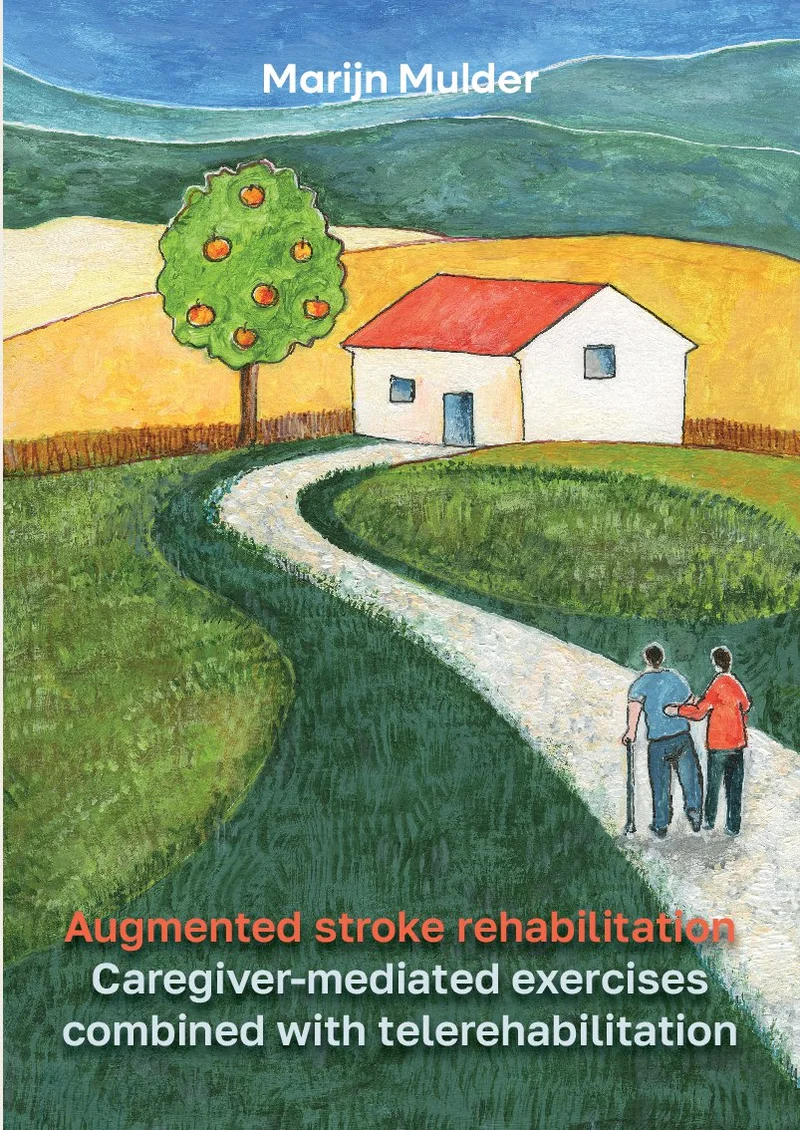


AUGMENTED STROKE REHABILITATION
Stroke is one of the leading causes of disease burden worldwide, with increasing morbidity and mortality rates due to population ageing and unfavourable trends in vascular risk factors. Many stroke survivors experience long-term impairments in motor function, limiting their independence in mobility and restricting participation in society. Regaining independent mobility within the community is considered a key goal of stroke rehabilitation. As a result of the increased care demand and staff shortages, rehabilitation facilities face increasing pressure to accelerate discharge to the home setting. Early supported discharge (ESD) services can reduce length of stay (LOS), improve functional outcome and facilitate the transition from inpatient rehabilitation to the community. However, the effectiveness of ESD depends on the continuation of intensive, task-specific rehabilitation at home. Although intensive task- and context-specific training is recommended, actual therapy dose remains below guideline targets, particularly after discharge. Hence, cost-effective ways to increase the intensity of training and support the transition to the home setting are required. One cost-effective strategy to increase training dose could be to actively involve informal caregivers in task- and context-specific training through caregiver-mediated exercises (CME). In addition, caregivers provide sustained support after discharge from inpatient care. Training patients and informal caregivers through a combination of face-to-face support and telerehabilitation (i.e. blended care) could further help the transition of care by improving insight and preparing for self-management and informal caregiving at home. The main aim of this thesis was to investigate the added value of CME combined with telerehabilitation services after stroke to augment the current dose of task- and context-specific training and to facilitate the transition from inpatient rehabilitation to community and informal care. The studies presented in this thesis address different but complementary aspects of stroke recovery and rehabilitation, ranging from prognostic modelling to intervention development and evaluation. Specifically, this thesis (1) identifies prognostic factors for community ambulation, (2) synthesizes the evidence for CME interventions, (3) compares international implementations of CME with e health support, (4) explores family functioning within patient-caregiver dyads, and (5) evaluates a blended care CME program (ARMed4Stroke) in a multicentre, randomized controlled trial (RCT). Chapter 2 aimed to classify patients with stroke into clinically relevant subgroups based on their characteristics at discharge from inpatient rehabilitation to predict community ambulation outcome six months later. A prospective cohort design and classification and regression tree analysis was used for prognostic modelling. This study, based on a cohort of 243 patients with stroke, demonstrated that comfortable gait speed at discharge is a key predictor of community ambulation outcome. A cut-off value of 0.5 m/s was identified as the most robust threshold, with a sensitivity of 94% and specificity of 54%. The overall model accuracy of 86% was reduced to an adjusted accuracy of 79% after cross-validation. The findings presented in this chapter highlight the importance of early assessment of walking capacity and support the use of gait speed as a simple and clinically relevant prognostic indicator when organizing home-based rehabilitation and community services. A CME program may be a resource-efficient approach to improve long-term patient and caregiver outcomes by increasing the intensity of training and supporting patient and caregiver empowerment during the transition from inpatient rehabilitation to the home setting. In chapter 3, we summarized the available evidence for CME interventions poststroke up to 2015, in a systematic review and meta-analysis. The overall objective was to investigate if CME can improve functional ability and health-related quality of life in people with stroke, and to determine the effect on caregiver burden. Nine RCTs were identified and data from six trials, including 333 patient-caregiver dyads, were included in the meta-analyses. The results showed inconclusive evidence for the effects of CME on ADL independence and caregiver burden. Overall, outcomes of ADL independence and caregiver burden were neutral, with no evidence of either benefit or harm when compared with control conditions, i.e. usual care, other intervention or no intervention. However, sensitivity analyses demonstrated significant positive effects on basic ADL independence postintervention. The analysis distinguished between ‘CME-core’ interventions and trials in which the effects of CME could not be separated from the effects of other rehabilitation approaches, e.g. caregiver-mediated Constraint-Induced Movement Therapy (CIMT) versus therapist-delivered Neuro Developmental Treatment (NDT). Importantly, ADL independence is mainly determined by lower limb functions, and the ‘CME-core analysis’ only included trials focused on the lower extremity. The findings further suggested that CME may improve standing balance, walking distance and health-related quality of life as measured with the self-reported mobility, physical functioning, and general recovery domains of the Stroke Impact Scale (SIS). In contrast, no beneficial effects were observed for upper limb outcomes. The limited number of studies, substantial clinical heterogeneity and inconclusive results indicated the need for further well-designed trials to establish the effectiveness of CME interventions after stroke. Subsequently, the effects of CME combined with e-health support were investigated in two identically protocolized RCTs conducted in parallel in the Netherlands and Australia. In chapter 4, we combined individual patient data from both trials (N=129) and identified important clinical differences across countries. Cross-cultural differences in patient casemix, with a younger age (p = 0.005) and lower functional status (p = 0.001) observed among Dutch patients, could result in a different potential for recovery. In addition, Australian patients were recruited earlier poststroke, spent less time in exercise therapy, had a shorter LOS, and suffered less from contamination when compared to Dutch controls. Both trials showed neutral effects on self-reported mobility, but consistent positive effects were observed on caregiver-related psychological outcomes, including fatigue, self-efficacy, and mood. Despite clear differences across countries, study setting did not moderate the trial outcomes. This suggests that contextual differences between healthcare systems may influence implementation processes, but do not necessarily alter the overall effects and we can proceed faster to evaluating CME interventions in international pragmatic trials. Because informal caregivers play a central role in stroke rehabilitation, especially after discharge, chapter 5 focused on family functioning after acquired brain injury (ABI). The central objective of this study was to investigate agreement and differences in the perception of family functioning between patients with ABI and their partners. Baseline data from 77 patient-partner dyads (87% stroke) recruited from the CARE4Patient and CARE4Carer trials, revealed that discrepancies may exist between patient and partner perceptions of family functioning. Within-dyad agreement was poor, with partners reporting significantly worse family functioning compared to the patients (32.5% versus 18.2%). Partners who perceived ineffective family functioning also reported higher caregiver burden and more symptoms of anxiety and depression, underscoring the need for systematic monitoring of caregiver wellbeing. These findings also emphasize the importance of addressing the experiences of both members of the patient-caregiver dyad when implementing and designing family-centred rehabilitation interventions. Actively involving caregivers in stroke rehabilitation while considering their perspectives, goals and support needs may address the current gap between intensive multidisciplinary support during inpatient care and self-management and informal care after discharge to the community. In addition, combining telerehabilitation and face-to-face support may empower patient-caregiver dyads and smoothen the transition from professional support to self-management at home. Chapter 6 describes the study design of the ARMed4Stroke trial, a multicentre, observer-blinded RCT. The primary aim was to investigate the effects of an 8-week CME program using a blended care approach in addition to usual care, on recovery of mobility after subacute stroke. Patient-caregiver dyads were recruited from four rehabilitation centres in the Netherlands during in- or outpatient rehabilitation. The primary endpoint was the self-reported mobility domain of the SIS. Secondary endpoints included outcomes of self-efficacy, psychological wellbeing, family functioning, LOS, care transition preparedness, walking capacity, paretic leg strength, balance, extended ADL, quality of life and caregiver burden. Outcomes were assessed at enrolment, end of treatment and six months follow-up. We calculated a required sample size of 72 dyads based on an expected improvement of 10 points on the SIS mobility domain. The ARMed4Stroke program focused on joint goal setting and was specifically developed to heighten motivation and stimulate self-management during the transition from inpatient care to the community. Participants in the intervention group received a tailor-made training program aimed at improving gait, balance, physical activity and outdoor activities. Dyads were asked to perform the CME program for 2.5 hours per week, supported by four face-to-face sessions and a web-based telerehabilitation system with a messaging environment and individualized goals and exercises to achieve important milestones for community ambulation. The results of the ARMed4Stroke trial were reported in chapter 7. In total, 41 patient-caregiver dyads (21 intervention, 20 control) were randomized, and 37 dyads were analysed following intention-to-treat. No significant between-group differences were found for the primary outcome of SIS mobility (B 0.8, 95% CI -6.8–8.5, p = 0.826). However, significant beneficial effects were observed for the secondary endpoints of caregiver quality of life (p = 0.013) and depressive symptoms (p = 0.025) postintervention, as well as extended ADL independence in leisure activities (p = 0.024) after six months. A significant difference in favour of the control group was observed for self-reported muscle strength (p = 0.002) after 6 months. We concluded that CME combined with telerehabilitation yielded no significant beneficial effect in terms of mobility recovery. Although the study was insufficiently powered to draw precise conclusions, we did report an added value on psychological wellbeing of caregivers consistent with previous trials. In the general discussion presented in chapter 8, the main findings of chapters 2 through 7 are summarized and discussed within the broader context of stroke rehabilitation. Taken together, the studies in this thesis demonstrate that augmenting rehabilitation through enhanced caregiver involvement during CME combined with telerehabilitation support is a promising strategy that deserves a large phase III trial with a health-economic evaluation, to address the gap between recommended and delivered therapy intensity after stroke. This thesis shows that recovery of mobility after stroke is strongly influenced by both walking capacity and the organization of stroke rehabilitation. Gait speed emerged as a robust and key prognostic factor for long-term community ambulation outcome using a cut-off value of 0.5 m/s. Acknowledging that community ambulation is not precisely defined and is probably dependent on varying personal and environmental characteristics, future research should combine self-reported measures, monitoring data and psychological information to gain more insight into the complex nature of community ambulation poststroke. In addition, recovery of mobility is dose-dependent and with that negatively influenced by insufficient rehabilitation services, particularly after discharge to the home setting. The results of this thesis provide no evidence for a beneficial effect of CME combined with telerehabilitation into insufficient treatment contrast between experimental and control groups at the end of the intervention period. Future trials should consider cluster randomization to prevent contamination. Actively involving informal caregivers during inpatient care and providing remote support may improve psychological wellbeing and quality of life. Future studies should focus on identifying which caregiver profiles benefit most from structured involvement and how care systems can remain inclusive for patients without informal support. In addition, successful implementation requires careful consideration and monitoring of family dynamics and contextual factors. Given the neutral mobility outcomes in relatively small phase II trials, future research should move towards larger pragmatic phase III and IV trials, preferably with health-economic evaluations, to assess whether a high-dose home-based CME program can be a cost-effective alternative or complements to existing ESD services poststroke.
| Publicatiedatum | 8 september 2026 |
| Universiteit | Vrije Universiteit Amsterdam |
| Auteur | Marijn Mulder Kampen |
| Order nummer | 19265 |
| ISBN nummer | 9789465345123 |