Koen Broker
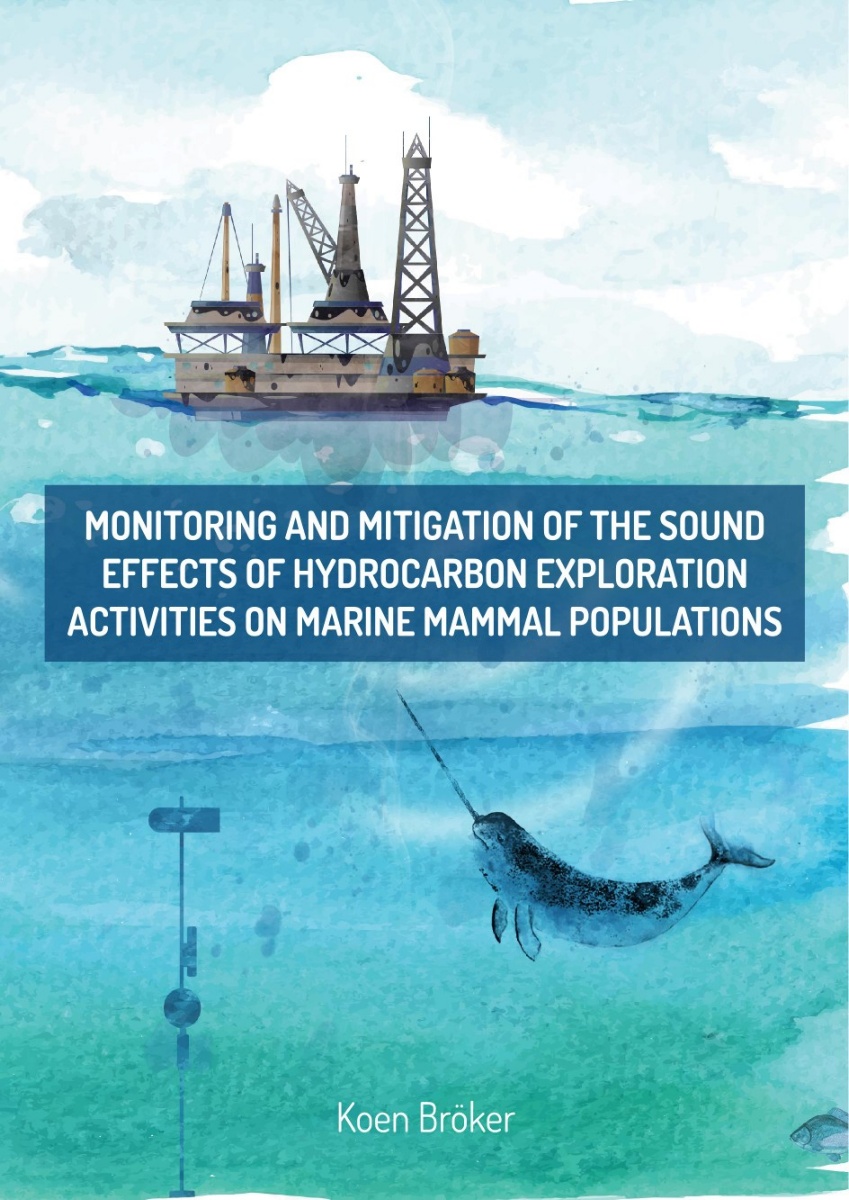


Monitoring and mitigation of the sound effects of hydrocarbon exploration activities on marine mammal populations
Offshore Exploration and Production (ECP) activities, such as seismic surveys and drilling generate sound that propagates well in marine environments. These activities can overlap in space and time with marine mammal populations in different stages of their life cycle. Depending on the sound levels, frequency and duration, marine mammals can be impacted by these sound sources. Exposure of marine mammals at varying distances from a sound source can result in different effects ranging from auditory injury, i.e. Permanent Threshold Shift (PTS), Temporary Threshold Shift (TTS), to behavioral responses or disturbance and communication masking. If these sound effects are severe, or continue for prolonged periods of time, and are not mitigated sufficiently, they may result in population level consequences. Marine sound risk assessments requires information on (i) the acoustic characteristics of the source such as source level, frequency spectrum and duty cycle, etc., (ii) the pathway, i.e. the way that sound propagates through the water column, and is affected by environmental and physical conditions and (iii) receptor specifics such as abundance and distribution and associated seasonal variation, species-specific audiograms and TTS thresholds, sensitivity of species to disturbance, etc. A range of measures can be applied to mitigate these effects. In Chapter 2, a comprehensive overview is provided of these types of effects and available mitigation measures that can be applied to mitigate these effects. In this, the source-pathway-receiver (SPR) model is applied to summarize the current understanding of 1) ECP impulsive sound sources such as air gun arrays and continuous sounds originating from drilling (source), 2) the propagation of sound generated by these sources through the ocean’s water column (pathway) and, 3) the effects of these sounds on marine mammals (receiver). Potential unmitigated effects of ECP activities on marine mammals can be categorized according to their impact severity and spatial scale, ranging from severe effects occurring at a small spatial scale to lower level effects occurring at larger scales (typically, but not always, in the following order: permanent auditory threshold shift → temporary auditory threshold shift → behavioral disturbance → masking). Available monitoring techniques, applied to enhance our understanding of marine mammals as related to ECP effects ranging from individual behavioral responses up to population level consequences, are also described in this chapter using the SPR model. Additionally, an overview of mitigation measures applied in the ECP industry to prevent unacceptable impacts to marine mammals are provided and categorized according to a mitigation hierarchy (avoid > minimize > restore > offset). Finally, a case is made for application of the ALARP (As Low As Reasonably Practical) principle in seismic mitigation guidelines; that is, the applied mitigation measures in specific ECP activities should be proportional with the assessed risk on marine mammal populations, as well as reasonably practicable to achieve. In chapter 3 a study is presented on a comparison of abundance estimates of a narwhal population in Melville Bay, Greenland, based on an aerial double-observer line-transect (MRDS) survey
| Publicatiedatum | 24 september 2021 |
| Universiteit | Rijksuniversiteit Groningen |
| Auteur | Koen Broker |
| ISBN nummer | 978-94-6423-295-0 |