Linda Remijn Nelissen
Symptomatic treatment of myasthenia gravis
3 september 2026
Universiteit Leiden
Open Ebook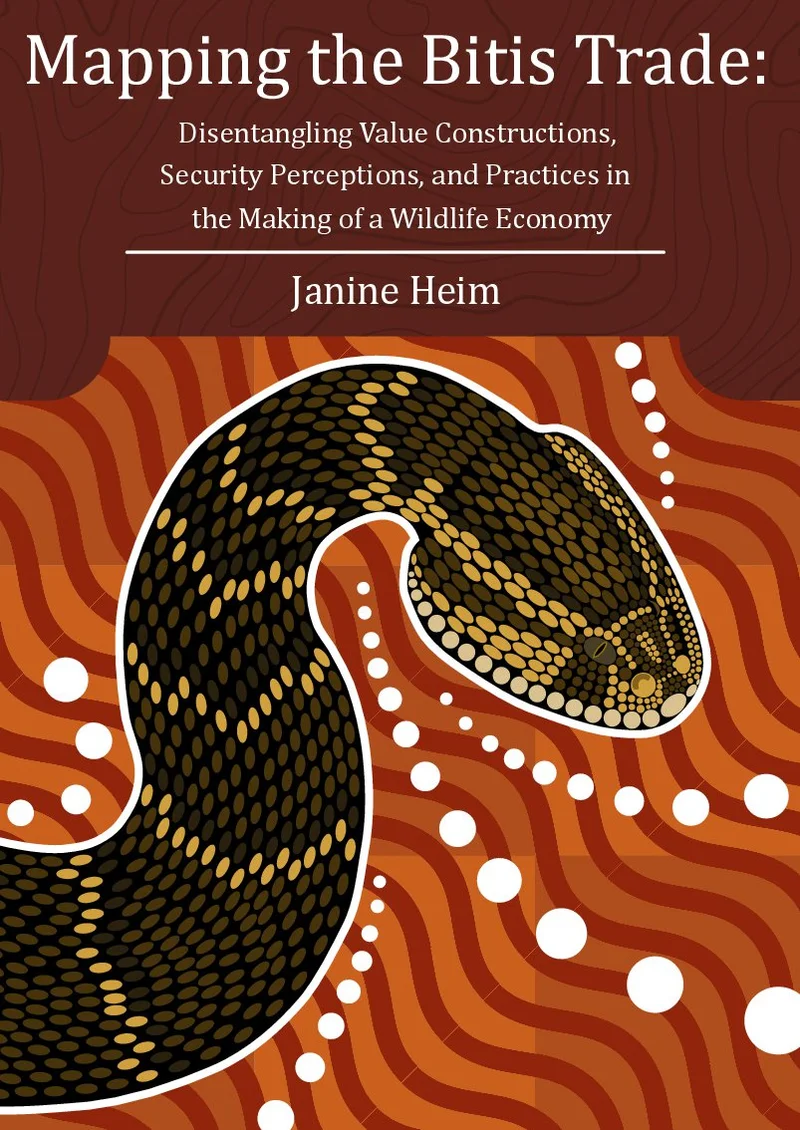
Share this project
Summary
In this dissertation, I examine the transnational trade in Bitis vipers between southern Africa and Europe to illuminate how wildlife economies are constituted through everyday practice, shifting value constructions, and contested security perceptions. By focusing on a largely overlooked genus within the exotic pet trade, I move beyond dominant emphases on charismatic megafauna and organised crime to analyse a niche yet globally networked community of breeders, traders, herpers, veterinarians, and conservation actors.
I trace how Bitis species circulate through decentralised but durable networks that connect digital platforms, reptile expos, breeding facilities, and regulatory institutions. The trade emerges as small-scale yet persistent, sustained primarily through captive breeding, specialised expertise, and tightly knit social relations. While moments of wild collection and regulatory breaches occur, the Bitis trade cannot be reduced to illicit trafficking. Instead, it operates through an assemblage of legal, grey, and illegal practices embedded in fragmented permitting regimes and everyday routines.
Central to this analysis is the question of value. Within the Bitis trade, rarity is not simply ecological scarcity, but a socially constructed distinction shaped by locality, phenotype, narrative, and visibility within collector cultures and social media. Snakes become desirable not only because of biological characteristics, but because of the meanings attached to them within specific communities. These webs of significance structure breeding decisions, pricing, and status within the trade.
At the same time, Bitis vipers occupy shifting and often contradictory positions within security discourses. They are framed variously as exotic pets, ecological assets, welfare concerns, biosecurity risks, and public safety threats. These competing constructions generate regulatory tensions and inconsistent governance responses. By examining how such securitisations are produced and negotiated, I show that security in the wildlife trade is not an objective condition but a socially mediated process.
The trade is further shaped by what I conceptualise as customary illegality: practices that may be technically unlawful yet are normalised within the trade’s moral economy. Participants frequently position themselves as stewards and experts navigating regulatory systems they experience as fragmented or misaligned with practical realities. This complicates enforcement-centred narratives and reveals the interpretative work through which legality is negotiated in practice.
Finally, I situate the contemporary Bitis trade within longer colonial and postcolonial continuities. Historical collecting traditions and European dominance in breeding networks continue to shape authority, visibility, and access within the wildlife economy, raising questions about who is authorised to regulate, represent, and benefit from wildlife.
Taken together, this dissertation presents the Bitis trade as a dynamic wildlife economy in which value, legality, and security are continuously produced and contested. By centring lived experience and tracing connections across scales, it advances a more nuanced and context-sensitive understanding of how exotic pet trades are made and governed.