Dixit Guleria
Uniaxial Orientation of Polyethylene Films for Recyclable Flexible Packaging
21 mei 2025
TU Eindhoven
Open Ebook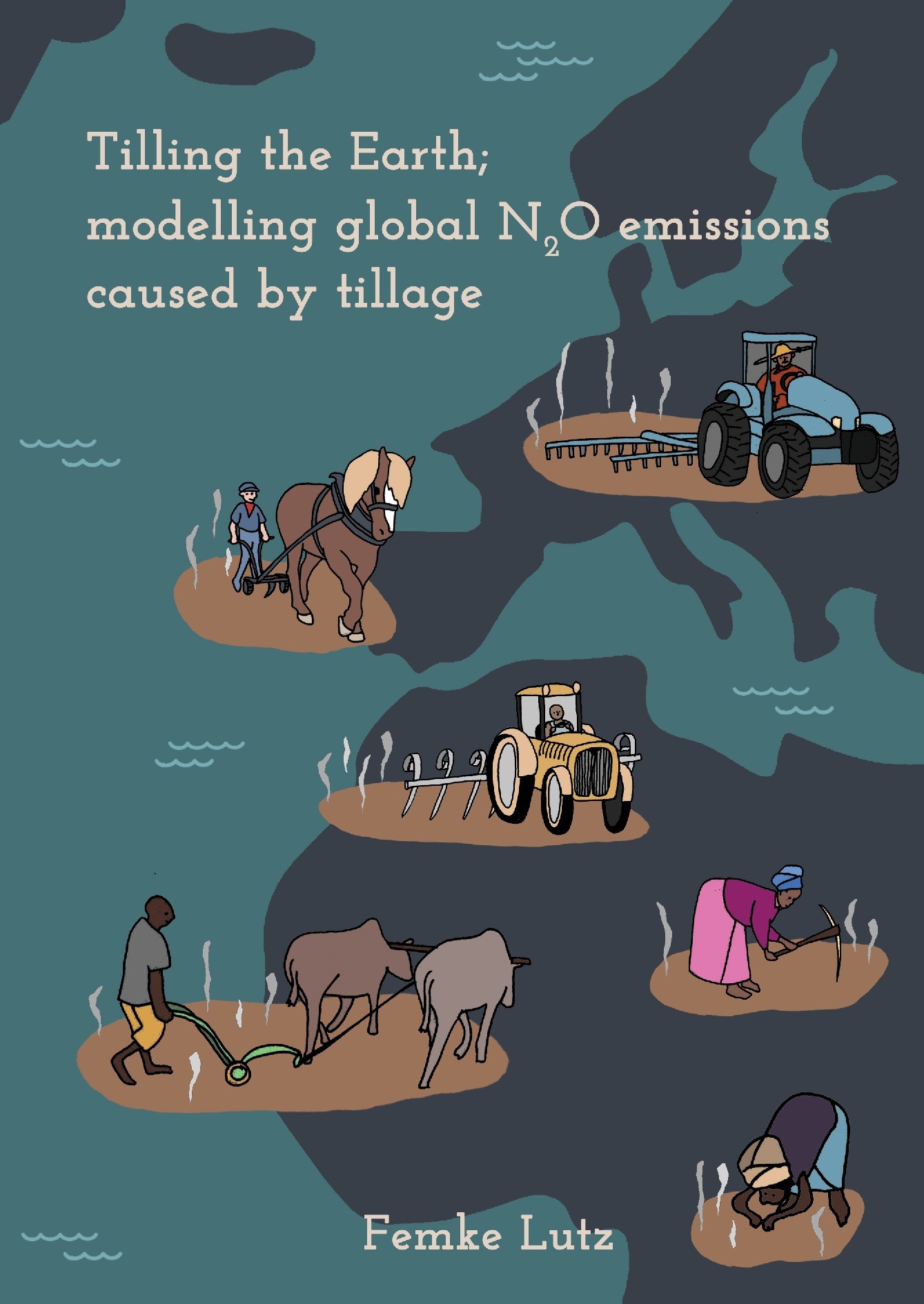
Share this project
Summary
spatial resolution of 0.5° (equivalent to approximately 55 km at the equator) and usually work with the most dominant soil texture class in the grid cell. The heterogeneity of the soil within the grid cell is therefore ignored. In Chapter 5, we tested four different ways to represent heterogeneity in soil conditions and their effects on simulated N2O emissions and soil organic matter with LPJmL. In addition, we identified the areas at risk of errors when using the dominant soil texture in the grid cell. The results of the study indicated that for global studies, the method typically used by global ecosystem models (i.e., using the dominant soil texture class) is feasible for simulating N2O emissions and soil organic matter content, as errors in regions tend to compensate each other, so only small differences were found between the methods for representing soil heterogeneity. However, significant differences were found when analyzing local and regional differences. For local or regional assessments of N2O emissions and soil organic matter content, using the dominant soil texture class in the grid cell can therefore lead to uncertainties, especially in high-risk areas. In these areas, soil heterogeneity must be taken into more explicit account. Because the spatial patterns of high-risk areas for N2O emissions and soil organic matter content were similar, I hypothesized that a non-regular grid could be defined for soil input/output variables of global ecosystem models as a compromise between constraints in the computational capacity of a model and requirements in spatial detail. This could potentially also improve the simulation of tillage effects on N2O emissions and soil organic matter content, but requires further research.
The extended global ecosystem model LPJmL was not able to accurately simulate tillage effects on N2O emissions. The potential for reducing N2O emissions through tillage on a global scale can therefore not be properly assessed. Nevertheless, a better understanding has been gained of processes related to tillage and their interactions with N2O emissions. Furthermore, the model was able to reproduce the observed effects of tillage on other dimensions, such as agricultural production, soil carbon, and CO2 emissions at different scales. The implementation of the more detailed tillage mechanism in LPJmL therefore improves the ability to represent different agricultural systems and gain insight into agricultural management options for agricultural adaptation and for greenhouse gas emission mitigation options in agriculture. Such findings can help agricultural management decisions at different scales regarding agriculture-based mitigation strategies in support of regional and global mitigation goals, such as the Paris Agreement.