a.zweerink


TAILORED CARDIAC RESYNCHRONIZATION THERAPY
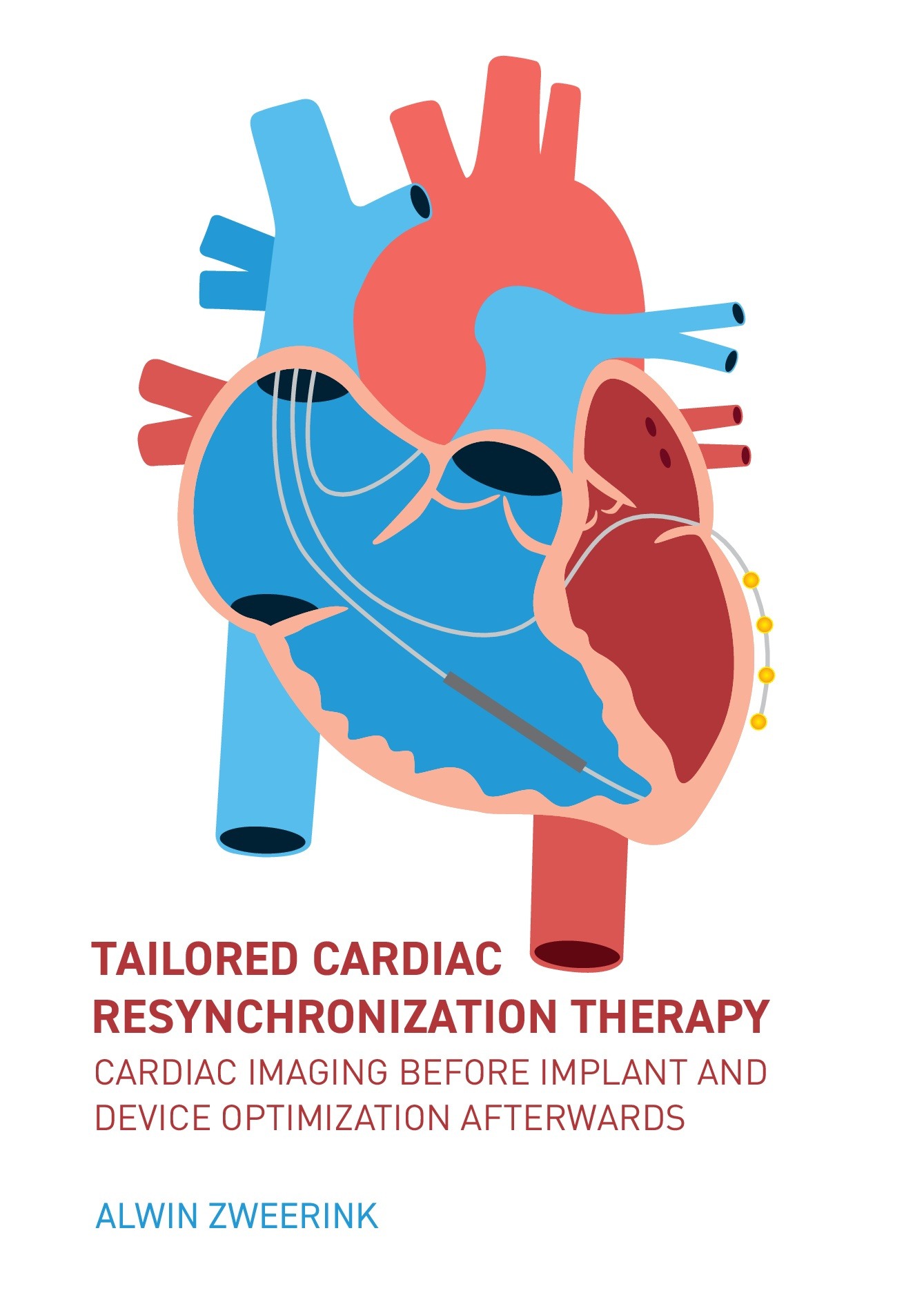
Selection criteria for Cardiac Resynchronization Therapy (CRT) are mainly based on the morphology and time duration of the QRS complex. Following guideline criteria, however, approximately one-third of the patients implanted with CRT will not respond favorably. The present thesis aims to investigate two strategies that can potentially increase effectiveness of CRT: (i) improved selection of potential responders prior to implantation using cardiac imaging techniques and (ii) optimized device settings afterwards in order to maximize hemodynamic benefits. Part IA evaluates the theoretical concept that adjusting QRSd to LV structural characteristics improves patient selection for CRT. Normalization of QRSd to LV dimension (i.e. QRSd divided by LV dimension) improved correlation with acute LV pump function improvement by CRT and prediction of survival. Women achieved more pump function improvement during CRT compared to men, which may be partly ascribed to smaller LV size in women leading to more relative conduction delay at identical QRSd values. Part IB evaluates the role of myocardial strain imaging. It was hypothesized that the lower the septal contribution to total myocardial work (or the higher the septal waste) at baseline, the higher the acute improvement in pump function during CRT. The end-systolic septal strain (ESSsep) parameter showed a consistent high correlation with reverse remodeling after CRT, irrespective of the imaging technique used (CMR-TAG, CMR-FT or STE). The novel segment length in cine (SLICE) technique was introduced to derive segmental strains from standard CMR cine images without specialized software. A positive ESSsep (systolic stretching) predicted clinical benefit and better survival. In part II, CRT optimization strategies were evaluated. Although response varied between electrodes of quadripolar leads, electrical delay parameters (QLV) could not identify the optimal pacing electrode for individual patients. Invasive hemodynamic optimization using pressure-volume loops showed that stroke work (SW) guided optimization resulted in superior ventricular-arterial coupling and better predicted long-term response than dP/dtmax. Finally, the role of rate-adaptive pacing for chronotropic incompetence in heart failure patients was reviewed, suggesting potential benefits for exercise capacity and survival.
| Publicatiedatum | 24 april 2020 |
| Universiteit | Overig |
| Auteur | a.zweerink |
| Order nummer | FTP-202604010715 |
| ISBN nummer | 978-94-6380-761-6 |