Share this project
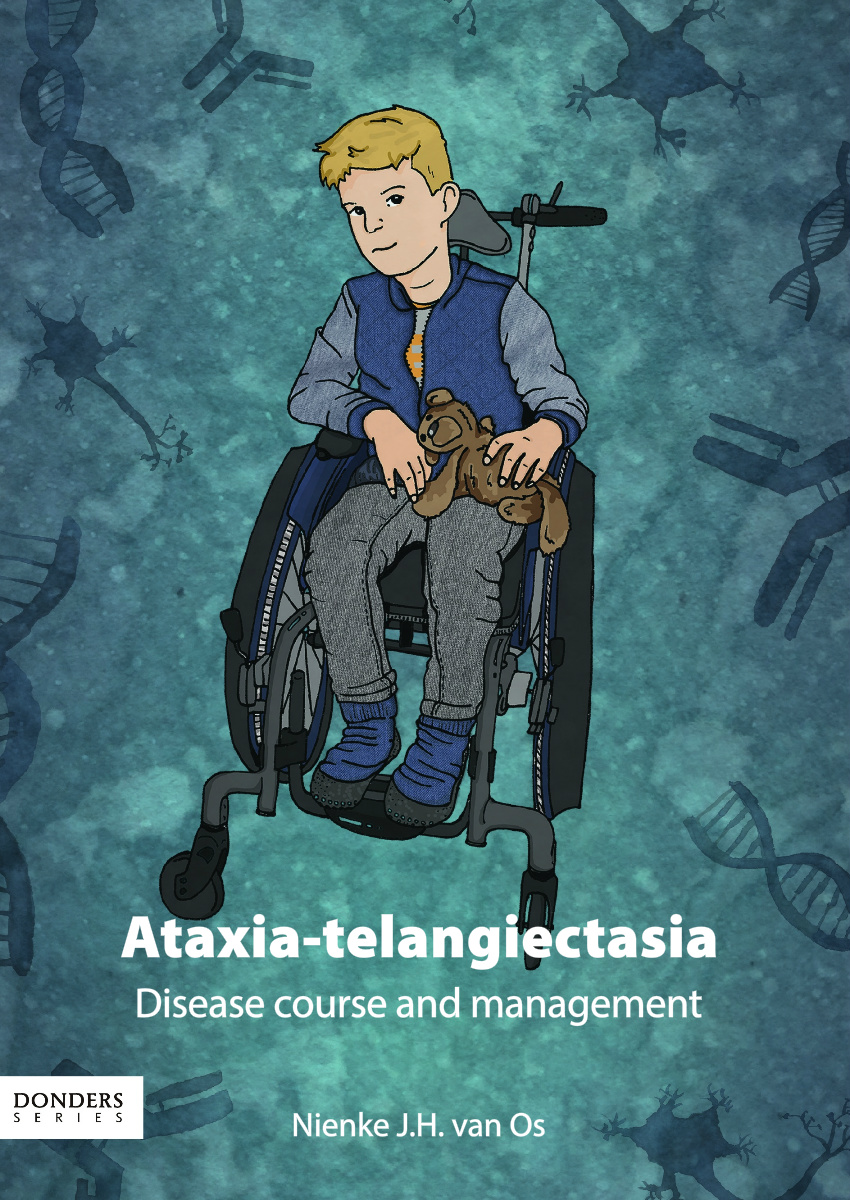
Nienke Van Os
Radboud Universiteit
Publication date: 19 maart 2021
University: Radboud Universiteit
ISBN: 978-94-6284-246-5
Ataxia-telangiectasia
Summary
In the first decade of life in most patients with variant A-T (46 of 57), the median age at first needing a wheelchair was 20 years. The patients exhibited a neurological phenotype with a) predominantly ataxia and/or peripheral neuropathy with (n=28) or without (n=19) extrapyramidal involvement, or b) predominantly extrapyramidal signs (n=10). Patients with a pure extrapyramidal presentation seemed to have a milder course of disease compared to other patients with variant A-T. None of the patients in this study had severe lung disease or serious immunological complications, while absence of oculocutaneous telangiectasia and normal serum AFP level were observed in some patients (21 of 56 and 3 of 45, respectively). All patients had an increased cancer risk. Furthermore, Chapter 3 indicates that ATM missense mutations are associated with a milder neurological presentation, but with a higher risk of malignancies in variant A-T, as compared to patients with variant A-T and other types of mutations.
In Chapter 4, neurological trajectories of 105 patients with mild forms of A-T from the Dutch cohort and the literature were studied. ‘Mild A-T’ was defined strictly on the neurological phenotype, by a non-ataxia presenting or dominant feature, later age at onset, or slower progression compared to classic A-T. Different neurological patterns were categorized based on age at onset, presenting feature, and further course of disease, resulting in the identification of six different trajectories of mild A-T: 1) childhood-onset extrapyramidal features with ataxia developing later (n=18), 2) childhood-onset ataxia with extrapyramidal features developing later (n=35), 3) childhood- to adolescence-onset isolated dystonia without ataxia (n=23), 4) childhood- to adolescence-onset isolated mild cerebellar symptoms (n=22), 5) childhood- to adult-onset prominent muscle weakness, with ataxia developing later (n=2), and 6) adult-onset extrapyramidal features with anterior horn cell disease developing later (n=5). Since unawareness of mild forms of A-T can be a major problem, for example because of the increased radiation sensitivity and cancer risk in these patients, detailed descriptions of the neurological trajectories of patients with mild forms of A-T may contribute to minimizing diagnostic delay.
Part II: Factors that contribute to the clinical heterogeneity of ataxia-telangiectasia
Chapter 5 explores genotype-phenotype correlations in patients with A-T who carry one of two frequently occurring ATM gene mutations: the ATM c.3576G>A splice site mutation or the ATM c.8147T>C missense mutation. Retrospective data of Dutch, French, German, and Italian patients with A-T and one of these two particular mutations were combined and compared to data of 51 patients with classic A-T from the Dutch cohort. The results point out that patients with A-T with one or two ATM c.3576G>A mutations (n = 35) have a milder phenotype of classic A-T, with prolonged survival and lower susceptibility to immunodeficiency, respiratory disease, and cancer. Patients with one ATM c.8147T>C mutation (n = 24) have a variant A-T phenotype and additionally have milder neurological symptoms and fewer telangiectasias. The oldest patient with A-T described thus far, a 78-year old woman, is compound heterozygous for the ATM c.8147T>C mutation. It is suggested that low levels of – sometimes undetectable – ATM kinase activity are accountable for the relatively favourable prognosis in these patients.
Chapter 6 investigates factors influencing the survival of 61 patients with A-T from the Dutch cohort retrospectively, focusing on immunological characteristics. This study showed that patients with classic A-T have a reduced life expectancy compared to patients with variant A-T, and that respiratory failure and malignancies were the major causes of death in patients with A-T. The presence of a malignancy negatively influences survival in patients with classic A-T. Almost all (17 of 19) patients with A-T died within one year after their cancer diagnosis. Having an IgG deficiency or an AT-HIGM phenotype also shortens the life expectancy of patients with A-T. Patients with AT-HIGM seem at extremely high risk of early death, since only one patient with AT-HIGM from the Dutch cohort (n=7) and the literature (n=15) survived beyond adolescence, while four patients were still alive but did not reach adulthood yet. For this reason, patients with AT-HIGM seem most eligible for inclusion in future therapeutic trials.
Part III: Clinical management of patients with ataxia-telangiectasia and heterozygous ATM mutation carriers
Chapter 7 gives an overview of frequently encountered medical problems in the disease course of patients with classic and variant A-T and provides a practical guideline with recommendations for the clinical management of these patients. It is emphasized that longitudinal follow-up and treatment of patients with A-T needs to focus on problems in neurological, immunological, infectious, pulmonary, anaesthetic, oncological, endocrine, and nutritional domains. Given the rarity, complexity, and severity of A-T, patients should preferably be managed in the setting of a dedicated and experienced multidisciplinary team of healthcare professionals. As the scientific evidence for the treatment of A-T is scarce, the recommendations for the management of patients with A-T are partly expert-based.
The recommendations described in Chapter 7 cannot be implemented worldwide. Chapter 8 provides a practical, expert-based guideline for the diagnosis and management of patients with A-T in resource-limited settings. As the consanguinity rate in these settings can be high, the occurrence of A-T is likely underreported here, possibly also due to lack of specialized healthcare professionals that recognize and register the disease. As the availability and affordability of certain diagnostic investigations and therapeutic interventions can be challenging in settings with limited resources, this Chapter makes a distinction between ‘what can be done’ and ‘what needs to be done’ by prioritizing diagnostic and therapeutic options based on medical necessity, availability, and costs. For example, serum AFP assessment is sufficient to make a presumptive diagnosis of A-T in resource-limited settings, and optimization of the nutritional status is extra important to limit disease-related complications.
Chapter 9 focuses on heterozygous carriers of an ATM gene mutation. Previous studies reported an increased breast cancer risk among female blood relatives of A-T patients, but no evidence-based guideline for their management was available. Therefore, the literature was systematically reviewed and seven studies, concerning American, British, French, and Nordic cohorts of A-T families, were included in a meta-analysis. The results indicate that the life expectancy of heterozygous ATM mutation carriers is reduced by 7-8 years due to mortality from cancer and ischemic heart disease, and that carriers are at increased risk to develop cancer, in particular malignancies of the digestive tract, and breast cancer in female ATM mutation carriers. Furthermore, this Chapter discusses the evidence–from both in vivo and in vitro studies–for other possible health risks for ATM mutation carriers, such as radiation sensitivity, and cardiovascular and neurodegenerative diseases, and concludes that future cohort studies in A-T families are needed. Finally, Chapter 9 provides an evidence-based guideline for the clinical management of heterozygous ATM mutation carriers, recommending intensified screening outside national breast cancer screening programs for all female ATM mutation carriers between 40 and 50 years of age, and for female ATM c.7271T>G mutation carriers from 25 years of age onwards.
The general discussion in Chapter 10 includes methodological issues considering the study design, study population, and the methods of data collection. Furthermore, the main findings of the previous chapters are discussed in the light of the objectives and the existing literature. The general discussion ends with implications for clinical practise and recommendations for future research.
See also these dissertations


Toby van Gastelen
Structure-Preserving Data-Driven Methods for Modeling Turbulent Flows
19 mei 2026
TU Eindhoven
Open Ebook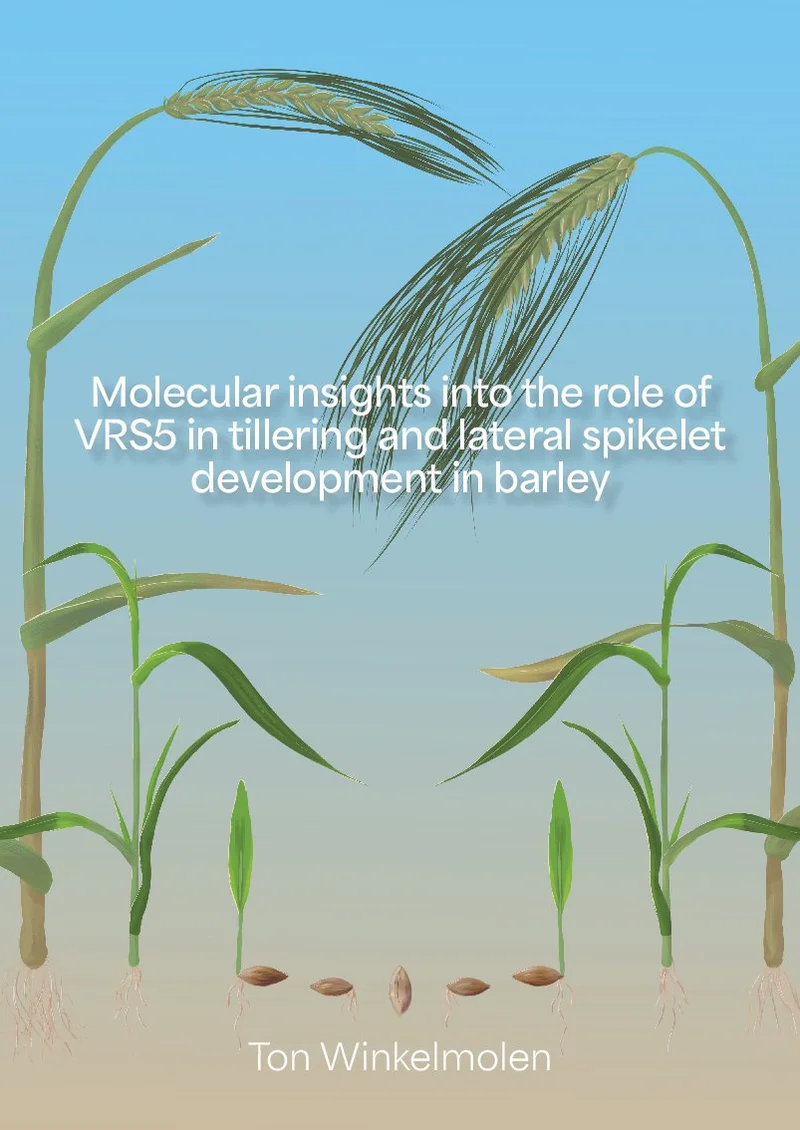
Ton Winkelmolen
Molecular insights into the role of VRS5 in tillering and lateral spikelet development in barley
12 juni 2026
Wageningen University
Open Ebook
Selcuk Peker
Gamma Knife Radiosurgery for Skull Base Tumors
10 juni 2026
Universiteit Maastricht
Open Ebook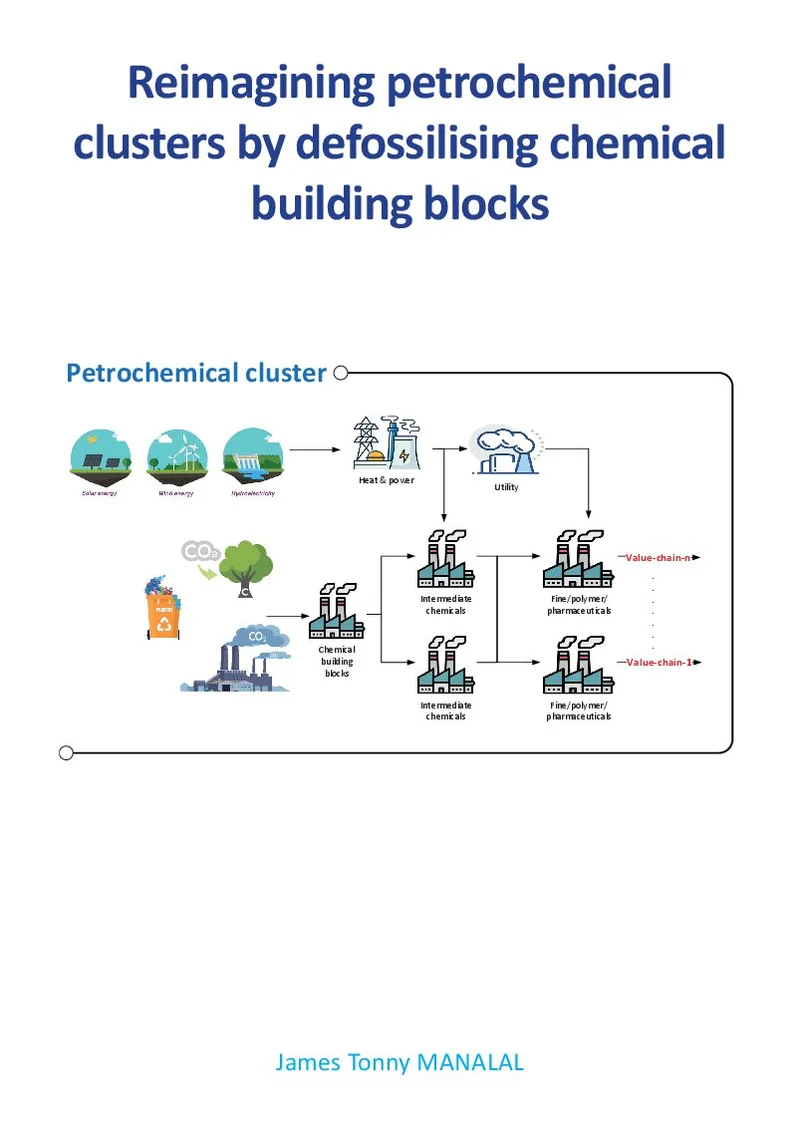
Tonny Manalal
Reimagining petrochemical clusters by defossilising chemical building blocks
18 mei 2026
Overig
Open Ebook


Cora De Gol
Microbial stabilization and protein functionality of plant-based liquids using pulsed electric fields
17 juni 2026
Wageningen University
Open Ebook
We print for the following universities