Share this project
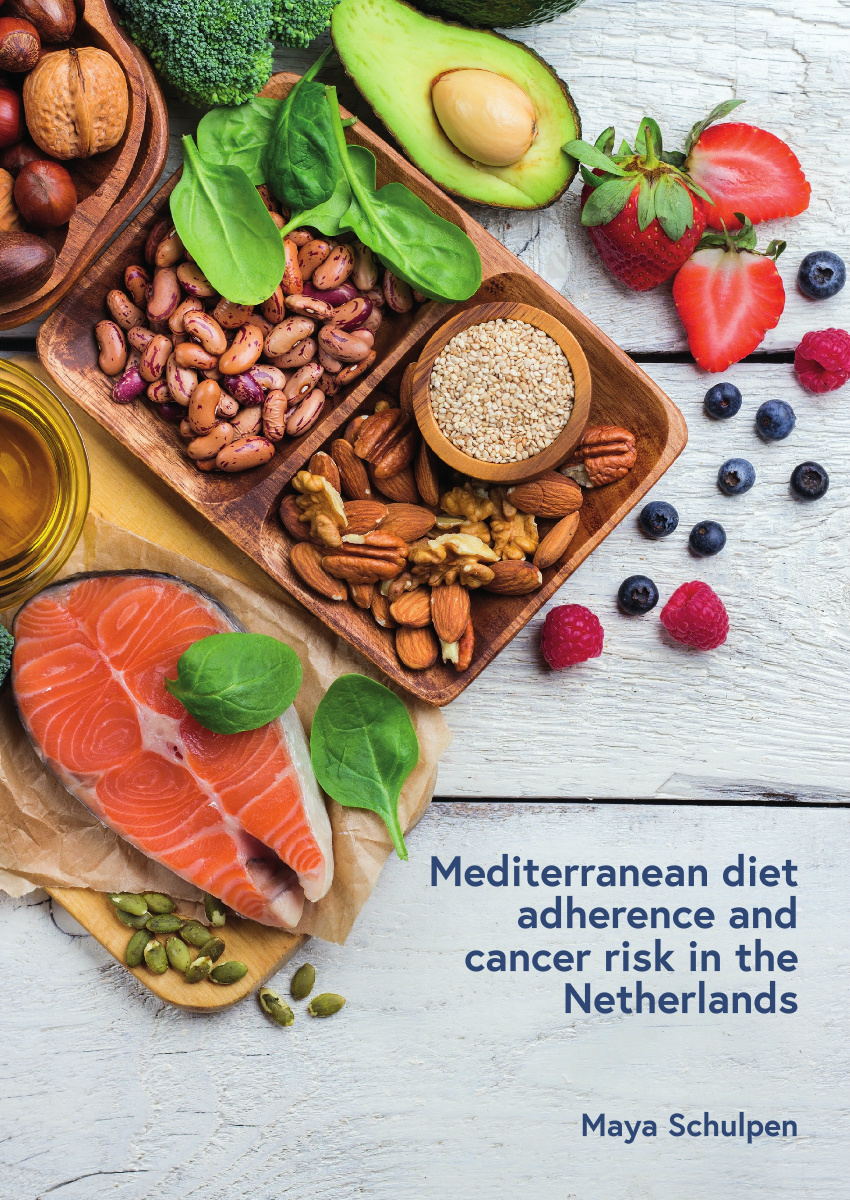
Maya Schulpen
Universiteit Maastricht
Publication date: 9 juli 2020
University: Universiteit Maastricht
ISBN: 978-94-6380-802-6
Mediterranean diet adherence and cancer risk in the Netherlands
Summary
With its high incidence and mortality, cancer negatively affects many lives. According to estimations, about a tenth of the cancers diagnosed in the Netherlands in 2010 would have been preventable by the adoption of a healthy diet. The traditional Mediterranean diet (MD) can be defined as the dietary pattern typical of the olive-cultivating areas bordering the Mediterranean Sea in the late 1950s and the early 1960s, which was primarily based on plant foods (Chapter 1). The MD was characterized by a high consumption of vegetables, fruits, legumes, nuts, whole grains, and olive oil (rich in monounsaturated fatty acids). In contrast, the intake of meat and dairy products was low. Alcohol was consumed in moderate amounts and usually during meals. Adherence to the MD has been associated with numerous health benefits, including reduced all-cause mortality, and cardiovascular disease incidence and mortality. Despite the increasing interest in the potential cancer-protective effect of MD adherence in recent years, the evidence is still limited for most cancer sites. Additionally, results of conducted studies were not always consistent and had often been obtained using case-control designs, which are prone to bias. Moreover, potential heterogeneity of associations with MD adherence across the sexes or subtypes of specific cancer sites has been suggested, but has rarely been evaluated in prospective studies. Therefore, the principal aim of this thesis was to prospectively evaluate the association of MD adherence with incidence of specific cancer sites (i.e., lung, breast, esophagus, stomach, pancreas, colorectum, prostate, and bladder) as well as overall cancer incidence in the Netherlands. Specific attention was paid to possible differences in associations between men and women, and across subtypes of the investigated cancer sites. The relative level of MD adherence was assessed using two a priori defined MD scores, namely the alternate Mediterranean diet score (aMED) and the modified Mediterranean diet score (mMED). Alcohol consumption may increase the risk of multiple types of cancer even at low or moderate intake levels. Therefore, reduced variants of aMED and mMED were created that did not include the alcohol component (aMEDr and mMEDr, respectively) and models containing MD score variants with and without alcohol were compared in terms of performance. In order to investigate our aims, we primarily used data collected from the 120852 participants of the population-based Netherlands Cohort Study on Diet and Cancer (NLCS), who were between the ages of 55 and 69 years at baseline in September 1986. To increase statistical power, the association between MD adherence and pancreatic cancer risk was evaluated by pooling results from the NLCS and the Dutch cohort of the European Prospective Investigation into Cancer and Nutrition (EPIC-NL). The EPIC-NL cohort includes 40011 men and women, who were aged 20 to 70 years at enrolment between 1993 and 1997. NLCS participants were followed up for cancer incidence for a maximum of 20.3 years, whereas the median follow-up in EPIC-NL was 19.2 years.
For the majority of the cancer sites, aMEDr-containing models had an equal or better performance than mMEDr-containing models. Therefore, aMEDr was considered our principal measure of MD adherence. Furthermore, the score variant without alcohol component was preferred, because of the carcinogenic effect of alcohol in humans. Higher MD adherence (aMEDr) was associated with a non-significantly reduced lung cancer risk in men and women (Chapter 2). Subgroup analyses suggested that the non-significant inverse association was most pronounced in women and those who never smoked, but the interaction tests did not reach statistical significance. When comparing associations with aMEDr across the histological lung cancer subtypes, some variations in strength were observed, especially in men.
Increasing levels of MD adherence were also associated with a non-significantly reduced incidence of postmenopausal breast cancer in female NLCS participants (Chapter 3). Stratification by estrogen receptor (ER) status showed that the inverse association was strongest and only statistically significant for the ER negative subtype. Similar findings were obtained when we evaluated progesterone receptor (PR) and combined ER/PR subtypes. Finally, we combined our results of the NLCS and results of previously published cohort studies in random-effects meta-analyses. Results of these meta-analyses were in line with the NLCS observations, showing inverse associations between MD adherence and postmenopausal breast cancer risk, particularly of the ER negative subtype.
For esophageal and gastric cancer (Chapter 4), associations with MD adherence were evaluated separately for subtypes defined by histology and anatomic location, respectively, which were suggested to have distinct etiological backgrounds. A significantly decreased risk of esophageal squamous cell carcinoma (ESCC) was observed among men with higher levels of MD adherence. In contrast, MD adherence was not associated with ESCC risk in women or risk of esophageal adenocarcinoma (EAC) in both men and women. Although statistical significance was only reached in men, MD adherence was inversely associated with risks of gastric cardia adenocarcinoma (GCA) and gastric non-cardia adenocarcinoma (GNCA) in both sexes.
Using data of both the NLCS and EPIC-NL cohorts, the relation of MD adherence with pancreatic cancer incidence was investigated in Chapter 5. MD adherence was not significantly associated with the risk of microscopically confirmed pancreatic cancer (MCPC) in pooled and cohort-specific analyses, irrespective of sex. Potential effect modification by smoking status was indicated. MD adherence was weakly and non-significantly inversely associated with MCPC risk in never smokers, but not in ever smokers. The overall conclusion did not change when we also included cases who were not microscopically confirmed in the analyses.
Furthermore, MD adherence was not significantly associated with colorectal cancer risk in men and women, regardless of the anatomical subsite (i.e., colon, proximal colon, distal colon, and rectum) evaluated (Chapter 6).
Associations of MD adherence with risks of prostate and bladder cancer were examined in Chapter 7. For prostate cancer, associations were estimated separately for advanced and nonadvanced tumors at diagnosis, because differences in etiology and risk factor profiles have been suggested. The subgroup of nonadvanced prostate cancers at diagnosis mainly encompasses less aggressive tumors, which progress slowly and might never become clinically relevant. Therefore, we considered advanced prostate cancer risk to be the most interesting outcome. MD adherence was not associated with advanced prostate cancer risk in our analyses. For nonadvanced prostate cancer risk, a statistically significant positive association was observed. The prostate cancer awareness, likelihood to seek care, and screening attendance may be higher among well-educated men with healthier lifestyles and higher MD adherence. Consequently, nonadvanced prostate tumors may more commonly be diagnosed in this part of the population. Additionally, we evaluated the association between MD adherence and bladder cancer risk combining male and female NLCS participants, and showed that there was no evidence of a relation, irrespective of the malignancy grade at diagnosis.
The association of MD adherence with overall cancer incidence was the focus of Chapter 8. Higher MD adherence was associated with a non-significantly reduced cancer risk in women, but not in men. In women, similar associations with MD adherence were observed for subgroups of cancers related vs. not related to tobacco smoking, obesity, and alcohol consumption. Even though differences across the subgroups seemed small and irrelevant in men as well, heterogeneity tests in men were significant for all subgroup comparisons made, possibly because of the high statistical power.
As was described above, our primary measure of MD adherence was aMEDr, which does not include the alcohol component. Largely similar results were obtained when MD adherence was assessed using the original aMED including the alcohol component. However, in most cases an equal or better model performance was observed for the MD score variant without alcohol.
In Chapter 9, the findings of this thesis were put into perspective by relating them to results of previously published studies and discussing methodological considerations. Moreover, implications for public health and recommendations for future research were addressed. This thesis shows that higher MD adherence might be associated with a reduced risk of several cancer (sub)types in the Netherlands. Therefore, the MD could potentially be an interesting dietary approach in the prevention of cancer in the Dutch population. However, when looking at the totality of the evidence, no final conclusions regarding the cancer-preventive properties of the MD can be drawn at this time. Inverse associations in our analyses did not always reach statistical significance and the number of prospective cohort studies is still small for some cancer (sub)sites. In agreement with our findings, it has been suggested that associations with MD adherence might differ between the sexes and/or depend on the cancer subsite evaluated, but unfortunately, it is not common practice yet to report sex- and subtype-specific results. Accordingly, in future, well-designed cohort studies and randomized controlled trials are warranted, which might provide the additional evidence required to justify the promotion of the MD with the specific aim to prevent cancer. Until this is the case, policymakers in the Netherlands could consider using the MD as a framework to develop a healthy plant-based dietary strategy for the prevention of chronic diseases in general.
See also these dissertations


Toby van Gastelen
Structure-Preserving Data-Driven Methods for Modeling Turbulent Flows
19 mei 2026
TU Eindhoven
Open Ebook
Ton Winkelmolen
Molecular insights into the role of VRS5 in tillering and lateral spikelet development in barley
12 juni 2026
Wageningen University
Open Ebook
Selcuk Peker
Gamma Knife Radiosurgery for Skull Base Tumors
10 juni 2026
Universiteit Maastricht
Open Ebook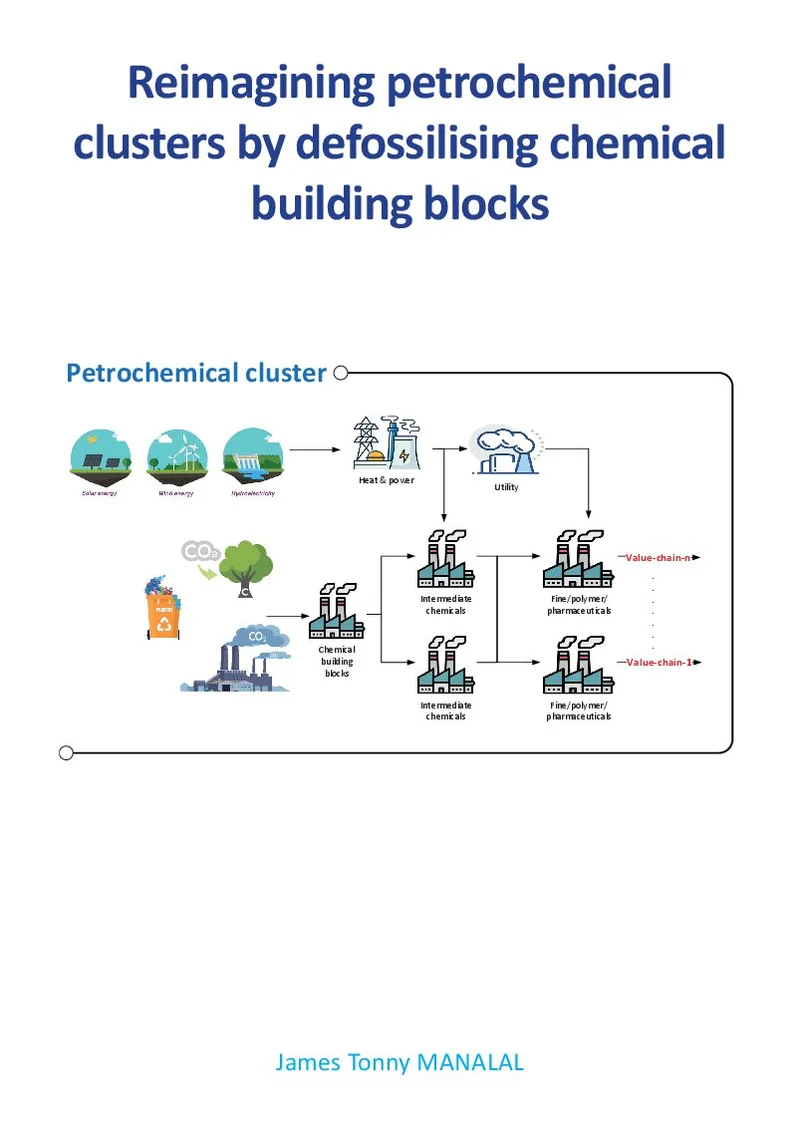
Tonny Manalal
Reimagining petrochemical clusters by defossilising chemical building blocks
18 mei 2026
Overig
Open Ebook


Cora De Gol
Microbial stabilization and protein functionality of plant-based liquids using pulsed electric fields
17 juni 2026
Wageningen University
Open Ebook
We print for the following universities