Share this project
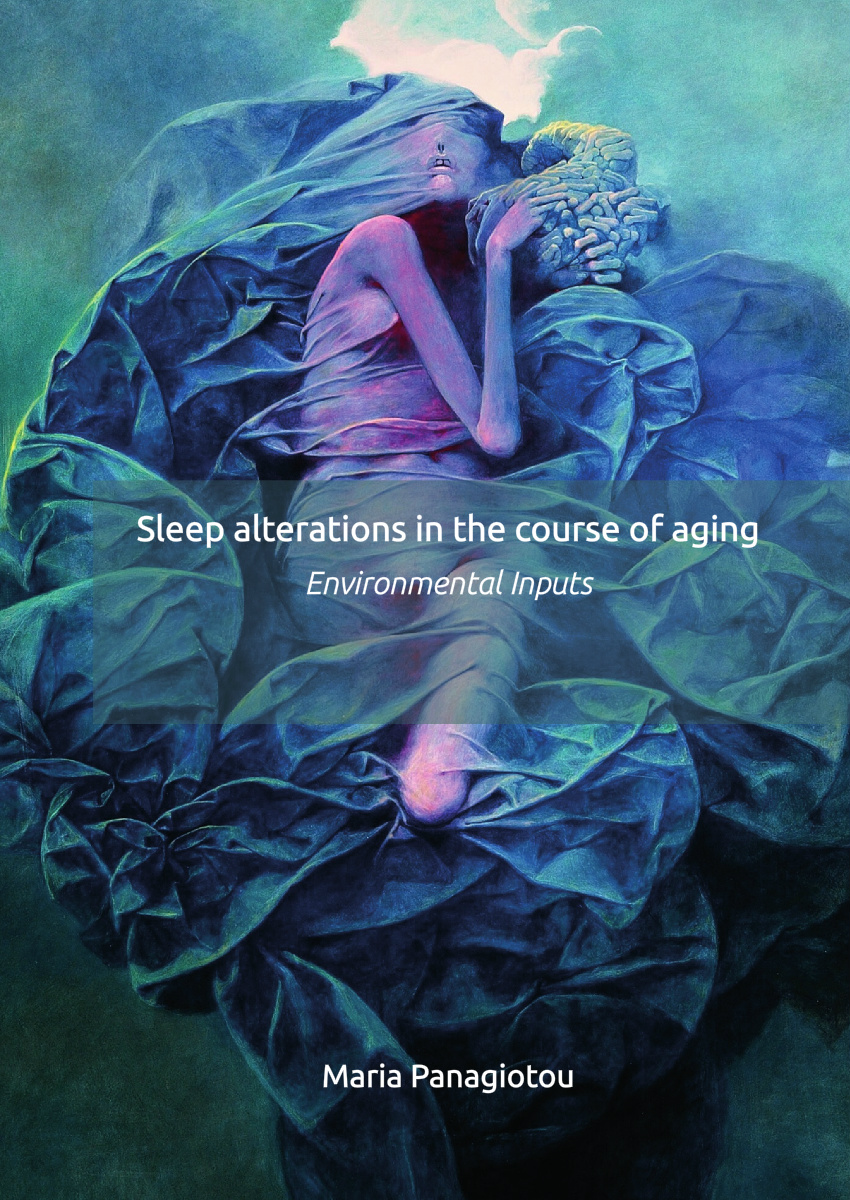
Maria Panagiotou
Overig
Publication date: 7 april 2026
University: Overig
Summary
By approaching the age of ninety, we will have spent approximately thirty years of our time sleeping; considering that, sleep must play a physiologically vital role in life irrespective of age. Although markedly puzzling and of enigmatic nature, both sleep and aging have been the subject of study for centuries, since almost all animals on the planet experience them. Several theories revolve around their existence and evolution converging on one point: along with several physiological processes that deteriorate in the course of aging, sleep is largely affected. In particular, stemming possibly from interrupted brain pathways and brain atrophy, sleep quality is considered to be progressively decreased in humans, due to attenuated capacity to initiate and/or maintain sleep. Sleep in the elderly includes decreased total sleep time and sleep efficiency, increased sleep fragmentation accompanied by problems falling asleep, and attenuated deeper sleep. Deeper sleep is reflected in the slow-wave activity (SWA) in the non-rapid eye movement (NREM) sleep electroencephalogram (EEG power in NREM sleep in 0.5-4 Hz), which in the elderly is found to be lower. In addition to sleep, the circadian clock, located in the suprachiasmatic nucleus of the hypothalamus, which normally controls rhythms in behavior and physiology with a period length of almost 24h, is also influenced by aging, where a reduction in the amplitude of its signal has been noted. A plethora of environmental factors, to which we are daily exposed, influence the sleep and circadian behavior from adulthood to aging. Since aging is an unavoidable process, an utmost goal of every individual is to achieve healthy aging with an augmented general body and brain health. The current thesis aims to investigate the way sleep and subsequently general health can be enhanced in the course of aging, exploring the detrimental and beneficial aspects of specific environmental factors, namely diet, physical activity, light levels and caffeine intake.
In order to establish the basis of how aging shapes the sleep architecture and sleep EEG in mice, we conducted an extensive study depicted in Chapter 5. Older mice were found to sleep more during the dark period compared to young ones, and antithetically to what it is shown in humans, SWA levels in NREM sleep were elevated. This study was particularly focused on the attributes of EEG slow waves, that were characterized by increased amplitude, steeper slopes and fewer multipeak waves. Our study suggests first, that aged mice are living under high sleep pressure conditions and, second, that altered brain network properties possibly prevail in aging.
Albeit the notable findings in Chapter 5, the mechanisms underlying these age-associated sleep changes remain elusive. Due to the complexity of the aging process, the development of a concrete and solid animal model is essential; however, in the sleep research field, in general, aging has not been profoundly studied since it comprises a strenuous and time consuming area. A need, therefore, has been developed for successful shorter timespan studies. Owing to that, in Chapter 9, we aimed to investigate sleep and the sleep EEG in a premature aging mouse model with a complete deficiency of the xeroderma pigmentosum group G protein (XPG). Animals with complete XPG deficiency usually have a very short life span (with a maximum life expectancy of 18 weeks) and display segmental progeria. Sleep architectural characteristics were found to be analogous to normally aged mice. Nevertheless, the sleep quality and brain integrity was likely compromised in this mutant model beyond normal aging, revealing an exacerbated aging condition usually not seen in naturally aged mice. The data point towards a different
See also these dissertations


Max Keizer
Surgical and Radiotherapeutic Nuances in Skull Base Tumors
23 juni 2026
Universiteit Maastricht
Open Ebook
Elfi Verheul
Optimizing Quality of Cancer Care Using Outcome Information
23 juni 2026
Erasmus Universiteit Rotterdam
Open Ebook
Francoise Dekker
FibrilPaints to Detect, Study and Modulate Amyloid Fibrils
14 juli 2026
Universiteit Utrecht
Open Ebook


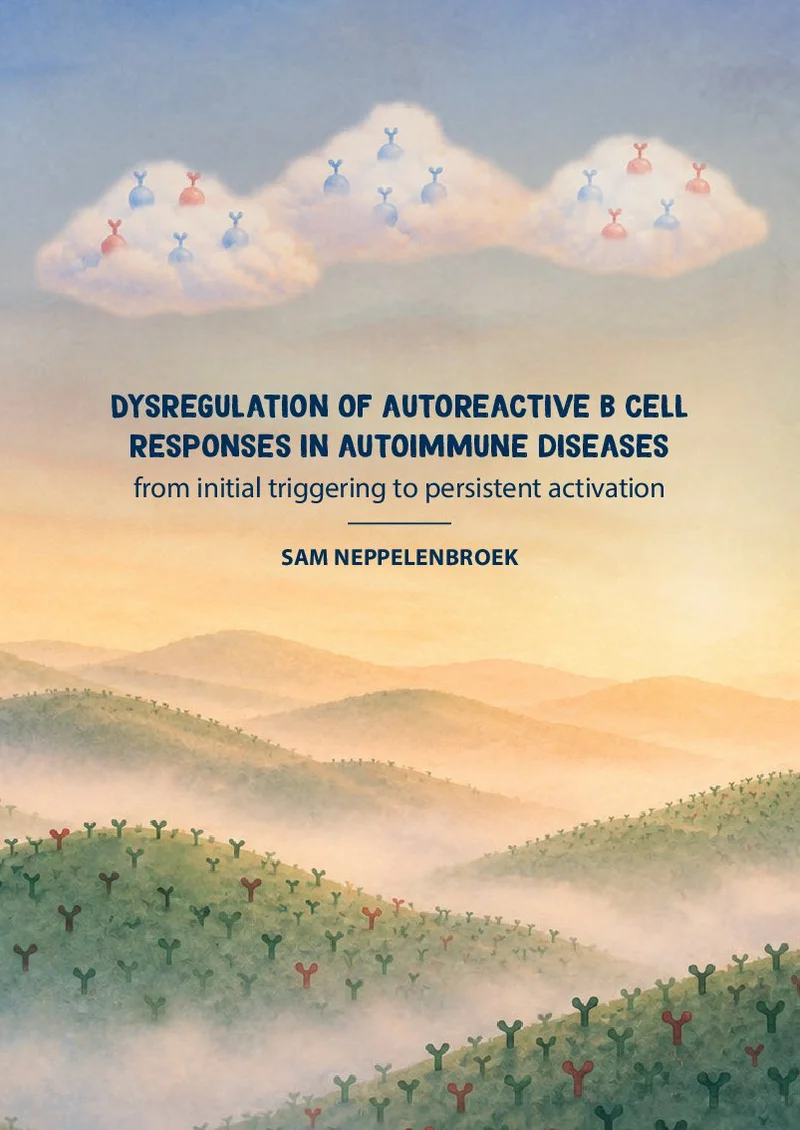
Sam Neppelenbroek
Dysregulation of autoreactive B cell responses in autoimmune diseases
9 juli 2026
Universiteit Leiden
Open Ebook
We print for the following universities