Share this project
Kazi Kabir
Wageningen University
Publication date: 18 juni 2019
University: Wageningen University
ISBN: 978-94-6343-940-4
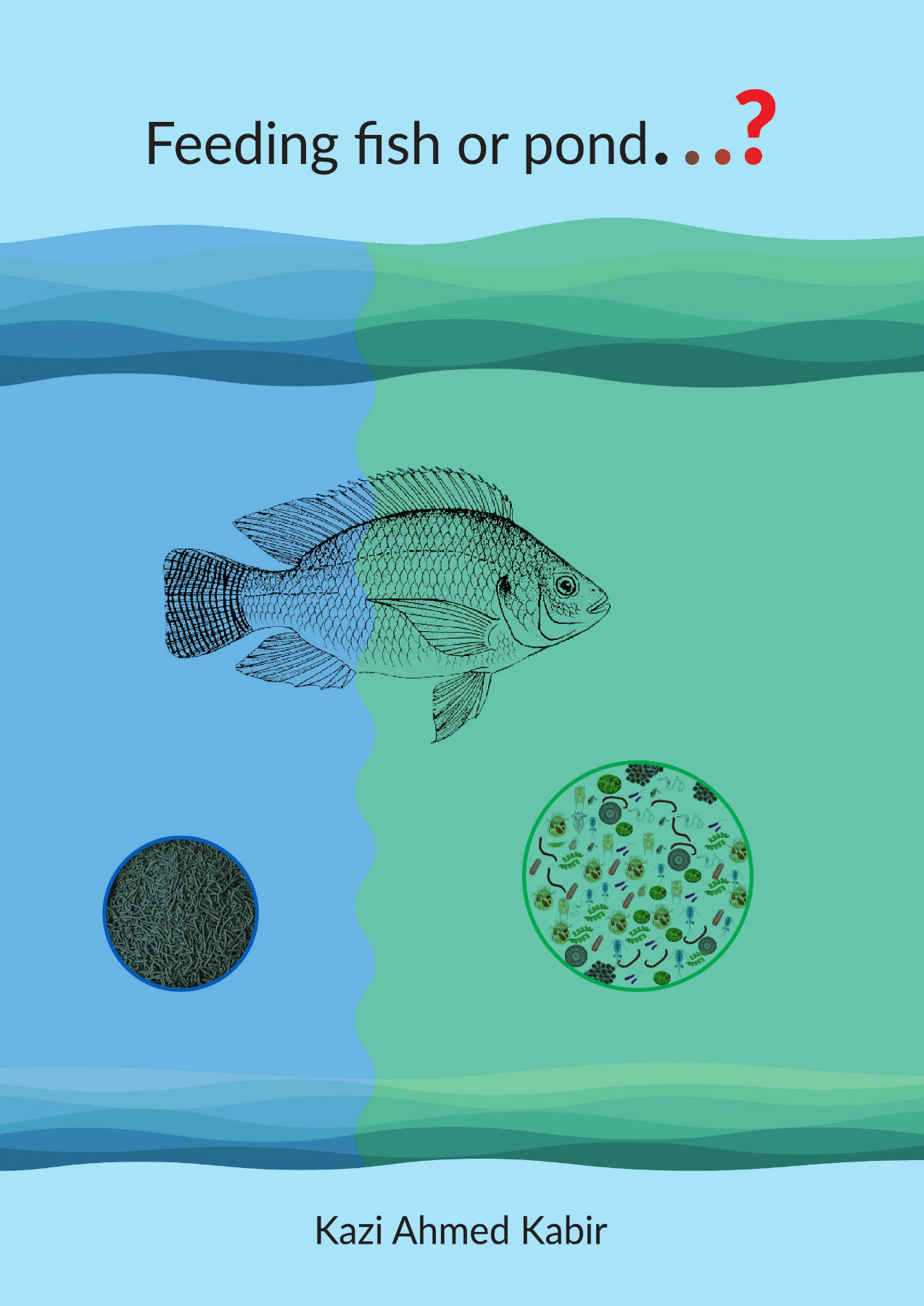
Feeding fish or pond . . . ?
Summary
Aquaculture is one of the fastest growing food producing sectors. In 2016, aquaculture production reached 80 million metric tonne and contributed 53% to the global fish consumption. The majority of cultured fish comes from ponds. In pond culture systems, the natural food web provides part of the fish’s nutritional requirements. Studies in which nutrient requirements of fish are estimated are mainly done in the absence of such a natural food web. Even more, (optimal) diet formulation for fish predominantly ignores the potential intake of natural food from ponds and thus also miss the possible indirect (fertilizing) effects of feed on the food web. Therefore, we hypothesise that current feeds and fish production approaches are suboptimal because of ignoring the possible role of natural food in the growth of pond fish. Matching natural food and supplementary feeding can create synergetic effects for growing more fish with less nutrient inputs. However, the knowledge how to optimize diet composition, taking into account that the natural food of the pond can be enhanced by the amount and type of waste produced by the fish, is very limited. The aims of this research were to develop a better understanding on how dietary macronutrients determine the growth of fish when cultured in ponds, as a direct nutrient source for fish, and indirectly, via fertilization of the pond’s food web. A second objective was to determine how the impacts of macronutrients on fish performance interact with feeding level and culture intensity.
In chapter 2 we assessed if lowering the dietary protein to energy (P:E) ratio (and thus increasing the C:N ratio of the feed input in the pond) below the optimal P:E ratio affects fish productivity, food web dynamics and nitrogen balances in semi-intensively managed tilapia ponds. Twelve ponds, each divided into three equal compartments, were assigned to test the effect of two diets, which differed in P:E ratio (19 vs 14 g.MJ-1). Three feeding levels (no feed, “low” and “high”) were nested in each pond in a split-plot design. The duration of the experiment was 60 days. Decreasing the P:E ratio enhanced tilapia production and specific growth rate (P<0.05; 1195 vs. 986 g.compartment-1 and 1.76 vs 1.55 %.d-1). Body composition of tilapia was unaffected by diet and feeding level. Averaged over both diets, survival and feed conversion ratio increased with increasing feeding level (P<0.001). Diet composition did not alter water quality, nor abundance and diversity related parameters of the food web. With the low P:E diet, 87% of the combined feed and fertilizer N input was retained in the fish compared to 59% from the high P:E diet. As a result, total N accumulation in the pond was lower with the low P:E ratio diet (i.e., low protein diet). The data on N gain and N balance at the pond level suggest that the food web productivity was stimulated by reducing the dietary P:E ratio below the reported optimal levels in the literature. Our results suggest that the optimal dietary P:E ratio is dependent on the culture intensity (extensive, semi-extensive or intensive pond culture). In chapter 3 we tested if the type on non-protein energy in the diet (lipid vs carbohydrate) affected fish productivity, and natural food enhancement in semi-intensively managed tilapia ponds. The carbohydrate to lipid (CHO:LIP) ratio of the two test diets were 4.7 vs 19.5 g.g-1. The experimental approach was the same as in chapter 2 and the duration was 42 days. Increasing CHO:LIP ratio had no impact on tilapia production (i.e., biomass gain = 2154 vs 2077 g.compartment-1); specific growth rate (1.36 vs 1.30 %.d-1); FCR (1.65 vs 1.80); and survival (89%). However, feeding level influenced both biomass gain, SGR and survival. Apparent digestibility coefficient (ADC) for fat and carbohydrate was influenced by the dietary CHO:LIP ratio but ADC for (overall) energy was unaffected. Despite of replacing non-protein energy source from lipid to carbohydrate, fat content in the body didn’t exceed 5.5% at any feeding level. Dietary CHO:LIP ratio had no impact on N, P, K, and OM of pond soil and water and measured natural food except for phytoplankton diversity. There was no effect of dietary CHO:LIP ratio on the faeces composition. The data on N gain from natural food also indicated no difference. The results show that changing the type of dietary non-protein energy source from lipid to carbohydrate did not have any impact on tilapia production in semi-intensive ponds. In chapter 4 we determined the effect of the type of dietary non-starch polysaccharides (NSP)s on fish production and the contribution of natural food to total fish production in semi-intensively managed tilapia ponds following the same experimental approach of chapter 2. Two experimental diets were “PecHem-Diet” (pectin and hemicellulose), a diet with easily fermentable NSP, and “LigCel-Diet” (lignin cellulose), a diet with slowly fermentable NSP. The experiment lasted 56 days. With the “LigCel-Diet” fish biomass gain was higher (2192 vs 2599 g.compartment-1) and feed conversion ratio (FCR) was lower (1.9 vs 1.4) than with the “PecHem-Diet”. The type of dietary NSP had no effect on fish survival and specific growth rate (SGR). Averaged over both diets, increasing the feeding level increased biomass gain, fish survival, FCR and SGR. There was a significant interaction effect between diet and feeding level on FCR. Fish body composition at harvest was the same between diets. With the “LigCel-Diet”, the apparent digestibility coefficient (ADC) was higher for crude protein, fat, phosphorus and calcium and lower for ash compared to the other diet. Neither feeding level nor the interaction between diet and feeding level influenced the apparent digestibility coefficient (ADC) of any nutrient. Diet composition did not alter the organic matter (OM) composition of the faeces. Δ15N and Δ13C data from the stable isotope analysis revealed that N gain in fish originated from both feed and natural food of the pond. The abundance of natural food in the pond increased over time for both diets. Chlorophyll-a was higher in the pond fed with “LigCel-Diet”. Fish gut content and calculated N gain indicated an enhanced contribution of natural food to fish growth in ponds fed with “LigCel-Diet”. In conclusion, the type of dietary NSP determines tilapia productivity in semi-intensive managed ponds by altering food web productivity. In chapter 5 in an on-farm trial, we tested the effect of lowering dietary P:E ratio on fish performance, pond nutrient utilization and economic benefit under two stocking densities and feeding levels. Forty ponds were assigned to test the effect of two diets, which differed in P:E ratio (18 vs 14 g.MJ-1), two feeding levels (14 vs 18 g.kg-0.8.d-1) and two stocking densities (2 vs 3 fish.m-2). Initial fish biomass was 45(±21) vs 67(±38) g.m-2 at 2 vs 3 fish.m-2, respectively. The experiment lasted 82 days. Decreasing the P:E ratio enhanced tilapia production (P<0.05; 459 vs 399 g.m-2). Increasing the stocking density from 2 to 3 tilapia.m-2 increased biomass gain 43% (P<0.001; 354 vs 505 g.m-2). Averaged over both diets and stocking densities, growth and feed conversion ratio (FCR) increased with increasing feeding level (P<0.001). Neither the interaction of diet and feeding level nor the interaction of feeding level and stocking density influenced any of the indicators of fish performance. Fish survival was unaffected by diet, stocking density and feeding level. Dissolved oxygen increased with increased stocking density with the low P:E diet while the opposite happened with high P:E diet (P<0.05). N retention efficiency was higher with the low P:E ratio diet (P<0.001; 71 vs 52%) and decreased with increasing feeding level (P<0.001). The data on N gain and N balance at the pond level suggest that the food web productivity was stimulated by reducing the dietary P:E ratio. The low P:E diet increased the gross margin by 95% (P<0.001; 2076 vs 1067 USD.ha-1) and benefit cost ratio by 22% (P<0.05; 1.57 vs 1.29). The P:E ratio of the low P:E diet is lower than the presently advised level. Lowering the P:E ratio from 18 to 14 g.MJ-1 in pond feeds for tilapia will increase the economic viability of tilapia pond culture. In chapter 6 the main outcomes of the studies of this thesis were summarized and discussed in the context of feeding the pond and its role in sustaining aquaculture growth, and working towards a circular food production system for pond aquaculture. Overall the following conclusions can be drawn from this thesis: - In ponds with a functional natural food web, the optimal macronutrient composition of supplementary feeds for tilapia differs from the optimal composition as recommended by NRC (1993, 2011) for tilapia. This may be related to the fact that the NRC recommendations were developed without the presence of natural food, and that the effect of the latter may be related to a possible enhancement of its production due to the extra nutrient input in the ecosystem via the waste of the fish (fertilizing effect). a. Lowering the dietary protein to energy ratio increased fish production at the pond level, mainly via the indirect impact of diet by enhancing the natural food in the pond. b. The type of non-protein energy (lipid versus carbohydrate) neither directly affected fish performance nor indirectly via influencing the natural food web of the pond. c. The contribution of natural food to fish growth was affected by the types of dietary non-starch polysaccharides (NSP). - Feeding level increased fish production in semi-intensive pond culture of tilapia for all the tested diets but also increased FCR. - Fish production increased with increasing stocking density (within the tested level). - Culture intensity (feeding level and stocking density) did not interact with the influence of the dietary macro-nutrient composition (i.e., P:E ratio) on pond productivity. In other words, enhancement of the natural food web through diets is possible even with increasing culture intensity. - Better approach of quantification of natural food to fish production might be useful for matching the effect of natural food with diet composition. - Feeding the pond system (including the fish) will increase economic profitability and environmental sustainability of pond aquaculture.
See also these dissertations
Toby van Gastelen
Structure-Preserving Data-Driven Methods for Modeling Turbulent Flows
19 mei 2026
TU Eindhoven
Open Ebook
Ton Winkelmolen
Molecular insights into the role of VRS5 in tillering and lateral spikelet development in barley
12 juni 2026
Wageningen University
Open Ebook
Selcuk Peker
Gamma Knife Radiosurgery for Skull Base Tumors
10 juni 2026
Universiteit Maastricht
Open Ebook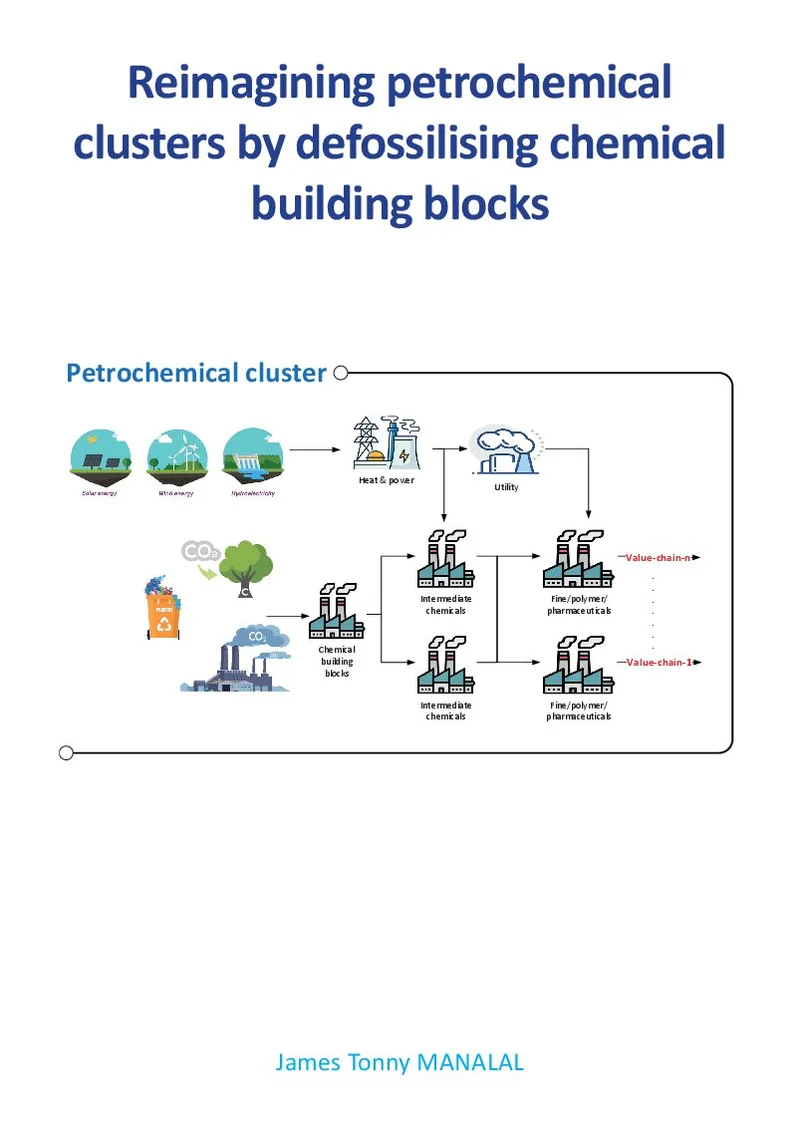
Tonny Manalal
Reimagining petrochemical clusters by defossilising chemical building blocks
18 mei 2026
Overig
Open Ebook
Cora De Gol
Microbial stabilization and protein functionality of plant-based liquids using pulsed electric fields
17 juni 2026
Wageningen University
Open Ebook
We print for the following universities