Share this project
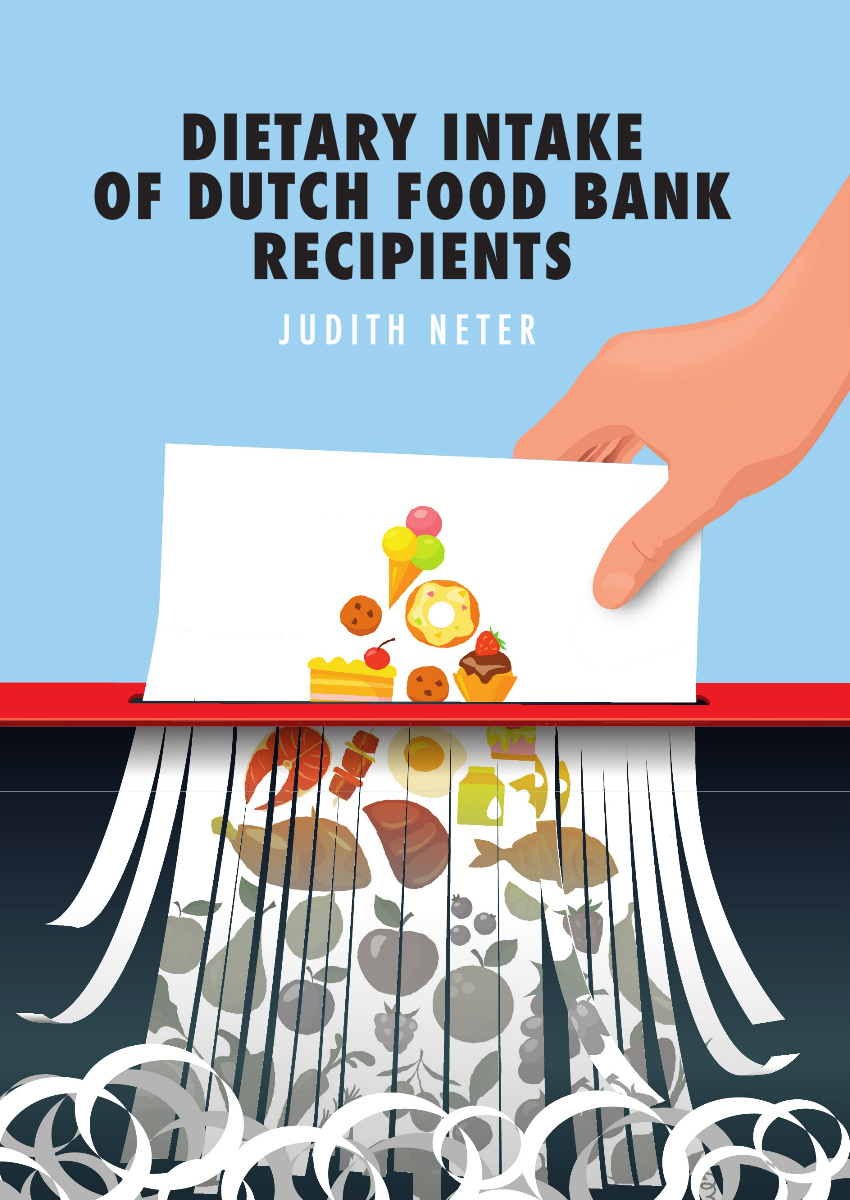
Judith Neter
Vrije Universiteit Amsterdam
Publication date: 27 november 2019
University: Vrije Universiteit Amsterdam
ISBN: 978-94-6380-548-3
DIETARY INTAKE OF DUTCH FOOD BANK RECIPIENTS
Summary
INTRODUCTION
Socioeconomic status (SES) is an important determinant of health inequalities. In the Netherlands, people with a lower education level have a six year shorter life expectancy than people with a higher education level. When looking at healthy life expectancy, the gap is even greater i.e. 19 years. Research has shown that these health inequalities can partly be explained by a higher exposure to a range of unfavourable lifestyle behaviours of people with a lower SES. One lifestyle behaviour that may influence the health inequalities is dietary intake. In general, people with a low SES have unhealthier dietary intakes than people with a higher SES. Unhealthier diets are associated with higher risks of nutrition-related chronic diseases.
Even in high-income Western countries, like the Netherlands, there are people who cannot make ends meet. Despite the right of everyone to have access to safe and nutritious food, this is not self-evident. Even in affluent countries, an increasing number of people with low SES experience food insecurity. Food insecure people experience a lack of availability of nutritionally adequate foods. Low food security has been associated with a less-healthy diet which may lead to micronutrient deficiencies and malnutrition. Both low food security and unhealthy dietary intake are major and growing public health issues.
There are many public and private food assistance programs, like food banks, to alleviate low food security and hunger in high-income countries. In the Netherlands, food banks aims to support the poorest people and to counteract food waste by providing food parcels that supplement the normal diet for 2-3 days per week. Food bank recipients are a specific group of low-SES people as they have limited-to-no resources to purchase food and largely rely on food parcels.
OVERALL AIM
The overall aim of this thesis was to assess dietary intake and food security status of Dutch food bank recipients and to identify potential strategies to optimize their dietary intake.
RESULTS
Prevalence of (very) low food security, and factors associated with (very) low food security
In Chapter 2, the prevalence of (very) low food security, and potential demographic, lifestyle and nutrition-related factors associated with (very) low food security, were assessed among 251 Dutch food bank recipients, mean age 46.3 years, from 11 food banks throughout the Netherlands. The prevalence of low food security among Dutch food bank recipients, assessed with the 6-item U.S. Department of Agriculture Household Food Security Survey Scale, was 72.9%. Of these 72.9%, over 40% reported very low food security. Of the very low food secure participants, 56.8% reported they were ever hungry but did not eat because they could not afford enough food in the previous three months. Furthermore, the presence of (very) low food security was associated with the following demographic, lifestyle and nutrition-related factors: female sex, low level of education, households with children, low satisfaction with the food parcel, low satisfaction with overall food intake, low perceived healthiness of overall food intake and low self-efficacy toward eating healthy.
Content and use of food parcels provided by Dutch food banks
Chapter 3 describes to what extent the content of food parcels supplied by the Dutch food bank meet the Dutch nutritional guidelines for a healthy diet and how food bank recipients use the contents of their food parcels. The study was based on 96 food parcels and 251 Dutch food bank recipients, mean age 46.3 years, from 11 food banks throughout the Netherlands. The results, standardized for a single-person food parcel for one day, show that the content of food parcels did not meet the Dutch nutritional guidelines for a healthy diet. The provided amounts of energy, protein and saturated fat for a single-person food parcel for a single day were higher than the nutritional guidelines for a healthy diet, whereas the provided amounts of fruit and fish were lower. There was a wide range in the number of days for which macronutrients, fruit, vegetables and fish were provided for a single-person food parcel (1-11 days). Of the participants, only 9.5% bought fruit and 4.6% bought fish to supplement the food parcel. The majority (60.6%) of the participants usually did not use all foods provided in the food parcel, and 75.7% was (very) satisfied with the content of the food parcel. These results suggest that, in the present concept of the food banks, food parcels could be improved. More research is needed how to effectively improve the dietary quality of the food parcels, and how this ultimately affects the nutritional intake of food bank users.
Dietary intake of Dutch food bank recipients
The extent to which dietary intake of Dutch food bank recipients meet the Dutch nutritional guidelines for a healthy diet, and whether their dietary intake is comparable with the dietary intake of a representative sample of the general Dutch population, and those with low SES, was examined in Chapter 4. Dietary intake was measured using three 24-hour recalls in 167 Dutch food bank recipients, mean age 48.6 years, from 12 food banks throughout the Netherlands. Comparison data were used from the Dutch National Food Consumption Survey (n=1,933), including a low SES sample (n=312), 2007-2010. The results show that dietary intake of Dutch food bank recipients does not meet the Dutch nutritional guidelines for a healthy diet. The majority of the Dutch food bank recipients, similar to the general and low SES sample of the Dutch population, had lower intakes than dietary reference intakes for dietary fiber, fruit, vegetables, and fish, and a higher intake for saturated fat. In addition, food bank recipients’ intakes of energy, fiber, fruit, and vegetables were lower than both the general and low-SES Dutch population, whereas their fish intake was lower than the general, but not than the low-SES Dutch population. Food bank recipients’ intakes of carbohydrates and polysaccharides were higher than both the general and low-SES Dutch population. These results emphasize the importance of improving dietary intake of Dutch food bank recipients. Strategies need to be developed to optimize the dietary intake of Dutch food bank recipients, e.g. distributing information on healthy food intake, adding recipes to the food parcel, or improving the content of the food parcels.
Dutch food bank recipients’ perceptions on food parcels and their dietary intake
Chapter 5 describes Dutch food bank recipients’ perceptions on the content of the food parcels, their dietary intake and how the parcels contribute to their overall dietary intake. Data from 11 semi-structured focus group discussions with 44 Dutch food bank recipients, age range 20 to 64 years, from seven food banks throughout the Netherlands were used. Food bank recipients were not always satisfied with the amount, quality, variation, and type of foods in the food parcel. For the participants who could afford to, supplementing the food parcel was reported as main reason for buying foods, and price was the most important aspect in selecting these foods. The most frequently mentioned foods bought to supplement the food parcel were: vegetables, fruit, bread, meat and meat products, coffee, (soft)drinks, cheese, and butter/oil. Regarding participants’ dietary intake, numerous participants were not satisfied mainly due to nutritional inadequacy, specifically insufficient amounts, but also due to lack of variation, lack of quality, lack of choice and the types of food. Participants reported that the content of the food parcel importantly influenced their dietary intake. Moreover, participants reported struggling with their feelings of dissatisfaction regarding the food parcels, because they were also grateful for receiving the foods.
Improvement of dietary quality of food parcels and the impact on dietary intake
In Chapter 6, the effect of improving the dietary quality of food parcels, using different intervention strategies, on the actual dietary intake of Dutch food bank recipients was examined. This eight-week randomized cross-over controlled trial with four intervention condition included 163 Dutch food bank recipients, mean age 45.1 years, from three food banks throughout the Netherlands. The results show that improving the dietary quality of food parcels positively impacted the actual dietary intake of Dutch food bank recipients. Overall, adding fruit and vegetables to the standard food bank specific food parcels (either in combination with replacing unhealthy snacks from the standard food parcel by staple foods or not) positively impacted the mean fruit and/or mean vegetable intakes of the food bank receipts compared with the other intervention conditions. The intervention condition in which unhealthy snacks from the standard food parcel were replaced by staple foods did, however, not improve dietary quality of the participants; mean intake of the food group nuts, seeds and snacks did not differ from the other intervention conditions and mean intake of the food group sugar, candy, sweet filling and sweet sauces was even higher compared with the intervention strategy in which unhealthy snacks were replaced by staple foods plus adding fruit and vegetables to the standard food parcels. The results from this study revealed that adding fruit and vegetables to the standard food bank specific food parcels, either in combination with replacing unhealthy snacks by staple foods or not, was an effective intervention strategy to improve dietary intake (i.e. fruit and vegetables), whereas replacing unhealthy snacks from the food parcel by staple foods was not. This even seems to worsen the quality of food bank recipient’s diet. The results provide first insights in possible effective intervention strategies to improve dietary quality of the food parcels, but more research is necessary to develop effective strategies that can be easily applied by food banks and positively impact dietary intake in food bank recipients.
MAIN CONCLUSION
Results from this thesis indicate that (very) low food security is highly prevalent in Dutch food bank recipients. Food bank recipients largely rely on the food parcels, of which the amount and nutritional quality do not meet their nutritional needs. Dietary intake of food bank recipients is poorer than the general Dutch population and even poorer than the low-SES Dutch population, and is importantly influenced by the content of the food parcel. Food bank recipients are not satisfied with their dietary intake, mainly due to nutritional inadequacy, specifically insufficient amounts, but also due to lack of variation, lack of quality, lack of choice and the types of food. Notably, this thesis unequivocally shows that the dietary intake of food bank recipients can be positively impacted by improving the dietary quality of the food parcels.
In view of the constantly high and rising number of people using food banks worldwide, it is important to develop effective strategies aiming to alleviate low food security and to improve dietary intake of food bank recipients in a structural way. In the development of these strategies it is important to take the nutritional needs, socio-psychological aspects of being a food bank recipient, and health status of food bank recipients into account. This is necessary to ensure that interventions and policies are tailored to the needs of the target population, are feasible, effective and environmentally sustainable, and thus ultimately do improve users’ health.
See also these dissertations

Toby van Gastelen
Structure-Preserving Data-Driven Methods for Modeling Turbulent Flows
19 mei 2026
TU Eindhoven
Open Ebook
Ton Winkelmolen
Molecular insights into the role of VRS5 in tillering and lateral spikelet development in barley
12 juni 2026
Wageningen University
Open Ebook
Selcuk Peker
Gamma Knife Radiosurgery for Skull Base Tumors
10 juni 2026
Universiteit Maastricht
Open Ebook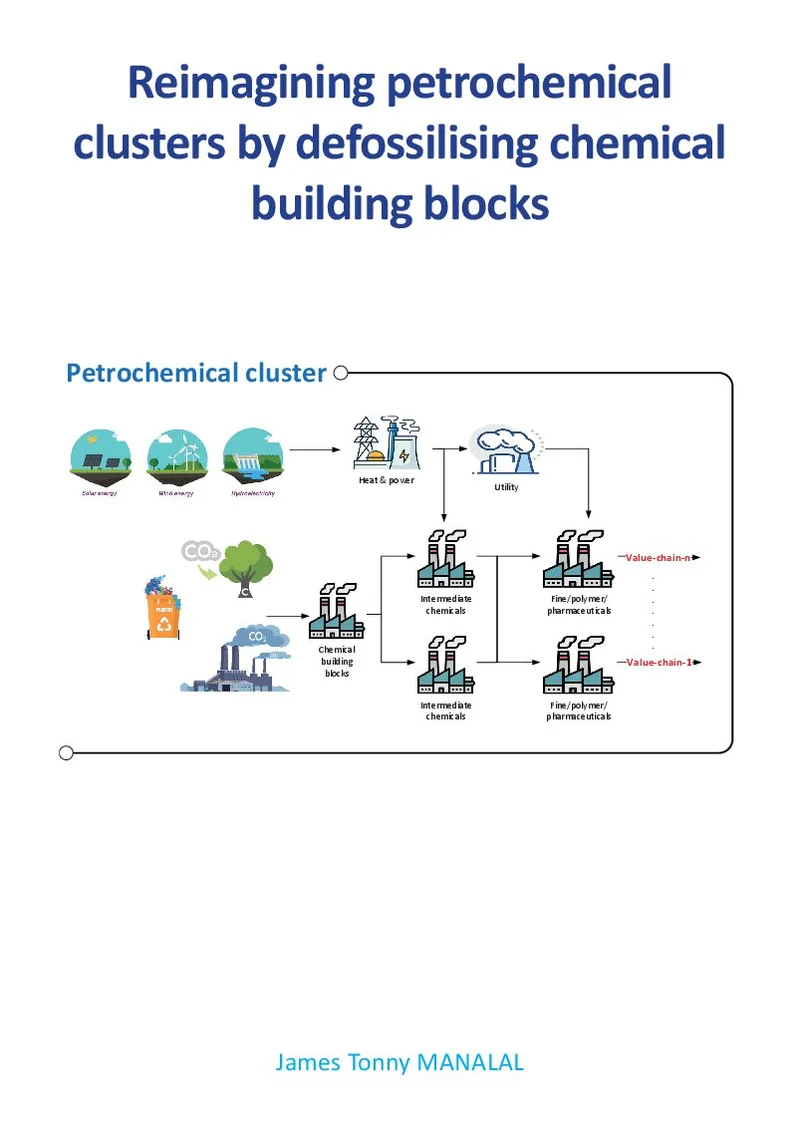
Tonny Manalal
Reimagining petrochemical clusters by defossilising chemical building blocks
18 mei 2026
Overig
Open Ebook

Cora De Gol
Microbial stabilization and protein functionality of plant-based liquids using pulsed electric fields
17 juni 2026
Wageningen University
Open Ebook
We print for the following universities