Share this project
Renate
Vrije Universiteit Amsterdam
Publication date: 9 mei 2023
University: Vrije Universiteit Amsterdam
ISBN: 978-94-6469-286-0
ACUTE AND CRITICAL CARE DIAGNOSTICS IN COVID-19
Summary
Part 1 | Conventional tests in COVID-19 patients presenting to the emergency department
Part 1 of this thesis focused on how conventional diagnostic tests could aid in the diagnosis and prognosis of (suspected) COVID-19, as well as its complications in patients presenting to the emergency department (ED). At the start of the pandemic clinicians turned to computed tomography (CT) to aid rapid diagnosis, as well as risk stratification of suspected COVID-19 patients. The results of the multicenter study in Chapter 2 showed that the CO-RADS is an excellent tool in differentiating between positive and negative COVID-19 patients at the ED. Furthermore, Chapter 2 showed that the degree of pulmonary involvement at ED presentation – quantified by the CT severity score (CTSS) – had a significant positive association with hospital admission, intensive care unit (ICU) admission and 30-day mortality.
Bacterial (co)infection is a dreaded complication of viral respiratory infections. In Chapter 3 we showed that procalcitonin (PCT) may aid in excluding a bacterial (co)infection in patients with respiratory symptoms presenting to ED. These results strengthen previous findings that have shown PCT as a promising tool to reduce the inappropriate prescription of antibiotics in multiple settings. We also found that the PCT cutoff for a bacterial co(infection) can probably be raised to 0.5 in patients with a proven viral infection.
In Chapter 4 we aimed to fill this knowledge gap by developing and externally validating a prognostication model that could predict poor outcome (ICU admission or 30-day mortality) in patients with suspected COVID-19 presenting to the ED: the COVERED risk score. The final COVERED risk score contained 10 such parameters and showed good discrimination and calibration exemplifying that it could be employed in multiple settings and might be a welcome improvement over existing prediction models.
Part 2 | Point-of-care ultrasound in COVID-19 patients in the acute care setting
In Part 2 we explored the use of point-of-care ultrasound (POCUS) for diagnosis and prognosis of (suspected) COVID-19 patients in the ED and the medical ward. LUS’ diagnostic properties are better than CXR and physical examination combined, and almost equivalent to chest CT in diagnosing various acute respiratory pathologies including pneumonia and ARDS. Importantly, it has the advantage over CT of being portable, quick, radiation free, easy to disinfect and low cost.
In Chapter 6-8 we reported the results of multiple prospective observational studies comparing LUS and CT in the diagnosis and prognosis of COVID-19 patients. The results of Chapter 6 indeed showed that 12-zone LUS had a comparable excellent negative likelihood ratio (NLR) and only slightly lower positive likelihood ratio (PLR) than CT in diagnosing COVID-19 pneumonia. LUS proved to be safe in ruling out pulmonary involvement. The results of Chapter 7 showed the 6-point protocol is an excellent screening tool due to its high NLR. It also revealed that it is important to scan the infero-posterior zones, which is unsurprising as COVID-19 associated abnormalities tend to originate there. The findings presented in Chapter 8 show that the semi-quantitative lung ultrasound score (LUSS) at initial ED presentation is associated with poor outcome (ICU admission or 30-day all-cause mortality), admission duration and disease severity.
In Chapter 9 we reported the results of a multicenter cross-sectional study in which we screened COVID-19 patients admitted to the medical ward for asymptomatic proximal DVT with extended compression ultrasound (ECUS). We found a low prevalence (4%) of asymptomatic DVT, while there was a high prevalence of pulmonary embolism (PE) (28.8%). The low prevalence of DVT, compared to the relatively high rates of PE, add to the theory that local clot formation is the underlying pathophysiological process.
Part 3 | Point-of-care ultrasound in COVID-19 patients in the critical care setting
In Part 3 we predominantly concentrated on the use of POCUS in monitoring the COVID-19 disease course, the association of LUS findings with prognosis, and the diagnosis of COVID-19 complications in the ICU. The results outlined in Chapter 10 showed excellent agreement between 6-zone and 12-zone scores in either position, indicating that a 6-zone protocol was sufficient. In Chapter 11, we debated the optimal LUS protocol and demonstrated that a 6-zone protocol was sufficient compared to more extensive variants.
In Chapter 12, we found that the LUSS within 24 hours of intubation was associated with successful liberation from mechanical ventilation, even independently from ARDS severity. In Chapter 13, we assessed the longitudinal correlation of pulmonary involvement graded by weekly CT and LUS. Serial LUSS is capable of detecting true changes in pulmonary involvement, whereas CTSS cannot. Of the two scores, only a rise in LUSS after 2 weeks was significantly associated with mortality and detectable beyond measurement error.
In Chapter 14 we reported the findings of a single-center, prospective diagnostic study, comparing the diagnostic accuracy of those different POCUS modalities – separately and in combination (multi-organ POCUS) – with CT pulmonary angiography (CTPA). We found that a combination of deep vein and cardiac POCUS can be of aid in ruling out PE in critically ill COVID-19 patients. Lastly, in Chapter 15 we presented the results of a study to determine the evolution of respiratory muscle thickness assessed by POCUS. Surprisingly no decrease in diaphragm thickness was observed during the first week of mechanical ventilation, possibly because inflammatory oedema formation might have masked the loss of muscle mass.
See also these dissertations


Toby van Gastelen
Structure-Preserving Data-Driven Methods for Modeling Turbulent Flows
19 mei 2026
TU Eindhoven
Open Ebook
Ton Winkelmolen
Molecular insights into the role of VRS5 in tillering and lateral spikelet development in barley
12 juni 2026
Wageningen University
Open Ebook
Selcuk Peker
Gamma Knife Radiosurgery for Skull Base Tumors
10 juni 2026
Universiteit Maastricht
Open Ebook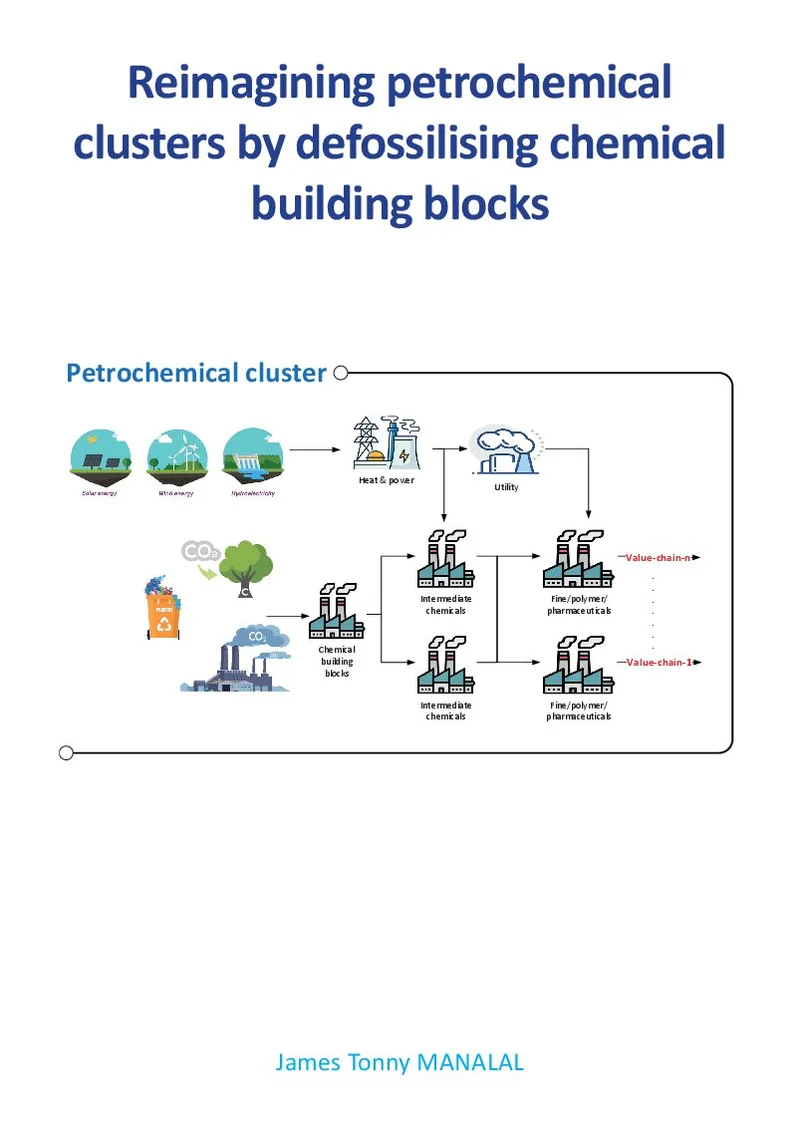
Tonny Manalal
Reimagining petrochemical clusters by defossilising chemical building blocks
18 mei 2026
Overig
Open Ebook

Cora De Gol
Microbial stabilization and protein functionality of plant-based liquids using pulsed electric fields
17 juni 2026
Wageningen University
Open Ebook
We print for the following universities