Share this project
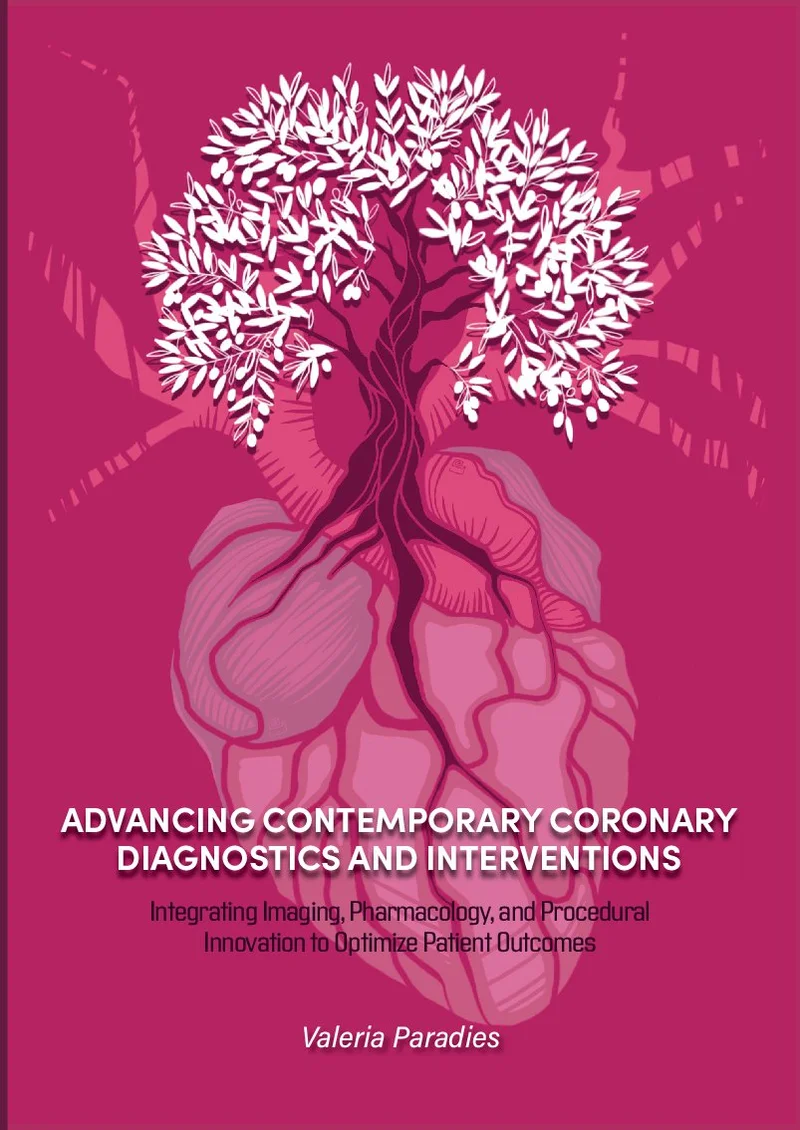
Valeria Paradies
Erasmus Universiteit Rotterdam
Publication date: 7 juli 2026
University: Erasmus Universiteit Rotterdam
Advancing Contemporary Coronary Diagnostics and Interventions
Summary
Part I: Procedural and Pharmacological Optimization in ACS Patients
This section addresses key advancements in the management of acute coronary syndrome (ACS), with a particular focus on patients with multivessel disease (MVD). The introduction of newer-generation drug-eluting stents (DES), characterized by thinner struts, bioresorbable polymers, and enhanced endothelial healing properties, has substantially reduced thrombotic complications. These technological innovations have also raised the possibility of safely shortening dual antiplatelet therapy (DAPT) duration in selected patient populations.
While shorter DAPT strategies have been extensively studied in patients with chronic coronary syndrome (CCS), translating this approach to ACS patients has proven more challenging due to the heightened risk of recurrent ischemic events. Nonetheless, recent randomized trials have explored abbreviated DAPT regimens—often involving early aspirin discontinuation followed by P2Y12 inhibitor monotherapy—and have shown encouraging results. These studies have included high bleeding risk patients, unselected ACS cohorts, and Asian populations. However, to date, no randomized trial has specifically investigated early aspirin withdrawal in patients presenting with acute myocardial infarction (MI) who undergo complete revascularization using guideline-recommended strategies and contemporary DES.
The large-scale, multicenter TARGET FIRST trial (n=2246) provided important insights by demonstrating that early transition to P2Y12 inhibitor monotherapy was non-inferior to continued DAPT in preventing net adverse clinical and cerebral events (NACCE)—a composite of all-cause mortality, MI, stent thrombosis, stroke, or BARC type 3 or 5 bleeding. Notably, monotherapy resulted in a 54% relative reduction in bleeding events (BARC type 2, 3, or 5), underscoring its potential safety benefit.
Building on these findings, the COMPARE STEMI ONE trial is designed to take a further step by focusing specifically on ST-elevation myocardial infarction (STEMI) patients. This randomized trial will investigate the combination of a shortened DAPT regimen with Prasugrel monotherapy, alongside OCT-guided revascularization of non-culprit lesions, in patients with multivessel disease. This dual approach aims to assess whether procedural optimization using intracoronary imaging, together with tailored antithrombotic therapy, can enhance both ischemic and bleeding outcomes in this high-risk cohort.
While the role of intracoronary imaging—particularly IVUS and OCT—in optimizing PCI has been well established, its utility in identifying vulnerable plaques which deserves preventive PCI remains an evolving area. Imaging may offer additional insights into plaque morphology and features associated with thrombogenic potential. However, the clinical relevance of identifying morphologically high-risk plaques has been questioned, given that these lesions may persist for years without precipitating events. Further research is needed to determine whether certain NCLs would benefit from preventive interventions based on imaging-defined vulnerability.
An important and often under-recognized dimension of ACS management is the role of sex-based differences in clinical presentation, response to therapy, and outcomes. Significant gaps remain in our understanding of how biological sex influences thrombotic and bleeding risks, as well as pharmacologic response to antithrombotic therapies. There is a pressing need for the development and implementation of sex-specific clinical recommendations. The current EAPCI clinical consensus statement on this topic emphasizes the importance of tailoring antithrombotic therapy in women and highlights the need to address systemic barriers to female enrollment in cardiovascular clinical trials.
Overall, the studies presented in this section aim to support a more individualized approach to ACS management, integrating procedural precision, imaging guidance, and patient-specific characteristics—such as bleeding risk, sex, and plaque morphology—to optimize both safety and efficacy of therapy.
Part II: Technological Advancements and Imaging in Complex PCI
Recent advancements in stent technology, particularly the development of newer-generation drug-eluting stents (DES) with thinner struts and bioresorbable polymers, have led to significant improvements in PCI outcomes. These innovations are associated with reduced flow disturbance, less vascular inflammation, and accelerated endothelial healing—all of which contribute to lower thrombotic risk. As a result, thinner and ultrathin strut DES are particularly attractive in high bleeding risk (HBR) patients, where minimizing the duration of dual antiplatelet therapy (DAPT) is crucial.
The COMPARE 60/80 HBR trial provides pivotal evidence in this regard. In this randomized study, the ultrathin-strut biodegradable-polymer sirolimus-eluting Supraflex Cruz stent was found to be noninferior to the thin-strut biodegradable-polymer sirolimus-eluting Ultimaster Tansei stent for net adverse clinical events (NACE) at 12 months in an HBR population undergoing short DAPT post-PCI. This finding supports the clinical safety and efficacy of the Supraflex Cruz stent in this vulnerable group and underscores a broader implication: in the evolving landscape of personalized antithrombotic strategies, the choice of stent matters. Devices proven safe and effective in settings of abbreviated DAPT should be preferentially considered for HBR patients.
In parallel, intravascular imaging has emerged as a cornerstone of modern PCI, particularly in complex anatomical settings. The latest ESC guidelines for chronic coronary syndromes grant a Class I recommendation for imaging-guided PCI of complex lesions. Among the most challenging lesion subsets are calcified coronary lesions, which can hinder device deliverability and adequate stent expansion—two key predictors of adverse outcomes. Calcification contributes to increased rates of restenosis and thrombosis, particularly when stent underexpansion occurs. Strut thickness plays a crucial role in device performance in this context, influencing deliverability, radial strength, and healing response. However, comparative data on different strut thicknesses in calcified lesions remain limited—especially when assessed using intravascular imaging modalities like IVUS or OCT to quantify calcium burden and stent expansion. Further research is needed to define optimal stent selection and procedural techniques for calcified lesions, particularly in the era of precision PCI.
Another complex anatomical subset is bifurcation lesions, which carry an inherently higher risk of adverse events, especially when involving the left main coronary artery (LMCA). Disease in this territory affects a substantial myocardial territory and increases the risk of major adverse cardiovascular events. The traditional strategy of provisional stenting has been widely adopted for most bifurcations; however, recent evidence has challenged the "one-size-fits-all" approach, particularly in the setting of true LMCA bifurcation lesions. These lesions are often more complex and may warrant an early escalation to a two-stent technique. Intravascular imaging plays a central role in the procedural planning and execution of LMCA PCI. Beyond angiography, imaging allows accurate assessment of plaque composition, lesion morphology, and vessel size. It helps guide both the decision-making between single- versus dual-stent strategy and the optimization of stent expansion, apposition, and final geometry. Importantly, imaging can detect complications and confirm the adequacy of PCI results, especially at bifurcation sites, contributing to improved procedural and long-term outcomes.
Finally, in-stent restenosis (ISR) remains one of the leading causes of long-term stent failure. While early cases of ISR were largely mechanical in origin (e.g., stent underexpansion or fracture), there has been a shift toward biological mechanisms, particularly neoatherosclerosis, in the current DES era. This presents a unique therapeutic challenge, especially in cases of DES-ISR, where the antiproliferative drug has already failed once. In this context, drug-coated balloons (DCBs) may be a valid non-stent-based alternative, allowing antiproliferative drug without adding a new layer of metal. Their use is expanding globally. However, it is important to recognize that not all DCBs are equal, and a class effect cannot be assumed. While paclitaxel-coated balloons currently dominate the clinical landscape and have demonstrated favorable angiographic outcomes, newer limus-based DCBs are still evolving, aiming to match or surpass paclitaxel in terms of pharmacokinetics and clinical efficacy. Ongoing and future large-scale randomized trials will be critical in determining whether the observed angiographic benefits of paclitaxel-based DCBs translate into clinically meaningful differences in outcomes, and whether limus-based DCBs can offer comparable or superior results—especially in complex subsets like DES-ISR.
Part III: Evolving Concepts in Coronary Physiology: Diagnostic and Therapeutic Implications for Obstructive and Non-Obstructive Disease
The final section of this thesis explores a clinically significant and increasingly recognized subset of patients: those with angina or ischemia but no obstructive coronary artery disease (ANOCA). This group, which may comprise up to 25% of patients undergoing coronary angiography, often remains symptomatic despite the absence of epicardial obstruction, with persistently impaired quality of life and elevated cardiovascular risk. A key step in managing these patients lies in distinguishing between coronary microvascular dysfunction (CMD) and vasomotor disorders such as coronary spasm—each requiring distinct diagnostic approaches and tailored therapies. Invasive coronary function testing (CFT) remains the gold standard, yet its widespread implementation is limited by technical complexity and low availability. The advent of continuous thermodilution offers a promising alternative, enabling more reproducible, operator-independent assessment of coronary physiology without the need for hyperaemic agents.
In our study, we evaluated continuous thermodilution-derived parameters—Qmax and Rμ,hyper—in ANOCA patients undergoing CFT. We aimed to enhance the characterization of ANOCA endotypes and to examine the correlation between continuous and bolus thermodilution-derived metrics across these subgroups. Ongoing research is expected to clarify the diagnostic accuracy, reproducibility, and potential clinical integration of these newer physiological indices compared to traditional methods.
The persistent underdiagnosis and undertreatment of CMD underscore the need for standardized diagnostic pathways and evidence-based therapies. The expert reviews and consensus documents presented in this thesis highlight CMD as a heterogeneous and often overlooked condition, commonly associated with both cardiac and extracardiac syndromes. These documents advocate for a syndrome-specific approach, emphasizing individualized diagnosis and treatment, while calling for targeted pharmacological and interventional strategies validated through future randomized trials.
CMD challenges the traditional epicardiocentric paradigm of ischemic heart disease. While diagnostic tools to detect CMD are now available and increasingly refined, therapeutic options remain limited. Bridging this gap will require both expanded clinical awareness and dedicated clinical trials to identify effective, personalized treatment pathways.
In parallel, the application of coronary physiology to PCI planning—as recommended by the latest EAPCI clinical consensus—marks a key shift toward precision medicine in interventional cardiology. While indices like fractional flow reserve (FFR) and non-hyperaemic pressure ratios have become standard in guiding the indication for PCI, their role has expanded over the past five years to include pre-procedural planning, post-PCI assessment, and identification of residual ischemia. Emerging techniques such as pressure-wire pullback-derived vessel analysis offer valuable insights into the distribution of ischemia, help predict PCI success, and aid in identifying residual flow-limiting stenoses. Additionally, novel functional coronary angiography tools, which integrate angiographic imaging with computational fluid dynamics, now allow for physiology-based assessment without the need for pressure wires—potentially broadening the applicability of physiology-guided PCI.
In summary, this section emphasizes the need for expanding the role of coronary physiology beyond lesion assessment, into procedural planning, disease pattern recognition, and post-intervention optimization. The ultimate goal remains to integrate these tools into routine practice to improve outcomes for both obstructive and non-obstructive forms of ischemic heart disease.
Conclusions
In this thesis, we highlighted how advances in technology, intracoronary imaging, and applied coronary physiology are transforming the management of both obstructive and non-obstructive coronary syndromes. Tailored strategies—guided by patient-specific factors such as bleeding risk, anatomical complexity, and coronary function—are essential to optimizing outcomes. Moving forward, the continued integration of innovative technologies with physiological, imaging, and mechanistic insights will be key to delivering more personalized and effective coronary interventions.
See also these dissertations

Tom Anbergen
Translational evaluation of engineered RNA-based cancer immunotherapeutics
27 augustus 2026
Radboud Universiteit
Open Ebook
Sahra Unluturk
Lifelong Impact of Congenital Heart Disease
14 juli 2026
Erasmus Universiteit Rotterdam
Open Ebook

Willy Theel
Prevalence, Risk Factors, and Clinical Implications of MASLD
22 september 2026
Erasmus Universiteit Rotterdam
Open Ebook
Jeroen Deckers
Targeting lymphoid organs with nanomedicines is a forward-thinking immunotherapy paradigm
3 september 2026
Radboud Universiteit
Open Ebook
Zjala Ebadi
Persistent Fatigue in Chronic Respiratory Conditions
14 september 2026
Radboud Universiteit
Open EbookWe print for the following universities