Share this project
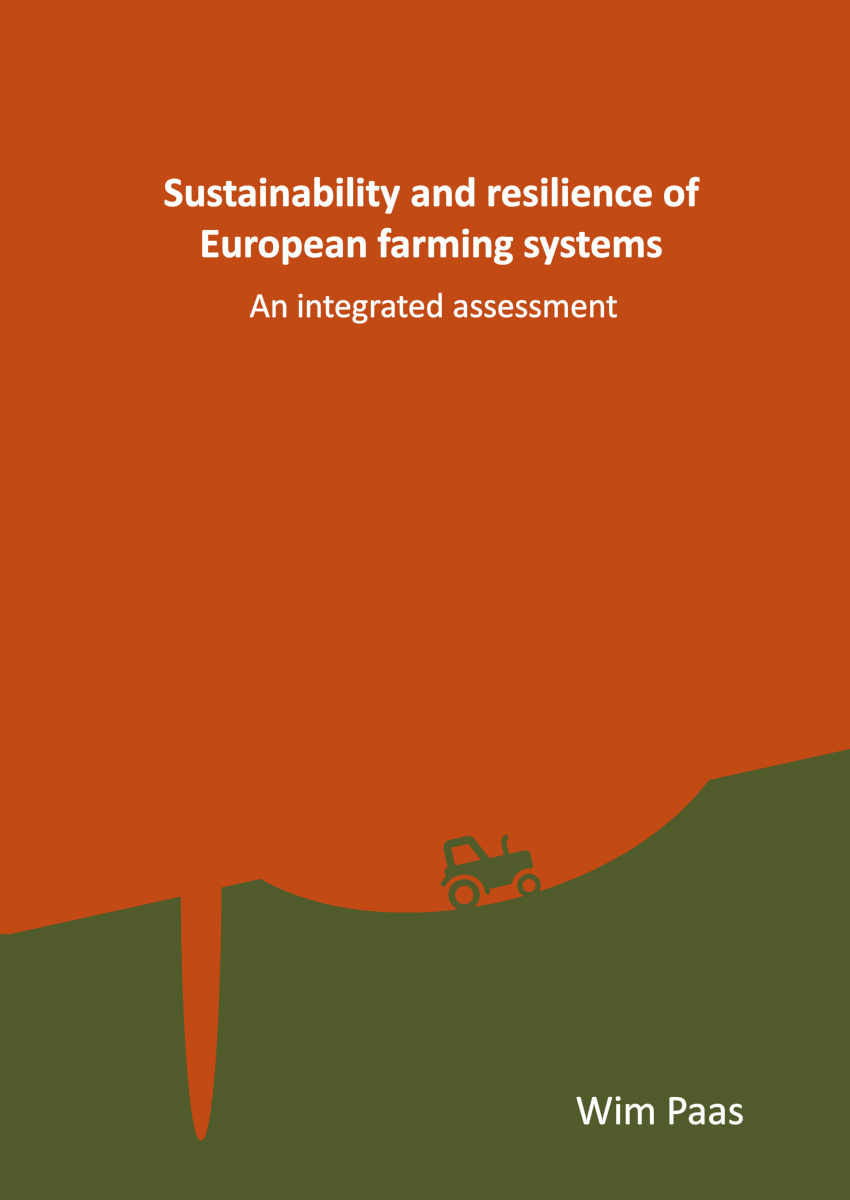
Wim Paas
Wageningen University
Publication date: 24 oktober 2022
University: Wageningen University
ISBN: 978-94-6447-347-6
Sustainability and resilience of European farming systems
Summary
An increasing variety of stresses and shocks provides challenges for farming systems in Europe. As a consequence, the sustainability and resilience of Europe’s diverse farming systems is at stake. In particular the possible presence of economic, social or environmental thresholds in farming systems is worrying, as beyond those thresholds permanent and undesired system change may happen.
Sustainability of a system is in this thesis defined as an adequate performance of all system functions across the environmental, economic and social domains. Sustainability of agricultural systems has been studied extensively, but existing frameworks and tools are not designed to study resilience which is much more about the different capacities of systems to deal with disturbances. Moreover, in agricultural sustainability assessments, the social aspects are often least integrated, compared to the economic and environmental. Of particular importance are participatory, integrated assessments that focus on improving sustainability and resilience as they are designed to come up with adaptation options and action-oriented approaches together with relevant stakeholders.
Resilience can be defined as the capacity to resist change without changing its feedback system and functionality, i.e. robustness, while acknowledging the possibility of alternative stable states. The acknowledgement of possible stable alternative states of a system has led scholars to argue that ecological resilience thinking should also encompass, besides robustness, the system’s capacity to adapt or to organize structural and functional change. Resilience of agricultural systems has been studied at a conceptual level and resilience indicators have been proposed. The actual operationalization has taken place only to a limited extent. In particular, quantitative assessments of agricultural systems are lacking in literature. Lack of good data may be one of the reasons for this. Much resilience work on agricultural systems is therefore qualitative in nature, for instance involving assessments based on system parameters that supposedly bring resilience to the system. The examples in which the resilience concept of agricultural systems is operationalized, are not guided by an integrated resilience framework that was applied to many different agricultural systems.
The work presented in this thesis was part of the EU Horizon 2020 project SURE-Farm to assess the sustainability and resilience of European farming systems. Within SURE-Farm, a resilience framework was developed that considers the need for combining approaches, having a local focus and stimulating participation of relevant (local) actors. The SURE-Farm framework proposed five steps to assess farming system sustainability and resilience (Meuwissen et al., 2019; Figure 1.1). From Step 1 to 5 specific resilience is addressed, i.e. resilience to a specific type disturbance. Step 1 to 3 relate, therefore, to the questions resilience “of what?”, “to what?” and “for what purpose?”. Step 4 addresses the farming system specific resilience capacities that need to be developed. Based on the previous steps, system characteristics are identified that convey general resilience to the system, regardless the type of disturbance (Step 5).
The aim of this thesis is to operationalize the above introduced resilience framework with new and integrated methods and to assess the sustainability and resilience of current and future European farming systems. The following research questions are central in this thesis: 1) Is there a balance between social, economic and environmental functions in European farming systems in terms of importance and performance? 2) Are European farming systems approaching critical thresholds? 3) What resilience capacities do and should European farming systems have? 4) What strategies enhance sustainability and resilience of European farming systems? The methods applied in this thesis follow the five steps of the resilience framework as much as possible. From a methodological point of view, the methods aim to operationalise the framework by using locally adapted indicators and different sources and types of data.
Chapter 2 presents the Framework of Participatory Impact Assessment for Sustainable and Resilient FARMing systems (FoPIA-SURE-Farm I). FoPIA-SURE-Farm I investigates current farming system functioning, dynamics of main indicators, and specifies resilience for the different resilience capacities, i.e., robustness, adaptability, and transformability. Three case studies with specialized farming systems serve as an example for the used methodology: starch potato production in Veenkoloniën, The Netherlands; dairy production in Flanders, Belgium; and hazelnut production in Lazio, Italy. Chapter 3 presents the synthesis of the application of FoPIA-SURE-Farm I to 11 European farming systems. Results from Chapters 2 & 3 overlap. In most farming systems, functions that related to food production, economic viability, and maintaining natural resources were perceived as most important. Perceived overall performance of system functions suggests moderate sustainability of the studied farming systems. Overall, the resilience of the studied farming systems was perceived as low to moderate, with robustness and adaptability often dominant over transformability. This indicates that finding pathways to more sustainability, which requires adaptability and transformability, will be a challenging process. General characteristics of farming systems that supposedly convey general resilience, the so-called resilience attributes, were indeed perceived to contribute positively to resilience. Profitability, having production coupled with local and natural resources, heterogeneity of farm types, social self-organization, and infrastructure for innovation were assessed as being important resilience attributes. To allow for transformability, being reasonably profitable and having access to infrastructure for innovation were viewed as essential. Past strategies were often geared towards making the system more profitable, and to a lesser extent towards the other important resilience attributes. To improve sustainability and resilience of European farming systems, responses to short-term processes should better consider long-term processes. Technological innovation is required, but it must be accompanied with structural, social, agro-ecological and institutional changes. The relative importance of some resilience attributes in the studied systems differed from case to case. This indicates that the local context in general, and stakeholder perspectives in particular, are important when evaluating general resilience and policy options based on resilience attributes. Overall, FoPIA-SURE-Farm I results seem a good starting point for raising awareness, further assessments, and eventually for developing a shared vision and action plan for improving sustainability and resilience of farming systems.
While Chapters 2 & 3 presented the development and applications of a participatory semi-quantitative method, Chapter 4 aimed to complement the results regarding sustainability and resilience of current farming systems with a quantitative method. A statistical method using longitudinal data was applied to study farm performance (food production, profitability, nitrogen surplus) under different conditions regarding weather, market and farm structure. A case study for potato production in three regions in the Netherlands was employed, using data from 2006-2019. Statistical model performance was at best moderate. Model results were easily influenced by the selection of response variables. Food production, economic and environmental performance levels and gradual dynamics were primarily determined by input intensity levels. How these levels are determined by intensity of cropping, i.e. positively or negatively, differed per case study. Year-to-year variability was determined by average yearly weather conditions and weather extremes. We did not find evidence of moderating effects of farm structure on the impact of weather conditions and weather extremes. Overall, the conclusion is that results do only provide insights that can confirm existing knowledge at case study level. In the context of resilience of farms, while using a relatively small dataset, the application seems limited to a rather homogeneous farm population in a stable economic environment. Researchers intending to apply this method in (arable) farming systems should be well aware of the influence they can have over the results through the selection of response variables.
Following up on the sustainability and resilience assessment of current systems, Chapter 5 aims to find pathways to more sustainable and resilient farming systems, while identifying and avoiding critical thresholds. To serve this purpose, a participatory, integrated and indicator-based methodology is presented that leads researchers and farming system actors in six steps to a multi-dimensional understanding of sustainability and resilience of farming systems in the future (FoPIA-SURE-Farm II). The method is presented for the case study of extensive sheep production farming system in Huesca, Spain. Participants in the participatory workshop indicated that their farming system is very close to a decline or even a collapse. Approaching and exceeding critical thresholds in the social, economic and environmental domain is currently causing a vicious circle that includes low economic returns, low attractiveness of the farming system and abandonment of pasture lands. More sustainable and resilient alternative systems to counteract the current negative system dynamics were proposed by participants: a semi-intensive system primarily aimed at improving production and a high-tech extensive system primarily aimed at providing public goods. Both alternatives place a strong emphasis on the role of technology, but differ in their approach towards grazing, which is reflected in the different strategies that are foreseen to realize those alternatives. Although the high-tech extensive system seems most compatible with a future in which sustainable food production is very important, the semi-intensive system seems a less risky bet as it has on average the best compatibility with multiple future scenarios. Overall, the methodology can be regarded as relatively quick, interactive and transdisciplinary, providing ample information on critical thresholds, current system dynamics and future possibilities. As such, the method enables stakeholders to think and talk about the future of their system, paving the way for improved sustainability and resilience.
In Chapter 6, FoPIA-SURE-Farm II is applied to assess the presence of critical thresholds in 11 European farming systems. All studied systems were perceived to be close, at or beyond at least one identified critical threshold, i.e. these systems are (very likely) exceeding thresholds within the next 10 years. Stakeholders were particularly worried about economic viability and food production levels. Moreover, critical thresholds were perceived to interact across system levels (field, farm, farming system) and domains (social, economic, environmental), with low economic viability leading to lower attractiveness of the farming system, and in some farming systems making it hard to maintain natural resources and biodiversity. Overall, a decline in performance of all key system variables was expected by workshop participants in case critical thresholds would be exceeded. For instance, a decline in the attractiveness of the area and a lower maintenance of natural resources and biodiversity. Chapter 6 shows that concern for exceeding critical thresholds is justified and that thresholds need to be studied while considering system variables at field, farm and farming system level across the social, economic and environmental domains. For instance, economic variables at farm level (e.g. income) seem important to detect whether a system is approaching critical thresholds of social variables at farming system level (e.g. attractiveness of the area), while in multiple case studies there are also indications that approaching thresholds of social variables (e.g. labour availability) are indicative for approaching economic thresholds (e.g. farm income). Based on the results, reflections follow on the importance of considering system resources, such as knowledge levels, when monitoring and evaluating the sustainability and resilience of Europe’s farming systems.
Chapter 7 provides a synthesis of the research presented in this thesis. Based on the synthesis, policy recommendations are made for improved sustainability and resilience. Subsequently, the framework and methods used in this thesis are evaluated. After that, the relevance of the work is discussed. Based on that discussion, reflections follow on improving the evaluation and monitoring of sustainability and resilience of farming systems in Europe. I conclude that sustainability and resilience of farming systems remains a challenging subject due to its complexity in terms of detail (different domains, many concepts and variables) and dynamics (non-linearity, thresholds, interactions). The research presented in this thesis confirmed the usefulness of the resilience framework in reducing this complexity through a step-wise approach tailored to farming systems. The participatory approaches presented in this thesis contributed mainly to describing and explaining sustainability and resilience of current farming systems. These methods provide, therefore, a good basis for exploring future farming systems. The quantitative approach (presented in Chapter 4) confirmed the impact of weather extremes on economic and environmental farm performance, but was limited in explaining resilience, and raised awareness about the influence researchers have on the results through the selection of response variables. Based on the work and reflections presented in this thesis I see scope for better understanding and assessing farming system sustainability and resilience through system thinking theory and the use of participatory integrated assessment
See also these dissertations
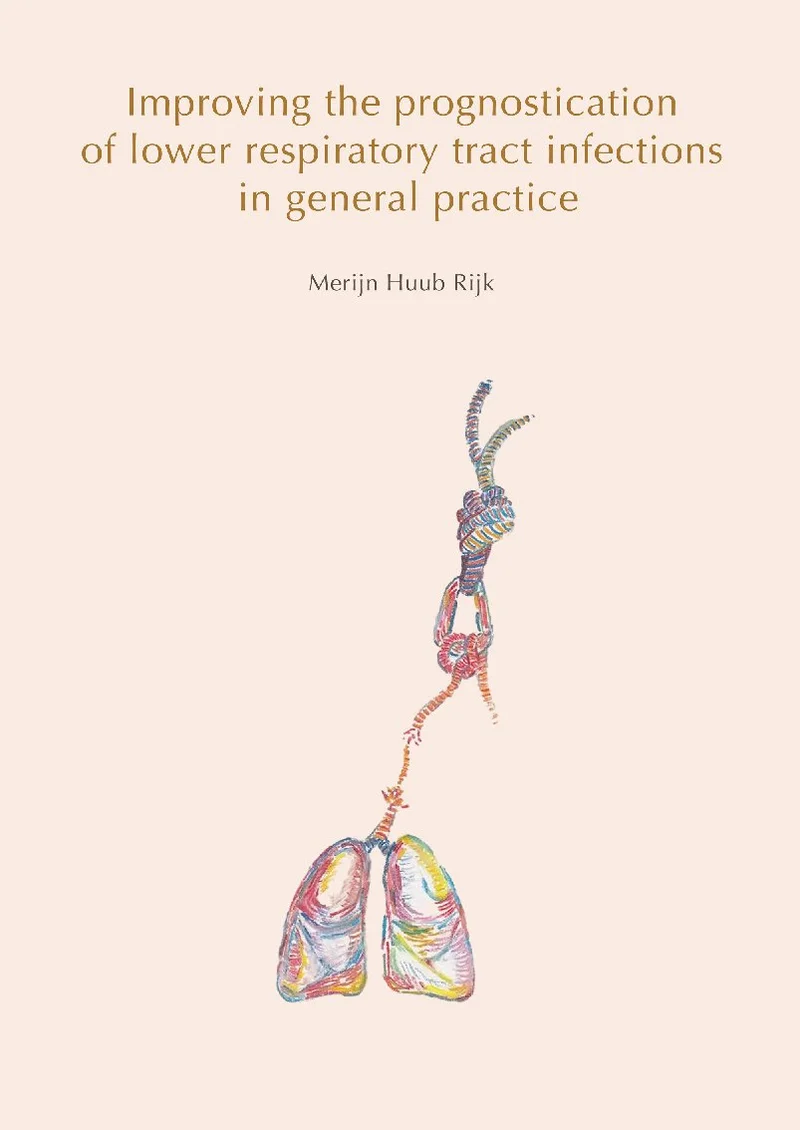
Merijn Rijk
Improving the prognostication of lower respiratory tract infections in general practice
15 september 2026
Universiteit Utrecht
Open Ebook

Valeria Paradies
Advancing Contemporary Coronary Diagnostics and Interventions
7 juli 2026
Erasmus Universiteit Rotterdam
Open Ebook
Ningning Zeng
Life in the Mist: When Nothing Feels Worth It
26 juni 2026
Rijksuniversiteit Groningen
Open Ebook

Mustafa Can Sati
MILITARY AI TECHNOLOGIES UNDER INTERNATIONAL HUMANITARIAN LAW
29 juni 2026
Universiteit Maastricht
Open Ebook
Haojie Lu
Omics Studies of Cardiometabolic and Skeletal Traits
25 juni 2026
Erasmus Universiteit Rotterdam
Open Ebook
Katja Hol
Holistic Integration of Desktop Virtual Reality Technology in Higher Education
18 juni 2026
Open Universiteit
Open Ebook
We print for the following universities