Linda Remijn Nelissen
Symptomatic treatment of myasthenia gravis
3 september 2026
Universiteit Leiden
Open Ebook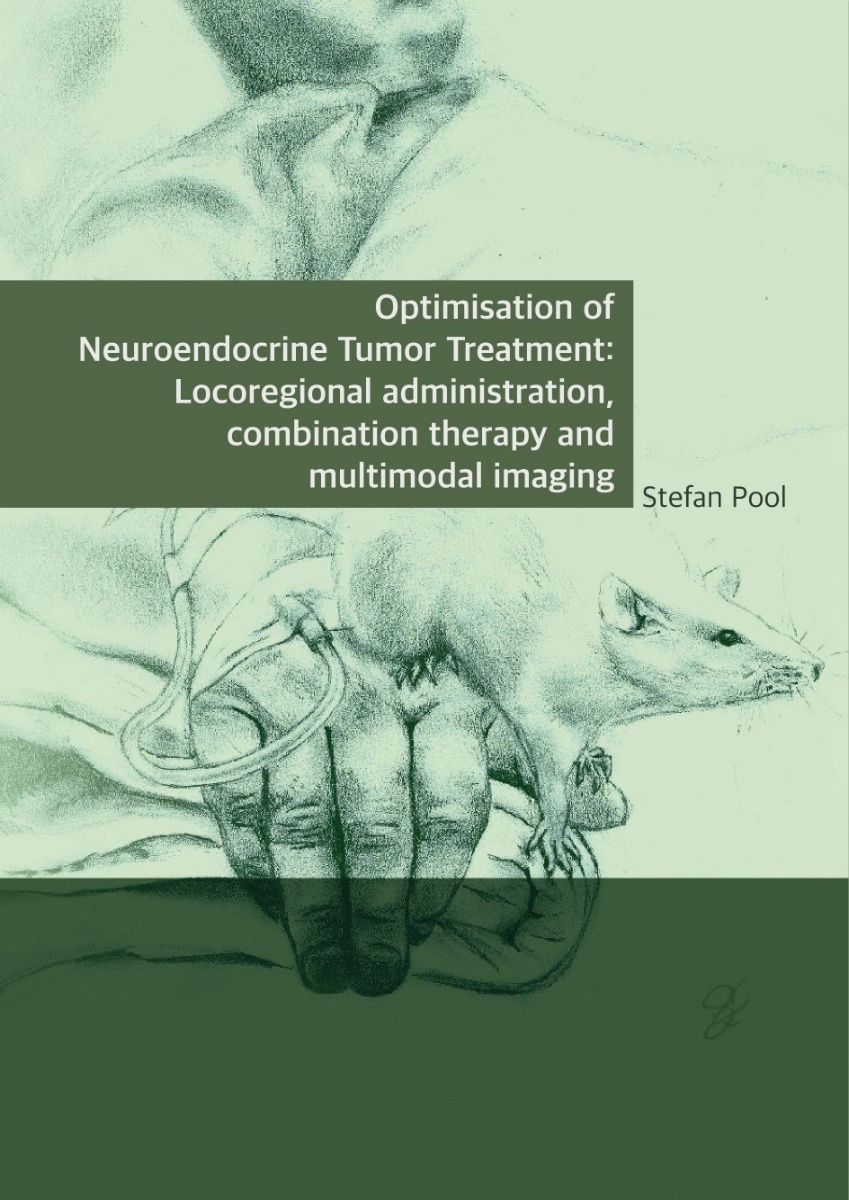
Share this project
Summary
Neuroendocrine tumors are rare neoplasms with an incidence of 2-5 per 100,000 inhabitants. When a NET is diagnosed, in the majority of cases it has already metastasized and the only curative treatment option available nowadays, i.e. surgery, is not an option any more. Standard treatment in most of these patients comprise long-acting somatostatin analogs, possibly in combination with (palliative) surgery, chemotherapy, radiotherapy, hepatic artery/transarterial (chemo-) embolization (H/TA(C)E), radiofrequency ablation (RFA), cryoablation and laser-induced thermotherapy (LITT) and intra-arterial radio embolization with yttrium-90/holmium-166 microspheres.
The widely used long-acting somatostatin analogs bind to somatostatin receptors (mainly sst2), which are over-expressed on both functioning and non-functioning NETs, resulting in significant lengthening of time to tumor progression compared to placebo 1,2. Also treatment with somatostatin analogs can reduce hormonal overproduction of functioning tumors and may result in symptomatic relief in most patients with metastasized disease 3-5. The sst over-expression on NETs is also widely used for diagnosis/visualization of these tumors using radiolabeled somatostatin analogs, such as [111Indium-DTPA]-octreotide (Octreoscan, Covidien, Petten, the Netherlands) and the more recently developed PET tracers 68Ga-DOTA-Tyr3-octreotide or 68Ga-DOTA-Tyr3-octreotate (68Ga-DOTATATE) 6,7. Based on the same principle, somatostatin analogs labeled with radionuclides with high-energy beta particle emission, including 177Lu-DOTATATE and 90Y-DOTATOC are commonly being applied for treatment of the metastasized NETs with most promising results. New is the promising application of alpha emitters like bismuth-213 (213Bi), which is very likely to be a very effective strategy because of the high linear energy transfer (LET) of alpha radiation 8-10. Some promising results with 213Bi-DOTATOC PRRT have already been published in seven NET patients refractory to 90Y/177Lu-DOTATOC PRRT 10.
In this thesis, several approaches to optimize the treatment of NETs have been described, as well as their application in different studies and evaluation of the results thereof. Chapter 1 is a general introduction on NETs and the different treatment modalities currently being applied. Also, a short overview is given on the animal model and molecular imaging modalities described and applied in this thesis work.
Chapter 2 is a review of the literature on preclinical and clinical PRRT. The therapeutic effects of somatostatin analogs labeled with different radionuclides have been discussed. Also potential new peptides for PRRT, like glucagon-like peptide 1, gastrin-releasing peptide, CCK2, epidermal growth factor receptor and αvβ3 integrin targeting peptide analogues, have been included. Strategies to improve PRRT, including tumor size-specific use of 177Lu for smaller tumors and 90Y for larger tumors, locoregional administration and the combination of PRRT with chemotherapy, are described and discussed as well.
Chapter 3 describes the effect of intra-arterial (IA) administration compared to intravenous (systemic) administration on the [111Indium-DTPA]-octreotide uptake in liver metastases in an animal model and in 3 patients with NET liver metastases, varying in sst2 density and tumor load. In rats with intrahepatic sst2-positive tumors, IA administration resulted in a twice-higher uptake of 111In in the tumor compared to that after systemic administration. The patient study showed that IA administration can result in significantly higher 111In uptake in NET liver metastases, although the effect can differ between patients. The results obtained in one patient further showed accurate localization of the catheters tip to be essential for optimal IA administration to the whole liver. In this patient one of the NET liver metastases, situated in a part of the liver that was not perfused during locoregional administration, showed to have the same uptake as that in the setting of IV administration. Locoregional IA administration did not implicate reduction of uptake in tumor lesions elsewhere in the body compared to that after systemic administration. Estimation of 177Lu dosimetry and pharmacokinetic modeling was performed based on the results obtained in one patient and showed a 30% reduction of the estimated radiation dose on the kidneys after intra-arterial administration. In patients with diffuse or large, somatostatin receptor positive metastasic liver disease, IA PRRT administration could be preferable over IV administration. Future and more extended clinical studies will have to reveal if the high uptake after IA administration results in better tumor response and overall survival as well.
In Chapter 4 we describe the combination study of 177Lu-DOTATATE PRRT with the mTOR inhibitor RAD001 (Affinitor, Novartis, Basel, Switzerland) in a NET model in rats. The aim of the study was to investigate a potential synergistic therapeutic effect of mTOR inhibition and PRRT, based on earlier reports showing radiosensitizing effects by mTOR inhibition 11,12. Surprisingly, the combination treatment appeared to be less effective compared to 177Lu-DOTATATE treatment alone, but even more importantly, we observed rats that received RAD001 treatment twice weekly for 4.5 weeks (with or without 177Lu-DOTATATE treatment) to develop distant metastasis, whereas control and 177Lu-DOTATATE treated animals did not and never did before in our earlier studies during more than 10 years. We hypothesized that the discontinuation of RAD001 treatment at 4.5 weeks after start of treatment could have caused the occurrence of metastasis, probably by a rebound effect of the mTOR pathway. Inhibition of the immune system by RAD001 could also be an explanation for the occurrence of distant metastases.
Chapter 5 describes additional analyses derived from the in Chapter 4 described combination studies and from an additional animal study in which RAD001 treatment twice weekly for 4.5-weeks was compared to RAD001 treatment given for 12-weeks. Aim of the study was to investigate if the cessation of RAD001 after 4.5 weeks of treatment was causing the occurrence of metastasis. The 12-weeks RAD001 treatment also resulted in the development of metastasis. Also 177Lu tumor uptake after 177Lu-DOTATATE treatment with and without RAD001 co-treatment was quantified, to see if this could serve as an explanation for the fact that the combination treatment of RAD001 and 177Lu-DOTATATE was less effective compared to that with 177Lu-DOTATATE alone. 177Lu-DOTATATE tumor uptake was not affected by RAD001 treatment. This experiment was performed in a different substrain of Lewis rats, often used for auto-immune studies, as these animals have a more active immune system showing an enhanced CD4+ and CD8+ T cell (auto)-immune response 13-17. This autoimmunity is linked to an increased anti-tumor immunity 18,19. In these rats 50% of subcutaneous tumors disappeared spontaneously in the control group, whereas in the RAD001 treatment groups only 12.5% of the tumors regressed, probably caused by RAD001 induced inhibition of the immune system and in line with our hypothesis. A recent report by Yin et al. 20 showed comparable effects of mTOR inhibition in BALB/c mice bearing subcutaneous 4T1 murine breast cancer tumors. The mTOR inhibitor rapamycine accelerated lung metastasis. Rapamycin induced production of immunosuppressive molecules and cytokines, like TGF-β, arginase-1, indoleamine 2,3-dioxygenase, IL-6 and IL-10, in the lungs. The authors postulate treatment with rapamycin to result in an immunosuppressive microenvironment in the metastatic sites. A definite answer on the occurrence of metastasis in the CA20948 tumor model after RAD001 treatment is not yet fully clear and more studies are needed to solve the still open questions. The use of mTOR inhibition treatment in the clinical setting should be closely watched for the development of unexpected, new metastasized disease.
Chapter 6 describes the transfection of CA20948 cells with a plasmid coding for green fluorescent protein and luciferase, for use of non-invasive tumor follow up by bioluminescence imaging (BLI) in future PRRT experiments in a liver metastasis rat model. We successfully applied these transfected CA20948-luc cells in a subcutaneous nude mouse as well in a rat liver-metastasis model as described in this chapter.
Future perspectives
Currently all clinical data published on the efficacy of 177Lu-DOTATATE treatment for NETs were based on non-randomized studies, with data compared to those obtained in historical controls. In 2012 however, a multicenter, prospective, randomized, clinical trial in patients with inoperable, progressive midgut NETs, has started. This study randomizes between 177Lu-DOTATATE (four administrations of 7.4 GBq (200 mCi) at 8±1-week intervals) combined with Octreotide LAR 30 mg (discontinued during PRRT) versus treatment with high dose Octreotide LAR 60 mg. Primary efficacy endpoint is progression-free survival as measured by objective tumour response, centrally assessed according to the response evaluation criteria in solid tumors (RECIST) 21, every 12±1 weeks from the first treatment date in 280 patients. Concomitant amino acids will be given with each administration for kidney protection. Estimated Primary Completion Date is December 2014. (www.clinicaltrials.gov; Identifier: NCT01578239)
Combination of PRRT with several new biologicals and chemotherapeutics could result in a higher therapeutic effect. For example, a prospective, randomized, clinical trial comparing RAD001 + Octreotide LAR versus 177Lu-DOTATATE + Octreotide LAR in patients with advanced GEPNETs would be of very high interest now. Despite our observations in the studies described in Chapters 4 and 5, RAD001-induced metastasis has not been reported in patients. Currently a randomized clinical trial, comparing 177Lu-DOTATATE treatment with 177Lu-DOTATATE treatment in combination with the oral chemotherapeutic drug capecitabine (Xeloda; Roche, Basel, Switzerland) is ongoing in our center. Earlier studies already showed that combining these therapies is safe and at least as effective as 177Lu-DOTATATE PRRT alone 22,23. The aim of this study is to show that chemosensitization with capecitabine improves the percentage of patients with objective tumor responses who are also treated with 177Lu-DOTATATE. In the near future the results of this study will be published.
Despite the disappointing and surprising results of Everolimus (RAD001) with 177Lu-DOTATATE treatment combinations as described in Chapters 4 and 5 in this thesis, this combination therapy has now in Australia been given to patients with metastasized NET with tolerable side effects. In the future, a phase II randomized controlled trial of 177Lu-DOTATATE with capecitabine/temozolomide versus 177Lu-DOTATATE with RAD001 is planned to be performed in Australia 24. With our preclinical results in mind, a close watch is needed for possible increase in metastases after/during RAD001 treatment in patients. Another very promising targeted therapy, Sunitinib (Sutent, Pfizer), a VEGF-receptor inhibitor 25, is an interesting option for comparison to PRRT in future randomized clinical trials. Combination therapy of Sunitinib with PRRT would be the next step. Transient normalization of the tumor vasculature by VEGF-receptor inhibition results in decreased intratumoral pressure and better oxygenation with possible facilitation of higher intratumoral radiopeptide penetration and increased radiation effects by higher oxygenation 26.
Intra-arterial PRRT is of high value in selected NET patients, as described in Chapter 3 of this thesis and elsewhere 27-29. In the near future selected NET patients with a predominant tumor load in the liver will be offered intra arterial 177Lu-DOTATATE PRRT in our center. In selected NET patients with the tumor-mass mainly located in the liver, a combined approach of intra-arterial 177Lu-DOTATATE PRRT with 166Ho-loaded poly(L-lactic acid) microsphere radio-embolisation 30 of NET liver metastases compared to intra-arterial 177Lu-DOTATATE PRRT alone is a strategy worth investigating. 166Ho-microspheres are preferable over 90Y-microspheres, because 166Ho emits low energy gamma photons for gamma camera imaging and is paramagnetic, allowing magnetic resonance imaging (MRI).
In the near future, 177Lu-DOTATATE PRRT dosimetry will hopefully be performed at our institution, resulting in patient tailored dose calculation, resulting in optimal tumor radiation with minimal radiation damage to the healthy tissues. Possibly many patients treated with the standard dose of 4 times 7.4 GBq 177Lu-DOTATATE are under-treated and could be treated with higher dosages without significant side effects and better tumor responses are to be expected. Patients with, e.g., a suboptimal kidney function could receive a lower dose preventing end stage renal damage.
Varying the specific activity of 177Lu (amount of radioactivity/gram), the peptide mass of DOTATATE (now around 200 μg) and infusion rate are very interesting methods of increasing tumor 177Lu uptake and resulting therapeutic effects. Further (pre)clinical studies will have to be performed to explore the effects of these strategies.
The use of 177Lu-DOTATATE PRRT as a neoadjuvant treatment in patients with initially irresectable pancreatic NETs has been performed at our center and is promising. We therefore propose a prospective study on neo-adjuvant use of 177Lu-DOTATATE PRRT to be initiated.
The recently obtained and promising results on the use of the alpha emitter 213Bi for α-PRRT in preclinical animal experiments 8,9 and in patients with NETs refractory to 90Y- or 177Lu-DOTATOC β-PRRT 10 will certainly result in clinical trials using 213Bi α-PRRT as single treatment for NETs or in combination with e.g. 90Y or 177Lu β-PRRT. Acute and mid-term toxicity seems to be low, but long-term follow up is still needed.
Preclinical and clinical studies showed higher uptake of radiolabeled sst antagonists than of sst agonists 31,32 in neuroendocrine tumors and promising tumor responses. Future studies will have to show the potential benefit of these antagonists over agonists.
In conclusion, the field of PRRT is rapidly evolving and will hopefully result in increasing progression-free survival and higher quality of life for NET bearing patients. Hopefully, these rapid developments will ultimately result in curing a higher percentage of these patients.