Samara Rosendo Machado
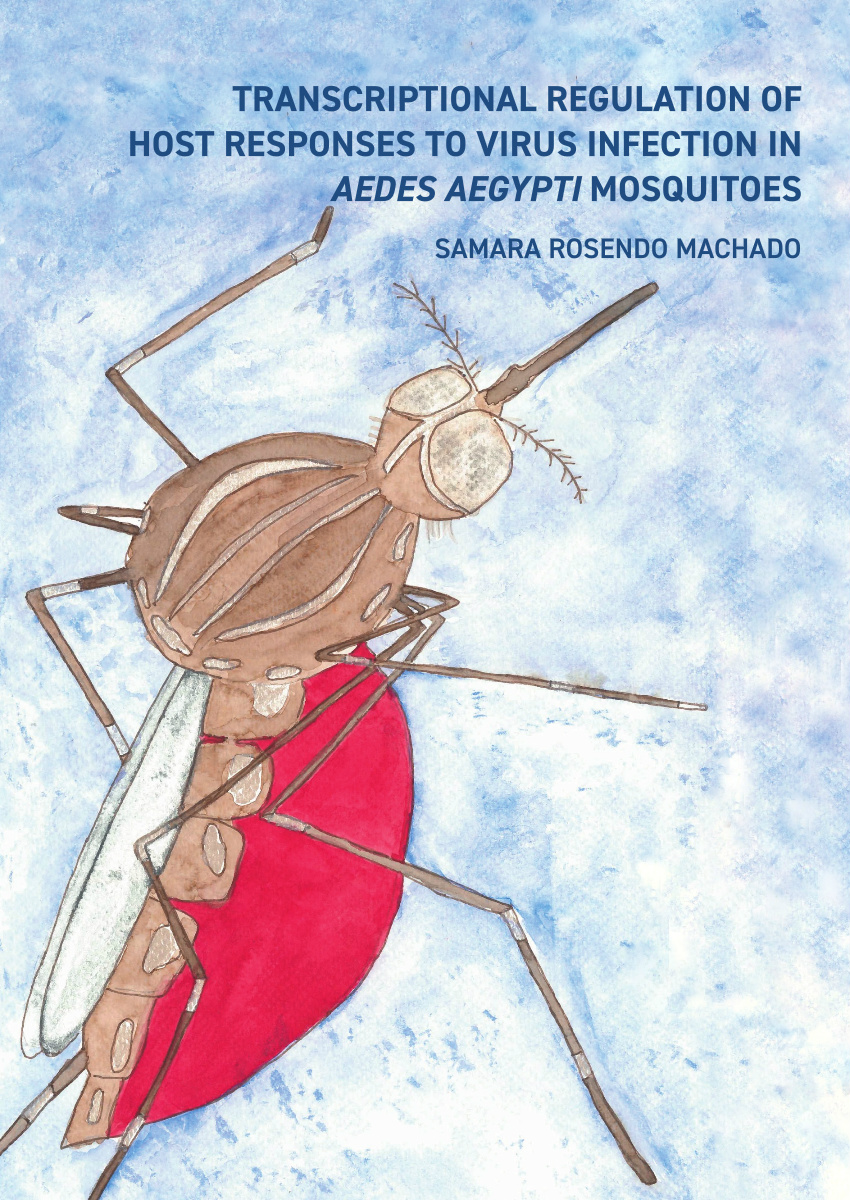


TRANSCRIPTIONAL REGULATION OF HOST RESPONSES TO VIRUS INFECTION IN AEDES AEGYPTI MOSQUITOES
Virus transmission from an infected host to a naïve person is a crucial aspect of the viral life cycle and viruses have evolved multiple ways to achieve this challenge. A particularly interesting mode of transmission is by blood-feeding insects as it requires viruses to replicate in two evolutionary distinct hosts. Viruses that are transmitted between vertebrate host by insects or other arthropods are named arboviruses (arthropod-borne viruses), the majority of which are transmitted by mosquitoes. Most epidemic arboviruses, such as dengue and chikungunya viruses, were previously restricted to tropical and subtropical countries, but are nowadays also endemic in more template regions of the world. This development has largely been driven by the expansion of vector mosquitoes due to environmental change, rising global temperatures, or increased travel and trade. Dengue and chikungunya virus transmission is mainly driven by Aedes aegypti, also known as the yellow fever mosquito, which is well-adapted to the urban habitat and can directly transmit disease from human to human. Importantly, the effectiveness of transmission depends on the ability of arboviruses to efficiently replicate in the insect vector. Mosquitoes acquire arboviruses during a blood meal on a viremic person, after which the viruses infect the midgut, the mosquito’s equivalent of a stomach. Next, viruses need to replicate in secondary tissues to finally infect the mosquito salivary gland. In this organ, virus replication leads to shedding of new virus particles into the mosquito saliva which is essential for transmission to the next non-infected host. Besides physical tissue barriers, arboviruses have to overcome immune responses that are induced in the infected mosquito. Amongst the different immune pathways that exist in mosquitoes, RNA interference (RNAi) is the best characterized antiviral defense mechanism. This pathway is mediated by small RNAs derived from replicating viral RNA. Ultimately, the function of these small RNAs is to restrict virus replication by directly degrading the viral RNA. Besides the well-established RNAi pathway, other immune defense mechanisms such as transcriptionally-induced pathways (Toll, IMD, and JAK-STAT) have been suggested to act in antiviral defense and other currently unknown mechanisms likely exist. The aim of this doctoral thesis was to discover and characterize such unexplored pathways. In chapter 2, we knocked down hundreds of so-called RNA binding proteins in mosquito cells to identify novel factors that act in mosquito antiviral defense. RNA binding proteins often play important roles in immune pathways, and indeed, we identified three RNA binding proteins belonging to the family of DEAD-box RNA helicases, that showed a broad antiviral phenotype against multiple arboviruses. From these, the mechanism underlying the antiviral function of the RNA helicase Dhx15 was further investigated. Dhx15 regulates the expression of genes that are involved in glycolysis, one of the central pathways that controls energy metabolism in the cell. Interestingly, also chikungunya virus infection leads to similar changes in glycolytic gene expression, suggesting that Dhx15 may affect virus replication in Ae. aegypti mosquito cells via modulation of the glycolysis pathway. In chapter 3, we focused on the antiviral role of additional players that were picked up in our knockdown screen. Interestingly, four of the identified hits (SPT4, SPT5, SPT6, and Brd4) were proteins that act in the regulation of transcription in a process called transcriptional pausing. Knockdown of these transcriptional pausing factors caused increase replication of several arboviruses including chikungunya virus. Based on these findings, we hypothesized that virus replication triggers a transcriptional immune response and that transcriptional pausing controls this response. However, chikungunya virus infection only caused a surprisingly modest transcriptional response that lacked signatures of canonical immune pathway activation but instead resembled a general stress response involving the upregulation of heat-shock proteins. The heat-shock response was dependent on specific members of the transcriptional pausing machinery, suggesting that this mechanism contributes to the regulation of host responses to virus infection. In chapter 4, we focused on the characterization of one of the factors that acts in transcriptional regulation: Brd4. This protein is involved in regulating gene expression at the epigenetic level. Epigenetic regulation of transcription involves, among other things, the dynamic deposition and interpretation of modifications of histones, the structural protein core that DNA is wrapped around. In this context, Brd4 is an important reader of histone modifications and is usually associated with active transcription. We made use of the fact that a potent pharmacological inhibitor (JQ1) is available for Brd4. Treating mosquito cells with JQ1 resulted in a fierce increase of virus replication that greatly exceeded the effect of Brd4 knockdown. The mechanism by which Brd4 inhibition affects antiviral defense was investigated. As expected for an inhibitor of a transcriptional regulator, JQ1 treatment resulted in a dramatic change in gene expression. Interestingly, amongst the differentially expressed genes target genes of the Forkhead box O (FOXO) transcription factors were enriched. FOXO had previously been associated with antiviral defense in insects, and indeed, modulating its expression or activity affected virus replication in a similar way as JQ1 treatment, suggesting that Brd4 controls virus replication at least partly by regulating FOXO target genes. In chapter 5, the findings from this doctoral thesis are discussed in a broader context. Furthermore, I reflect on the advantages and challenges of the mosquito model used and I discuss suggestions for further research. Overall, this doctoral thesis provides insights into novel mechanisms that underlie antiviral defense in the Ae. aegypti mosquito.
| Publicatiedatum | 27 november 2023 |
| Universiteit | Radboud Universiteit |
| Auteur | Samara Rosendo Machado |
| Order nummer | FTP-202602261458 |
| ISBN nummer | 978-94-6469-587-8 |