Zjala Ebadi
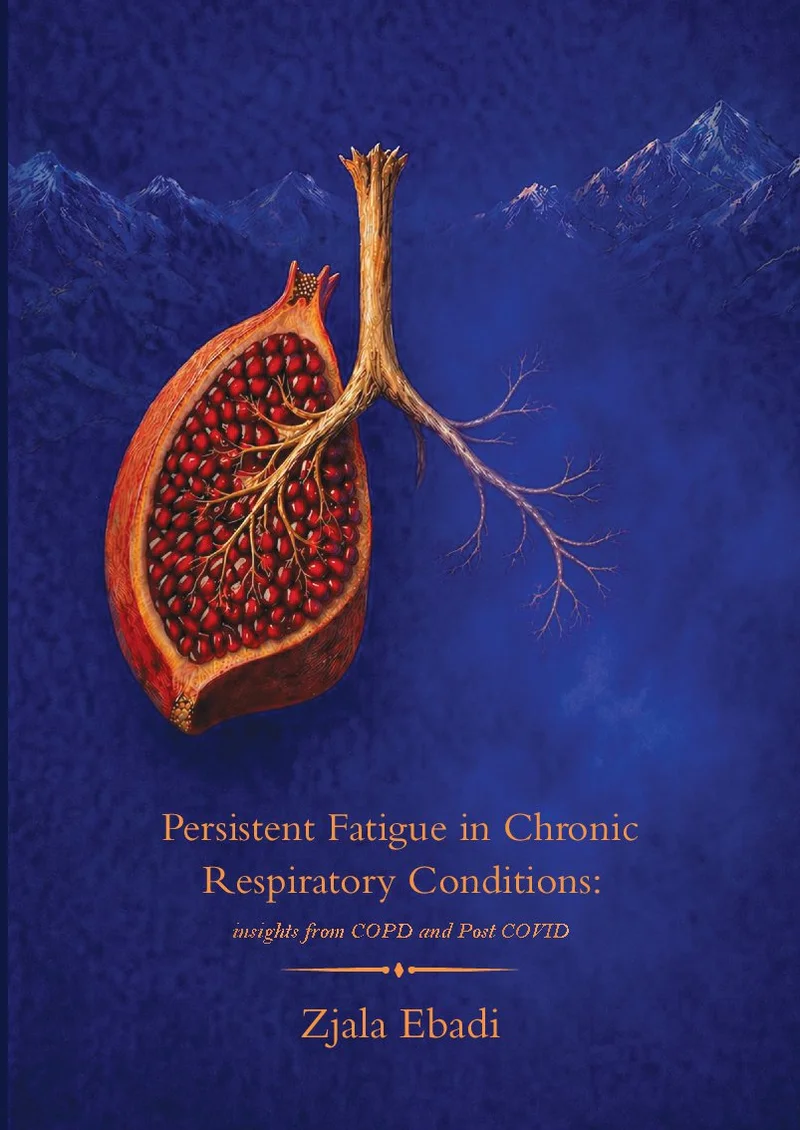
Persistent Fatigue in Chronic Respiratory Conditions
14 september 2026
Radboud Universiteit
Open Ebook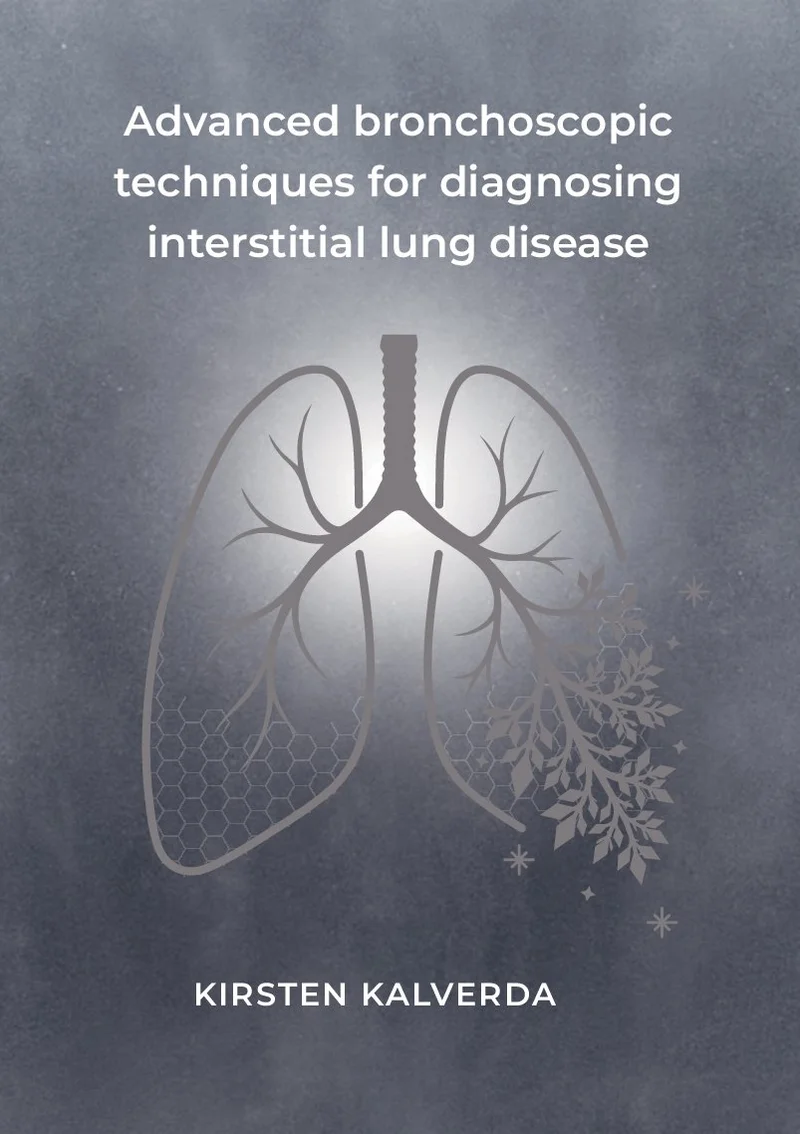
Share this project
Summary
This thesis investigates how bronchoscopic techniques can improve the diagnostic work-up and assessment of interstitial lung diseases (interstitial lung disease, ILD). The central aims are to maintain (or increase) diagnostic certainty and to reduce patient burden by choosing less invasive strategies whenever possible. The thesis is built around three complementary components: (1) optimising sampling strategies when lung tissue is needed, (2) adding microscopic information through in vivo bronchoscopic imaging, and (3) improving the workflow and interpretation of biopsies through rapid ex vivo microscopy.
Part I Bronchoscopic sampling techniques for diagnosing interstitial lung disease
Chapter 2 focuses on granulomatous ILD: stage I and II sarcoidosis. In the international randomized ISA study, 358 patients from 14 centers worldwide were included with suspected stage I–II sarcoidosis. Patients were randomized between endobronchial ultrasound (EBUS) and esophageal ultrasound using an EBUS scope (EUS-B) for lymph node sampling. In addition, there was a second randomization between two needle types: a standard 22G EBUS needle and a 25G ProCore needle. The yield for detecting granulomas was comparable between both routes (70% in the EBUS group versus 68% in the EUS-B group; p=0.67). The representativeness of the lymph node material was also comparable for both needles (90.4% for 22G versus 91.1% for ProCore; p=0.829). The clinical message is that both EBUS and EUS-B achieve a high and similar diagnostic yield. Therefore, the choice of approach can mainly be made pragmatically, based on patient tolerance, type of sedation, and local expertise.
Chapters 3 and 4 focus on patients with suspected ILD in whom a biopsy is indicated. Lung tissue can be obtained by surgical lung biopsy (high diagnostic yield but invasive) or by transbronchial cryobiopsy (lower diagnostic yield but less invasive). The randomised COLD study (Chapter 3) compares a step-up strategy (starting with transbronchial cryobiopsy, with surgical lung biopsy only if results are inconclusive) with immediate surgical lung biopsy. In total, 55 patients were included from 6 hospitals in the Netherlands. The number of patients who required an unexpected chest drain was substantially higher in the immediate surgery group (11% in the step-up group versus 46% in the immediate surgery group; p=0.0058). Diagnostic yield was similarly high in both groups (89% in the step-up group versus 88% in the immediate surgery group; p=0.841), while hospital stay, the amount of pain experienced, and the number of serious complications were higher in the immediate surgery group. The economic evaluation (Chapter 4) builds on these findings and shows that the step-up strategy is cost-effective. Taken together, these results support a “least-invasive-first” approach when histology is needed: start with cryobiopsy and reserve surgery for the minority of patients in whom this does not provide sufficient diagnostic certainty.
Part II Bronchoscopic imaging techniques for the assessment of interstitial lung disease and ARDS
Chapter 5 describes, in a review, the technical developments and clinical applications of optical coherence tomography (OCT) and confocal laser endomicroscopy (CLE) in respiratory medicine. Both techniques aim to bridge the gap between macroscopic imaging (HRCT) and invasive histology by adding microscopic in vivo information during bronchoscopy.
Chapter 6 evaluates polarization-sensitive endobronchial OCT (PS-EB-OCT) as an additional technique for fibrosis assessment in ILD, with histology as the reference. In 19 patients we show that PS-EB-OCT is feasible and able to detect and quantify fibrosis. The more fibrosis PS-EB-OCT detected, the more fibrosis was actually seen in the corresponding biopsies. Moreover, agreement with the histological fibrosis measure was better than that of CT. In addition, microscopic features relevant for ILD diagnostics could be recognized in PS-EB-OCT images. This supports the idea that PS-EB-OCT could potentially develop into an “optical biopsy”, but it requires larger prospective studies for clinical validation, standardization, and interpretation frameworks.
Chapter 7 is a response to a study in which histological patterns are recognized based on endobronchial OCT. Although the results are promising, we emphasize the need for prospective validation, transparent reporting of the patient population, and especially standardization of measurements to ensure reproducibility and generalizability.
Chapter 8 brings the micro-imaging concept to the intensive care unit. We investigated bronchoscopic CLE in mechanically ventilated patients with respiratory failure. In 33 patients (41 procedures) we show that bronchoscopic CLE is feasible and safe in this setting. CLE can visualize patterns of alveolar filling (for example cells or fluid) and architectural changes that may complement conventional imaging. Therefore, bronchoscopic CLE has the potential to add microscopic information without a biopsy, particularly in a population in whom invasive tissue sampling is often too risky.
Part III Novel imaging technique for rapid assessment of lung tissue in interstitial lung disease
In Chapters 9–11 we introduce higher harmonic generation (HHG) microscopy as a rapid method to image fresh, unprocessed lung tissue. Normally, histological processing requires fixation, embedding, sectioning, and staining, which is time-consuming. HHG offers the possibility to obtain tissue-level structural information directly, within minutes.
Chapter 9 describes a proof-of-concept study in which we assessed 65 biopsies using HHG. Importantly, these were fresh, unprocessed biopsies that could be examined directly in the bronchoscopy suite or operating theatre. We show that images can be obtained within minutes and that two pathologists can recognize essential features of healthy and diseased lung tissue. HHG also enables simultaneous assessment of collagen, elastin, and cellular structures in a single image, without additional stains. This makes it possible to visualize their relative distribution. In addition, HHG microscopy allows depth scanning, so that 3D assessment can be added.
Chapter 10 explores clinical applicability as a “rapid on-site evaluation” (ROSE)-like tool for cryobiopsies. Because cryobiopsies sometimes contain insufficient informative tissue, rapid feedback on biopsy quality may increase diagnostic yield and may prevent additional (surgical) procedures. In this study, 49 cryobiopsies were assessed for “adequacy” based on HHG images, using conventional histology as the reference. This resulted in a sensitivity of 86.1% and a specificity of 76.9% for identifying adequate biopsies. These findings support that HHG can provide direct feedback during procedures.
Chapter 11 illustrates rapid HHG visualization in autopsy tissue from COVID-19 ARDS, demonstrating the technique in a context where rapid, label-free assessment of lung tissue can be valuable.
In Chapter 12 the findings of this thesis are brought together and placed in clinical context, with attention to future perspectives. Overall, the results support a stepwise, patient-centered diagnostic approach: HRCT, clinical data, and multidisciplinary discussion remain the basis. When additional certainty is needed, the data support a least-invasive-first strategy for tissue sampling. At the same time, the imaging chapters show that innovative bronchoscopic imaging and rapid ex vivo microscopy may contribute to ILD diagnostics and may improve workflow when tissue is obtained.