
Yussif Baba Kassim
Enhancing crop response to fertilization in northern Ghana
4 september 2026
Wageningen University
Open Ebook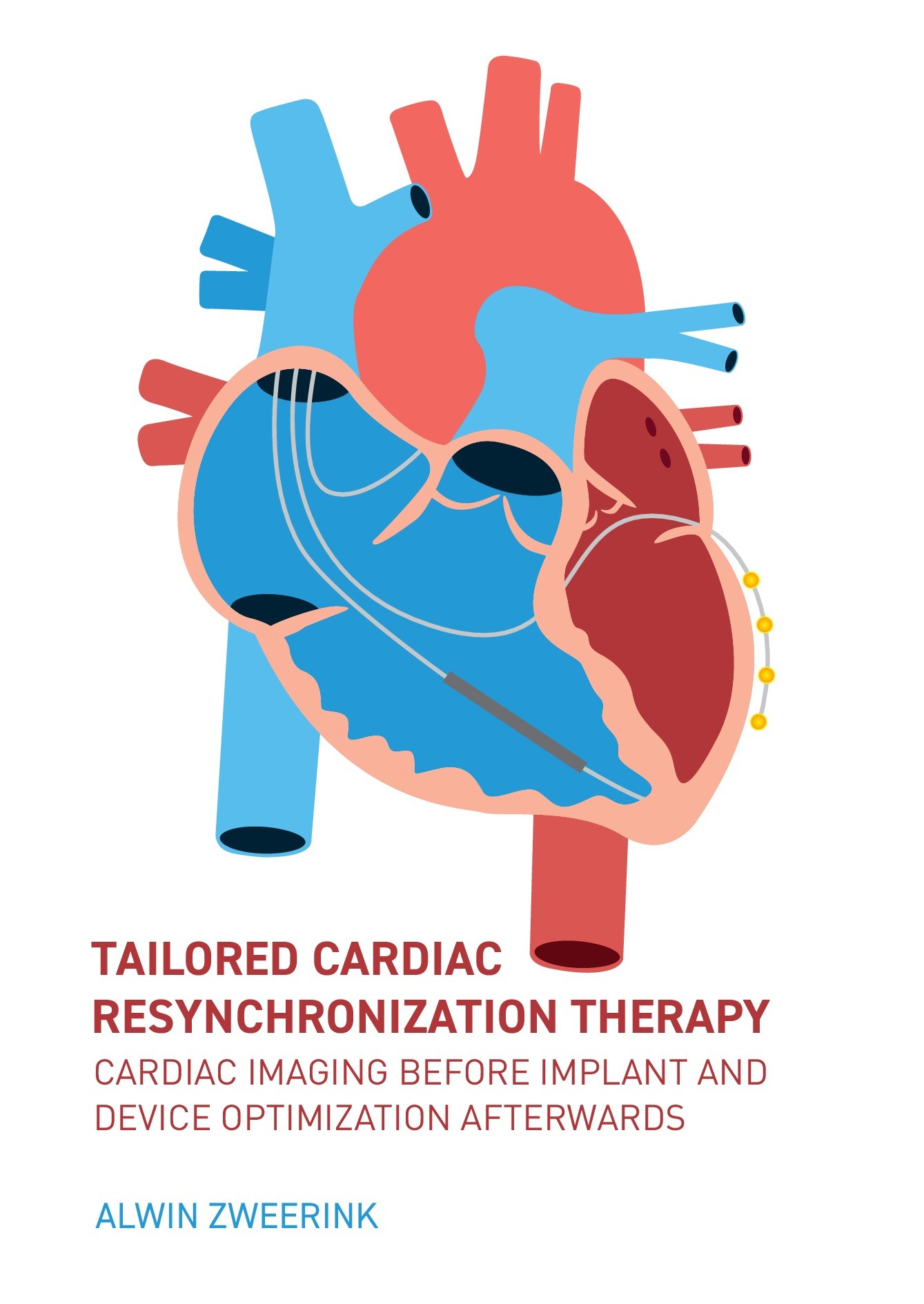
Share this project
Summary
Selection criteria for Cardiac Resynchronization Therapy (CRT) are mainly based on the morphology and time duration of the QRS complex. Following guideline criteria, however, approximately one-third of the patients implanted with CRT will not respond favorably. Over the last two decades, numerous studies have sought to determine variables associated with improved CRT response. It is now widely accepted that these factors include strict left bundle branch block (LBBB) morphology, longer QRS duration (QRSd), sinus rhythm, non-ischemic etiology, younger age and female gender. On the other hand, consensus has still not been reached on the predictive value of cardiac imaging techniques in CRT candidates. On this matter, the role of myocardial strain parameters is especially debated. After the decision to implant CRT has been made, the question arises if device optimization strategies increases benefit from the therapy. This, again, is topic of significant debate and requires further research. The present thesis aims to investigate two strategies that can potentially increase effectiveness of CRT: (i) improved selection of potential responders prior to implantation using cardiac imaging techniques and (ii) optimized device settings afterwards in order to maximize hemodynamic benefits.
Part IA evaluates the theoretical concept that incorporation of left ventricular (LV) structural measurements in the assessment of electrical delay, by normalizing QRSd to LV size, improves prediction of CRT response. Normalization of QRSd to LV dimension (i.e. QRSd divided by LV dimension) improved correlation with acute LV pump function improvement by CRT. Different metrics of LV size (volumes; diameter; length; mass) all showed similar results in relation to QRSd and CRT response. In addition, women achieved more pump function improvement during CRT compared to men. This sex-specific difference in CRT outcome may be partly ascribed to differences in LV size between both sexes. As the female heart is generally smaller, women have shorter QRSd compared to men. In order to reach the cut-off QRSd value for CRT (guidelines are identical for men and women), female hearts will have more conduction delay compared to male hearts and might therefore be more amenable for successful treatment with CRT. QRSd normalization improved prediction of survival after CRT implantation.
Part IB of this thesis evaluates the role of myocardial strain imaging to improve patient selection for CRT. Contribution of the septum to total LV work varies widely in CRT candidates with LBBB, and the lower the septal contribution to total myocardial work (or the higher the septal waste) at baseline the higher the acute improvement in pump function that can be achieved during CRT. Myocardial strain imaging therefore provides an insight in the negative effect of LBBB on myocardial work and energy utilization, and reflects the potential benefit that can be achieved by CRT. Of all strain parameters, measuring end-systolic septal strain (ESSsep) showed strongest relation with CRT response after one year, irrespective of imaging technique. Detection of septal discoordination with higher ESSsep values (i.e. septal stretching instead of contraction) at baseline was associated with more extensive reverse remodeling after CRT. The novel segment length in cine (SLICE) strain technique provides a simplified strain analysis technique to estimate benefit from CRT by analyzing standard CMR cine images.
In part two of this thesis several CRT optimization strategies are evaluated. Although there was a large variation in acute hemodynamic CRT response between different electrodes of the quadripolar lead, electrical parameters (QLV; QLV/QRSd) were unable to identify the most beneficial pacing electrode. Optimization of the pacing configuration should rely on functional assessment of cardiac function, instead of local electrical delay. It was demonstrated that hemodynamic optimization of the LV pacing electrode and AV delay in CRT with quadripolar leads result in approximately one-third additional improvement in the parameter used for optimization (either dP/dtmax or SW). Whereas dP/dtmax optimization favored LV contractility, SW optimization improved ventricular-arterial coupling leading to higher stroke volume and ejection. Acute changes in SW showed high predictive value for prediction of long-term CRT response.