Dixit Guleria
Uniaxial Orientation of Polyethylene Films for Recyclable Flexible Packaging
21 mei 2025
TU Eindhoven
Open Ebook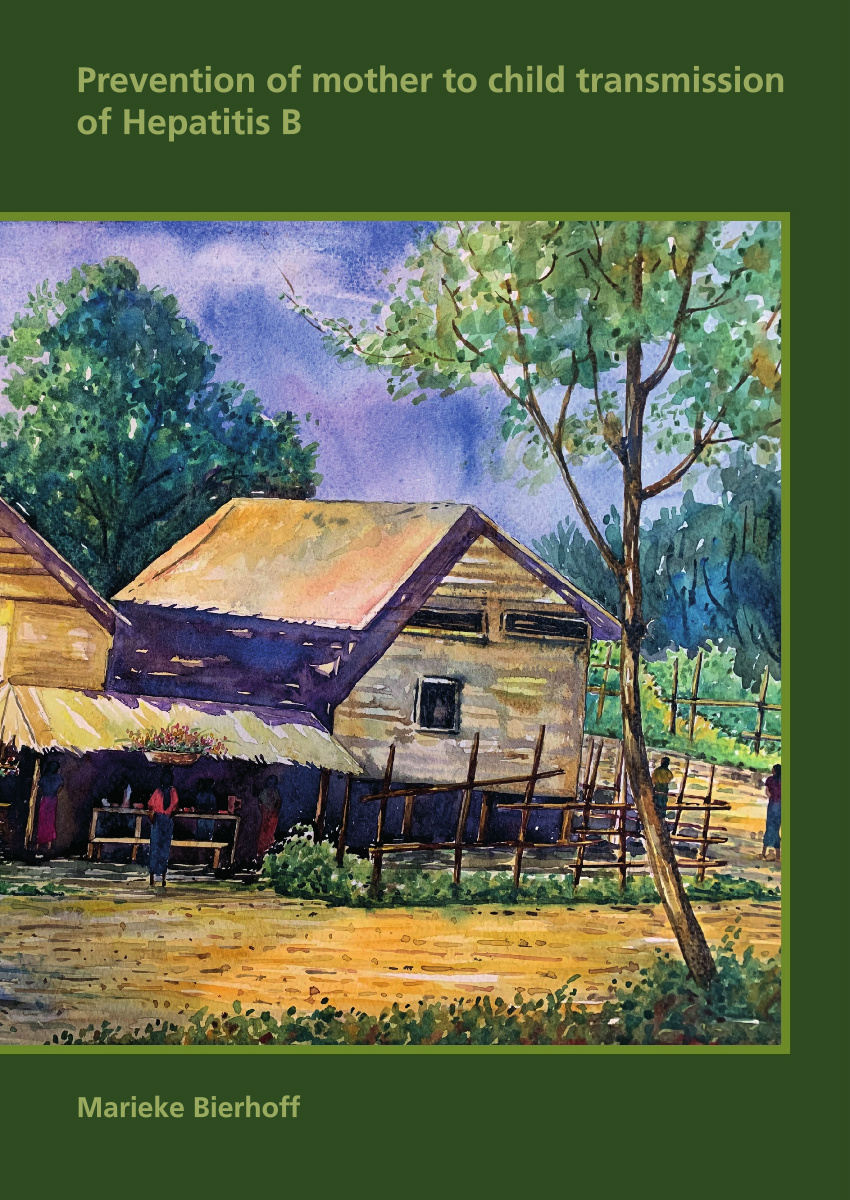
Share this project
Summary
This study has not changed the already high uptake of HBV screening in pregnancy that was in place before study implementation, but the concept of treatment to prevent HBV transmission to the newborn is new information for local health staff and women. There is a need to measure the knowledge, attitudes and practices in relation to PMTCT of HBV to provide appropriate health messaging to pregnant women and their communities.
Diagnostic limitations
Identification of women that would benefit from tenofovir is challenging in RLS where the diagnosis relies on HBsAg rapid diagnostic tests and additional testing is not always available. In this study the Pacific Biotech POCT for HBsAg (reported sensitivity >90% and specificity >98% [27]) which uses a ‘gold standard’ chemiluminescent microparticle immunoassay had a proportion of false positive of 4/88, 4.5% (95% CI 0.2-8.9). A previous report using the same brand in the same population described a false positive proportion of 3.1% (95% CI 1.7- 5.4) [17]. This information is available because the study requires confirmation before treatment. In practice, approaches for HBV could consider using similar diagnostic criteria as for HIV, where two different POCT tests are sufficient to commence treatment, [28] which could lead to a more efficient test and treat policy. However, whether two different HBsAg POCT tests decreases the false positivity rate would need to be determined.
Maternal tenofovir is recommended, at least, for women with a high HBV DNA (>200,000 IU/mL or HBeAg positive). Of the 84 HBsAg confirmed positive women 73/84 (86.9%) were eligible for the study: 23/73 (31.5%) were HBeAg positive. Women that were HBeAg negative were eligible if they tested positive (50/73, 68.5%) for the presence of HBV DNA (>85 IU/mL) using a qualitative Polymerase Chain Reaction (PCR) test “HBV DNA assay Fast Track Diagnostics” (Siemens healthineers company). This study detected HBV DNA in HBeAg negative women with an off-site qualitative laboratory test that is expensive and is usually not available in RLSs [29]. The standard of HBsAg detection by a single POCT is insufficient to confidently identify women with HBsAg and further confirmation is needed.
Constrained access to healthcare
The ultimate goal of maternal tenofovir treatment for RLSs would be to reduce HBV DNA to undetectable levels to negate the necessity for HBIG at birth [30, 31]. In studies where tenofovir was initiated in third trimester, the HBV DNA was not reduced enough to reach this goal [7, 32]. Commencement of tenofovir in early pregnancy may reduce HBV DNA to undetectable levels before delivery and is the main reason for the current study. However, in RLSs, pregnant women often present after 20 weeks gestational age for antenatal care. As of 31 December 2019, 83/171 (48.5%) of the women in our ANC, who were HBsAg positive by POCT, presented after 20 weeks of pregnancy [18, 33].
In rural areas, participants face constraints on access to healthcare. They often live far away from the clinics and this implies that on some occasions these women need to walk for up to four hours [34] to reach the clinic. In their travels, most women have to cross one or more river systems, which show large seasonal variations with pronounced flooding. Of the eight missed appointments in the tenofovir study, five (5/8, 62.5%) were in the rainy season when the rivers became impassable. Travel to the clinic also involves passage through police and/or military checkpoints on both sides of the border. In Thailand, there are documented and undocumented migrant workers with over a quarter of the migrant workers without work permits, or legal status, especially in rural areas. These migrant workers are at risk of being asked for additional fees, or of being arrested at police checkpoints, which can delay presentation with subsequent poorer outcomes. In this study a high follow up proportion of the expected appointments, 395/422 (93.6%) was obtained but women are assisted with transportation. Integrated care allowing pregnant women to complete HBV and ANC care in the same visit will reduce access constraints. Due to late ANC attendance only one in two women were eligible by gestation for the study. Integrated care alongside reducing access constraints in RLS remains a priority area for general improvement of maternal child health care. Despite difficulties women arrived for their appointments showing that mothers are motivated to overcome difficulties for the health of their pregnancy.
Risk of flare after cessation of antiviral therapy
After delivery, in RLSs, there is no support to continue HBV antivirals for the mother, should they be needed. Tenofovir treatment ceases 4-12 weeks post-partum and there is a risk for hepatic flare. Hepatic flares are detected using ALT but in most RLSs, ALT is not available on site which can cause a delay in identification of the flare. Most, 90%, of the cases resolves spontaneously, but in rare cases, flares could cause severe disease and even death [35, 36]. This implies that after stopping tenofovir treatment the woman should be able to follow up in a clinic preferably with the ability to measure ALT. In the study, 3/88 (3.4%) women were lost to follow up before the final check for hepatic flare. There was one patient that had a proven, asymptomatic, post-partum hepatic flare that resolved spontaneously after five months of additional follow up. The challenge of detection and management of hepatic flare after cessation of tenofovir post-partum requires careful discourse to ensure the woman remains safe. Flare can be detected and treated in RLS with an offsite laboratory but POCT for ALT would facilitate this.
Medication issues
Tenofovir should be taken once daily at a dosage of 300mg. While monthly drug accountability checks have been high (94.6-100% adherence per follow up according to pill count and reviewers opinion), one in ten of the women reported incidents of tablet misplacement: “pills dropped though the [bamboo] floor and fell in the mud”, and “children played with the bottle”. The structure of typical households and the places where tablets are normally kept, such as plastic boxes or in an elevated shelf, is normal for families in these areas but may not be ideal or as safe as required.
In Mae Sot, the wet season is oppressive and overcast and the dry season is humid and hot. The highest relative humidity is in August (87%) and the lowest relative humidity in March (61%) [37]. As an example in one of the study sites in 2019: the humidity averaged 76.1% [37] and for 187 days of the year the temperature was ≥30°C. For 362/365 days (99.2%) humidity and ambient temperature (20-25°C) were outside the manufacturer’s recommendations: tenofovir should be kept between 20-25 degrees Celsius (°C) [38]. In this study medication is maintained at the required temperature via air-conditioning or refrigeration, and the study is monitored closely in line with Good Clinical Practice Guidelines [39]. Participants are supplied with a maximum of two months of tenofovir at any one time in air tight resealable bottles of 30 tablets, complete with a silica gel sachet for absorption of moisture that is stored at room temperature as they do not own fridges. In the Gilead patent product information it states that “… tenofovir disoproxil fumarate is prone to decomposition at elevated humidities and temperatures” and the stability is also connected to the pH of the environment [40]. Stability is likely to depend on the formulation of the tenofovir and products that are off patent and cheaper may not maintain the bioavailability or shelf life of the original product manufactured by Gilead.
Most women appeared to manage their medications well but it should not be assumed that households have a safe storage place for medication. Study drugs were well maintained in fridges at the study field site and Gilead reports that Viread bioavailability is not affected by high average humidity and temperature. It is challenging for some women to adhere to good pharmacy practice in the household under normal tropical weather conditions, which may affect bioavailability in new, off-patent products.
Recommendations
The first step towards prevention of MTCT of hepatitis B is timely vaccination, which can be provided without screening for hepatitis B in pregnancy. This requires a minimum level of government investment in guidelines for policy and finance that supports this practice. Many RLS struggle to reach a high level of facility births, which impedes hepatitis B policy for both HepB-BD and HBIG. The window for prevention is small and is usually passed before home-born children come to the attention of service providers.
As early antenatal care remains a corner-stone to positive birth outcomes overall, not just early tenofovir, settings with late initiation of care can investigate the barriers to this at a local level. Nevertheless, more than 90% of pregnant women in RLS attend antenatal care, and screening for diseases transmitted from mother to child is a global practice. Therefore, adding HBsAg to this routine testing can boost awareness and help identify pregnant women at risk of transmitting to the newborn. Treatment options must be provided and explained as this can support or influence parental decisions of where a mother gives birth [41]. Studies from resource limited settings, and settings where literacy is limited, are required to clarify that antenatal care screening is understood.
Accurate POCTs are crucial to timely implementation of treatment. POCT for HBeAg and/or HBV DNA >200,000 IU/mL would significantly boost identification of women who will benefit most from tenofovir. Offering treatment during pregnancy presents the highest profile of care for hepatitis B at the community level, just as it does for HIV. For RLS a critical question that requires an answer because health systems differ between resource high- and limited settings is: Does tenofovir given in early pregnancy reduce the HBV DNA concentration to undetectable levels allowing the elimination of HBIG, which is unaffordable and difficult to maintain in RLS? This will be clarified when the tenofovir study results are analyzed.
Conclusions
Despite challenges, results from the study to date suggest tenofovir can be offered to HBV-infected women in RLS before 20 weeks gestation with a high uptake of screening, high drug accountability and follow-up, albeit with provision of transportation support related to the study. This commentary reports on a small and local study, but it is clear that mothers in RLS have the interest of their future offspring at heart and will go to serious efforts to obtain good outcomes. Governments and health service providers can take steps towards PMTCT of HBV by policies that are met with finance that ensure practice is harmonized towards the 2016 World Health Organization goal of viral hepatitis elimination by 2030.
Ethics approval and consent to participate
Not applicable
Consent for publication
Not applicable
Availability of data and material
Data sharing is not applicable to this article as no datasets were generated or analysed during the current study.
Competing interests
The authors declare that they have no competing interests
Funding
The work is supported by the following awards: Thrasher Research Fund [grant number: TRFNPO9S] to Johns Hopkins University; the Wellcome-Trust Major Overseas Program in Southeast Asia [grant number: 106698/Z/14/Z] to Mahidol University Oxford Tropical Medicine Research Programme which directly supports FN and RM from Shoklo Malaria Research Unit; and Chiang Mai University Thailand supporting MB and CA.
Authors’ contributions
SE, CT and RM designed the study; MB, WY, MP and RM collected data and implemented the study; MB, MJR and RM drafted the manuscript. CA, FN and MvV provided guidance during the project. All authors read and agreed to the final manuscript.