Dixit Guleria
Uniaxial Orientation of Polyethylene Films for Recyclable Flexible Packaging
21 mei 2025
TU Eindhoven
Open Ebook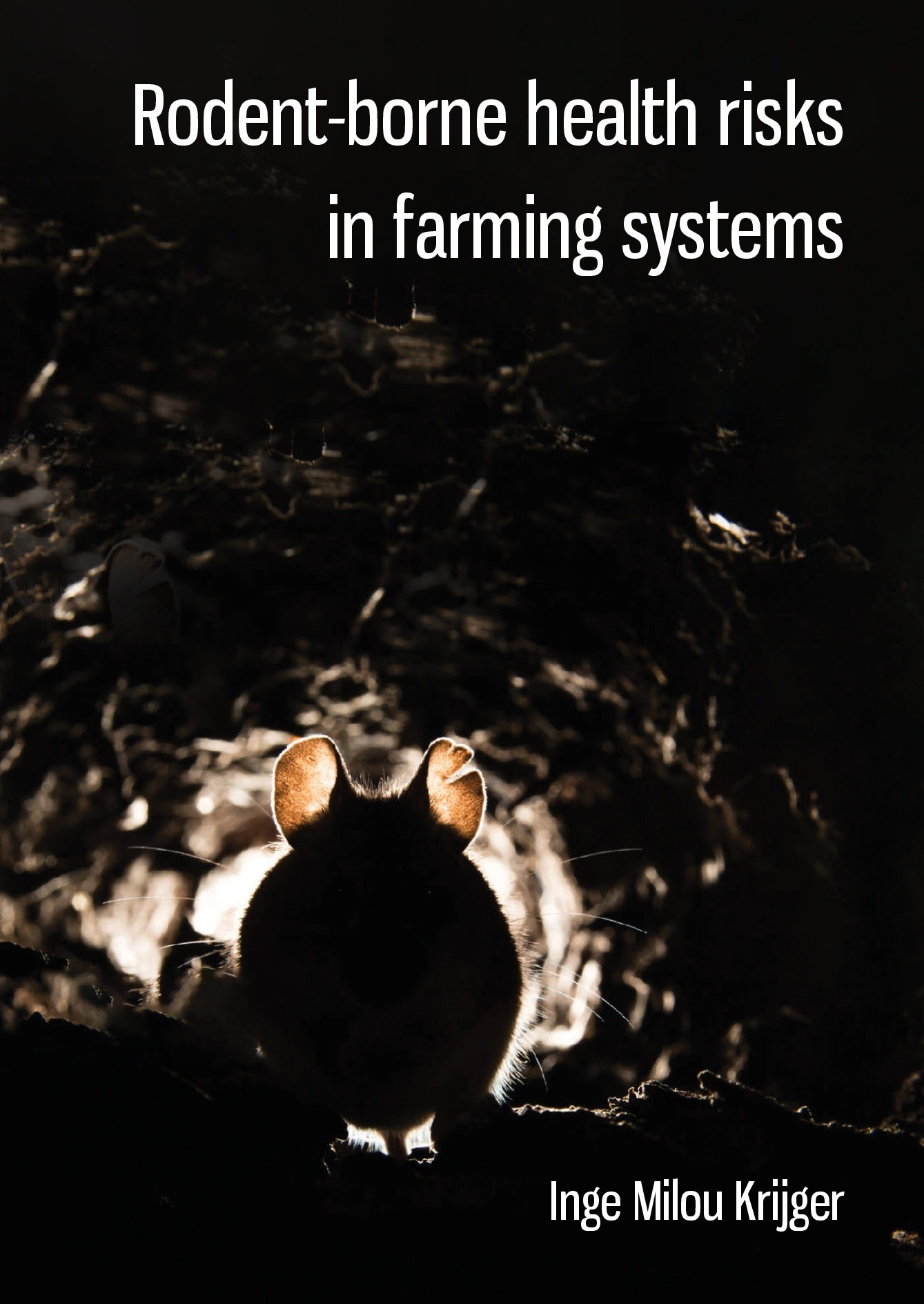
Share this project
Summary
Rodents represent the largest order of mammals (>40%) and consist of over 2000 species. However, only a small portion (<10%) of all rodent species can be referred to as pest species. From a human perspective, rodents have always been connected with disease. There are numerous pathogens that can be transferred from rodents to humans, called zoonoses. Currently, there are over 60 rodent borne zoonoses known. Little research has been conducted on current rodent borne zoonoses in regions of Asia, which raises the need to determine pathogen prevalence. Furthermore, impaired knowledge on zoonotic pathogens in rodents and insectivores limits opportunities for preventive measures and complicates risk assessments for zoonotic transmission to humans. Besides being able to transmit diseases, rodents are also known for causing damage and losses to stored food. Asia has the highest undernourishment rate with an estimated number of over 275 million people suffering from hunger. In Bangladesh the proportion of undernourished in 2017 was almost 25 million people on a population of 164.7 million. A factor contributing to food insecurity is the presence of rodents. On yearly basis, rodents cause 5-10% loss to rice production in Asia, which leads to a worldwide estimated loss of 11 kg of food per person per year. There is a knowledge gap on the biology and habitat specialisations and distribution of many rodent species in Asia and in Europe, which is essential for the species-specific management of pest rodents. The main aim of this thesis was to obtain more knowledge about rodent-borne health risks in farming systems in both Europe and Asia. The chapters of this thesis describe several studies into rodents from the Netherlands and Bangladesh in order to find an answer to the main research question of this thesis. In Chapter 2, presence of the zoonotic enteropathogen Clostridium difficile in wild rodents and insectivores is studied. Because C. difficile, an opportunistic anaerobic bacteria, is distributed globally and can be carried by both animals and humans, it is important to gain more knowledge whether and to what extent this zoonotic pathogen is present in Dutch wild rodents and insectivores. It is known that there is genetic overlap between human and animal sources of C. difficile. In our study, the aim was to assess the presence of C. difficile in rodents and insectivores trapped on and around pig and cattle farms in the Netherlands. In total 347 rodents and insectivores (10 different species) were trapped and 39.2% tested positive for presence of C. difficile. For all positive samples the ribotype (RT) was determined, and in total there were 13 different RTs found (in descending order of frequency: 057, 010, 029, 005, 073, 078, 015, 035, 454, 014, 058, 062, 087). Six of the RTs isolated from rodents and insectivores are known to be associated with human C. difficile infection; RT005, RT010, RT014, RT015, RT078 and RT087. The presence of rodents and insectivores in and around food production buildings (e.g. farms) could contribute to the spread of C. difficile in the human environment. In order to enable on-farm management for pathogen control, it is essential to comprehend the role of wild rodents and insectivores that could potentially affect the ecology of pathogens on farms. The aim of Chapter 3 was to assess the presence of two other pathogens in wild rodents and insectivores from the Netherlands; Leptospira spp. and Toxoplasma gondii. These two zoonotic pathogens are present on a list of prioritized emerging pathogens in the Netherlands and were therefore the focus of this chapter. Both pathogens have the ability to survive under moist environmental conditions. In total, a group of 379 small mammals (rodents & insectivores) were tested on pathogenic Leptospira spp, and 312 on Toxoplasma gondii. Rodents and insectivores were trapped at various sites, but mostly on pig and dairy farms throughout the country. Over five percent of the animals (5.3%, n=379) tested positive for Leptospira DNA, and five of the animals (1.6%, n=312) tested were positive for Toxoplasma gondii DNA. The animals positive for T. gondii were all brown rats and the ones for Leptospira spp. were various species. Our results show that insectivores and rodents might be used as an indicator for the environmental contamination and/or the contamination in wildlife for Leptospira spp. In Chapter 4 the study location changed to a totally different environment: the study described was conducted in Bangladesh. As there is limited scientific knowledge available about the incidence and prevalence of T. gondii in commensal rodents in many Asian countries, we tested rodents from a commercial rice mill and eight local villages in Bangladesh for the presence of T. gondii DNA using rodent brain material preserved in ethanol. Rodents contribute to the life cycle of the protozoan parasite Toxoplasma gondii as an intermediate host and key prey animal of cats, the definitive host. Overall, 10 of 296 (3.4%) rodent samples tested positive for Toxoplasma DNA. Our results indicate that rodents present in food production and food storage facilities may carry T. gondii. The aim of Chapter 5 was to assess the prevalence of pathogenic Leptospira species in rodents from Bangladesh. Worldwide, Leptospira infection poses an increasing public health problem. In 2008, leptospirosis was recognised as a reemerging zoonosis of global importance with South-East Asia being one of the most significant centres of the disease. Because Bangladesh offers a suitable humid climate for the survival of these pathogenic bacteria, the presence of rodents could be a serious risk for human infection, especially in peri-urban areas or locations where food is stored. Rodents are thought to be the most important host for a variety of Leptospira serovars. Real-time Polymerase Chain Reaction (qPCR) and sequencing showed that 13.1% (61/465) of the trapped rodents were infected with pathogenic Leptospira. Sequencing of the qPCR products identified the presence of three species: Leptospira interrogans, Leptospira borgpetersenii, and Leptospira kirschneri. Rodents of the genus, Bandicota, were significantly more likely to be positive than those of the genus, Rattus and Mus. Our results confirm the importance of rodents as hosts of pathogenic Leptospira and indicate that human exposure to pathogenic Leptospira may be considerable, also in places where food (rice) is stored for longer times. This chapter also emphasizes the need to improve rodent management at such locations and to further quantify the public health impacts of this neglected emerging zoonosis in Bangladesh. Then in Chapter 6 the efficacy of rodent management and monitoring methods on post-harvest losses by rodents in Bangladesh was assessed. The presence of pest rodents around food production and storage sites is one of many underlying problems contributing to food contamination and loss, particularly influencing food and nutrition security in low-income countries. By reducing both pre- and post-harvest losses by rodents, millions of food-insecure people would benefit. Studies on the impact of rodents is particularly lacking in post-harvest systems. As there is limited quantitative data on post-harvest rice losses due to rodents in Asia, we assessed stored rice-losses in local households from eight rural communities and two rice milling factories in Bangladesh in order to monitor the effect of different rodent control strategies. Four treatments were applied, of which three rodent management methods: (i) control (ii) use of domestic cats, (iii) use of rodenticides, (iv) use of snap traps. In total, over a two year period 210 rodents were captured from inside people’s homes, with Rattus rattus trapped most often (n= 91), followed by Mus musculus (n=75) and Bandicota bengalensis (n=26). In the milling stations, 68 rodents were trapped, of which 21 M. musculus, 19 R. rattus, 17 B. bengalensis, 8 Rattus exulans, and 3 Mus terricolor. In 2016, losses from rice-baskets within households were between 13.6-16.7%. In 2017, the losses were lower, ranging from 0.6-2.2%. Daily rodent removal trapping proved to be most effective to diminish stored produce loss. The effectiveness of domestic cats was limited. The aim of Chapter 7 was to obtain knowledge to be able to optimize IPM (prevention and control) for the local situation in Bangladesh to reduce the actual post-harvest losses. Current reactive pest management methods have serious drawbacks such as the heavy reliance on chemicals, emerging genetic rodenticide resistance and high secondary exposure risks. Rodent control needs to be based on pest species ecology and ethology to facilitate the development of ecologically based rodent management (EBRM). An important aspect of EBRM is a strong understanding of rodent pest species ecology, behaviour and spatiotemporal factors. Gaining insight into the behaviour of pest species is a key aspect of EBRM. The landscape of fear (LOF) is a mapping of the spatial variation in the foraging cost arising from the risk of predation, and reflects the levels of fear a prey species perceives at different locations within its home range. In practice, the LOF maps habitat use as a result of perceived fear, which shows where bait or traps are most likely to be encountered and used by rodents. Several studies have linked perceived predation risk of foraging animals with quitting-harvest rates or giving-up densities (GUDs). GUDs have been used to reflect foraging behaviour strategies of predator avoidance, but to our knowledge very few papers have directly used GUDs in relation to pest management strategies. An opportunity for rodent control strategies lies in the integration of the LOF of rodents in EBRM methodologies. Rodent management could be more efficient and effective by concentrating on those areas where rodents perceive the least levels of predation risk. We can conclude that there are serious rodent-borne health risks in farming systems in both in the Netherlands and in Bangladesh. In this thesis, for both countries rodent presence is demonstrated, as well of the presence of zoonotic pathogens in these animals. The results of this thesis may help to improve the preparedness for potential disease outbreaks. Of course we cannot prevent the outbreaks of rodent borne diseases. However, we can be prepared to take appropriate measures when necessary. It is essential to gain a more thorough understanding of the ecology of rodent-borne pathogens in rodents and humans in order to determine the public health risks associated with commensal rodents. Even though the ecology of rodent-associated zoonoses is complex, shared elements of human disease can still be identified by studying the manifold ways in which rodents, pathogens, vectors, humans, and the environment possibly will interact. This will help to reduce the impact of disease outbreaks on animal and human health. Furthermore, transmission mechanisms and methods of pathogen spill-over should be studied in more depth in order to explore the role of the rodent as vector for zoonotic pathogens. It is crucial to integrate knowledge from several different and distinct fields to prevent future (large) disease outbreaks. The need for a multidisciplinary approach to deal with rodent borne zoonoses is mainly due to the complexity of the diseases, the interactions between intermediate and final hosts, species specific host behaviour and ecology, economic importance, changing climate, and the multifaceted management of control and prevention (Integrated Pest Management, IPM). Although strategies to prevent rodent-borne disease outbreaks are limited, it is essential to rapidly respond to rodent-borne zoonoses in order to reduce the impact of emerging rodent-borne zoonoses in the coming era.