Share this project
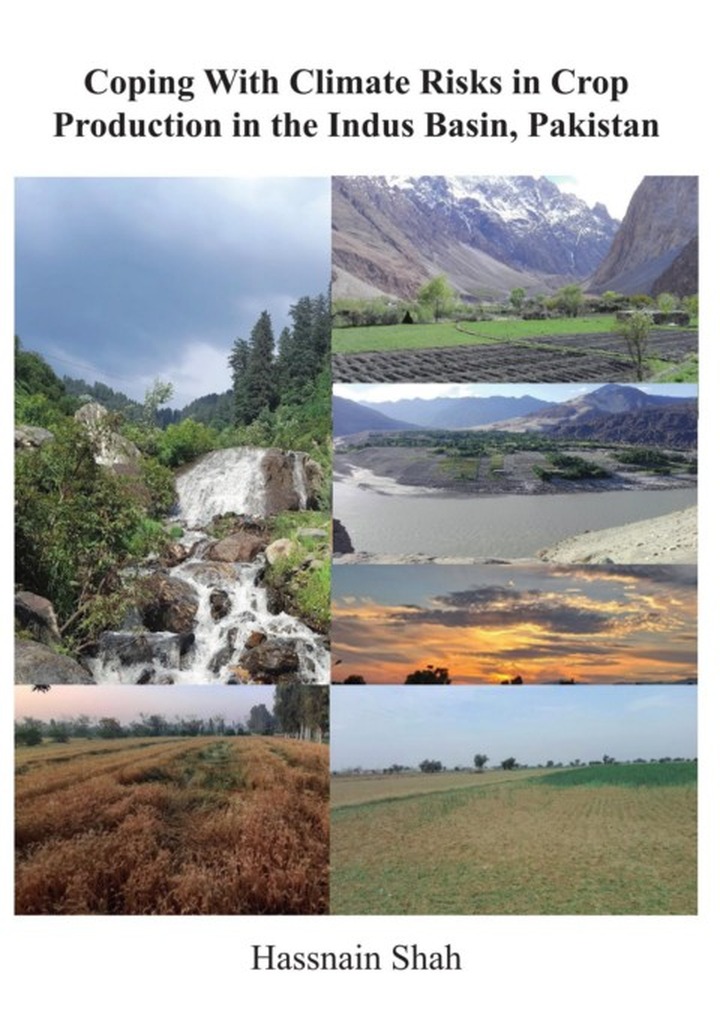
Hassnain Shah
Wageningen University
Publication date: 20 januari 2023
University: Wageningen University
ISBN: 978-94-6447-512-8
Coping with Climate Risks in Crop Production in the Indus Basin, Pakistan
Summary
Evidence is mounting of accelerated global warming and resultant changes in climate variability and extreme events. A main manifestation of this is increased risks for crop production. Indeed, sustaining crop production across diverse agro-ecologies and cropping systems is increasingly challenging, as in each, crops are exposed to a specific array of climate-related hazards throughout the production period. This thesis examines in-season climate hazards, farmers’ current coping strategies and constraints to adopting coping strategies. Particularly, it analyses limitations to the adjustments farmers can make during growing periods to adapt to shifts in crop seasons under climate change. The central question of the thesis is “when, within a crop production cycle, are farming communities most vulnerable to climate hazards?”
First, the integrative concept of critical moments (CMs) is introduced, defined as “periods of risk during which livelihoods are vulnerable to specific climate hazards”. The CM concept is explored through a review of the literature on climate modelling, agronomy and socio-economics. To structure evidence from that review, a conceptual framework is derived distinguishing three categories of CMs according to the “when” of their impact: immediate, compound and shifted (Chapter 2). Second, an empirical analysis of farm-level cross-sectional data (n=287) is presented, encompassing from four cropping systems (rice-wheat, groundnut-wheat, maize-wheat and potato-wheat) in different agro-ecological zones (high mountains, mountain valleys, mid-hills and irrigated plains) in the Pakistani part of the Indus Basin (Chapter 3). A step-wise methodology is presented and applied to identify important CMs, based on an in-depth cause-and-effect chain analysis by impact pathways, as well as the coping strategies farmers implemented to mitigate yield losses, their effectiveness, the costs involved, and the level of adoption. Third, farmers’ recollections of shifts in seasons under climate change are explored, as well as changes that farmers instituted in growing periods and in sowing and harvesting dates over time, alongside the impacts of these and limitations to further adjustments of growing periods within the shifted seasons (Chapter 4). The results on shifts in seasons and changes in growing periods are substantiated using temperature and precipitation data and changes in growing degree days as obtained from meteorological stations near the study sites.
The concept of critical moments is novel as it considers direct and indirect impacts as well coping strategies and explicitly includes the total effects of individual and multiple hazards by crop stage and the cost of coping. Indeed, a weather hazard affects more than just the volumetric production; often it also affects yield quality, which can render a crop unmarketable. From the literature, three types of CMs were identified: CMs resulting from hazards with immediate impact (iCM), CMs resulting from compound hazards (cCM) and CMs resulting from hazards in which the impact was shifted to the next period in the crop rotation cycle (sCM). The literature also provides examples of several workability issues and difficulties in crop management that affect cost, crop yield and quality. However, in-season coping strategies targeting crop stages and pathways to losses are seldom reported, as the climate change literature focuses mainly on adaptation (ex ante) and ex post livelihood adjustments.
Field evidence from this research shows that in-season climate hazards resulted in substantial losses without a coping strategy, though yield losses varied, being in the 10–30% range for 43% of the in-season hazards and in the 31–50% range for another 39% of reported cases. Application of in-season coping strategies resulted in a yield recovery of 40–95%. Both effectiveness in terms of the yield loss recovered and the cost of coping strategies affected farm profitability and income. The additional cost of coping varied from 4% to 34% of the recovered yield value, the average being 19%. There was no coping strategy possible for 22% to 45% of the events reported in the different study sites. For most of the hazards at later crop stages, which caused lodging, disturbed pollination, damaged spikes or shrivelled grains, farmers had hardly any coping options available.
In the rainfed ecology, foremost climate hazards included lodging, disturbed pollination, damaged spikes, shrivelled grains and wilting due to moisture stress. Farmers’ possibilities to cope were constrained by multiple barriers, including those due to overlaps in operations in multi-crop systems. Where coping options were available, the adoption rate varied from 60% in the mountain valley to 86% on the irrigated plains. The effectiveness of coping strategies varied by response time and level of inputs used. Coping became particularly difficult and costly when weather hazards disrupted farm management and field workability, giving rise to conflicts in the timing of crucial farm operations and labour allocation.
This thesis contributes to a contextual understanding of farmers’ responses to shifts in crop seasons and the resulting changes in crop growing periods. Farmers’ adjustments in sowing dates did not necessarily parallel shifts in seasons, as farm decision-making also had to consider risks linked to climate variability and management limitations. At higher altitudes (valleys and mountains), the frost period had shortened, producing a longer growing period that enhanced yields. At lower altitudes (irrigated plains and mid-hills), the summer crop season had lengthened and the winter season had shortened, but the growing period was shorter in both seasons, due to higher temperatures, which negatively impacted yields. As an adaptation strategy, changing sowing dates was only somewhat effective in preventing yield losses. Farmers adopted complementary strategies, but these brought additional costs.
For the future, farmers at lower altitudes indicated limited further scope to adjust sowing and harvesting dates for wheat. A better understanding of the differentiated risks and effectiveness of in-season coping strategies could support greater interdisciplinary engagement to identify risks, to develop and promote effective coping options, and to establish user-relevant support mechanisms to reduce vulnerabilities specific to places and moments in the crop production period under current and expected climate hazards.
See also these dissertations
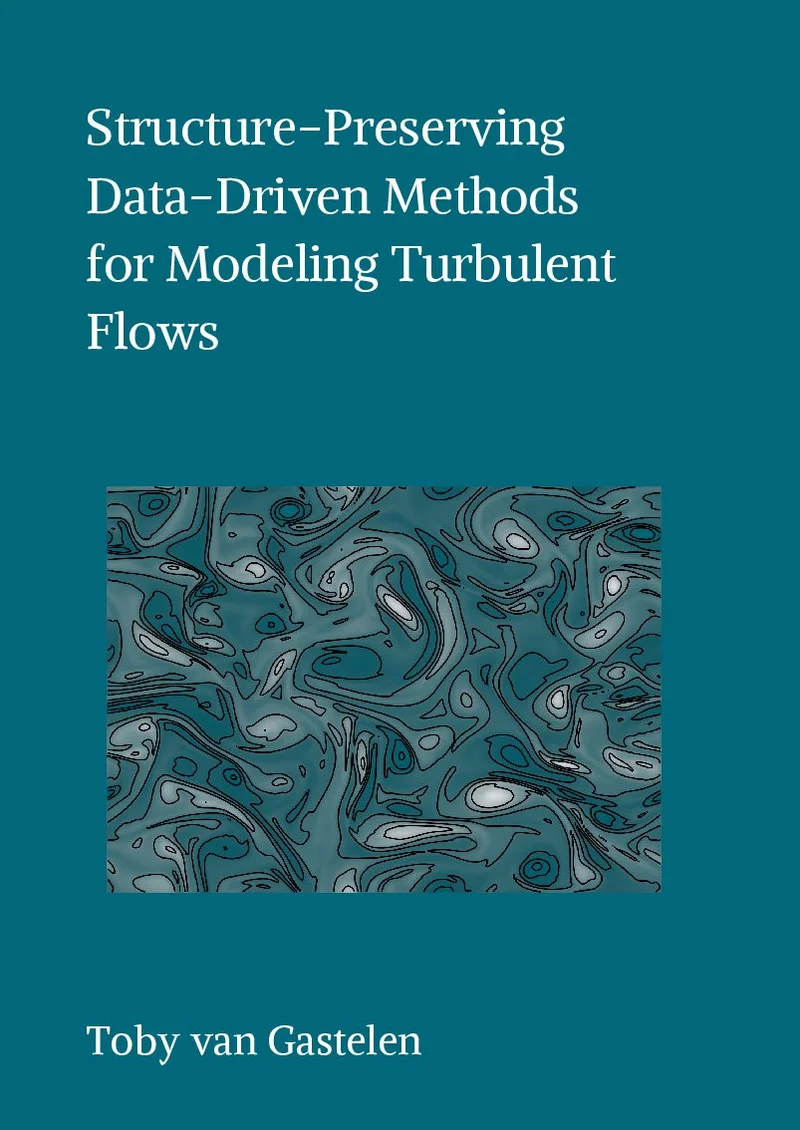
Toby van Gastelen
Structure-Preserving Data-Driven Methods for Modeling Turbulent Flows
19 mei 2026
TU Eindhoven
Open Ebook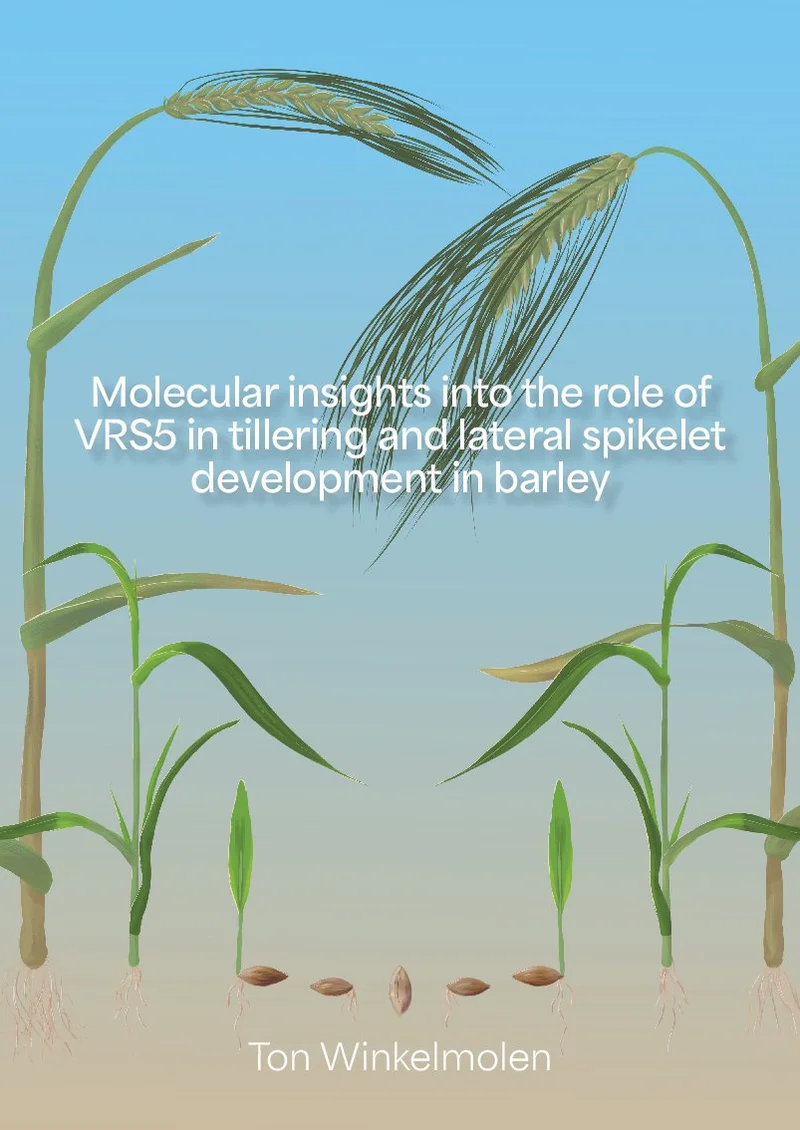
Ton Winkelmolen
Molecular insights into the role of VRS5 in tillering and lateral spikelet development in barley
12 juni 2026
Wageningen University
Open Ebook
Selcuk Peker
Gamma Knife Radiosurgery for Skull Base Tumors
10 juni 2026
Universiteit Maastricht
Open Ebook
Tonny Manalal
Reimagining petrochemical clusters by defossilising chemical building blocks
18 mei 2026
Overig
Open Ebook


Cora De Gol
Microbial stabilization and protein functionality of plant-based liquids using pulsed electric fields
17 juni 2026
Wageningen University
Open Ebook
We print for the following universities