Dixit Guleria
Uniaxial Orientation of Polyethylene Films for Recyclable Flexible Packaging
21 mei 2025
TU Eindhoven
Open Ebook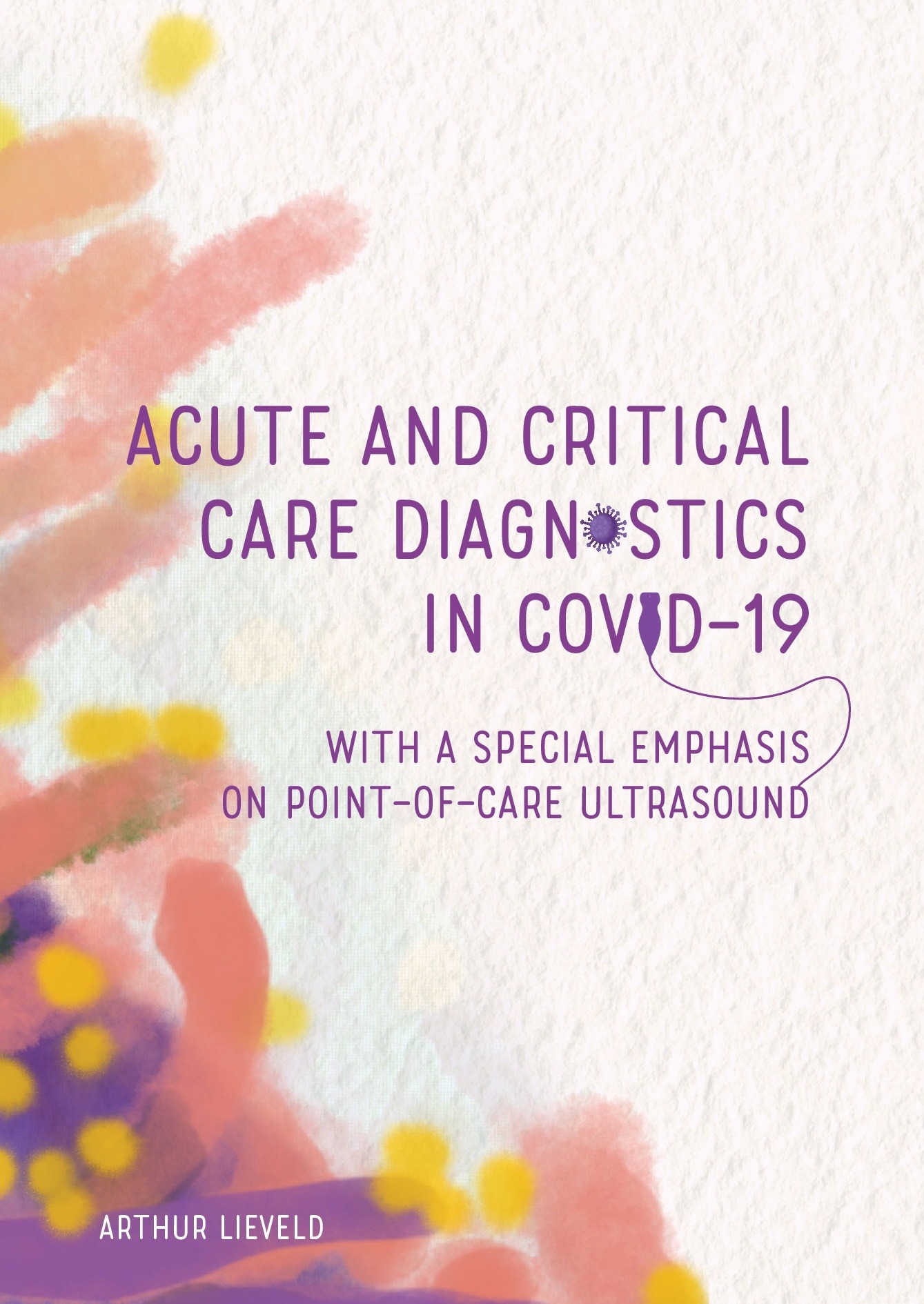
Share this project
Summary
Part 1 of this thesis focused on how conventional diagnostic tests could aid in the diagnosis and prognosis of (suspected) COVID-19, as well as its complications in patients presenting to the emergency department (ED). At the start of the pandemic clinicians turned to computed tomography (CT) to aid rapid diagnosis. The results of the multicenter study in Chapter 2 showed that the CO-RADS is an excellent tool in differentiating between positive and negative COVID-19 patients at the ED. Furthermore, the degree of pulmonary involvement at ED presentation – quantified by the CT severity score (CTSS) – had a significant positive association with hospital admission, intensive care unit (ICU) admission and 30-day mortality.
In Chapter 3 we showed that procalcitonin (PCT) may aid in excluding a bacterial (co)infection in patients with respiratory symptoms presenting to ED. We found that the PCT cutoff for a bacterial co(infection) can probably be raised to 0.5 in patients with a proven viral infection. In Chapter 4 we developed and externally validated a prognostication model that could predict poor outcome (ICU admission or 30-day mortality) in patients with suspected COVID-19 presenting to the ED: the COVERED risk score.
In Part 2 we explored the use of point-of-care ultrasound (POCUS) for diagnosis and prognosis. The results of Chapter 6 showed that 12-zone LUS had a comparable excellent negative likelihood ratio (NLR) and only slightly lower positive likelihood ratio (PLR) than CT in diagnosing COVID-19 pneumonia. The results of Chapter 7 showed the 6-point protocol is an excellent screening tool due to its high NLR. In Chapter 8, we showed that the semi-quantitative lung ultrasound score (LUSS) at initial ED presentation is associated with poor outcome, admission duration and disease severity. In Chapter 9, we screened COVID-19 patients admitted to the medical ward for asymptomatic proximal DVT and found a low prevalence (4%), while there was a high prevalence of pulmonary embolism (PE) (28.8%), suggesting local clot formation in the lungs rather than dislodging thrombi.
Part 3 concentrated on the use of POCUS in monitoring the COVID-19 disease course in the ICU. Chapter 10 showed excellent agreement between 6-zone and 12-zone LUS scores in either position, indicating there is no argument for using the 12-zone instead of the 6-zone protocol for monitoring. In Chapter 12, we found that the LUSS within 24 hours of intubation was associated with successful liberation from mechanical ventilation. In Chapter 13, we assessed the longitudinal correlation of pulmonary involvement graded by weekly CT and LUS. Only a rise in LUSS after 2 weeks was significantly associated with mortality. CTSS did not prove helpful in monitoring ICU patients. In Chapter 14, we found that a combination of deep vein and cardiac POCUS can aid in ruling out PE. Finally, Chapter 15 studied the evolution of respiratory muscle thickness, finding no overall decrease in diaphragm thickness in the first week, possibly due to inflammatory edema masking muscle loss.