Share this project
Giulia Bongiorno1
Wageningen University
Publication date: 18 maart 2020
University: Wageningen University
ISBN: 978-94-6395-245-3
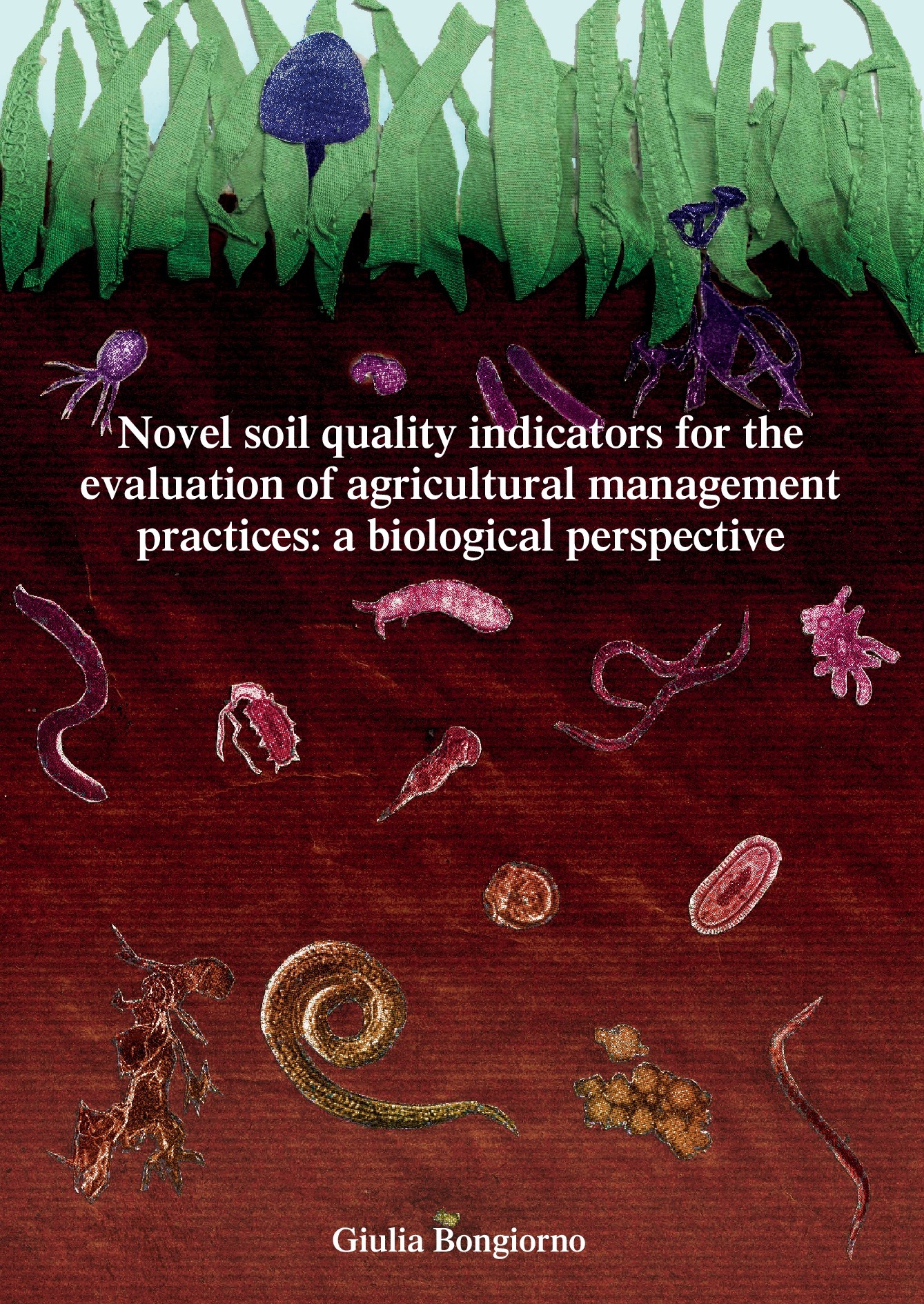
Novel soil quality indicators for the evaluation of agricultural management practices
Summary
The measurement and monitoring of the status and the changes in soil properties can indicate the effect of agricultural management on soil quality, defined as the capacity of a soil to perform multiple functions. With advances in knowledge and technological developments in the field of soil biology and soil organic matter, the floor is opening up for the use of novel biological soil quality indicators. My thesis is motivated by the need of assessing the suitability of novel indicators to better understand the impact of agricultural soil management on soil quality in the search for sustainable management practices.
Chapter 1 provides an introduction on soil multifunctionality, the soil quality concept, and soil quality indicators. In addition, I introduce the novel indicators selected for investigation in my thesis: labile carbon fractions, soil disease suppressiveness, soil free-living nematode communities, and microbial catabolic profiles. I highlight their relevance for soil quality assessments by referring to the broad body of literature on the topic, and by showing their conceptual link with multiple soil processes. This selection was based on the outcome of Chapter 2 (Bünemann et al., 2018), a critical review of the soil quality concept, to which I contributed especially with a review novel soil quality indicators.
In the next experimental chapters (3,4,5, and 6; Bongiorno et al., 2019b, c, a; Bongiorno et al., submitted) these soil parameters were screened for their suitability as novel soil quality indicators. This was done by assessing their sensitivity to tillage (conventional vs reduced) and organic matter addition (low vs high) in ten European long-term field experiments, and by linking them to a range of traditionally measured soil quality indicators, selected for their association with soil processes as the minimum data set (MDS) in the Horizon 2020 project iSQAPER (interactive Soil Quality Assessment in Europe and China for Productivity and Environmental Resilience).
In Chapter 3, five different labile carbon fractions were measured: hydrophilic dissolved organic carbon (Hy-DOC), dissolved organic carbon (DOC), permanganate oxidizable carbon (POXC), hot water extractable carbon (HWEC), and particulate organic matter carbon (POMC), ordered here from the smallest to the largest proportion of the total organic carbon (Bongiorno et al., 2019b). The labile fractions were increased by reduced tillage and high organic matter addition, even more than total organic carbon. In particular, POXC was found to be one of the most sensitive fractions, together with POMC and HWEC, and to be linked with various existing chemical, physical and biological soil quality indicators. These results showed that POXC, more than other fractions, has the potential to be a fast, cheap, and meaningful indicator of soil quality, applicable in soil management.
Chapter 4 aims at assessing the soil disease-suppressive capacity of the management systems with a bioassay using Cress-Pythium as a model pathosystem, and at elucidating the mechanistic relationship between labile carbon and soil suppressiveness (Bongiorno et al., 2019c). Overall, reduced tillage increased soil disease suppressiveness, but organic matter addition did not have an effect. Microbial biomass carbon was the soil parameter that most explained the variation in soil disease suppressiveness, while the labile carbon had an indirect effect on soil suppressiveness through a positive effect on microbial biomass.
In Chapter 5, I assessed soil free-living nematode communities with sequencing methods, obtaining information about alpha and beta diversity and the total nematode abundance with qPCR (Bongiorno et al., 2019a). Feeding groups relative and total abundances and food-web soil quality indices were also calculated. Reduced tillage increased richness and diversity of nematodes, caused a shift in community structure, and increased maturity, stability, and the fungal-decomposition channel of the food web. Organic matter addition had a weaker effect on nematode communities than tillage and created a more favourable environment for bacterivorous nematodes. Nematode communities were tightly linked with labile organic carbon fractions, available K, and microbial parameters (microbial biomass carbon and soil respiration).
In Chapter 6, the MicroRespTM system was used to measure microbial catabolic profiles in response to adding carbon substrates of different complexity to the soil (Bongiorno et al., submitted). Catabolic profiles were expressed in absolute and relative utilization rate and the Shannon microbial functional diversity index (H’) was calculated. Organic matter addition and reduced tillage increased the utilization rate of all the carbon substrates, but only reduced tillage increased the microbial functional diversity. In conventional tillage a higher proportional utilization of alpha-ketoglutaric acid was found, which suggest a more important role of organic acids in more intensive systems. A key direct positive role of labile carbon in sustaining microbial functional diversity was found, which points at the importance of carbon availability for sustaining microbial functionality.
Finally, in Chapter 7, I brought together the results of the four experimental chapters 3, 4, 5 and 6 (Bongiorno et al., in preparation). POXC, and to a less extent the other labile carbon fractions, was found to be the most sensitive indicator of the effects of tillage and organic matter addition. Because of its strong link found with other soil quality parameters, including soil disease suppressiveness, nematode communities, and microbial functional diversity, we modelled the role of POXC (a proxy for labile carbon) in sustaining multiple ecosystem services by Structural Equation Modelling (SEM). POXC was found to have a central role in nutrient cycling, carbon sequestration, biodiversity conservation, erosion control and disease regulation/suppression. Beside this synergistic effect between ecosystem services, labile organic carbon was found to have an indirect negative link with biomass production through soil respiration. This result shows a trade-off between functions sustaining agricultural productivity and environmental resilience.
The novel soil quality indicators were not redundant, and gave different and relevant information about the impact of tillage and organic matter input on soil processes. In particular, POXC has a high potential as a fast, cheap and multifunctional soil quality indicator.
Reduced tillage clearly increased carbon availability, disease suppressiveness, nematode richness and diversity, the stability and maturity of the food-web, and microbial activity and functional diversity. Organic matter addition had a weaker role in sustaining soil quality, possibly due to the different compositions of the organic matter inputs in the different long-term field experiments.
Future studies should focus on understanding which parts of the total carbon are assessed with the different labile fractions, in particular POXC, in order to better establish linkages with soil processes. In addition, the methodologies of measurement of the novel indicators proposed in my thesis will have to be improved and validated to enhance their usefulness in soil quality assessments for agricultural management.
See also these dissertations
Toby van Gastelen
Structure-Preserving Data-Driven Methods for Modeling Turbulent Flows
19 mei 2026
TU Eindhoven
Open Ebook
Ton Winkelmolen
Molecular insights into the role of VRS5 in tillering and lateral spikelet development in barley
12 juni 2026
Wageningen University
Open Ebook
Selcuk Peker
Gamma Knife Radiosurgery for Skull Base Tumors
10 juni 2026
Universiteit Maastricht
Open Ebook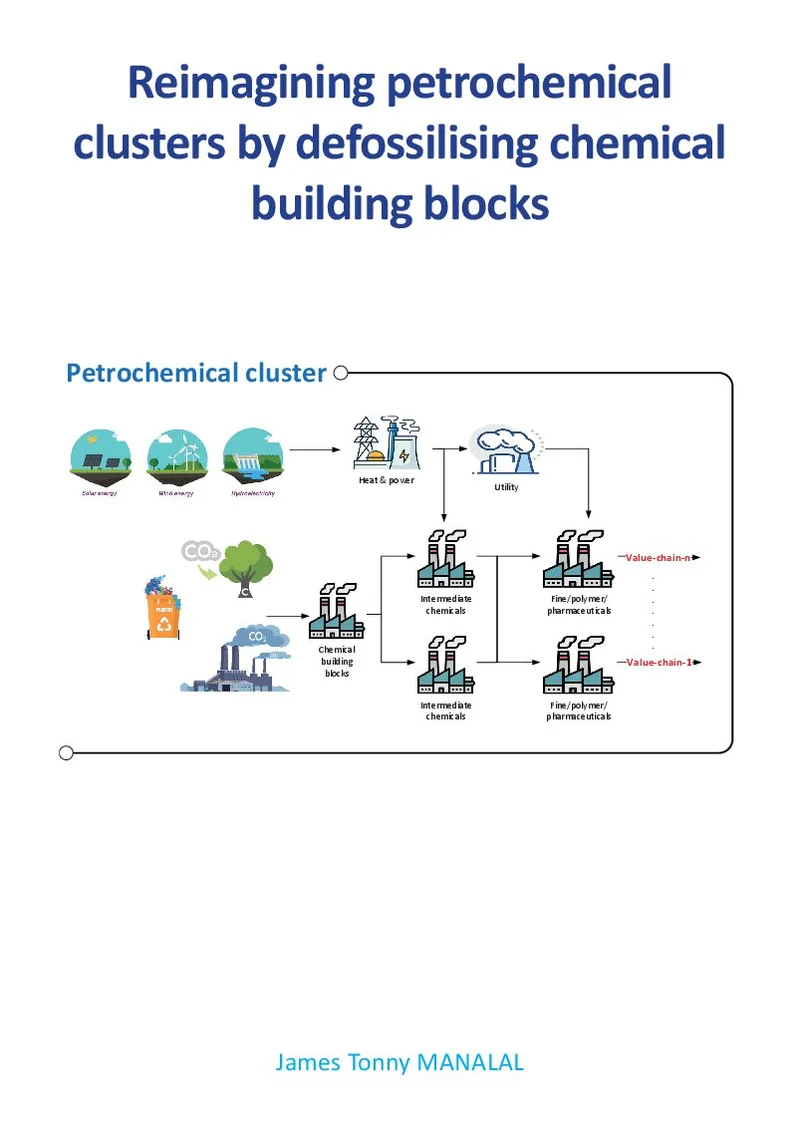
Tonny Manalal
Reimagining petrochemical clusters by defossilising chemical building blocks
18 mei 2026
Overig
Open Ebook
Cora De Gol
Microbial stabilization and protein functionality of plant-based liquids using pulsed electric fields
17 juni 2026
Wageningen University
Open Ebook
We print for the following universities