Share this project
Gisele Bourgeois Law
Universiteit Maastricht
Publication date: 3 september 2020
University: Universiteit Maastricht
ISBN: 978-94-6380-902-3
CONCEPTUALIZATIONS OF REMEDIATION FOR PRACTICING PHYSICIANS
Summary
The need to develop remediation programs for practicing physicians has never been greater. Increasing public demands for physician accountability and the ensuing development in several countries of revalidation processes and/or practice improvement programs are the main impetus for this state of affairs, abetted by high profile cases such as Shipman, the UK physician who was also a serial murderer. While it might be reasonably expected to be easier to remediate deficiencies in clinical competence than professionalism gaps or mental health and addictions issues negatively affecting performance, until now there have been more programs to support physicians struggling with mental health and addictions than to address gaps in clinical competence. This thesis explores possible reasons for this state of affairs. Since the first step in solving a problem is in defining it, the focus of this thesis is on how remediation in practicing physicians is conceptualized, and on how these conceptualizations might be contributing to the current situation.
Chapter 1 explains the background of this thesis and how personal experience as the director of an assessment and remediation program for practicing physicians led me to want to do a PhD to explore why remediation in practice is so fraught. I found it particularly telling that a paper written more than 30 years ago asking questions such as where remediation fits into the CME/CPD educational system, who pays for it and who provides it, could have been written today. Based on the literature and on personal experience as a member of international organizations of remediation programs, this challenge in addressing remediation appears to be consistent across countries, or at least across English-speaking countries, irrespective of the medical (state-funded vs private) or social systems. The lack of an agreed-upon definition for remediation and of what the term includes contributes to that challenge. It leads to widely varying estimates of the need for remediation (0.5% to 30% of the physician population), as well as to difficulty in interpreting what little outcome data we have. Canada has been a leader in the field of physician assessment and remediation and would thus appear to be a fruitful context in which to study remediation.
Chapter 2 consists of a scoping review of the literature on the remediation of practicing physicians, focusing on what is revealed explicitly or what might be revealed implicitly about the meaning of remediation for practicing physicians. The review includes the gray literature on remediation programs in North America and the United Kingdom, as well as other literature that contributes to our understanding of remediation, such as learning theories and theories on the sociology of medicine. This review suggests that remediation is conceptualized as an educational process, with the final aim of returning the individual to self-regulated, autonomous practice. Consistent with that educational perspective, remediation in the literature appears to be conceptualized as similar to remediation in residency with similar methods employed and similar remediator attributes and skills required. In regards to the individual requiring remediation (the remediatee), the literature focuses on understanding personal risk factors for poor practice. This focus seems to be more in the service of identifying these individuals so that their practice can be assessed, than in service of determining how to support at risk individuals before problems develop. Finally, the literature on medical culture suggests that aspects of that culture, including shaming and blaming individuals, the reluctance to challenge a colleague’s practice, and the concept of professional autonomy might all affect to a greater or lesser degree the willingness to remediate. The conclusion of the scoping review was to suggest that a different way of looking at remediation – as supported practice change – and taking into account the social determinants of competence rather than focusing on remediatee characteristics might enable us to ask better questions. Finally, since culture is notoriously difficult to change, rather than wait for culture change to facilitate program development, it might be less complicated to normalize remediation, and thus change the culture, by developing widespread remediation programs.
Chapter 3 explores how representatives of different Canadian remediation stakeholder groups (certifying bodies, regulatory authorities, health authorities, university postgraduate and continuing professional development associate deans) grapple with the issue of remediation, and their underlying beliefs and assumptions regarding it. Data from one-hour semi-structured interviews were analyzed using constructivist grounded theory. Results showed that remediation stakeholders conceptualize remediation as having both educational and regulatory aspects and that they slip unconsciously between these two conceptualizations. [Regulatory here refers to the loss of self-regulation and of professional autonomy implied when an external agency removes an individual physician’s decisions regarding their continuing education and/or practice.] This may help explain why universities hesitate to accept remediation as part of their mandate: they are focusing on remediation’s regulatory aspect. On the other hand, regulatory authorities, those responsible for public protection, deem their main role to be assessment and consider remediation to be the purview of educators, i.e. of the university. Failure to come to grips with the education/regulation duality not only makes organizing remediation more difficult, it also leads to practice improvement initiatives being misconstrued as regulatory by the general physician workforce.
Chapter 4 utilizes data from the previously described semi-structured interviews to explore how the representatives from various stakeholder groups conceptualize individuals requiring remediation. Interactions with colleagues over the years lead us to believe that, in spite of the common public perception that doctors ‘stick together’, physicians may not be as supportive of their struggling colleagues as they could be. This was confirmed when stakeholders sometimes demonstrated ambivalence towards their struggling colleagues and about whether remediation, versus removal of licensure, is a wise use of scarce resources. Our participants simultaneously view competence gaps as a state, a place any physician can find themselves in if they are careless or unlucky, and as a trait, a characteristic of the individual suggesting they do not belong in the medical fraternity. This latter tendency to ‘other’ struggling colleagues can be explained by both various psychological theories and by the medical culture of autonomy where the individual is solely responsible for developing and maintaining competence.
Chapter 5 explores the remediators’ (those who are asked by regulatory and health authorities to work one on one with physicians with significant competence gaps and oversee their learning and practice) underlying conceptual frameworks around remediation for practicing physicians, their motivation for being involved in this activity, and how they view the physicians they remediate. Asking remediatees for stories of particularly memorable remediation experiences enabled further exploration of the phenomenon of remediation without attaching any preconceptions as to what might be found. An analysis of their narratives using positioning theory as a sensitizing concept revealed that remediators move between the positions of educator, judge, and guardian, and that while educator is their preferred position, regulators and remediatees might inadvertently or deliberately place obstacles in their way. This suggests that failure to acknowledge the education/regulation duality and to train remediators to identify and move between different positions in the remediator role may be contributing to making the remediation experience more challenging for remediators than it needs to be.
Chapter 6 This commentary on a paper regarding the do’s and don’ts of remediation, written at the end of the PhD and thus informed by our research findings, posits that if we don’t change medicine’s culture of independence and individual self-regulation, remediation will continue to be problematic no matter what we call it or how we organize it.
Chapter 7 This thesis has attempted to understand barriers to organizational (university, health authority, medical association, regulatory body) involvement with remediation. Whereas the literature and conversations at meetings focus on logistics, I explored less tangible barriers such how we conceptualize remediation and those who require it. This final chapter discusses how this program of research has refined and shaped my conceptions of the nature of remediation for practicing physicians, and where those new conceptions might lead to. Using the lens of polarity theory, remediation might now be viewed as a duality with two apparently contradictory poles, education and regulation, that can and must be managed. Keeping the two poles in balance, maximizing the upsides of both poles and minimizing the downsides, might help us move forward with the development of remediation programs as an integral component of the continuing professional development. At the same time, we must address ‘othering’ of struggling physicians, either by stressing that given the right circumstances any physician could find themselves in a similar situation, or by encouraging a shift from exclusionary to inclusionary othering. The first step may be to speak with physicians who have undergone remediation in order to understand how they conceptualize the process and experience its impact.
See also these dissertations

Toby van Gastelen
Structure-Preserving Data-Driven Methods for Modeling Turbulent Flows
19 mei 2026
TU Eindhoven
Open Ebook
Ton Winkelmolen
Molecular insights into the role of VRS5 in tillering and lateral spikelet development in barley
12 juni 2026
Wageningen University
Open Ebook
Selcuk Peker
Gamma Knife Radiosurgery for Skull Base Tumors
10 juni 2026
Universiteit Maastricht
Open Ebook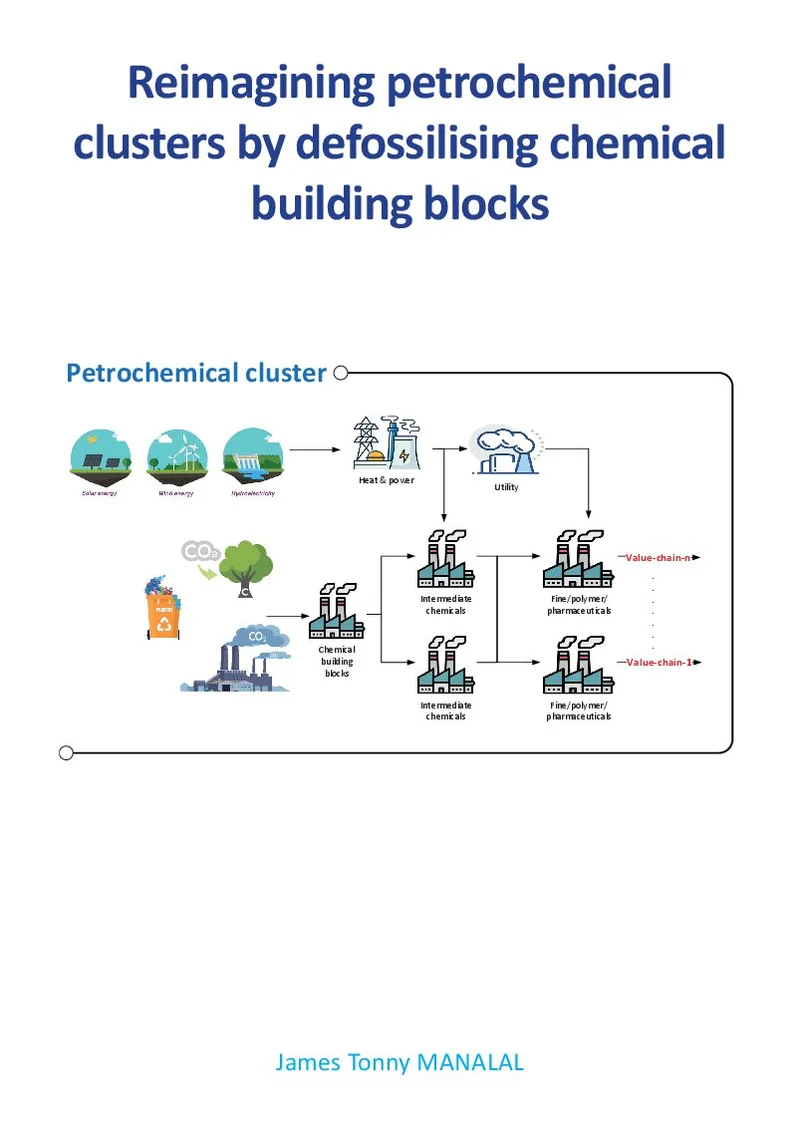
Tonny Manalal
Reimagining petrochemical clusters by defossilising chemical building blocks
18 mei 2026
Overig
Open Ebook
Cora De Gol
Microbial stabilization and protein functionality of plant-based liquids using pulsed electric fields
17 juni 2026
Wageningen University
Open Ebook
We print for the following universities