Share this project
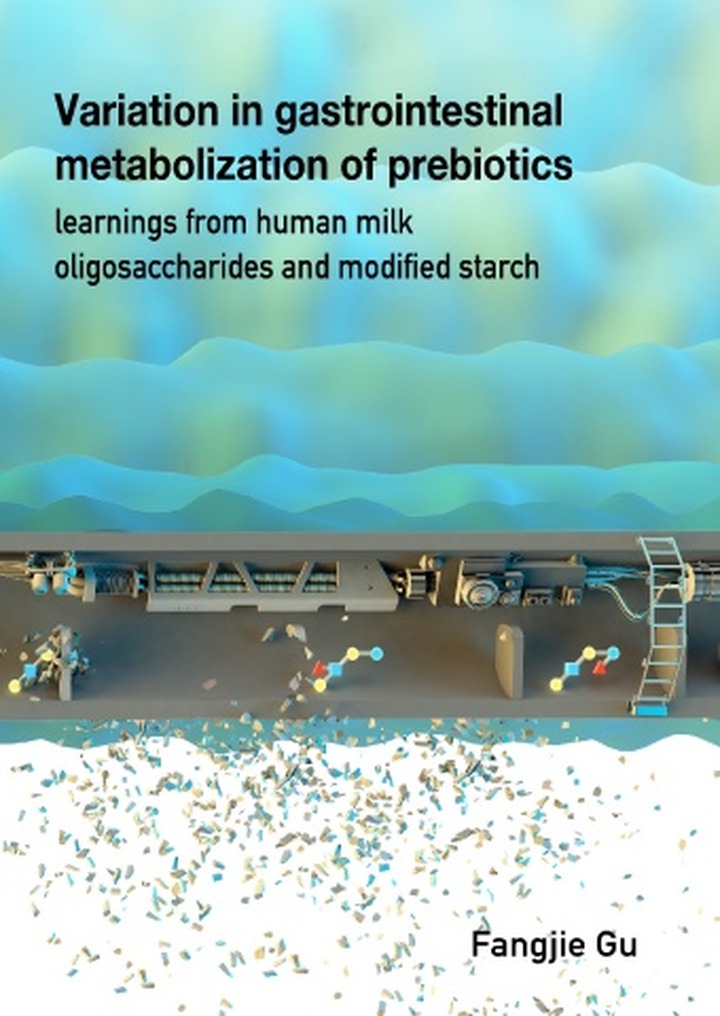
Fangjie Gu
Wageningen University
Publication date: 26 januari 2021
University: Wageningen University
ISBN: 978-94-6395-651-2
Variation in gastrointestinal metabolization of prebiotics
Summary
Prebiotics and their close interactions with human gut microbiota has gained attention in recent years, as they exert multiple impacts on human health. Studies described in the current thesis focused on metabolism of prebiotics or indigestible carbohydrates at molecular level, as well as their associations with gut microbiota composition. In Chapter 1, we start with introducing human milk oligosaccharides (HMOs), which is the natural prebiotic during infancy. HMO structures are quite complex, and their concentrations in human milk vary depending on mothers’ genetic profiles such as Lewis/Secretor genotypes, as well as lactation duration. The metabolization of HMOs in infant gastrointestinal tract has been investigated in some studies, however only with limited numbers of participants or time points, insufficiently linked to microbiota composition and activity. We also introduced an enzymatically modified starch, isomalto/malto-polysaccharides (IMMPs), having potential as prebiotic based on preliminary results from previous studies. Commonly applied approaches for prebiotic study, including in vitro fermentation model, in vivo animal and human model, are described.
In Chapter 2, the optimization of analytical methods to quantify HMOs in maternal milk and infant fecal samples is described, including revisited protocol for 3-fucosyllactose (3FL) analysis. Absolute concentrations of 18 major HMOs present in human milk and infant fecal samples were obtained by combining high performance anion exchange chromatography - pulsed amperometric detection (HPAEC-PAD) and porous graphitized carbon - liquid chromatography mass spectrometry (PGC-LC-MS). Relative levels of fucosylated and sialylated HMO structural elements were obtained by one-dimensional 1H nuclear magnetic resonance (1H NMR). Application of these three techniques was compared regarding efficiencies and accuracy for the identification of mothers’ Lewis/Secretor phenotypes, as well as for monitoring HMO metabolization in the infant gut. Using a pilot sample set from KOALA cohort study, three HMO consumption patterns by infant gut microbiota at 1 month of age were identified. Degree of HMO consumption was also found to be varied depending on specific structural elements.
To validate the findings from KOALA pilot samples, human milk and infant fecal samples from 71 mother-infant pairs registered in the BINGO cohort study, and collected at two, six, and 12 weeks postpartum were analyzed for HMO presence and level as described in Chapter 3. Mothers’ Lewis/Secretor phenotypes influenced the concentrations of fucosylated and neutral core HMOs and sialyl-lacto-N-tetraose c (LST c) in the milk. During the first three months of life, gut microbiota favored utilization of neutral core HMOs the most, followed by sialylated HMOs, and utilized fucosylated HMOs the least. Di-fucosylation of HMOs lead to less microbial degradation compared to mono-fucosylation. Comparable consumption levels of (alpha1-2)-fucosylated HMOs and (alpha1-3/4)-fucosylated HMOs were observed. The majority of sialylated HMOs include the (alpha2-6) linked substituent; however, degradation levels of their (alpha2-3) isomeric structures were higher at all time points. High variation existed among infants regarding the time required for gradual transition from low/non-specific HMO consumption pattern, to intermediate/specific pattern, and finally reaching the complete consumption stage. Caesarean section, or early exposure to hospital/clinic associated surroundings were found to delay the gut developmental transition.
Chapter 4 describes the association between HMOs in mother milk and infant fecal microbiota composition at one month postpartum with 121 breastfed infants from KOALA study. Levels of two (alpha1-2)-fucosylated HMOs, 2'-fucosyllactose (2'FL) and lacto-N-fucopentaose I (LNFP I) were associated with infant fecal microbiota composition, besides delivery mode and infant gender. Infant fecal microbial community showed three different microbial clusters, one showed mixed community structure, one being predominated by Bacteroides and Bifidobacterium, and the third cluster being predominated by Bifidobacterium. Furthermore, it was found that several Bifidobacterium OTUs played a major role in degrading specific HMOs, followed by the genera Bacteroides and Lactobacillus.
In Chapter 5, maternal HMO profiles, infant fecal HMO profiles and infant fecal microbiota composition from 24 mother-infant pairs from BINGO study at two, six, and 12 weeks postpartum are described. Only weak correlations were found between maternal HMO levels and microbial OTUs in infant fecal samples. Other factors, including mode of delivery, delivery place and infant gender showed stronger influence on shaping infant gut microbiota. In general, the gut microbiota development of the infants in the study showed a gradual progression towards a Bifidobacterium dominated pattern; meanwhile, microbial degradation of HMOs increased with age. OTUs within genera Bifidobacterium, Parabacteroides, Escherichia-Shigella, Bacteroides, Actinomyces, Veillonella, Lachnospiraceae Incertae Sedis, and Erysipelotrichaceae Incertae Sedis were found to be important taxa of HMO metabolization.
Applying a batchwise in vitro fermentation model with human fecal inoculum to study prebiotic fermentation behaviors of isomalto/malto-polysaccharides (IMMPs) is described in Chapter 6. Overall, IMMPs with over 90% of alpha-(1->6) linked glycosyl residues showed a delayed and slow-fermenting behavior. IMMPs were degraded into alpha-(1->6) linked isomalto-oligosaccharides by extracellular enzymes, followed by absorption of these smaller molecules into the microbial cells and further degradation by cell-associated enzymes. When considerable amounts of alpha-(1->4) linked glycosidic linkages were present within the IMMPs, fecal microbiota instantly utilized these structures from the start of fermentation. Switching from alpha-(1->4) linked glucose consumption to alpha-(1->6) linked glucosyl residues required quite an adaption period of the microbes, which further postponed the alpha-(1->6) linked glucose associated fermentation. Acetic acid and succinic acid were the main metabolites during IMMP fermentation, besides production of propionic acid, butyric acid and lactic acid. Microbiota composition analysis pointed to an increase in relative abundance of genera Bifidobacterium and Lactobacillus in the IMMPs fermentation digesta, especially during degradation of alpha-(1->6) glycosidic linkages of IMMPs. All observations pointed towards the prebiotic potential of IMMPs, rich in alpha-(1->6) glycosidic linkages.
In Chapter 7, findings from both KOALA and BINGO cohort samples in the current thesis are summarized regarding HMO synthesis during lactation, as well as structure-specific metabolization by infant gut microbiota. The methodological improvement in HMO quantitation, including 3FL, was discussed and outcomes on a first pilot of paired milk - fecal samples were related to data from literature. The infant gut development model incorporating microbiota composition and HMO metabolization pattern was updated from previous studies. Several factors that could influence the infant gut microbiota development and hence HMO metabolization at different developmental stages were described. Furthermore, the in vitro fermentation behavior of IMMPs are compared to findings from in vivo mice study using the same substrates. Limitations of the current thesis are discussed, and suggestions for future research are provided.
See also these dissertations

Toby van Gastelen
Structure-Preserving Data-Driven Methods for Modeling Turbulent Flows
19 mei 2026
TU Eindhoven
Open Ebook
Ton Winkelmolen
Molecular insights into the role of VRS5 in tillering and lateral spikelet development in barley
12 juni 2026
Wageningen University
Open Ebook
Selcuk Peker
Gamma Knife Radiosurgery for Skull Base Tumors
10 juni 2026
Universiteit Maastricht
Open Ebook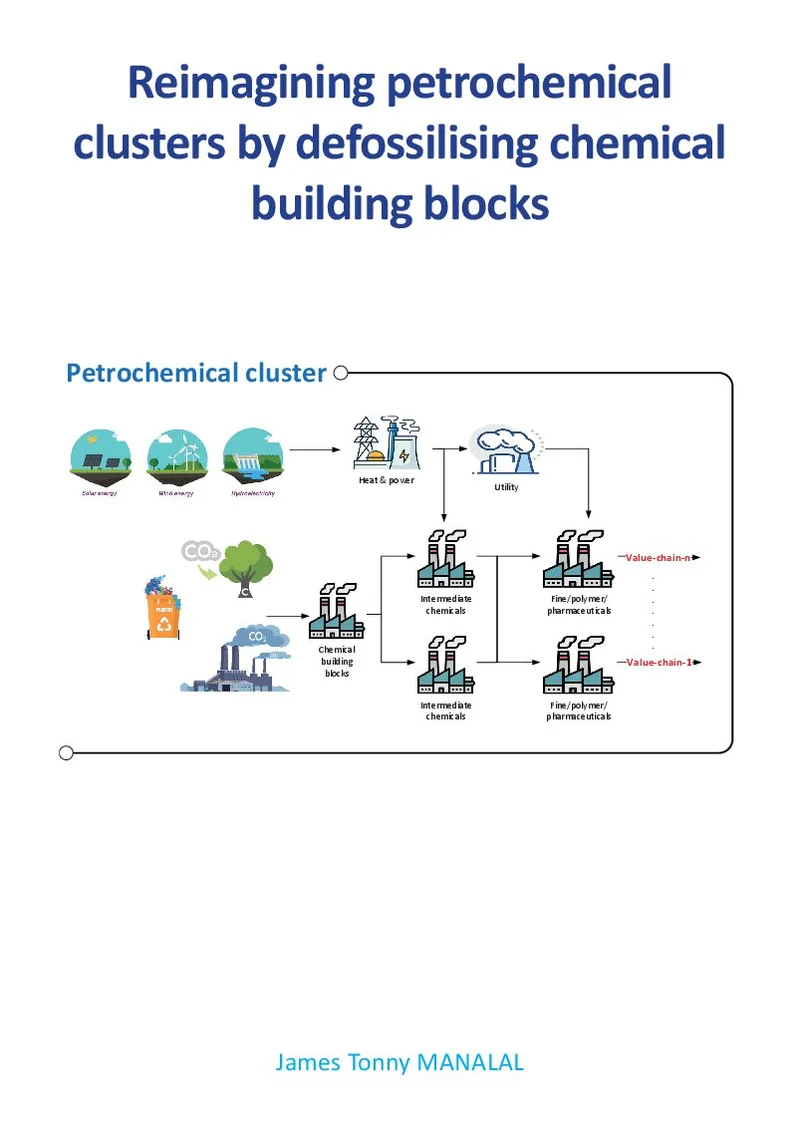
Tonny Manalal
Reimagining petrochemical clusters by defossilising chemical building blocks
18 mei 2026
Overig
Open Ebook


Cora De Gol
Microbial stabilization and protein functionality of plant-based liquids using pulsed electric fields
17 juni 2026
Wageningen University
Open Ebook
We print for the following universities