Share this project
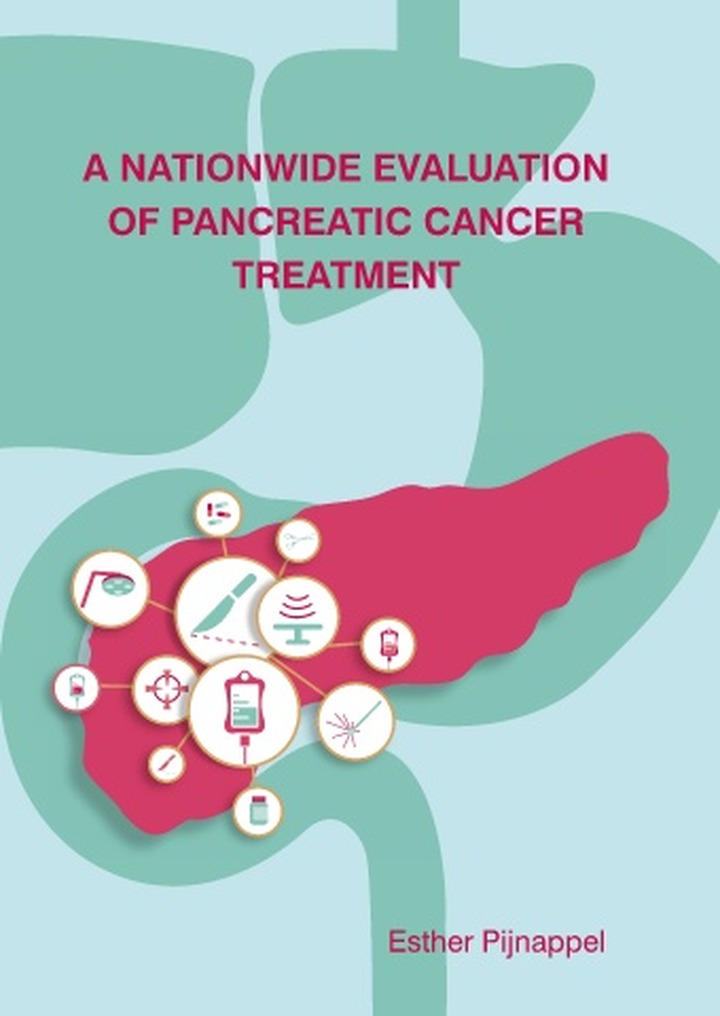
Esther Pijnappel
Universiteit van Amsterdam
Publication date: 24 juni 2022
University: Universiteit van Amsterdam
ISBN: 978-94-6423-788-7
A NATIONWIDE EVALUATION OF PANCREATIC CANCER TREATMENT
Summary
Consensus statement on Mandatory Measurements in PAncreatic Cancer Trials for patients with Resectable/Borderline resectable disease (COMM-PACT-RB) was described in Chapter 4 and 5. The literature search identified 42 RCTs from which the baseline and prognostic factors were up for voting in the consensus procedure. After two rounds with the Delphi panel consisting of 13 experts on pancreatic cancer, agreement was reached on 50 mandatory baseline and 20 mandatory prognostic factors. These factors, including a distinction between neoadjuvant and adjuvant treatment, should be reported in future RCTs for these patients.
The risk of progression or recurrence of the disease in patients with pancreatic cancer is substantial. Pancreatic cancer has a poor prognosis, even when treatment is started. And in the majority of patients, the disease is detected at a late stage. Therefore, it is reasonable that patients with pancreatic cancer experience a certain amount of fear of progression or recurrence of the disease (FOP). Chapter 6 includes results on patients with pancreatic cancer who participated in the Dutch Pancreatic Cancer Project (PACAP) and compares FOP in patients treated with surgical resection, palliative systemic treatment and BSC. Patients with pancreatic cancer report FOP at diagnosis, which stabilized over time. Patients who received surgical resection showed significantly less FOP at initial diagnosis compared to patients who received palliative systemic treatment or BSC only. Only in patients who received BSC only, higher QoL scores were independently associated with the probability of lower FOP. FOP was not associated with survival in any of the treatment subgroups. To make the treatment for patients with pancreatic cancer as comprehensive as possible, FOP should be discussed by the healthcare professional to be able to provide patients with the most suitable psychological support.
Biological sex and gender are known to have an impact on the incidence rates in patients with pancreatic cancer. However, it is unclear whether biological sex and gender are associated with treatment allocation and OS of patients with metastatic pancreatic cancer. Therefore, in Chapter 7, this was investigated. Patients with metastatic disease diagnosed between 2015 and 2019 were selected from the NCR. In general, women received less often systemic treatment compared to men. In multivariable logistic regression analyses, women at younger age (≤55 years), received more often systemic treatment as compared to men of the same age, but this disparity was absent at older age. After adjustment for clinical covariates, women had longer OS compared to men in all age groups. These results suggest that patient and treatment characteristics do not completely describe differences in survival, disease biology and sociocultural reasons might also contribute to the survival of patients with metastatic pancreatic cancer. It is important to understand the biological and sociocultural basis for sex differences in order to better personalize the treatment for these patients in the future.
See also these dissertations


Toby van Gastelen
Structure-Preserving Data-Driven Methods for Modeling Turbulent Flows
19 mei 2026
TU Eindhoven
Open Ebook
Ton Winkelmolen
Molecular insights into the role of VRS5 in tillering and lateral spikelet development in barley
12 juni 2026
Wageningen University
Open Ebook
Selcuk Peker
Gamma Knife Radiosurgery for Skull Base Tumors
10 juni 2026
Universiteit Maastricht
Open Ebook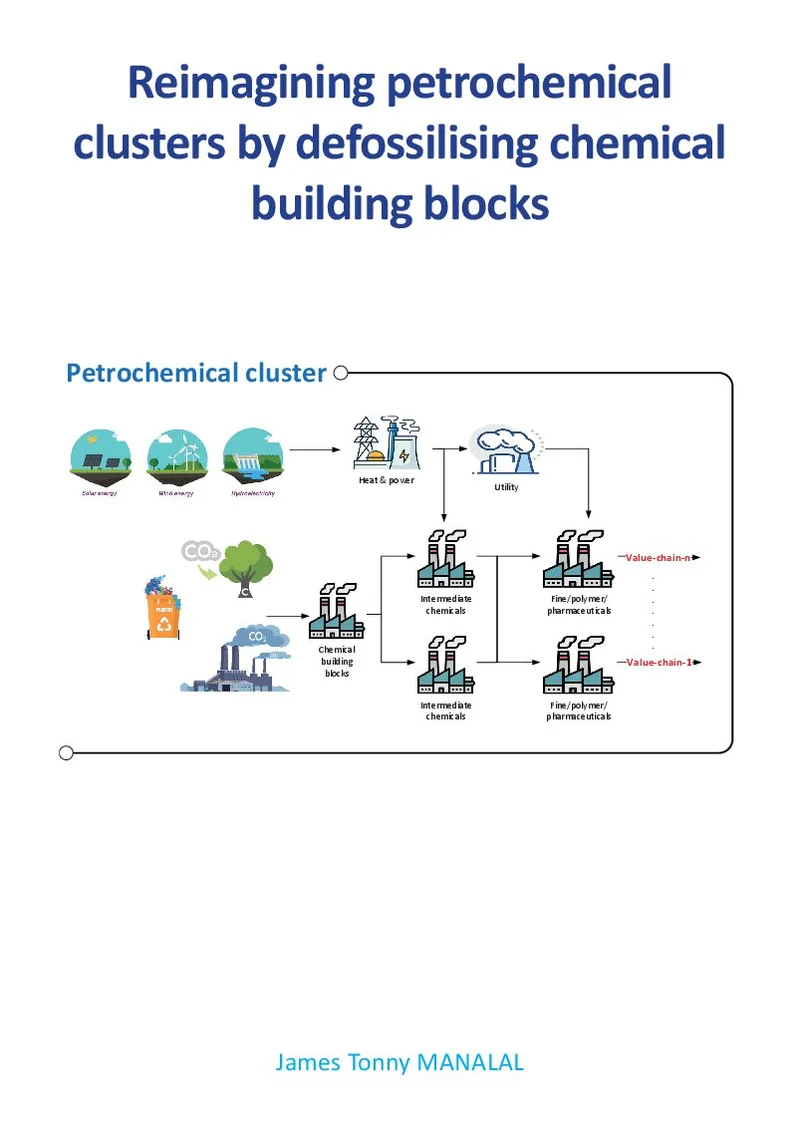
Tonny Manalal
Reimagining petrochemical clusters by defossilising chemical building blocks
18 mei 2026
Overig
Open Ebook


Cora De Gol
Microbial stabilization and protein functionality of plant-based liquids using pulsed electric fields
17 juni 2026
Wageningen University
Open Ebook
We print for the following universities