Share this project
Danilo Spinola
Universiteit Maastricht
Publication date: 4 maart 2020
University: Universiteit Maastricht
ISBN: 978-94-6380-698-5
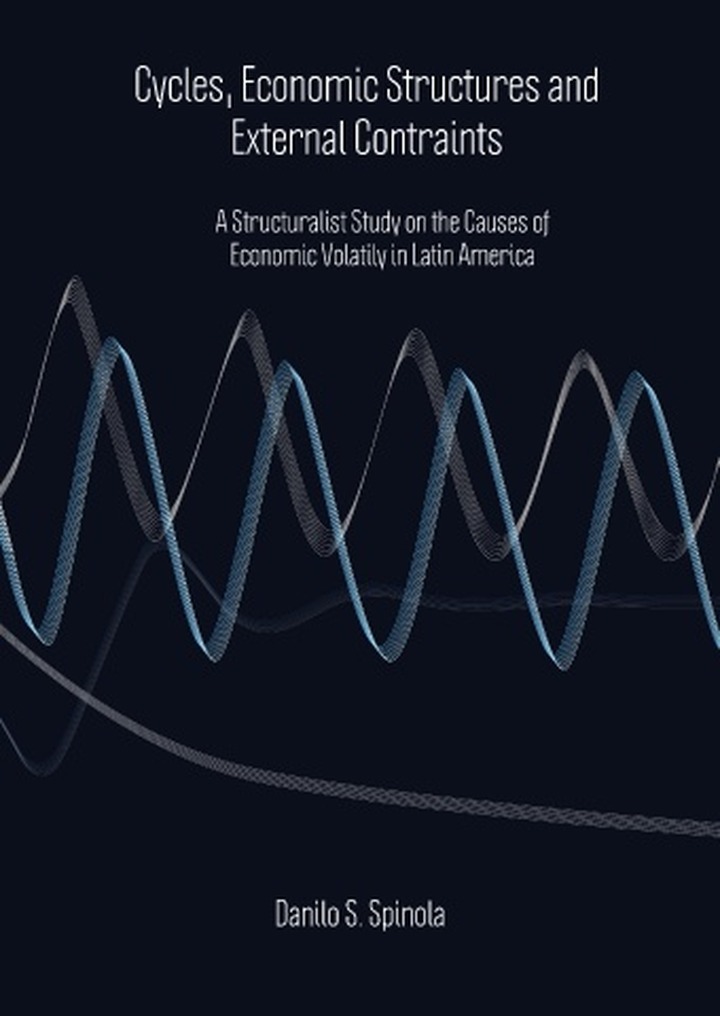
Cycles, Economic Structures and External Constraints
Summary
The main objective of this thesis is to understand the causes behind the endogenous volatile behavior of Latin American economies in a New-Structuralist perspective. Many distinct authors (Caldentey & Vernengo, 2010; Cimoli, Porcile, & Rovira, 2010; Botta, 2009; Ocampo, 2002) argue that the repetition of strong boom-bust dynamics is a structural problem in the economic development of Latin America. In this research we search for the underlying causes of this behavior, discussing volatility as an endogenous phenomenon, intrinsic to the characteristics of these fragile economies.
We assess this research question following empirical and theoretical approaches. The empirical approach initially consists on identifying the main characteristics of economic growth cycles in Latin America from real Gross Domestic Product (GDP) data. Secondly, we test the assumptions of the models developed in this thesis. Thirdly we check how the economic system behaves when there are exogenous shocks to some specific variables.
The theoretical part of this research develops itself from growth models, offering explanations of the causes of Latin American endogenous volatility based on the growth cycle theory literature. In terms of the theoretical framework, this thesis is based on three main classic pillars, all somehow related to the Structuralist theory: (1) The Goodwin model (Goodwin, 1967), composed of endogenous cycles that emerge in the relationship between economic growth and income distribution; (2) The Balance of Payments Constrained Model (BPCM) (Thirlwall, 1979), that relates economic growth to external constraints, and (3) The Prebisch-Singer hypothesis (Prebisch, 1950) (center-periphery framework), relating economic growth and development traps to the position of a developing economy in the international division of labor (global economic system). Since the early contributions figuring as pillars of this thesis, a whole tradition of Structuralist, Post-Keynesian, and Evolutionary works has been developed forming the core of the New-Structuralist framework (Cimoli & Porcile, 2014; Cimoli et al., 2010; Botta, 2009; Ocampo, Rada, & Taylor, 2009; Porcile & Yajima, 2019). In this thesis we interrelate these approaches using more recent models developed in the New-Structuralist framework to the Latin American case. Our research is based on the open-economy growth models of La Marca (2010) and Dutt (2002).
This thesis is divided in four independent articles. Despite their independence, their topics are considered as different parts of a puzzle, searching to answer the main research questions of this thesis: what are the conditions and causes of structural volatility in Latin America?
Initially, using GDP growth data from the Maddison Project Database we apply in Chapter 1 an asymmetric band-pass filter to extract growth GDP cycles for 136 different countries. After extracting 4 different types of cycles and the residual, we classify our country sample in categorical groups, doing a cluster analysis on the cyclical results. We observe the main cyclical characteristic of Latin American countries in terms of their volatility patterns. We argue that Latin America is a continent in which half of its countries are rather homogeneous in terms of the long-run economic cycle (Kondratiev) relevance to explain the causes of volatility. This indicates a high sensitivity of these economies to changes in the industrial/technological paradigm (Perez, 2010). As commodity-driven producers, a change in the international environment forces the Latin American economies to reshuffle their productive structure, resulting in high economic costs. On the other hand, some specific countries in the region show a high relative participation in short-run Juglar-type cycles, caused by the maturity of investment cycles, which are driven by the foreign-sector induction of investments in developing countries (external constraints block investment projects). We highlight that in Latin American economies for both short- and long-run cycles there is a high dependence on the behavior of the external sector, as well as the characteristics of productive structure, to sustain GDP growth (Foster-McGregor, Kaba, & Szirmai, 2015).
In this sense, we observe that the productive structure, technological change and the external sector are central elements associated to the high volatility of Latin American economies.
In Chapter 2 we change the perspective to a theoretical one, working with dynamic systems, expanding the open-economy growth model of La Marca (2010). This model builds a dynamic system capable of reproducing dampened cycles in the relationship between growth and distribution (Goodwin, 1967) to an open economy. We study this complex model, adding to the perspective some of the main BPCM (Thirlwall model) assumptions. We also add a productivity dynamics à la Kaldor and a technology catching-up simple structure. We observe that when changing the parameters to a more fragile economy, we observe a high increase in volatility.
Focusing on the peripheral insertion of a developing economy in the international global environment, we expand, in Chapter 3, the North-South Dutt (2002) model. Based on the old structuralist center-periphery framework, we discuss the topic of uneven development between countries in the center of the system (North) and countries in the periphery (South). From the Thirlwall’s BPCM ideas, Dutt (2002) endogenizes the long-run behavior of terms of trade. In this way it is possible to discuss the Prebisch-Singer hypothesis (theory of the decline in terms of trade) inside the BPCM framework. In this work we expand the system by creating a Goodwin dynamics in the Dutt model, modelling the labor market (Phillips curve) and applying a technological/productivity gap dynamics. The result is a dynamic system capable of reproducing a balance of payments constrained type of cycle (with neutral stability) in the context of terms of trade increases/decreases and technological catching-up or lagging-behind.
Finally, we present a second empirical paper in Chapter 4. Using data from the Penn World Tables 9.0 (Feenstra, Inklaar, & Timmer, 2015) we apply a Vector Error Correction model (VECM) on the main BPCM-related macroeconomic variables for the four largest Latin American economies (Argentina, Brazil, Colombia, and Mexico). We apply impulse-response analysis on selected variables, testing the main assumption of the BPCM. This chapter also aims to look how exogenous shocks affect the economic system, observing the adjustment dynamics and the short- to long-run trajectory. This highlights the endogenous pattern of volatility and how the system answers to shocks in their key variables: trade balance, domestic growth and the real exchange rate (terms of trade).
Keywords: Economic Cycles, Latin America, Economic Development, Structuralism
See also these dissertations
Toby van Gastelen
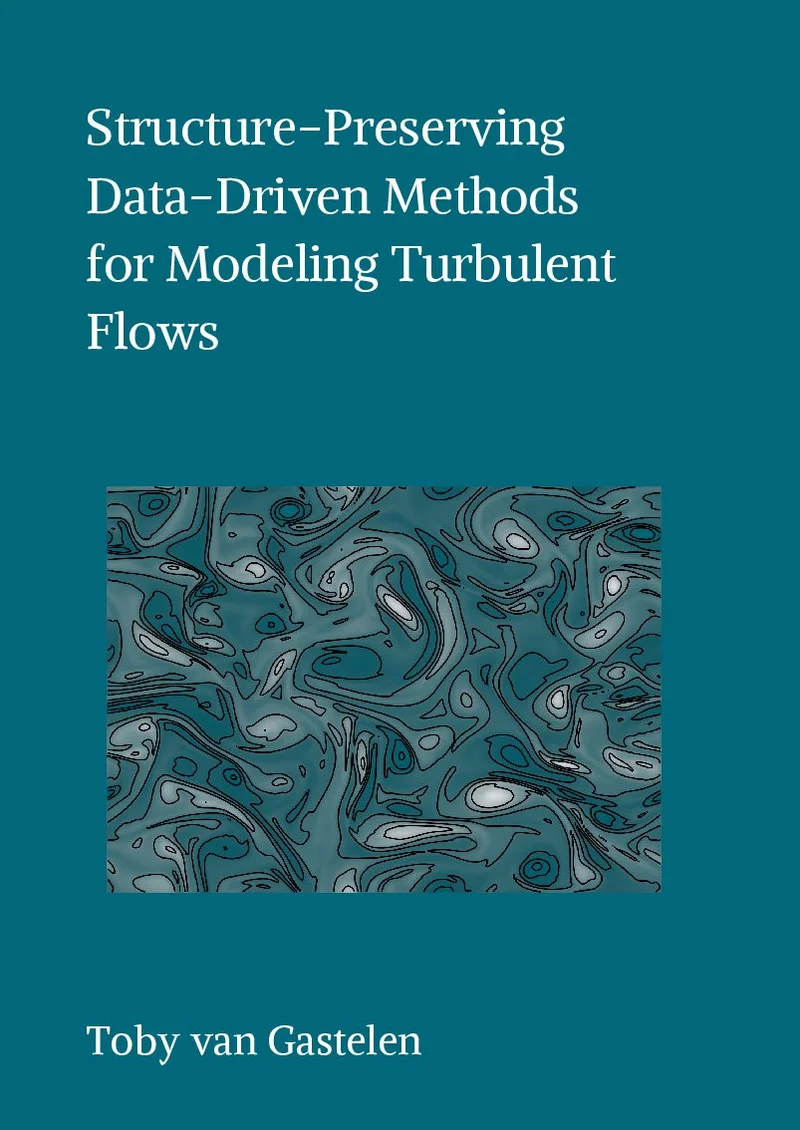
Structure-Preserving Data-Driven Methods for Modeling Turbulent Flows
19 mei 2026
TU Eindhoven
Open Ebook
Ton Winkelmolen
Molecular insights into the role of VRS5 in tillering and lateral spikelet development in barley
12 juni 2026
Wageningen University
Open Ebook
Selcuk Peker
Gamma Knife Radiosurgery for Skull Base Tumors
10 juni 2026
Universiteit Maastricht
Open Ebook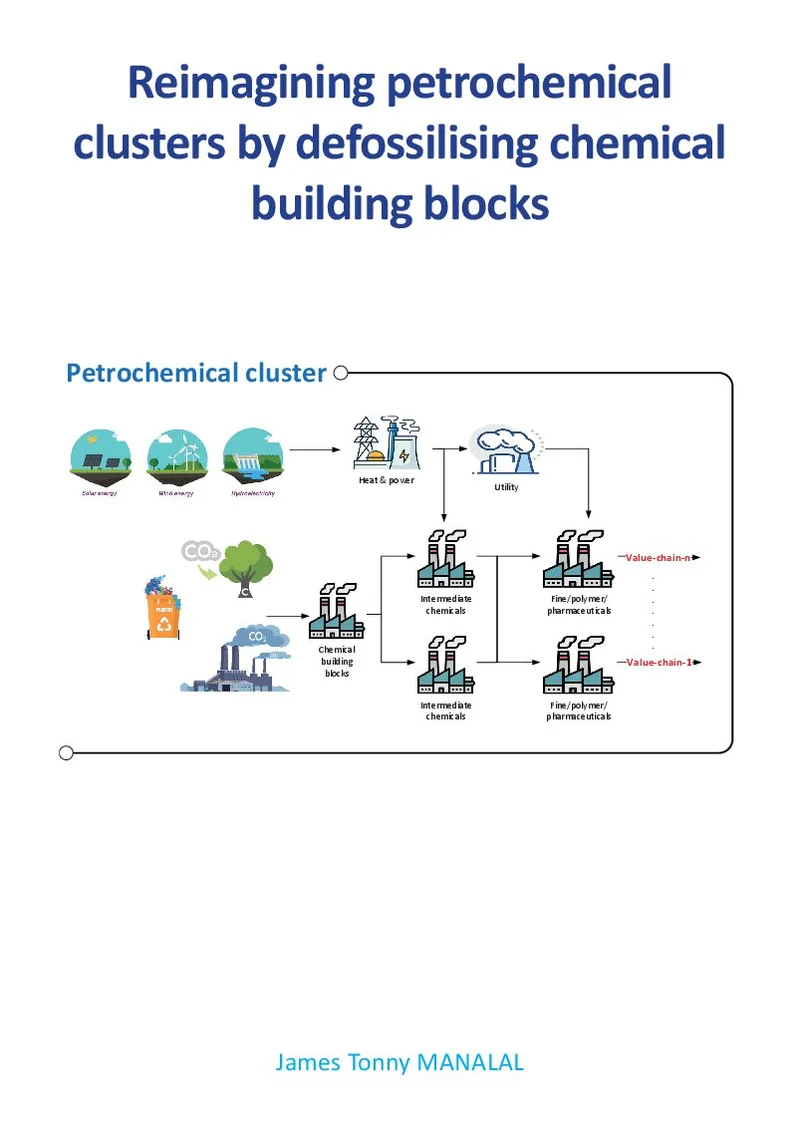
Tonny Manalal
Reimagining petrochemical clusters by defossilising chemical building blocks
18 mei 2026
Overig
Open Ebook



Cora De Gol
Microbial stabilization and protein functionality of plant-based liquids using pulsed electric fields
17 juni 2026
Wageningen University
Open Ebook
We print for the following universities