Linda Remijn Nelissen
Symptomatic treatment of myasthenia gravis
3 september 2026
Universiteit Leiden
Open Ebook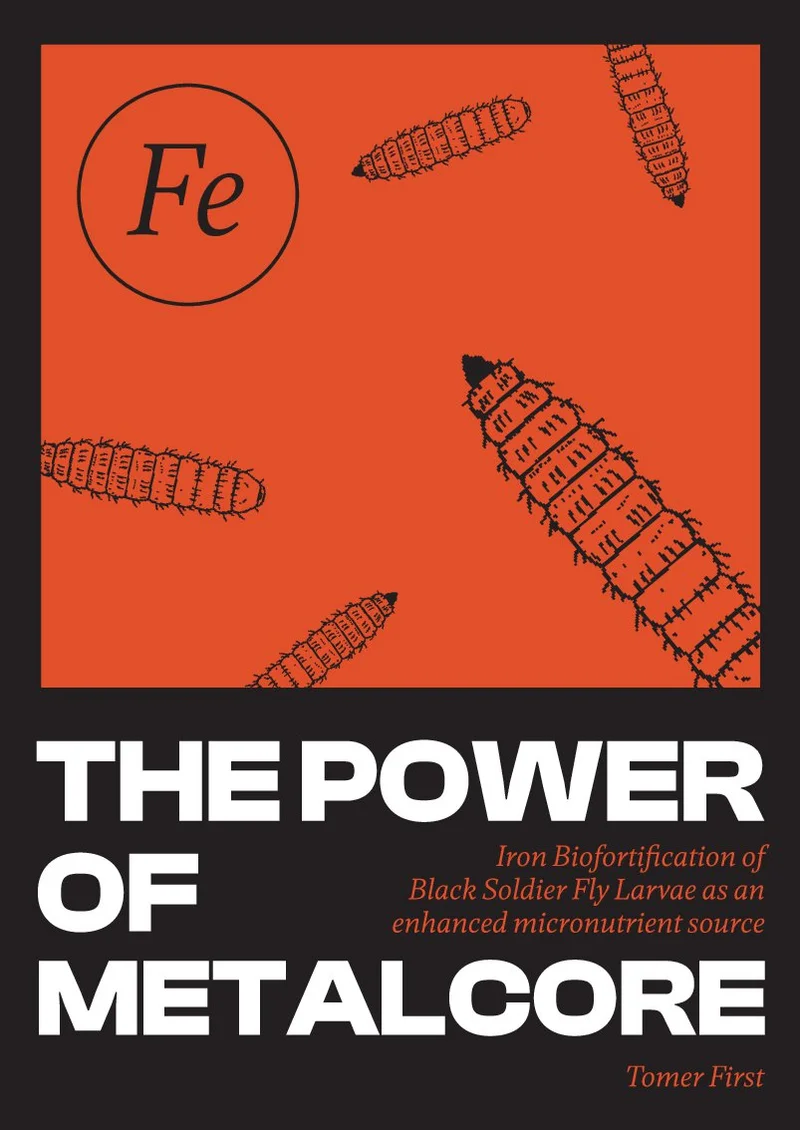
Share this project
Summary
Background and aim:
Iron deficiency remains one of the most prevalent micronutrient deficiencies worldwide, while sustainable and bioavailable iron sources are still limited. Edible insects, particularly Hermetia illucens (black soldier fly; BSF), have emerged as promising alternatives due to their high mineral content and efficient feed conversion. However, the mechanisms regulating iron uptake, storage, and utilization under elevated dietary iron conditions remain poorly understood. This thesis investigates how BSF larvae respond to increasing dietary iron levels, examining effects on larval physiology, nutritional composition, iron storage, and mineral bioaccessibility, providing insight into the potential of BSF as a sustainable iron source for animal feed and human food.
Methods:
A multidisciplinary framework was applied, combining literature research, controlled rearing experiments, omics analyses, histological localization, and digestion studies. Chapter 2 reviewed entoferritin, the primary iron-binding protein in insects, describing its structure, function, and nutritional relevance. Chapter 3 examined the effects of increasing dietary iron, supplied as ferric ammonium citrate, on growth, survival, and mineral composition of BSF and yellow mealworm larvae. Chapter 4 combined transcriptomic and proteomic analyses to characterize the molecular response of BSF to elevated dietary iron, with parallel dissections to localize iron accumulation across larval tissues. Chapter 5 applied an in vitro digestion model coupled with iron nanoparticle characterization to evaluate mineral bioaccessibility across biofortification levels and thermal processing conditions.
Results:
Chapter 2 reviewed entoferritin as the primary insect iron-binding protein, highlighting its high mineralization capacity, pH stability, and structural similarity to vertebrate ferritin, properties supporting its relevance as a bioavailable dietary iron source. In Chapter 3, increasing dietary iron produced a dose-dependent rise in BSF larval iron content, reaching nearly a threefold increase at the highest treatment level, without affecting larval growth, survival, or macronutrient composition. Calcium concentration increased by approximately 20% at the highest iron level. In contrast, yellow mealworm showed limited iron accumulation and reduced survival at far lower iron concentrations, indicating substantially lower tolerance. Chapter 4 revealed pronounced transcriptomic and proteomic shifts under elevated dietary iron, including approximately 70% increases in both entoferritin subunit abundances, driven by post-transcriptional regulatory mechanisms. Histological imaging localized iron clusters to the midgut across all biofortification levels, consistent with entoferritin-based sequestration. Additional pathway changes were observed in metal transport, oxidative stress response, and exoskeletal formation. Chapter 5 demonstrated significantly higher digestible iron in biofortified larvae compared to controls. Iron nanoparticle characteristics remained consistent across treatments, indicating a conserved storage mechanism. Thermal processing reduced iron bioaccessibility while increasing calcium solubilization, demonstrating mineral-specific effects of blanching.
Conclusions:
This thesis demonstrates that BSF efficiently regulates and accumulates dietary iron without impairing growth or survival. Elevated dietary iron triggered coordinated molecular responses, including increased entoferritin abundance and activation of oxidative stress and metal transport pathways, accompanied by localized midgut iron storage. Digestion studies confirmed higher digestible iron in biofortified larvae, while thermal processing reduced iron bioaccessibility but enhanced calcium availability. These findings provide fundamental mechanistic knowledge supporting iron biofortified BSF as a sustainable ingredient for animal feed and, in the future, human food.