Share this project
Virender Jashvant John Poeran
Erasmus Universiteit Rotterdam
Publication date: 18 september 2013
University: Erasmus Universiteit Rotterdam
ISBN: 978-94-91487-08-8
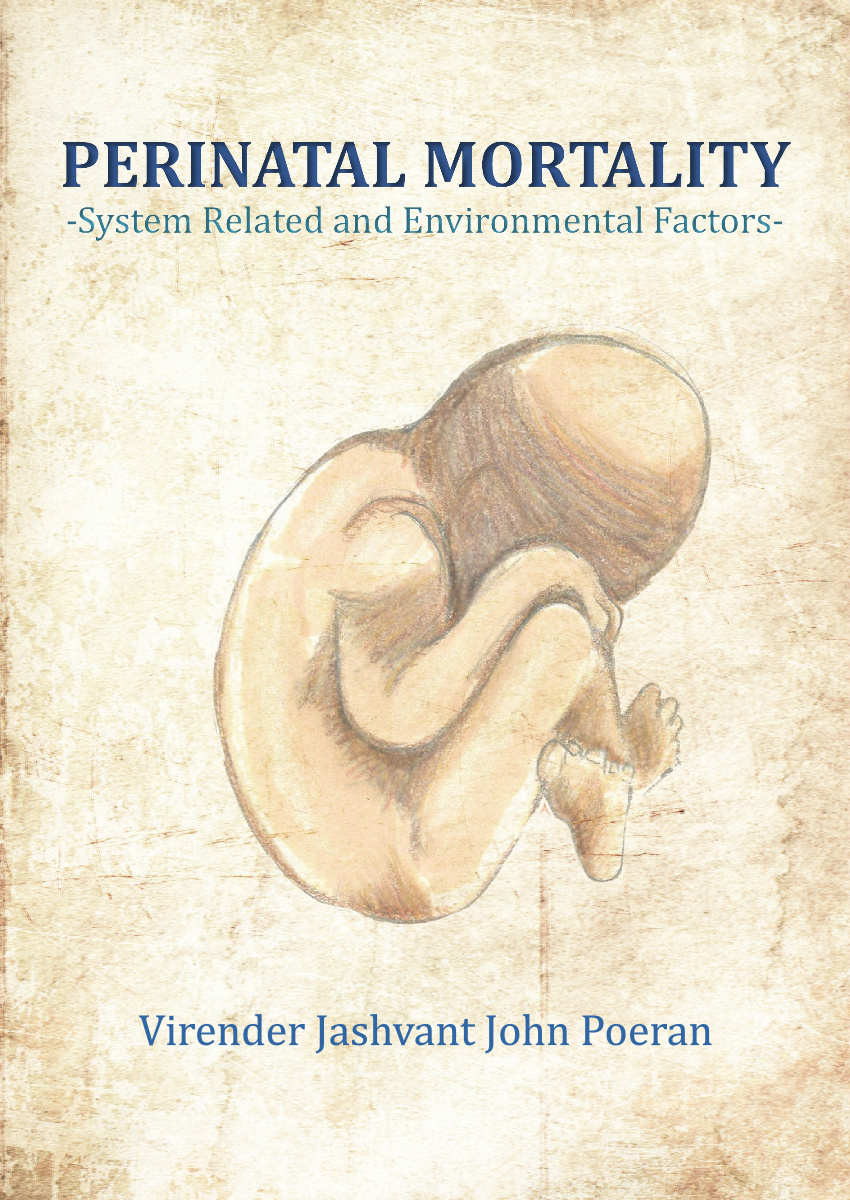
Perinatal Mortality
Summary
In The Netherlands perinatal mortality rates exceed the European average. Also, within The Netherlands inequalities in perinatal health are present, mainly in the four largest cities (‘G4’) and deprived neighbourhoods. We state three levels of inequalities: (1) The Netherlands vs. Europe, (2) regions and G4-cities vs. the remainder of The Netherlands, and (3) deprived vs. non-deprived neighbourhoods and boroughs within these G4-cities. The causal factors for perinatal inequalities may differ between the three geographic levels.
In response to the high perinatal mortality, the Dutch Minister for Health as well as the municipality of Rotterdam issued several measures and research topics. This thesis reports on local (PART I) and national (PART II) initiatives in the context of improving perinatal health in The Netherlands. The aim is to investigate the main contributing factors in adverse perinatal outcomes on the three geographic levels (international, national, regional). Throughout this thesis, the concept of ‘Big4’ is applied. ‘Big4’ refers to four adverse pregnancy outcomes (perinatal morbidities) which precede perinatal mortality in 85% of cases: congenital anomalies, preterm birth (<37th week of gestation), small for gestational age (SGA, birthweight below the 10th percentile for gestational age) or low Apgar score (<7, 5 minutes after birth). On the first geographic level, i.e., The Netherlands vs. Europe, the Dutch system of obstetric care significantly differs from those in other Western countries, with a high percentage of homebirths (around 20%), and an independent role for primary care community midwives. Most important, however, is the risk-based level of care: primary care for low risk pregnancies provided by independently practicing community midwives, and secondary/tertiary care for high risk pregnancies provided by obstetricians in hospitals. Due to the distinction between assumed low risk and high risk pregnancies, antenatal risk selection is an essential indicator of the adequacy of the Dutch obstetric care system. We demonstrate an insufficient separation of low risk pregnancies from a mix of low and high risk pregnancies with a considerable part of this selection and subsequent referral taking place even during parturition (chapter 7). Home birth, as another unique feature, is generally not associated with increased intrapartum and early neonatal mortality, under routine conditions (chapter 8). However, the safety of home births is dependent on antenatal risk selection as only assumed low risk women can be offered the choice of a birth at home. However, as antenatal risk selection still results in 6% to 9% of high risk (‘Big4’) women in primary care, intended for low risk pregnancies, improvement is mandatory (chapter 7). Chapters 5, 6, 9 and 10 pertain to perinatal health inequalities on the second geographic level, i.e., regions and G4-cities vs. the remainder of the Netherlands. In chapter 5 we demonstrate that an over 30% decrease in perinatal mortality is expected on the national level through optimisation of (hospital) organisational features. This optimisation may be achieved through centralisation of acute obstetric care services. However, hospitals appear very heterogeneous in organisational features affecting perinatal outcome. Therefore, in centralisation, these organisational features need to be taken into account as well as the full scope of negatively (e.g., increased travel time) and positively (e.g., better 24/7 access to specialised care) influencing factors (chapter 9). Due to the complexity of this matter we agree with the statement from the Royal College of Obstetricians and Gynaecologists: ‘localised where possible, centralised where necessary’. Chapter 6 reports on the selection of priority regions in which to implement intensified preconception care and uniform antenatal risk selection. This selection was based on indicators related to perinatal mortality, morbidity and healthcare factors. Both selecting strategies (regarding to risk selection and preconception care) point out the four largest cities (‘G4’, i.e., Amsterdam, Rotterdam, The Hague, Utrecht) as a priority region, thus illustrating the increased risk for adverse perinatal outcome in large urban areas. G4-cities surfacing in both selecting strategies emphasises the multifactorial effects on and the complexity of urban perinatal health. In chapter 10 we demonstrate the effect of climatological factors, i.e., seasonality, extremes in temperature and cumulative sunshine exposure, on birthweight. Minimum temperature exposure in the second and third trimester was associated with higher birthweight, maximum temperature exposure for all exposure windows was associated with lower birthweight, and cumulative sunshine exposure was associated with higher birthweight. On the population level, significant regional differences in birthweight exist, most likely attributable to particularly maximum temperatures, with moderation of the effect in coastal areas. For healthy babies born at term these differences in birthweight appear small; however, more severe detrimental effects may emerge for vulnerable subgroups, e.g., women carrying growth restricted babies. Chapters 2, 3 and 4 pertain to perinatal health inequalities on the third geographic level, i.e., deprived vs. non-deprived neighbourhoods and boroughs within G4-cities, in particular Rotterdam. We demonstrate large differences in absolute perinatal mortality and perinatal morbidity rates between neighbourhoods within the city of Rotterdam with perinatal mortality rates as high as 37 per 1,000 births (chapter 2). These inequalities remain after standardisation, also implying differences in possible causes per borough with subsequent different policy measures per borough (chapter 3). Common mechanisms of adverse perinatal outcome in deprived neighbourhoods are thought to be social deprivation and accumulation of risks for perinatal mortality and morbidity. In chapter 4 we demonstrate differential effects of social deprivation on Western and non-Western women in Rotterdam. Improvement in neighbourhood social quality causes improvement in perinatal outcomes for Western women only. Policy measures aimed at improving social quality for Western women may improve outcome in Western women, however, alternative approaches may be necessary for non-Western groups. The most important recommendations for improvement of perinatal health on the first geographic level include improvement of risk selection (possibly through a standardised checklist based approach) and ‘shared care’ as the success of improvement strategies depends on a joint collaboration of midwives and obstetricians. Important recommendations on the second geographic level of perinatal health inequalities include a sensible policy on centralisation of acute obstetric care and additional research and more public health awareness for the complex issue of urban perinatal health. On the third geographic level of perinatal health, we propose additional research on the differential effects of social deprivation on Western and non-Western women. Our results imply strategies to improve social quality in particular for Western women and more focus on alternative approaches for non-Western groups; these alternative approaches may be based on results from additional research. Furthermore, neighbourhood, and borough specific policies are mandatory on tackling urban perinatal health inequalities.
See also these dissertations



Nicola Pontillo
Aminoglycoside resistance mechanisms and strategies to overcome them
30 juni 2026
Rijksuniversiteit Groningen
Open Ebook





Xiaolong Zhong
Plant domestication reshapes rhizosphere microbiome-mediated adaptation to nitrogen stress
2 juli 2026
Universiteit van Amsterdam
Open EbookWe print for the following universities