Share this project
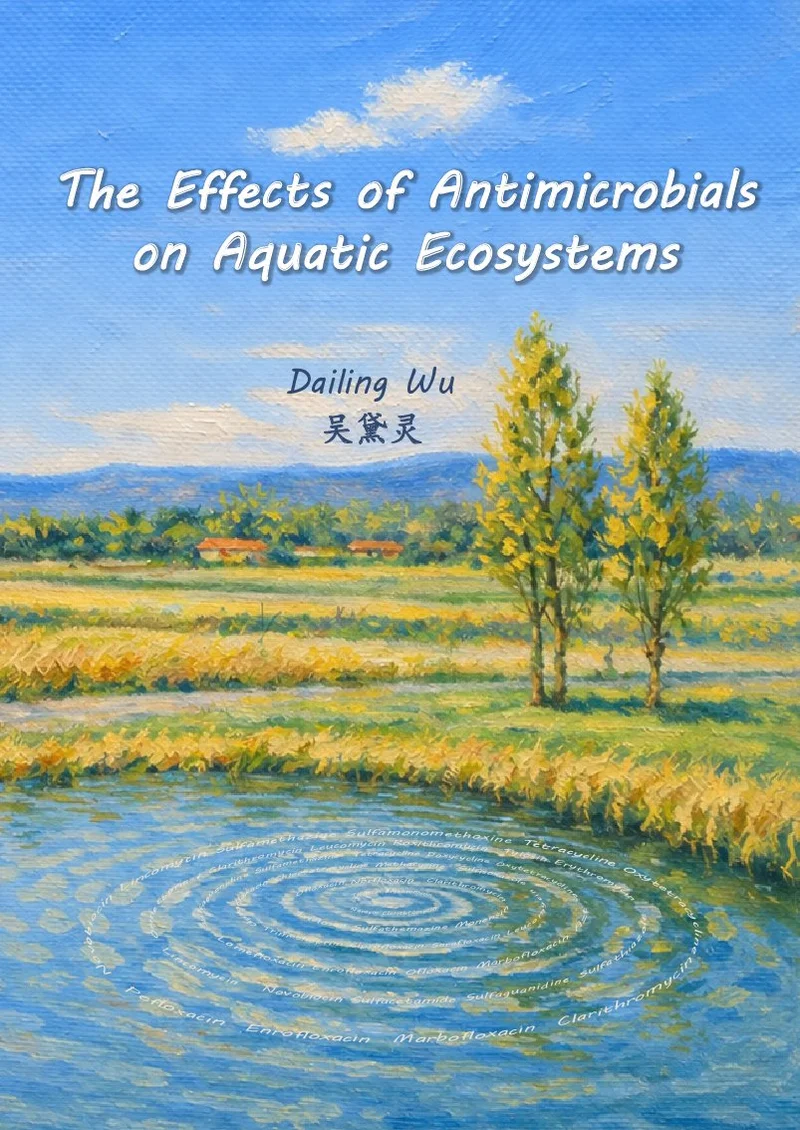
Dailing Wu
Wageningen University
Publication date: 8 mei 2026
University: Wageningen University
ISBN: 978-94-6534-341-9
The Effects of Antimicrobials on Aquatic Ecosystems
Summary
Antimicrobials, including antibiotics and biocidal agents, are used extensively in human and veterinary medicine, and their residues are frequently detected in aquatic environments. This thesis investigates the occurrence, ecological effects, and mitigation of antimicrobials in freshwater ecosystems through a combination of environmental monitoring, experimental microcosms, and food-chain studies.
Chapter 2 examined the pollution patterns of antibiotics and antibiotic resistance genes (ARGs) along a river-sediment-groundwater continuum in the highly urbanised Maozhou River, China. The study found high ecological risks for algae and identified that river sediments were the primary source of ARG contamination in shallow groundwater, whereas river water contributed more significantly to deeper groundwater.
Chapter 3 investigated the individual and mixture effects of sulfamethazine and tetracycline in freshwater microcosms. The study demonstrated that these antibiotics, when present as mixtures, can exert non-additive effects on phytoplankton and microbial communities, highlighting the complexity of predicting ecological outcomes from single-compound data.
Chapter 4 focused on the antimicrobial biocide triclosan, assessing its impact on microbial community structure across different sediment types and nutrient regimes. The results showed that the magnitude of microbial responses to triclosan is strongly modulated by the environmental context, such as organic matter content and water quality.
Chapter 5 explored the bioaccumulation and trophic transfer of azithromycin into a simplified freshwater food chain. Although no biomagnification was observed, the study showed sublethal fitness-related effects in predators, such as reduced growth, indicating that the absence of biomagnification does not exclude ecologically relevant impacts.
Chapter 6 evaluated the ecological gain achieved by different advanced wastewater treatment methods from a risk-management perspective by assessing whether reductions in micropollutant pressure are accompanied by concurrent decreases in mixture toxicity and adverse ecological responses. The findings showed that while these treatments effectively reduce chemical pressure, their ecological benefits must be balanced against treatment-driven shifts in resource conditions and microbial functional restructuring.
Chapter 7 synthesized cross-chapter findings and discussed implications for ecological risk assessment and freshwater management. Ecological effects of antimicrobials were strongly context-dependent, with response direction and magnitude jointly shaped by exposure composition, environmental background conditions, and trophic level. The thesis supports integrated consideration of external exposure, internal exposure, mixture pressure, and functional ecological responses to inform more ecologically relevant freshwater management.
See also these dissertations

Toby van Gastelen
Structure-Preserving Data-Driven Methods for Modeling Turbulent Flows
19 mei 2026
TU Eindhoven
Open Ebook
Ton Winkelmolen
Molecular insights into the role of VRS5 in tillering and lateral spikelet development in barley
12 juni 2026
Wageningen University
Open Ebook
Selcuk Peker
Gamma Knife Radiosurgery for Skull Base Tumors
10 juni 2026
Universiteit Maastricht
Open Ebook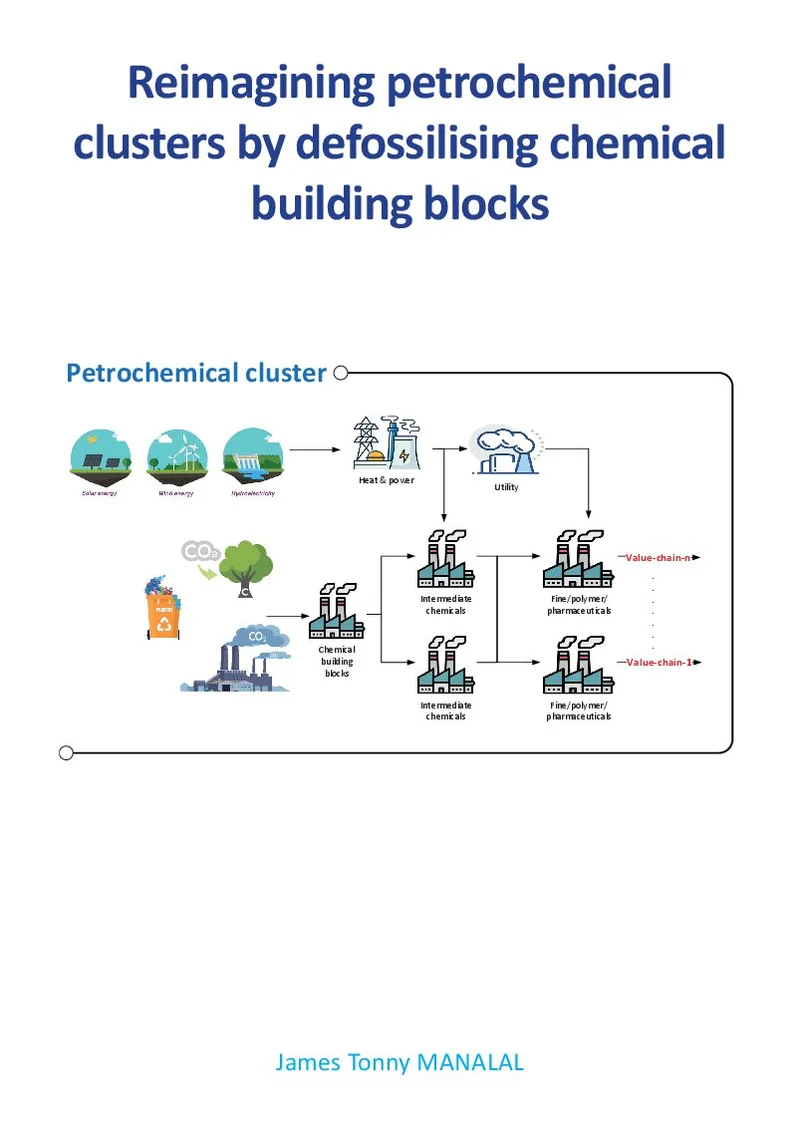
Tonny Manalal
Reimagining petrochemical clusters by defossilising chemical building blocks
18 mei 2026
Overig
Open Ebook
Cora De Gol
Microbial stabilization and protein functionality of plant-based liquids using pulsed electric fields
17 juni 2026
Wageningen University
Open Ebook
We print for the following universities