Ziyang Ye
Tunable kafirin nanoparticles at oil-water interfaces
11 juni 2026
Wageningen University
Open Ebook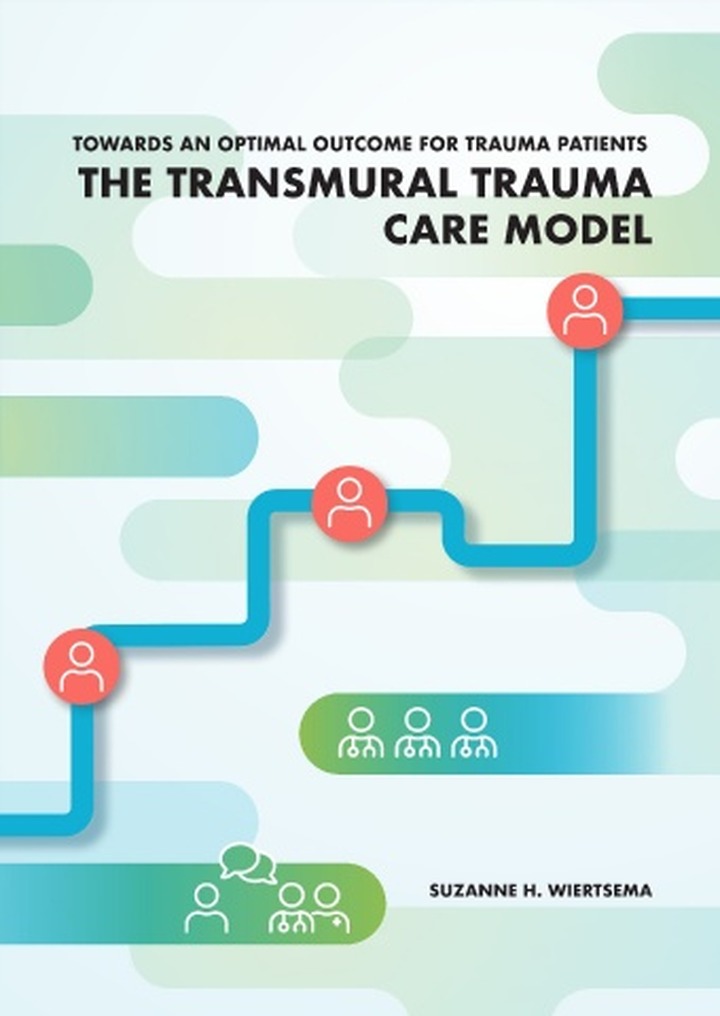
Share this project
Summary
Traumatic injury is one of the main causes of death and disability worldwide and poses a substantial economic burden to society. Traditionally, the organization of trauma care focused more on pre-hospital and in-hospital care than on the rehabilitation phase, because the trauma patients’ survival was its first and most important goal. Since the organization of acute trauma care has improved and mortality due to traumatic injury has decreased, the focus of trauma care has shifted from reducing mortality to improving quality of life and outcome. This in turn resulted in a growing interest in improving the quality of trauma rehabilitation, which is the main focus of this thesis.
Most trauma patients have one or more fractures due to their trauma. Trauma patients’ treatment depends on their fracture characteristics and other patient-related characteristics, such as age, comorbidity, health status, and activity level prior to the injury. Treatment can be conservative (e.g. with plaster or a limited weight-bearing policy) or surgical, which in most cases means intramedullary nailing or internal fixation with plates and screws. Trauma recovery generally proceeds in four phases, i.e. 1) the acute treatment phase, 2) the rehabilitation phase, 3) the adaption phase, and 4) the stable end situation. For physical therapists who treat trauma patients, it is important to deal with each phase of the recovery process in an appropriate way. In doing so, they will be able to give – within a certain margin – an estimate of a trauma patient’s length and outcome of the rehabilitation process. This is important, because it is recognized that managing trauma patients’ expectations is a critical element of their rehabilitation process and is necessary to achieve an optimal outcome. After being discharged from a hospital, the majority of Dutch trauma patients rehabilitates with the help of a primary care physical therapist. However, there is a lack of programs and guidelines for the rehabilitation of trauma patients following their medical treatment (i.e. in primary care), and it seems to be a rather unexplored area. Although it is recognized that post-clinical care organized in primary care networks of experienced and specialized healthcare providers results in better clinical outcomes, this was typically lacking for trauma patients prior to the start of this study.
To bridge this gap, we developed and evaluated the Transmural Trauma Care Model (TTCM), an advanced transmural rehabilitation model for mild, moderate and severe trauma patients, aiming to improve patient outcomes and reduce costs by optimizing the organization, content, and quality of the rehabilitation process. The TTCM consists of four components, all of which are linked to one another, i.e. 1) a multidisciplinary team at the outpatient clinic for trauma patients, 2) coordination and individual functional goal setting for each patient by the multidisciplinary hospital-based team, 3) a network of specialized primary care physical therapists, and 4) secured email traffic between the hospital-based physical therapist and the primary care network physical therapist.
The primary aim of this thesis was to assess the effectiveness and cost-effectiveness of the TTCM within a controlled-before-and-after study. Secondary aims included the assessment of the implementation of the TTCM by exploring its reach, dose delivered, dose received, and fidelity, supplemented by identifying possible barriers and facilitators associated with its implementation. Additionally, data collected in the context of this study were used to explore the association of specific trauma- and fracture related factors with disease-specific HR-QOL, functional outcome, and costs and to further improve the TTCM.
Chapter 2 described the development of the TTCM, complemented by a detailed description of the study design of the controlled-before-and-after study, which – as indicated above – was aimed at assessing the effectiveness and cost-effectiveness of the TTCM compared to regular care. Furthermore, a general outline of the process evaluation was given. In the controlled-before-and-after study, trauma patients with at least one fracture who received the TTCM at the outpatient clinic of Amsterdam UMC, location VUmc, were compared with trauma patients who did not (i.e. regular care).
Chapter 3 investigated the effectiveness of the TTCM compared to regular care among trauma patients, in terms of health-related quality of life (HR-QOL), functional outcome, pain and patient satisfaction. Preliminary evidence was provided that the TTCM is effective in improving patient-related outcome measures, such as disease-specific HR-QOL, functional status, and patient satisfaction among mild, moderate, and severe trauma patients with at least one fracture compared with regular care. For example, the mean difference for functional status at 9 months was nearly 21 points on a 100-points scale, favoring the TTCM group. Furthermore, patients in the intervention group suffered from statistically significant less pain at 6 and 9 months than their control group counterparts.
Chapter 4 described the results of the economic evaluation and indicated that secondary healthcare costs and presenteeism costs were lower among patients treated with TTCM compared with those receiving regular care. On the other hand, primary healthcare, medication, absenteeism, and unpaid productivity costs were higher among patients treated with TTCM compared with those receiving regular care. Total societal costs were lower among patients treated with TTCM compared with those receiving regular care, suggesting that implementation of the TTCM – on average – results in lower costs to society as a whole. However, only the difference in secondary healthcare costs was statistically significant. For generic as well as disease-specific HR-QOL, pain, perceived recovery, and functional status, TTCM dominated the control condition, meaning that – on average – TTCM was less costly and more effective than usual practice. These results imply that if decision-makers are not willing to pay anything per unit of effect gained, the TTCM has a relatively low probability of being cost-effective compared to usual practice (i.e. 0.54–0.58). However, this probability increased for all outcomes to relatively high levels with increasing values of willingness-to-pay. However, since it is unknown what decision-makers are actually willing-to-pay per unit of effect gained for the outcomes included in the analyses, we cannot make strong conclusions about the cost-effectiveness of the TTCM compared with usual practice.
Chapter 5 described the results of the process evaluation and showed that the TTCM was largely implemented as intended, with a moderate reach (81%), a high dose delivered, and a high dose received (95% to 100%). Moderate to high fidelity scores were found (66% to 93%). Fidelity scores indicate the extent to which the intervention protocol was followed by the care providers. Additionally, various facilitators and barriers were identified that need to be considered when implementing the TTCM broadly. Focus groups among patients and health care providers indicated that the “communication structure of the TTCM” was found to be an important theme, expressed in several facilitators, such as “the use of a secured email system” and “the use of a standardized referral form”. Other frequently mentioned facilitators were the “shared decision-making process at the outpatient clinic” and an “increased level of knowledge and skills”. The “absence of reimbursement for the hospital-based physical therapists at the outpatient clinic” was identified as one of the most important barriers to the implementation of the TTCM. Another important barrier was the “absence of awareness of the TTCM in other relevant departments of the hospital”.
Chapter 6 described the results of the study assessing the association between various fracture and treatment related factors with disease-specific HR-QOL, functional outcome, and societal costs. This study was conducted using data of the TTCM trial. For the purpose of this association study, the participating trauma patients’ baseline and 9-month follow-up data of both the intervention group participants and the 9-month control cluster participants were used. Having a fracture of the lower extremity was found to be associated with a lower disease-specific HR-QOL after 9 months compared to patients with a vertebral fracture or multi-trauma. Having an upper extremity fracture was associated with a better functional outcome compared to patients from the reference category. Having had surgery instead of conservative treatment was associated with lower societal costs. Fracture type (i.e. intra-articular or extra-articular) was found not to be associated with disease-specific HR-QOL, functional outcome, and societal costs.
Chapter 7 described the study protocol of the multicenter trial that was initiated, funded, and designed based on the results of chapter 3, 4, 5 and 6 of this thesis. This multicenter trial aims to assess the effectiveness and cost-effectiveness of an improved version of the TTCM compared to regular care in 10 Dutch hospitals using an improved design (i.e. both the intervention and control group are prospectively followed). Main improvements made to the TTCM were broadening it to tertiary care (i.e. rehabilitation centers and homes for the elderly with a geriatric rehabilitation setting) and involving healthcare decision-makers at an earlier stage to discuss the reimbursement for the hospital-based physical therapists at the outpatient clinic.
Chapter 8 presents an extensive discussion of our studies, the choices we made with respect to their methodology as well as their limitations that should be taken into account when interpreting the results. The most important methodological issues of this thesis are related to the controlled-before-and-after study design as well as the pragmatic set-up of the TTCM trial. The controlled-before-and-after study design has the potential to adversely affect the internal validity of the study findings, whereas the pragmatic set-up, in which daily practice was resembled as much as possible, facilitates the generalizability of the trial results to daily practice. Additionally, various methodological issues regarding the process evaluation and the study assessing the association between various fracture and treatment related factors with outcomes were discussed. This chapter was completed with recommendations for further research and a complete overview of valuable and useful practical recommendations for the local implementation of the TTCM.
In conclusion, this thesis shows that the TTCM seems feasible in practice and we found preliminary evidence that it is effective in improving patient-related outcome measures, such as disease-specific HR-QOL, functional status and patient satisfaction among mild, moderate and severe trauma patients. Strong conclusions about the cost-effectiveness of the TTCM cannot be made, since it is unknown what decision-makers are willing-to-pay per unit of effect gained for the outcomes included in the analyses. Furthermore, lessons learned from the TTCM trial and its process evaluation were used to further improve the TTCM and to set up a multicenter trial aimed to assess the effectiveness and cost-effectiveness of an improved version of the TTCM compared to regular care, on a wider scale and using an improved study design. Results of this multicenter trial are expected in 2023 and will hopefully lead to a nationwide implementation of the TTCM and thus contribute to an individually tailored rehabilitation path for every single trauma patient in the Netherlands.