Yijun Li
Optimizing food supply for nutrition and environmental sustainability
15 juni 2026
Wageningen University
Open Ebook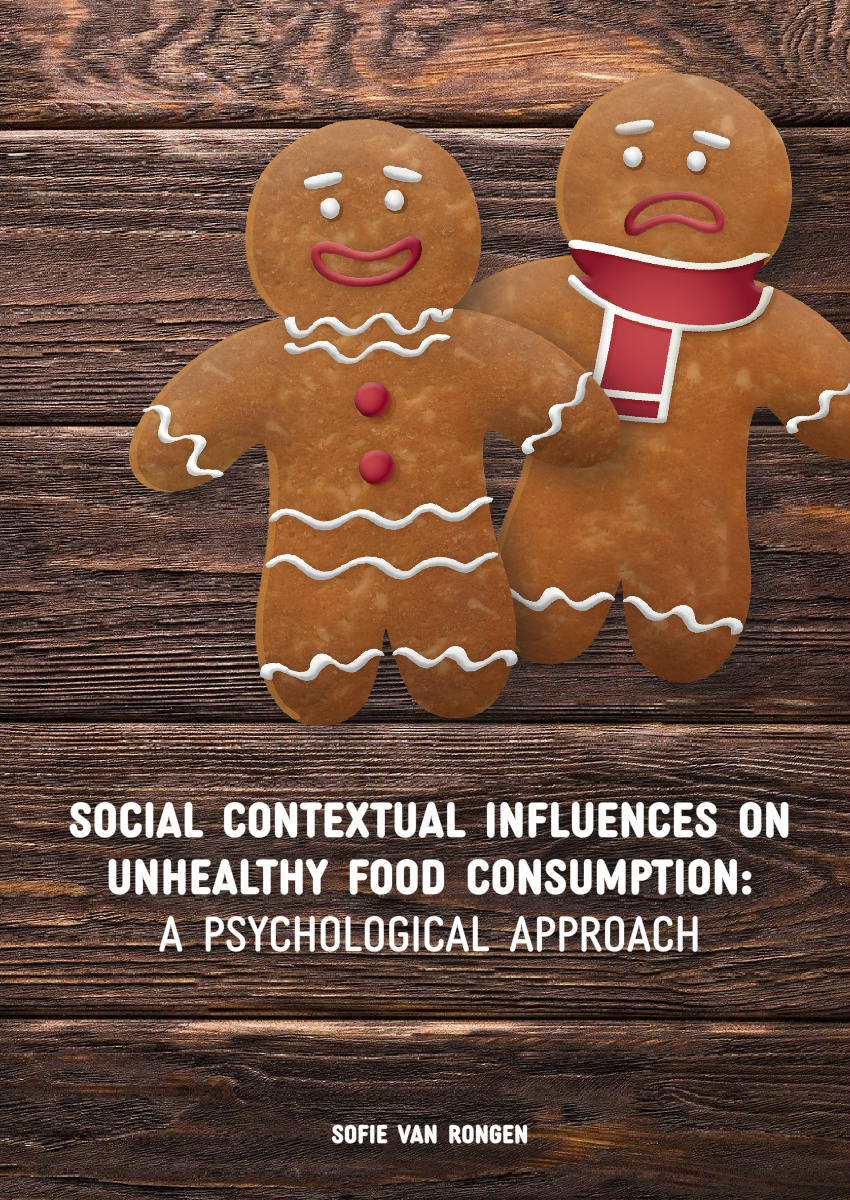
Share this project
Summary
The first part of the thesis aims to explore how the actual, real-world food environment may convey social norms regarding common and appropriate eating and thereby encourage consumption. This social interpretation of physical food environments is examined in two studies that differ in their level of observation of the food environment, as well as in their methodological approach.
In Chapter 2, the aim is to provide a new understanding of how physical aspects in micro food environments may influence consumption, by proposing that social norms are embedded in physical cues in these environments. In this mixed-methods study, in-store/restaurant food environments were analysed through a social norm lens, so as to make an inventory of physical cues in food environments that may communicate social norm messages. It was demonstrated that a great variety of physical cues in self-service food environments (e.g. food traces, covered presentation, product availability) may communicate normative messages about other consumers’ behaviour or the popularity of/demand for a product (i.e. descriptive norms) and/or the appropriateness of consumption (i.e. injunctive norms). Among a sample of laypeople, a descriptive norm concerning others’ behaviour appears easier to recognize than an injunctive norm regarding informal rules about appropriate behaviour. The findings from this study suggest that social norms may be inferred from a wide variety of physical cues in the outside-the-home, in-store/restaurant food context, and that these may constitute a potential psychological process that influences food consumption.
In Chapter 3, the proposition that the physical food environment conveys social norms regarding common and appropriate consumption is examined on the level of the built, neighbourhood environment. We tested whether social norm perceptions regarding fast food consumption in the neighbourhood mediated the relationship between residential exposure to fast food outlets and fast food consumption. Fast food outlet exposure was objectively assessed as the count of fast food outlets within a 400m walking distance buffer around the post codes of respondents on a Dutch panel. No direct association between residential fast food exposure and frequency of fast food consumption was found. However, it was demonstrated that both descriptive and injunctive social norms mediated the association between exposure and consumption. Those who were more exposed to fast food outlets in their direct neighbourhood perceived ‘unhealthier’ social norms (descriptive and injunctive), and these ‘unhealthier’ norms were associated with a higher frequency of fast food consumption. Hence, this chapter provides the first correlational evidence for the idea that social norms may be inferred from the built physical food environment. Together, the findings from Chapters 2 and 3 indicate that social norms may constitute a relevant psychological process that explains how the real-world physical food environment may guide food consumption.
The second part of this thesis aims to investigate psychological processes that could explain how a person’s specific socioeconomic condition or context increases unhealthy food consumption. In a series of experiments, two distinct psychological theories addressing subjective evaluative interpretations of the socioeconomic context (i.e. resource scarcity and relative deprivation) were applied to actual food consumption.
In Chapter 4, the aim is to experimentally examine whether experiences of resource scarcity in an absolute sense (i.e. having too few resources) result in a higher consumption of presented snacks. Scarcity experiences, including preoccupations with immediate problems, have been proposed to lead to a decreased mental bandwidth and so more impulsive behaviour. In our studies, resource scarcity was manipulated by a self-developed trade-off task, in which participants’ resources were either restricted (scarcity condition) or unrestricted (no-scarcity condition). Two lab experiments were conducted among students of Wageningen University. In the first lab experiment, a non-hypothesized interaction effect between scarcity and hunger bordered on significance. Scarcity appeared to increase snack consumption under low, but not high, hunger levels. Possibly, people are more sensitive to scarcity under situations where strong primary motives for eating are less relevant/influential. In the second lab experiment, participants were explicitly instructed to have eaten prior to participation so as to decrease their level of hunger. A difference in snack consumption between the two conditions could not be replicated in this experiment. Overall, we could not provide conclusive evidence for the notion that resource scarcity results in unhealthier food consumption.
In Chapter 5, the aim is to test whether the subjective experience of personal relative deprivation (PRD, i.e. being worse off than others) results in a higher preference for palatable, high-caloric snack-type foods. PRD, when paired with feelings of injustice, has been demonstrated to increase the preference for immediate, small rewards over larger benefits in the long term. PRD was manipulated by a computer card game in which participants experienced that they earned fewer (PRD condition) versus equal (control condition) resources relative to a fictitious player. The points earned served as resources to be spent on foods in a grocery shopping task. In an online experimental study, no main effect of the PRD manipulation on food choice was found. However, the manipulation appeared to have a differential effect for different levels of chronic PRD. Although simple effects bordered on significance, a higher number of snack-type food products were selected by participants that were relatively deprived in the card game and also experienced higher chronic relative deprivation. In a lab-in-the-field experiment, where a diverse community sample made real (non-hypothetical) food choices, it was demonstrated that those in the PRD condition selected more snack-type foods compared to those in the control condition, when particularly sensitivity to palatable food was controlled for. Overall, although the results need to be interpreted with caution, this study revealed some preliminary causal evidence that relative deprivation results in an unhealthier food choice.
In Chapter 6, the general discussion, I present an overview of the main findings of this thesis and a theoretical reflection on them, and I discuss methodological issues and practical implications. Moreover, I provide perspectives for future research that contributes to the overarching aim of an improved understanding of how and when individuals’ specific physical and social contexts shape dietary patterns. Theoretically, the results of this thesis contribute to better insights into how specific psychological processes may be relevant to the domains of the physical food environment and unhealthy food consumption. Specifically, the findings from part 1 indicate that the real-world physical food environment may be a relevant source of social norm perceptions about what is common and appropriate food consumption. Moreover, the findings reinforce recent notions that the mere physical availability of foods does not directly lead to consumption of those foods. Rather, our findings highlight the importance of human social cognition when a person is interpreting physical contexts, as they show that perceptions of social norms may be a psychological mechanism in the relation between the physical food environment and consumption. The findings in part 2 are somewhat inconclusive, but they indicate that deprivation in a relative sense through upward social comparison may result in unhealthier food choice, but that deprivation in an absolute sense does not consistently result in unhealthier food consumption. This provides preliminary causal evidence for previous suggestions that the relative component of deprivation is more important than absolute or objective measures in the association with overweight and obesity. Moreover, evidence-based insights that PRD affects decision-making processes and various (non-food) behaviours suggest that actual food consumption may be considered a new behavioural consequence of this adverse psychological state. Hence, although conclusions can only be drawn with some reservation, this thesis contributes to a better theoretical understanding of how a person’s socioeconomic condition or context may affect unhealthier food consumption. In the section about methodological issues, this chapter also briefly discusses the rationale of measuring overt food consumption as a behavioural measure of unhealthy diets. Moreover, I discuss advantages and disadvantages of each of the included methodological approaches with respect to the type of evidence it may provide. While acknowledging the preliminary nature of our findings, in a practical sense, this thesis suggests that social norms and PRD may be relevant psychological processes that need to be taken into account when the aim is to stimulate healthier consumption and reduce health inequalities through improved diets.