Linda Remijn Nelissen
Symptomatic treatment of myasthenia gravis
3 september 2026
Universiteit Leiden
Open Ebook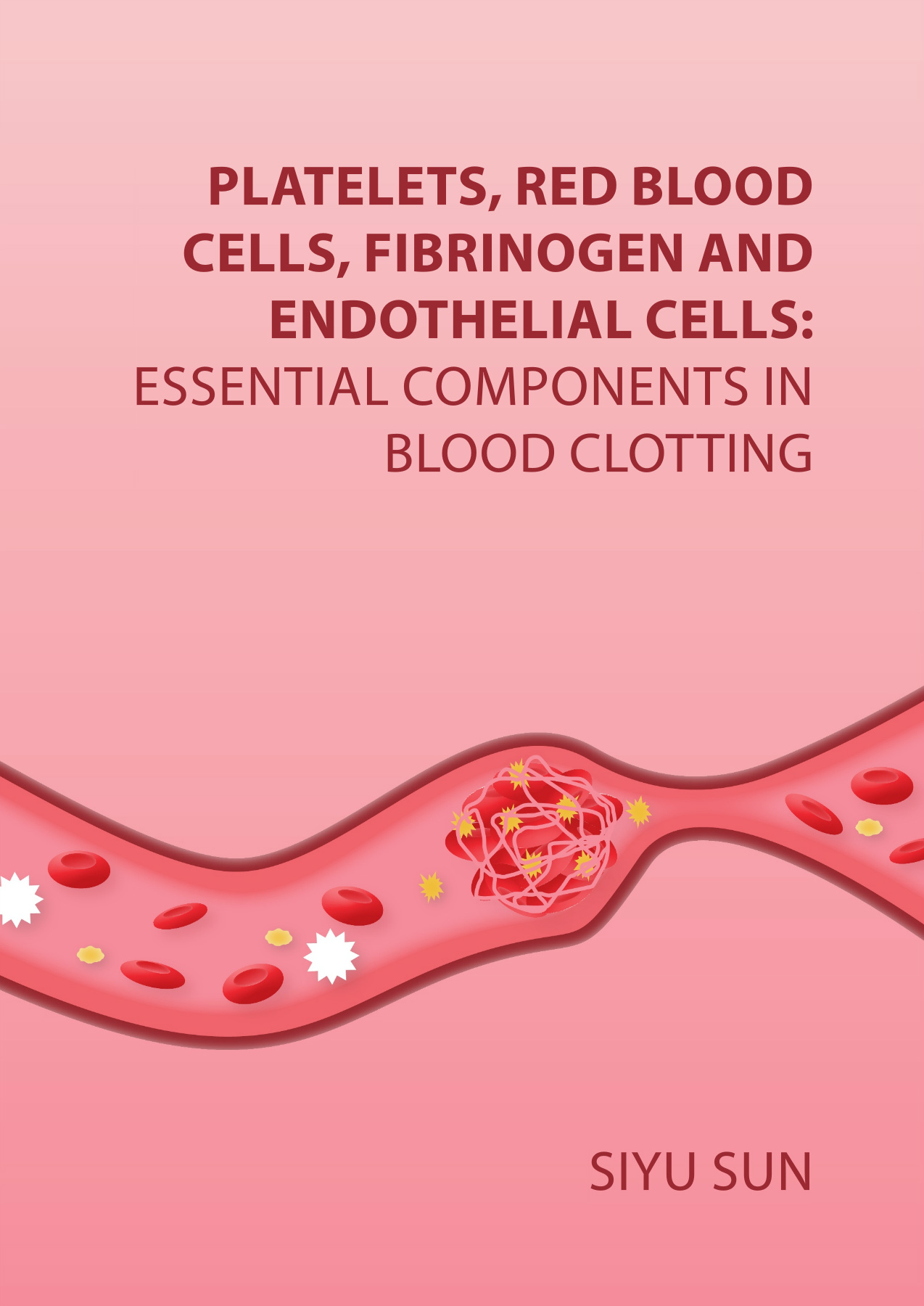
Deel dit project
Samenvatting
In dit proefschrift heb ik mij geconcentreerd op een aantal complexe stollingsprocessen, om daarbij de rol van plaatjes, rode bloedcellen, fibrine en endotheelcellen te ontrafelen in de context van hemostase en trombose. Hoofdstuk 1 biedt een algemene inleiding, waarin de belangrijkste routes van het stollingsproces en hun relevantie worden gepresenteerd. Verder worden plaatjesreceptoren en signaalmechanismen geïntroduceerd, in het bijzonder de collageen- en fibrine(ogeen)-receptor glycoproteïne VI (GPVI) samen met integrine αIIbβ3. Ook wordt achtergrondkennis gegeven over de invloed van andere bloedcellen in relatie tot bloedstolling, (beperkingen van) de meting van trombinegeneratie, als een integratieve stollingstest, en informatie over nieuwe van kameelachtigen afgeleide nanobodies met een enkel domein voor het bestuderen van de plaatjes- en coagulatieactivering.
Hoofdstuk 2 geeft een overzicht van bekende moleculaire oorzaken en gevolgen van immuungeïnduceerde trombocytopenie (dat wil zeggen een laag plaatjesaantal in bloed) als meest voorkomende vormen van auto-immuunziekten. De beschreven aandoeningen omvatten idiopathische en trombotische trombocytopenische purpura, systemische lupus erythematosus, antifosfolipidensyndroom, drug-geïnduceerde trombocytopenie, heparine-afhankelijke trombocytopenie, door Covid-19-vaccin geïnduceerde trombose met trombocytopenie en het zogenaamde HELLP-syndroom (hemolyse, verhoogde leverenzymen en lage plaatjes). Voor elke ziekte of syndroom beschrijven we de plaatjesreceptoren voor de betreffende auto-antilichamen, de betrokken immuuncomplexen en evidentie voor de pathogene effecten van schadegeïnduceerde moleculaire patronen en complementfactoren. Daarnaast geven we aan hoe circulerende plaatjes kunnen dienen als een reservoir van immunomodulerende moleculen. We concluderen dat er mogelijk een centrale rol is weggelegd voor de FcγRIIA-receptoren op plaatjes, maar in welke mate is nog onduidelijk. De door antilichamen geactiveerde plaatjes moduleren op hun beurt het aangeboren en adaptieve immuunsysteem door meerdere pro-inflammatoire en immuunmediatoren vrij te zetten. Duidelijk is dat de besproken plaatjes-afhankelijke processen kunnen leiden tot trombocytopenie, maar ook tot tromboses en bloedingen.
In Hoofdstuk 3 beoogden we de signaalroutes op te helderen die differentiëren tussen een permanente of transiënte activeringstoestand van plaatjes. We onderzochten de routes opgewekt door GPVI en door de protease-geactiveerde receptoren (PAR1/4) voor trombine, steeds op het vermogen om een tijdsafhankelijke integrine αIIbβ3-activering en plaatjesaggregatie te induceren. We vonden dat voorbehandeling van de cellen met farmacologische remmers de integrine αIIbβ3-activering onderdrukte (samen met P-selectine-expressie) in de target-volgorde van proteïnekinase C (PKC) > glycogeensynthasekinase 3 > β-arrestine > fosfatidylinositol-3-kinase. Nabehandeling met remmers leidde tot secundaire inactivering van αIIbβ3 (niet van P-selectine-expressie) in dezelfde volgorde, maar hier bleef de omkeerbaarheid beperkt tot GPVI- en PAR1-agonisten. Voor- en nabehandeling van plaatjes met ticagrelor, een blokker van de P2Y12-receptoren voor ADP, veroorzaakte inactivering van het integrine. Plaatjesspreidingstesten toonden aan dat de blokkering van PKC of P2Y12 gedeeltelijk leidde tot de overgang van een meer geactiveerde naar een meer rustende plaatjesmorfologie. We concludeerden dat zowel PKC- als autocriene ADP-signalering bijdragen aan een persistente αIIbβ3-activering en daarmee aan een stabiele plaatjesaggregatie. Deze bevindingen zijn relevant voor de optimalisatie van de behandeling met aggregatieremmers.
Hoofdstuk 4 betreft een onderzoek naar het stollingsvermogen van rode bloedcellen en plaatjes in de context van bloedingen en trombotische aandoeningen. Met behulp van een nieuwe high-throughput-methode voor trombinegeneratie in volbloed, zulks ter vergelijking met autoloog plaatjesrijk plasma, konden we de bijdragen van alle bloedcellen aan het stollingsproces vastleggen. We noteerden een snellere en aanvankelijk hogere generatie van trombine en een kortere stollingstijd in volbloed dan in plaatjesrijk plasma. Dit was het geval voor een reeks triggers, waaronder weefselfactor, Russell's addergif, factor Xa, factor XIa en trombine. De trombinegeneratie versnelde met het hematocrietniveau, maar werd vertraagd na voorbehandeling van de rode bloedcellen met fosfatidylserine-blokkerend annexine A5. In reconstitutie bloedmonsters verhoogde de blokkering van fosfatidylserine op rode bloedcellen de GPVI-afhankelijke plaatjesprocoagulante activiteit. Bij patiënten met bloedarmoede of erytrocytose vonden we middels clusteranalyse verschillende trombinegeneratieprofielen, die echter nog steeds afhankelijk waren van het fosfatidylserine op rode bloedcellen. We concludeerden dat zowel rode bloedcellen als plaatjes, op een fosfatidylserine-afhankelijke manier, bijdragen tot de generatie van trombine. Bepaling van de hypo- of hyperstollingsactiviteit in volbloed kan helpen bij het karakteriseren van een bloedings- of tromboserisico.
In Hoofdstuk 5 richtten we ons op de bijdrage van fibrinogeen en fibrine in plasma aan het stollingsproces. We beschrijven de effecten van een nieuwe nanobody, Nb106, dat gericht is tegen fibrine, maar niet tegen fibrinogeen. In volbloed of plasma verlaagde Nb106 dosisafhankelijk de trombinegeneratie tot 50%, evenwel zonder de kinetiek te beïnvloeden. Relevant was dat Nb106 niet langer effectief was in de afwezigheid van fibrinogeen of antitrombine, maar dat het de trombinegeneratie bleef blokkeren in de afwezigheid van factoren IX-XII, trombomoduline, geactiveerd proteïne C of orale antistollingsmiddelen. We concludeerden dat er een aanzienlijke pool van proteolytisch actief, aan fibrine gebonden trombine gevormd wordt, die beschermt tegen antitrombine-inactivering. Verdere experimenten gaven aan dat het fibrine-gebonden trombine verantwoordelijk is voor een correcte vorming van fibrinevezels. Bij afwezigheid hiervan, met Nb106, vervormen de vezels tot een samengeklonterde structuur. Bovendien is deze pool nodig voor de clot-retractie en de fibrinevorming onder stromingscondities bij lage afschuifsnelheid. De trombinegeneratie werd minder onderdrukt door Nb106 in plasma's van patiënten met congenitale dysfibrinogenemie, wanneer vergeleken met de plasma's van een cohort van controlepersonen. Gezamenlijk benadrukken deze bevindingen de functie van fibrine-gebonden trombine voor een goede stolselvorming en maken dit trombine tot een potentieel therapeutisch doelwit bij bloed-gerelateerde ziekten.
In Hoofdstuk 6 konden we aantonen dat een verhoging van het fibrinogeenniveau de GPVI-geïnduceerde activatie van plaatjes verhoogt in termen van P-selectine-expressie, vooral bij lage agonistdoses. In overeenstemming met deze bevinding bleek dat fibrinogeen ook dosisafhankelijk het proces van trombinegeneratie in plaatjesrijk plasma verhoogt, zowel in de aanwezigheid als afwezigheid van een externe GPVI-agonist. Deze fibrinogeeneffecten waren afwezig met de anti-GPVI-nanobody Nb2. Eerder was aangetoond dat bij patiënten met een proteïne C-deficiëntie – in sterkere mate dan bij een proteïne S-deficiëntie – de GPVI-afhankelijke trombus- en fibrinevorming verminderd is, in vergelijking met gezonde proefpersonen. We wilden nu vaststellen of fibrinogeen in het patiëntenplasma de GPVI-activeringsmodulator is. In deze plasma's aangevuld met donorplaatjes konden we inderdaad een verminderd GPVI-afhankelijk effect meten op de trombinegeneratie bij proteïne C-deficiëntie, maar niet bij proteïne S-deficiëntie. Deze verlaging bleek echter onafhankelijk te zijn van het fibrinogeenniveau.
Hoofdstuk 7 betreft een onderzoek naar de effecten van endotheelcellen op het trombinegeneratieproces, zowel in volbloed als in plaatjesrijk plasma. Opvallend was dat de aanwezigheid van een endotheliale monolaag de generatie van trombine in beide situaties vertraagde en nagenoeg volledig onderdrukte. Mechanistisch vonden we dat de blokkering van de heparine-achtige proteoglycanen met polybreen of de afwezigheid van het heparine-afhankelijke antitrombine de endotheliale antistollingsactiviteit tenietdeed. Bovendien leidde behandeling van de cellen met andexanet-α of met antilichamen tegen TFPI (tissue factor pathway inhibitor) tot een vermindering van het endotheel-effect. In aanmerking nemend de deels additieve rol van antitrombine en TFPI bij de stollingsregulering, wijzen onze gegevens dus op een functionele niet-redundantie van de endotheliale antistollingsactiviteit, op een wijze waarin zowel proteoglycanen als TFPI bijdragen tot de trombineremming.
In Hoofdstuk 8 bespreek ik de belangrijkste bevindingen en bijdragen van dit proefschrift. Mijn conclusie is dat de huidige onderzoeken naar plaatjes, rode bloedcellen, fibrine en endotheelcellen aanvullende inzichten en routes bieden binnen het concept van celgebaseerde hemostase en trombose.
中文概述
在本论文中,我们主要研究了复杂的凝血过程,包括血浆凝血因子、血小板、红细胞、纤维蛋白和内皮细胞对凝血过程的影响。第 1 章概述了不断变化的危险因素对凝血的影响,包括血小板受体和止血和血栓形成中的信号传导、凝血概述、血细胞对凝血的影响、凝血酶生成测定和骆驼源单域抗体在止血中的作用。
第 2 章概述了最常见的自身免疫性疾病中 IIT 的分子机制和后果。这些疾病包括特发性血小板减少性紫癜(ITP)、系统性红斑狼疮(SLE)、抗磷脂综合征(APS)、药物诱导的血小板减少症(DITP)、肝素诱导的血小板减少症(HIT)、Covid-19 疫苗诱导的血栓形成伴血小板减少症(VITT)、血栓性血小板减少性紫癜(TTP)以及溶血、肝酶升高和血小板过低(HELLP)综合征。我们的重点是与自身抗体、免疫复合物、损伤相关分子模式(DAMPs)和补体因子结合的血小板受体。此外,我们还回顾了血液循环中的血小板是如何充当免疫调节分子库。通过更新血小板在自身免疫性疾病发病机制中的分子机制和作用,我们强调了基于血小板的途径可能导致血小板减少,并与血栓或出血事件有关。
为了阐明区分血小板永久或短暂活化状态的信号通路。在第三章中,我们探讨了由胶原受体糖蛋白 VI(GPVI)或凝血酶蛋白酶活化受体(PAR)诱导的血小板信号传导机制,这些机制可调节时间依赖性 αIIbβ3 活化。我们发现,用药物抑制剂预处理血小板可减少 GPVI 和 PAR 诱导的整合素 αIIbβ3 激活和 P 选择素表达,其顺序为蛋白激酶 C (PKC) > 糖原合酶激酶 3 > β-阿司匹林 > 磷脂酰肌醇-3-激酶。后处理显示继发性 αIIbβ3 失活(而非 P-选择素表达),顺序相同,但这种可逆性仅限于 CRP 和 PAR1 激动剂。联合抑制传统和新型 PKC 同工酶对整合素封闭最有效。阻断 P2Y12 ADP 受体的替卡格雷(ticagrelor)可增强 αIIbβ3 的失活。铺展试验表明,PKC 或 P2Y12 抑制可使血小板从片状部分转变为更圆盘状。我们的结论是,PKC 和自分泌 ADP 信号有助于整合素 αⅡbβ3 的持续活化,从而稳定血小板聚集。这些发现对于优化有效的抗血小板治疗至关重要。
在第四章中,我们研究了红细胞(RBC)和血小板在出血和血栓性疾病中的凝血能力。使用获取完整 TG 曲线的新高通量方法,我们能够比较全血以及自体富含血小板和贫血小板血浆中的 TG,以重新定义血细胞对凝血过程的贡献。我们发现,在低浓度的凝血触发物(包括组织因子、罗素毒蛇毒因子 X、因子 Xa、因子 XIa 和凝血酶)下,全血比 PRP 产生更快、最初更高的凝血酶,并且凝血时间更短。TG 随着血细胞比容增加而加速,并在用磷脂酰丝氨酸阻断膜联蛋白 A5 预先治疗红细胞后延迟。经流式细胞术证实,用离子霉素处理红细胞会增加磷脂酰丝氨酸的暴露,并增加 TG 过程。在重构的血液样本中,预先用膜联蛋白 A5 选择性阻断红细胞上的磷脂酰丝氨酸增强了糖蛋白 VI 诱导的血小板促凝活性。在患有贫血或红细胞增多症的患者中,聚类分析揭示了特定贫血病例中全血 TG 谱的高或低。在红细胞存在的情况下,添加膜联蛋白 A5 后,TG 谱会降低,因此可以通过血细胞磷脂酰丝氨酸的暴露程度来确定。接受治疗的真性红细胞增多症患者的情况与对照组相似。我们得出的结论是,红细胞和血小板以磷脂酰丝氨酸依赖性方式参与了 TG 过程。测定全血低凝或高凝活性可能有助于表征出血或血栓形成风险。
在第 5 章中,我们主要研究了血浆纤维蛋白对血液凝固的作用。在本章中,我们介绍了一种新型纳米抗体 Nb106 的作用,它能特异性识别纤维蛋白而非纤维蛋白原。Nb106 可剂量依赖性地抑制血浆或全血中组织因子诱导的凝血酶生成约 50%,且不影响其动力学。值得注意的是,Nb106 在没有纤维蛋白原或抗凝血酶的情况下不再有效,但在没有因子 IX、XI 和 XII、血栓调节蛋白、活化蛋白 C 或口服抗凝剂的情况下仍能继续阻断凝血酶的生成。这些结果证实,存在一个相当大的纤维蛋白结合凝血酶池,它对抗凝血酶的失活具有保护作用。这种与纤维蛋白结合的凝血酶对纤维蛋白网络的正常形成负有责任,因为在 Nb106 的存在下,纤维蛋白结构会从伸长的纤维扭曲成团块状结构。此外,当 Nb106 清除纤维蛋白网络中的凝血酶时,血块的回缩也会受到抑制。在这里,我们证明了原来的假设,即所有形成的凝血酶都以类似的方式参与凝血过程是不正确的;纤维蛋白结合的凝血酶而不是游离的凝血酶负责纤维蛋白网络的正确形成和处理。有趣的是,与对照组相比,先天性纤溶酶原异常症患者的血浆中用 Nb106 生成凝血酶的抑制作用较弱。体内流动的人体血液形成纤维蛋白-血栓的时间大大推迟。总之,这些研究结果凸显了纤维蛋白结合凝血酶作为血液传播疾病潜在治疗靶点的重要作用,同时保留了止血功能。
在第 6 章中,我们发现纤维蛋白原水平的增加明显增强了 CRP 诱导的血小板 P 选择素表达,尤其是在低剂量 CRP 的情况下。此外,在有 CRP 和没有 CRP 的情况下,纤维蛋白原剂量依赖性地增加了富血小板血浆中凝血酶的生成过程。Nb2 纳米抗体部分抑制了凝血酶的生成,并有效地拮抗了 CRP 的作用。与对照血浆相比,在蛋白 C 缺乏症而非蛋白 S 缺乏症患者的含血小板血浆中,CRP 对凝血酶生成的影响受到了削弱。这种影响与纤维蛋白原水平无关。
在第 7 章中,我们研究了 HUVEC 对全血和含血小板血浆中凝血酶生成过程的影响。HUVEC 单层的存在延迟并几乎完全消减了全血和富含血小板血浆中凝血酶的生成。从机理上讲,我们发现用聚炳烯阻断肝素样蛋白聚糖或缺乏肝素效应抗凝血酶可恢复 HUVEC 的抗凝血活性。此外,用抗组织因子通路抑制剂(TFPI)的抗体处理 Andexanet-α,也能部分恢复 HUVEC 的抗凝血作用。考虑到抗凝血酶和 TFPI 在凝血控制中的不同作用,我们的数据表明内皮抗凝活性存在功能非冗余性,即蛋白聚糖和表面表达的 TFPI 都有助于凝血酶抑制的作用。
在第 8 章中,我们讨论了本论文的主要发现和贡献。可以预见的是,目前对血小板、红细胞、纤维蛋白和内皮细胞的研究为止血和血栓形成提供了更多的见解。
IMPACT
Cardiovascular diseases (CVD) are a leading cause of death globally, taking away an estimated 15 million lives each year. Patients with CVD are in the need of a proper diagnosis and an effective therapy to manage and return the progress of their disease and suffering. Activation of platelets and the coagulation system are the key targets of treatment in CVD. My research has focused on unravelling the intricate interplay between coagulation factors, platelets, red blood cells, endothelial cells and fibrinogen in the process of blood coagulation, striving to new insights with the potential to improve fundamental or clinical practice in the field of haemostasis and thrombosis.
Target group
The primary target groups include healthcare professionals, particularly clinicians involved in diagnosing and treating haemostatic disorders and cardiovascular diseases. Additionally, our findings will have broad relevance to biomedical researchers who focus on understanding the intricacies of blood coagulation, including those in academic institutions, in research laboratories, and in pharmaceutical as well as blood disease diagnostic companies. Those individuals are involved in developing novel therapies and coagulation testing for haemostatic disorders and cardiovascular diseases.
Innovation and implementation
By elucidating the dynamic interactions among coagulation factors, platelets, red blood cells, endothelial cells and fibrin during the coagulation process, it will be possible to further develop diagnostic tools and therapeutic strategies. These include the optimisation of advanced whole blood thrombin generation assay to evaluate thrombin dynamics in vitro, as well as seeking for novel targeted therapies that modulate platelets responses and the fibrin part of the coagulation cascade.
Considering the immunity role of platelets, I explored how platelets are activated and destructed in several immune-induced thrombocytopenia diseases. It is furthermore shown that platelet stimulation via glycoprotein VI (GPVI) or thrombin receptor PAR1 causes transient integrin αIIbβ3 activation, while stimulation via the PAR4 receptors leads to a more permanent αIIbβ3 activation. It appeared that the protein kinase C pathway is most crucial for integrin αIIbβ3 activation, and that autocrine responses via ADP receptors are essential for the sustained integrin αIIbβ3 opening. These observations will help to drive the development of antiplatelet medications.
Another relevant finding concerns the platelet GPVI co-activation via fibrinogen, an effect that is enhanced with the fibrinogen concentration. The results of this study can contribute to the development of novel and safer antithrombotic inhibitors that specifically target the GPVI-fibrinogen interaction.
Our research findings also involve collaboration with clinicians to aim to apply the new method of whole blood thrombin generation for examining cohorts of patients with anaemia. Application of this method can ensure a timely assessment of the risk of bleeding or thrombosis, and result in personalised treatment approaches for patients with anaemia. Considering the clotting role of fibrin this, we used a novel anti-fibrin nanobody to explore how fibrin modulates thrombin generation. These findings in this context highlight a unique role of fibrin-bound thrombin, potentially serving as a therapeutic target in blood-borne diseases, while preserving haemostatic function. Furthermore, we have explored the potent anticoagulant role of endothelial cells in thrombin generation.
Social and economic relevance
This relevance of my research lies in the promise that advanced thrombin generation assays, including whole blood thrombin generation and endothelial-modulated thrombin generation, can improve the patient outcome and quality of life by a better diagnosis and disease management, such as thrombosis and haemorrhage, which pose significant morbidity and mortality risks globally. Furthermore, my research contributes to the advancement of precision medicine, paving the way for more effective and personalised interventions in coagulation-related disorders. By providing clinicians with a deeper understanding of how platelets, red blood cells, endothelial cells and fibrin drive coagulation, our research empowers them to make more informed treatment decisions. Ultimately, the development of targeted therapies based on an anti-GPVI nanobody and anti-fibrin nanobody has the potential to spur economic growth through the creation of new medical technologies and pharmaceutical products.
PUBLICATIONS
1. Sun S, Du X, Fu M, Khan AR, Ji J, Liu W, Zhai G. Galactosamine-modified PEG-PLA/TPGS micelles for the oral delivery of curcumin. Int J Pharmaceutics, 2021, 595: 120227.
2. Sun S, Zhang H, Wang X, He S, Zhai G. Development and evaluation of ibuprofen loaded mixed micelles preparations for topical delivery. J Drug Delivery Science Techn, 2018, 48: 363-371.
3. Liu M, Zhang Y, Sun S, Khan AR, Ji J, Yang M, Zhai G. Recent advances in electrospun for drug delivery purpose. J Drug Targeting, 2019, 27(3): 270-282.
4. Sun S, Urbanus RT, ten Cate H, de Groot PG, de Laat B, Heemskerk JWM, Roest M. Platelet activation mechanisms and consequences of immune thrombocytopenia. Cells. 2021;10(12):3386.
5. Sun S, Campello E, Zou J, Konings J, Huskens D, Wan J, Fernandez D, Reutelingsperger C, ten Cate H, Toffanin S, Bulato C, de Groot PG, Simioni P, Heemskerk JWM, Roest M. Crucial roles of red blood cells and platelets in whole blood thrombin generation. Blood Adv. 2023;7(21):6717-6731.
6. Zou J, Sun S, Simone I, ten Cate H, de Groot PG, de Laat B, Roest M, Heemskerk JWM, Swieringa F. Platelet activation pathways controlling reversible integrin αIIbβ3 activation. TH Open. 2024 Jun 22;8(2):e232-e242.
7. Sun S, Urbanus R, Konings J, Campello E, Oftering P, Beck S, Bulato C, Kremers R, Huskens D, Swieringa F, Xiang G, Zou J, Nieswandt B, Simioni P, de Groot PG, Roest M, Heemskerk JWM. de Laat B. Thrombin pools in fibrin-independent and fibrin-dependent coagulation regulating clot structure. Preparation for submission.
8. Sun S, Campello E, Bulato C, Tullemans B, Spiezia L, de Groot PG, Simioni P, Heemskerk JWM, de Laat B, Roest M. Fibrin(ogen) modulation and GPVI dependent platelet responses. To be submitted.
9. Schönichen C, Sun S, Middelveld H, Huskens D, de Groot PG, Heemskerk JWM, Roest M, de Laat B. Functional non-redundancy of endothelial anti-thrombin generation mechanisms. Thromb Res. 2024 Dec:244:109208.
10. Schönichen C, Silvia Nedwed A, Provenzale I, A. Solari F, Marini F, Sun S, Stoll M, de Laat B, Sickmann A, J.E. Kuijpers M, Heemskerk JWM, Jurk K. Impaired antiplatelet and anticoagulant functions of endothelial cells by proinflammatory stimuli: a multi-omics approach. To be submitted.
11. M.S. Hoornstra I, Zhao J, Heemskerk JWM, Sun S, Schönichen C, Middelveld H, Heylen R, de Laat B, Roest M. Andexanet alpha is a potent DOAC reversal agent with pro-coagulant adverse effects. Preparation for submission.
PRESENTATIONS AT CONFERENCES
1. Sun S, Zou J, Konings J, Huskens D, Wan J, Reutelingsperger CPM, ten Cate H, de Groot PG, de Laat B, Heemskerk JWM, Roest M. Complementary roles of red blood cells and platelets in high-throughput whole-blood thrombin generation. 2022 July, International Society on Thrombosis and Haemostasis (ISTH) annual congress, London, UK. Poster presentation.
2. Zou J, Sun S, De Simone I, ten Cate H, de Groot PG, Heemskerk JWM, de Laat B, Roest M. Establishing the signalling pathways regulating reversible platelet integrin activation. 2022 July, International Society on Thrombosis and Haemostasis (ISTH) annual congress, London, UK. Poster presentation.
3. Sun S. Campello E, Zou J, Konings J, Huskens D, Wan J, Fernandez D, Reutelingsperger CPM, ten Cate H, Toffanin S, Bulato C, de Groot PG, de Laat B, Simioni P, Heemskerk JWM, Roest M. Complementary roles of red blood cells and platelets in high-throughput whole-blood thrombin generation. 2023 June, ISTH annual congress, Montréal, Canada. Oral presentation.
4. Sun S, Zou J, Konings J, Huskens D, Wan J, Reutelingsperger CPM, ten Cate H, de Groot PG, de Laat B, Heemskerk JWM, Roest M. Complementary roles of red blood cells and platelets in high-throughput whole-blood thrombin generation. 2023 September, 6th EUPLAN International Conference, Bristol, UK. Poster presentation.
5. Sun S, Konings J, Urbanus RT, Huskens D, Swieringa F, de Laat-Kremers R, Zou J, de Groot PG, Roest M, Heemskerk JWM, de Laat B. Diversity of plasmatic thrombin pools regulate thrombin generation and blood clotting: interference by a novel nanobody. 2023 December, 65th ASH Annual Meeting & Exposition, San Diego, CA, USA. Poster presentation.
6. Sun S, Konings J, Urbanus RT, Huskens D, Swieringa F, de Laat-Kremers R, Zou J, de Groot PG, Roest M, Heemskerk JWM, de Laat B. Concurrent interference of thrombin and fibrin fiber generation by an anti-fibrin nanobody in human and mouse plasma. 2024 February, 68th GTH Annual Meeting, Vienna, Austria. Poster presentation.
7. Sun S, Konings J, Urbanus RT, Huskens D, Swieringa F, de Laat-Kremers R, Zou J, de Groot PG, Roest M, Heemskerk JWM, de Laat B. Diversity of plasmatic thrombin pools regulate thrombin generation and blood clotting: interference by a novel nanobody. 2024 February, 68th GTH Annual Meeting, Vienna, Austria. Oral presentation.
8. Sun S, Feller T, D. Connell S, Konings J, Urbanus RT, Huskens D, de Groot PG, Roest M, Heemskerk JWM, A. S. Ariëns R, de Laat B. Fibrin clot structure and function dependent on thrombin modulation with a novel anti-fibrin nanobody. 2025 January, BSHT-NVTH Joint ASM, Newcastle upon Tyne, UK. Oral presentation. Excellence Award.