Reineke van Tol
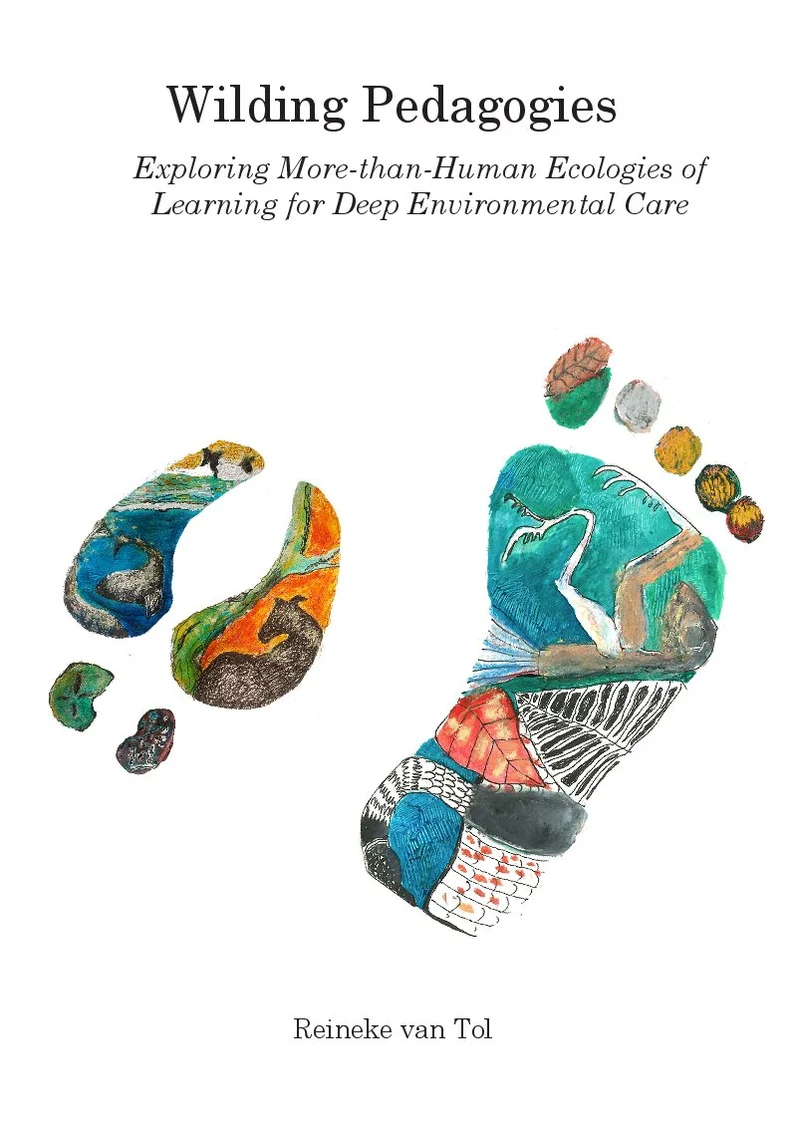


Wilding Pedagogies
Contemporary socio-ecological crises, including climate change, biodiversity loss, and widespread ecological degradation, increasingly point toward the failure of dominant ways of knowing, being, and organizing life that position humans as separate from and superior to the more-than-human world. Rather than isolated environmental problems, these crises reveal profound disruptions in the relations that sustain more-than-human flourishing.
As a key institution through which dominant assumptions, values, and ways of relating are reproduced and legitimized, education is deeply implicated in both the persistence of these crises and efforts to respond to them. Questions of how humans learn to relate to the world therefore become central educational concerns. While such questions extend across the lifespan, higher education constitutes a particularly significant context in which to explore them. Young adulthood is widely recognized as a formative period in which identities, values, worldviews, and orientations toward the future are actively in formation, while young adults increasingly encounter ecological uncertainty, environmental degradation, and concerns about the future as part of their educational experiences. Higher education therefore becomes an important space in which learners may explore what it means to live, learn, and become within a changing more-than-human world. Against this backdrop, this dissertation examines the potential of wild pedagogies as an educational response to the converging socio-ecological crises of our time.
The central aim of the dissertation was to explore in what ways, if any, wild pedagogies in higher education foster relational becoming with the world among students in times of socio-ecological crisis. Four research questions guided this journey: (1) How can wild pedagogies be conceptualized within more-than-human relational ontologies? (2) How can wild pedagogies be enacted as more-than-human ecologies of learning within higher education? (3) In what ways, if any, do processes of relational becoming emerge among higher education students engaged in wild pedagogies-inspired learning environments? And (4) How can qualitative inquiry be reconfigured to align with relational and more-than-human understandings of learning and becoming?
Chapter 1 introduces the theoretical and societal context of the dissertation. Drawing on indigenous and posthuman feminist scholarship, it argues that contemporary socio-ecological crises can be understood as symptoms of dominant ways of knowing and being that position humans as separate from and superior to the more-than-human world. In response, the chapter develops a relational framing of learning and becoming, introducing the concepts of more-than-human learning ecologies and relational becoming as central lenses through which educational processes are explored throughout the dissertation. Engaging with the concept of (re)wilding, the chapter further introduces wild pedagogies as a relational educational response that seeks to cultivate more reciprocal, attentive, and participatory forms of learning with the world. Finally, the chapter positions deep environmental care as an important future-oriented aspiration of such learning processes and outlines the research objectives, research questions, and overall structure of the dissertation.
Chapter 2 develops the onto-epistemological and methodological foundations of the dissertation. Building on posthuman feminist and relational scholarship, the chapter approaches research as relational process that emerges through ongoing engagements within more-than-human worlds. This perspective challenges conventional assumptions that position knowledge as detached from the contexts and relations through which it arises and instead emphasizes situatedness, embodiment, and relational participation. The chapter also explores the implications of relational ontologies for researcher positionality.
These commitments are translated into a qualitative research approach designed to remain attentive to the relational and more-than-human dimensions of experience. The chapter introduces the collective case study through which the dissertation explores practices of wild pedagogies in higher education and discusses the role of participatory immersion, reflective inquiry, and walking interviews in engaging with students' experiences.
Addressing the first research question, Chapter 3 explores how wild pedagogies can be understood within more-than-human relational ontologies. Through engagement with scholarship on sustainability education, environmental education, outdoor learning, transformative learning, and posthuman approaches to education, the chapter identifies the emergence of what is described as a ‘wild turn’ in sustainability education. This turn reflects growing efforts to move beyond educational approaches that position humans as detached observers of the world toward forms of learning that acknowledge humans as participants within more-than-human relations.
Within this broader development, the chapter conceptualizes wild pedagogies as a more-than-human ecology of learning. Rather than approaching learning as a process that occurs primarily within individual minds, wild pedagogies are understood as relational educational practices through which learning emerges among places, humans, and other-than human beings alike. The chapter further argues that wild pedagogies are characterized by a distinctive openness to uncertainty, emergence, and spontaneity, while simultaneously carrying a disruptive impulse that challenges assumptions of human exceptionalism, control, predictability, and productivity. In doing so, the chapter establishes the conceptual foundations upon which the remainder of the dissertation builds.
Addressing the second research question, Chapter 4 explores how wild pedagogies may be enacted as more-than-human ecologies of learning within higher education. Building on the conceptual foundations developed in Chapter 3 and drawing on empirical insights from the case studies, the chapter examines how relational commitments can be translated into educational practice. Rather than proposing a fixed pedagogical model, the chapter seeks to identify conditions through which relational becoming with the world may be supported.
This exploration resulted in four interconnected domains of wild pedagogical practice: (1) wild and caring learning spaces, (2) learning from curiosity and wonder, (3) relational learning with the world, and (4) disruptive learning for the world. Together, these domains describe ways in which educational practices can cultivate attentiveness, openness, participation, and care within more-than-human learning environments. Rather than functioning as separate pedagogical strategies, they overlap and interact, creating conditions through which learners may encounter themselves and the world differently.
The chapter further highlights the importance of deep wonder as a particularly significant force within these learning processes. Experiences of deep wonder have the capacity to interrupt habitual assumptions, invite openness toward uncertainty, and create opportunities for new ways of perceiving and relating to emerge. In this sense, deep wonder functions as a performative force that helps facilitate processes of relational becoming. Through articulating these four domains and the role of deep wonder within them, the chapter offers a practical and conceptual framework for enacting wild pedagogies in higher education.
Chapter 5 addresses the third research question by exploring in what ways, if any, processes of relational becoming emerge among students engaged in wild pedagogies-inspired learning environments. Drawing on participants’ experiences across the three case studies, the chapter develops relational becoming as a sensitizing concept for understanding how educational experiences may contribute to shifts in how learners perceive, relate to, and participate within more-than-human worlds.
The findings suggest that experiences with wild pedagogies can support processes of relational becoming through interconnected movements of relational awareness of the more-than-human world, new understandings of human–world relations, affective connection with the more-than-human world, reconsiderations of purpose and responsibility, and more responsive forms of action for the world. Rather than emerging as separate stages, these dimensions appeared as mutually reinforcing and dynamically intertwined aspects of a broader relational process.
Importantly, relational becoming did not emerge as a stable transformed state or educational outcome. Instead, participants’ experiences suggest an ongoing and undulatory movement that swells and recedes through continued engagement within more-than-human worlds. From this perspective, transformation is understood not as something that occurs within autonomous individuals, but as a relational process through which ways of being are continuously negotiated, renewed, and reconfigured within changing webs of relation.
The chapter further identifies deep environmental care as an important thread emerging within these processes. Rather than approaching care as an individual attitude or moral obligation, care is conceptualized as emerging through lived experiences of interdependence, vulnerability, and relational entanglement. Deep environmental care thus appears as a form of caring from within, arising through how learners come to notice, inhabit, and respond to the relations that sustain life. In doing so, the chapter provides the empirical foundation for the dissertation’s broader argument that wild pedagogies may contribute to more caring and responsive ways of becoming with the world.
Chapter 6 addresses the fourth research question by exploring how qualitative inquiry may be reconfigured to align with relational and more-than-human understandings of learning and becoming. Building on the onto-epistemological commitments developed in Chapter 2 and the empirical experiences discussed in Chapter 5, the chapter examines the methodological implications of taking relational ontology seriously. If learning and becoming emerge through ongoing relations within more-than-human worlds, questions arise concerning how such processes can be studied without reproducing assumptions of separation, representation, and methodological control.
In response, the chapter develops the notion of methodological wilding as an ethico-onto-epistemological reorientation of qualitative inquiry. Methodological wilding seeks to cultivate greater openness, attentiveness, and responsiveness to the situated, embodied, affective, and more-than-human conditions through which experience and meaning emerge. Drawing on the walking interviews that were part of the study, the chapter explores how practices such as movement, sensory attunement, grounding, and openness to spontaneity may create opportunities for engaging more directly with the relational entanglements that shape learning and becoming.
Beyond methodological innovation, the chapter engages with broader questions concerning knowledge, meaning-making, participation, and representation within relational research. It argues that inquiry may be understood as a situated practice of participating in and making meaning with a world that continuously unfolds through relations. At the same time, the chapter critically reflects on the tensions and limitations that accompany such an approach, including questions of asymmetry, partiality, and response-ability. Rather than offering a definitive methodological solution, methodological wilding is presented as an ongoing practice of remaining attentive and accountable within the relational worlds of which research itself forms a part.
Chapter 7 brings together the conceptual, pedagogical, empirical, and methodological threads developed throughout the dissertation. Drawing on the concepts of weaving and futuring, the chapter moves beyond the individual research questions to consider the broader significance of wild pedagogies in times of socio-ecological crises. Rather than treating futures as predetermined destinations waiting to unfold, the chapter approaches them as continuously emerging through present relations, practices, and ways of meaning-making.
Building on the findings of the preceding chapters, the discussion explores how wild pedagogies, relational becoming, deep wonder, deep environmental care, constructive hope, and methodological wilding can each be understood as important threads within the ongoing weaving of more livable futures. Within the context of wilding pedagogies, relational becoming is reconsidered as an ongoing and undulatory process through which humans continuously negotiate their place within a more-than-human world. Deep wonder is discussed as a performative force capable of unsettling habitual assumptions and opening possibilities for new ways of relating. Additionally, deep environmental care is explored as an emergent quality of such becoming, while constructive hope is approached as a way of remaining engaged with uncertain futures.
The chapter further reflects on the methodological implications of doing research within relational ontologies. Revisiting questions of knowledge, meaning-making, participation, and situatedness, it argues that relational inquiry requires ongoing attentiveness to the conditions through which meanings emerge. Methodological wilding is therefore reconsidered as a practice of remaining responsive and accountable within the relational worlds that research seeks to understand.
Taken together, these reflections position wild pedagogies as practices of futuring. By creating conditions through which learners may become more attentive, affected, responsive, and connected within the more-than-human world, wild pedagogies contribute to the cultivation of alternative ways of sensing, relating, caring, and participating. While such processes remain partial, situated, and contingent, they may help nurture forms of relational becoming and deep environmental care that support more hopeful and responsive engagements with uncertain futures.
| Publicatiedatum | 28 oktober 2026 |
| Universiteit | Wageningen University |
| Auteur | Reineke van Tol |
| ISBN nummer | 978-94-6534-632-8 |
| DOI nummer | 10.18174/681849 |