Jay Bakas
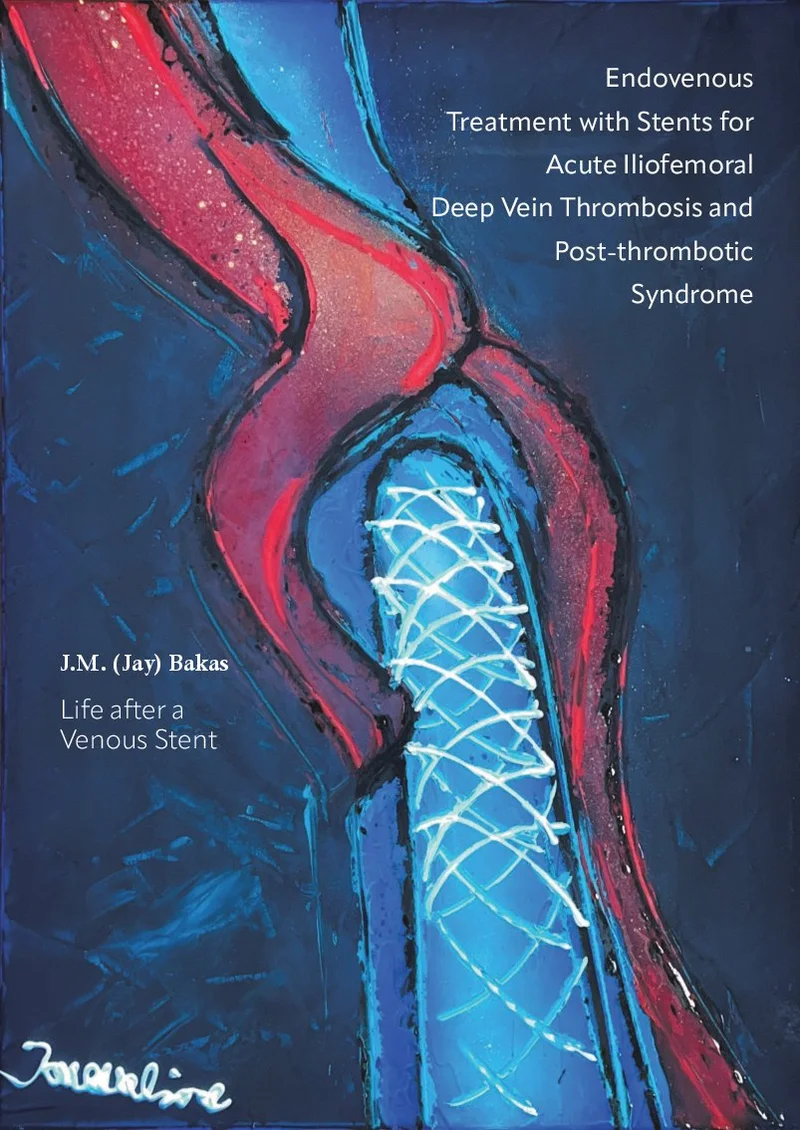


Endovenous Treatment with Stents for Acute Iliofemoral Deep Vein Thrombosis and Post-thrombotic Syndrome
Patients with an iliofemoral or iliocaval deep vein thrombosis (DVT) will develop post-thrombotic syndrome (PTS) more frequently than patients with a femoropopliteal or calf vein DVT. Treatment with venous stents could relief acute symptoms and signs of DVT and decrease the risk of PTS development. Interventions followed by placement of venous stents are performed to treat symptoms and signs of PTS in the chronic phase as well. Endovenous treatment techniques with venous stents for acute DVT and PTS have been increasingly performed over the past decades. The optimal duration of antithrombotic management after treatment with venous stents, and whether left iliac vein compression syndrome counts as a provoking factor for DVT is unknown. Cessation of post-interventional anticoagulant therapy might be safe for a selected group of patients, but requires confirmation by prospective studies. Patency loss is common within the first year after treatment with venous stents, but secondary patency is high at the long-term. Primary patency, secondary patency, and permanent occlusion were 73.5%, 98.1%, and 1.9% after treatment with venous stents for acute DVT (n= 53 limbs) after median follow-up of 2.3 years (IQR: 2.3); and 63.2%, 92.1%, and 7.9% for PTS (n= 76 limbs) after median follow-up of 5.2 years (IQR 7.1). Patient-reported outcome measures showed that physical disabilities are common, even after successful treatment with venous stents for PTS, emphasising that prevention of PTS is better than cure. The Short Form Health Survey (SF-36) physical and psychological component summaries were compared with the normative value of 50.0 (general population of the United States), with higher scores indicating better quality of life. Median physical component summary of the SF-36 was 44. 7 (IQR: 14.2) after treatment with venous stents for PTS, lower than the normative (50.0), p<.001. However, median psychological component summary of the SF-36 was 55.9 after treatment with venous stents for PTS, higher than the normative (50.0), p= .001. Impaired inflow of the deep femoral vein and femoral vein did not impact quality of life, but PTS patients with occluded stents (n= 3) reported poor functioning levels. For acute DVT patients, attention to mental functioning levels is deserved besides attention to the physical consequences after treatment. The median physical components summary (median 50.5, IQR: 16.6) and mental component summary (median 50.2, IQR: 14.2) of the SF-36 did not differ from the normative of 50.0 for acute DVT, however, wide interquartile ranges indicated impairments for a subgroup of patients. Re-intervention showed a significantly negative impact on SF-36 mental component summary in acute DVT (standardized ß coefficient of -0.4, p= .030). We also found that assessment of pre-operative inflow of the deep femoral vein and femoral vein is important, since impaired inflow increases the risk for stent patency loss in PTS. Eighty limbs with venous stents for PTS were evaluated: 37 limbs (46%) without inflow disease, 26 limbs (33%) with single-vessel inflow disease, and 17 limbs (21%) with double-vessel inflow disease. One-year primary patency was higher for limbs without inflow disease (89.2%), compared with single-vessel (57.7%, p=.002), and double-vessel inflow disease (47.1%, p<.001). Presence of inflow disease was significantly associated with 1-year primary patency loss (OR: 7.17; [95%CI:2.16 – 23.78], p=.001). Future research should develop objective criteria to define “sufficient inflow”, and develop methods to improve inflow as well. Treatment with venous stents was involved in various extraordinary cases, including spontaneous iliac vein rupture, chronic inferior vena cava obstruction presenting with exercise intolerance, and cauda equina syndrome caused by DVT. Spontaneous iliac vein rupture is a rare and easily missed diagnosed, with 76 cases (64 studies) presented in the literature. The diagnose should especially be considered for middle-aged and elderly female patients who present with haemorrhagic shock and concomitant left-sided DVT. Treatment of spontaneous iliac vein rupture could be either conservative, endovascular, or open surgical. Patients with chronic inferior vena cava obstruction, may present with exercise intolerance without any leg-specific symptoms or signs. Treatment with venous stents was successfully performed in a case-report, with improved hemodynamic, enhanced exercise intolerance and quality of life. Another case-report demonstrated DVT as a rare cause of cauda equina syndrome, with successful resolution of both conditions after thrombolysis, followed by treatment with venous stents. Timely recognition of DVT as a cause of cauda equina is important, and brings the opportunity to consider endovenous treatment. The extraordinary cases above demonstrate the great applicability and future perspectives of endovenous treatment methods.
| Publicatiedatum | 24 juni 2026 |
| Universiteit | Erasmus Universiteit Rotterdam |
| Auteur | Jay Bakas |
| ISBN nummer | 978-94-6534-246-7 |