Boy Van Droffelaar
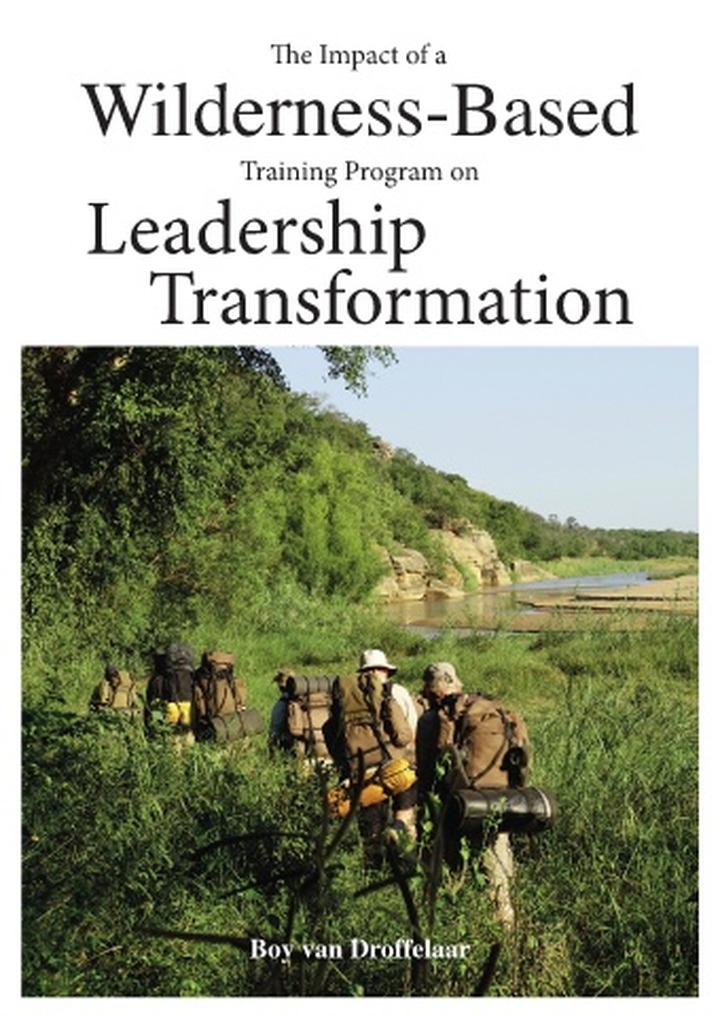


The Impact of a Wilderness-Based Training Program on Leadership Transformation
Nowadays, organization leaders face challenges that demand more than just development of leadership competences. Scholars and practitioners have argued that, at a more fundamental level, a shift in leaders’ mindsets is required. However, leadership development is still largely based on cognition-based learning aimed at improving skillsets. In addition, in leadership literature there is a relative dearth of conceptual and experimental exploration of conditions and design features that provide novel appropriate intervention settings, conducive to a shift in leaders’ mindset. In this thesis, I aim to address this gap by analyzing the impact of a wilderness-based training program on leadership transformation. Many factors have influenced scientific interests in leadership, from world affairs and politics to the perspectives of the discipline in which the subject is studied. As a logical continuation in the history of leadership theory, scholars have argued that a new perspective on leadership is necessary. They have conceptualized authentic leadership as an answer to the call for contemporary requisite changes in the mindset of leaders. Authentic leaders are guided by sound moral convictions and act in concordance with their deep-rooted beliefs and values, fostering greater self-awareness, an internalized moral perspective, balanced processing of information, and relational transparency. In addition, scholars have tried to provide scientific insight into the development of authentic leadership, that is, how the core components of authentic leadership may develop within leaders. The present dissertation makes a new contribution to the literature by investigating interventions in natural settings that may shift leaders’ mindset towards a more authentic leadership style. Various scholars suggest that “critical life events”, that is, trigger events that shape people’s lives, are probably an important antecedent of authentic leadership. Furthermore, research suggests that experiencing nature may lead to positive psychological effects. Typically, peak experiences in nature settings may act as trigger events constituting a ‘transitional space’ facilitating moments of self-focused attention, self-reflection, narrative processes with peers and opportunities to sharing life stories, fostering intrapersonal change. Based on this, I claim that spending time in nature could act as an appropriate trigger event that may facilitate leaders’ shift in mindset. This leads to five research questions: (1) What did the leaders experience during the wilderness-based training program? (2) Which intentions are triggered by leaders’ wilderness-based experiences? (3) To what extent has authentic leadership increased after participation in a wilderness-based training program? (4) Which memories of the wilderness-based training do the leaders relive in their work situations? (5) What changes in their leadership style do leaders perceive as influenced by their training experience memories? To address the research questions, I examined the impact of a wilderness-based training program on leadership transformation. The training program entails a four- to six-day wilderness trail with a group of five to seven participants, completed with one or two local guides and a certified FNL facilitator. Participants go into wild, remote natural places in Switzerland, Ireland, South Africa and Botswana, without human-made facilities, go hiking every day, bringing only a backpack with a sleeping bag and food. Besides camping, walking in silence, periods of solitude and sleeping under the stars, there is ample time for self-reflection, telling life-stories, one-to-one conversations and sharing experiences with the group. The thesis is based on three empirical studies that 1) analyze leaders’ experiences and resulting intentions to change, 2) measure the actual impact of the training program on authentic leadership, and 3) examine the role of memories of experiences on their leadership style and leadership style change. The first study, described in Chapter 2, used a sample of 97 senior leaders. Content analysis was used on trail reports made by participants of a wilderness-based leadership program. Participants were asked to write personal reports about their wilderness experiences, and related behavioral intentions. Analyses revealed four categories of leaders’ peak experiences: heightened sense of self, awareness of one’s core values, deep connected attention, and being in full presence. These peak experiences triggered intentions to change future leadership behaviors: to be more self-aware, to live by their inner compass, to improve careful listening, and to become more transparent. These intentions closely resonate with the core components of authentic leadership, namely self-awareness, internalized moral perspective, balanced processing, and relational transparency. The second study (see Chapter 3) involved a sample of 66 leaders. The experimental, quantitative study tested intrapersonal change toward authentic leadership by measuring before, immediately after, and 1 year after leaders’ participation in a wilderness-based training program, using standardized and previously tested authentic leadership scales. All components of authentic leadership – self-awareness, internalized moral perspective, balanced processing, and relational transparency – increased with medium to large effect sizes (d ≈ .7). Changes in general personality traits were of a lower magnitude, suggesting that change was specific to authentic leadership, rather than extending into general psychological characteristics. The findings demonstrated that immersion in wilderness may well be conducive to change in leadership style and could be considered as a strategy for fostering leadership change. Study 3, described in Chapter 4, used qualitative analysis of interviews with 36 leaders who had participated in the wilderness-based leadership transformation program in the past (on average six years before). Leaders’ episodic memories of the wilderness-based training program involved moments of solitude, a deeply felt connection with nature and the peer-to-peer counseling sessions. The interviewees frequently (often daily, mostly weekly) recalled their wilderness experiences from the training program in tense work situations, providing them with direction and guidance. Moreover, leaders felt that their episodic memories of wilderness experiences have given rise to enduring transformations of mental dispositions and leadership behavior. The findings suggest that not only the emotion-laden character, but also the fact that they keep recalling these episodic wilderness memories, may have contributed to enduring leadership style change. In Chapter 5 I first answered the research questions and argued that the overall findings provide a basis to believe that each of the attributes of the wilderness-based training program (wilderness experiences, unfamiliar challenges, peer-to-peer learning, and narrative processes), in their interdependence, contributes to promoting shifts in participants’ mindset, fostering leadership transformation. As participants believe wilderness experiences, storytelling, and unfamiliar challenges change them as leaders, it is highly likely that these attributes indeed contribute to changes in leadership style. Second, in this final chapter I discussed the potential of emotion concepts in leader development. The outcomes of this PhD research do not only suggest that emotion plays a significant role in leader development, but also that, through relived emotions, this development itself may persist over multiple years. Another topic discussed in the final chapter are the academic implications of this thesis. This work could be the start of a theoretical understanding that could be used to assess and develop emotion-based leader development. I specifically address the ways in which my research can contribute to the existing debates on how organizations can strengthen their leader development endeavors. Naturally, the present thesis has several limitations which should be considered when interpreting its results and contributions: there were no control groups of leaders not participating in the training program, part of the data come from self-report measurements, participants had joined the program precisely because they wanted to develop as leaders, and cultural differences. However, these limitations point towards important research directions, illustrating pathways future scholars might take in further investigating the central research problem of this dissertation. Finally, the thesis’ practical implications concern seven, more detailed, attributes of the examined training program, explaining how each attribute could contribute to the development of better leadership. The attributes could be a valuable resource to catalyze ideas for innovations in leadership education.
| Publicatiedatum | 29 oktober 2020 |
| Universiteit | Wageningen University |
| Auteur | Boy Van Droffelaar |
| ISBN nummer | 978-94-6395-423-6 |