Amy Van Der List
T Cell Alloreactivity to the Kidney Transplant
13 februari 2024
Erasmus Universiteit Rotterdam
Open Ebook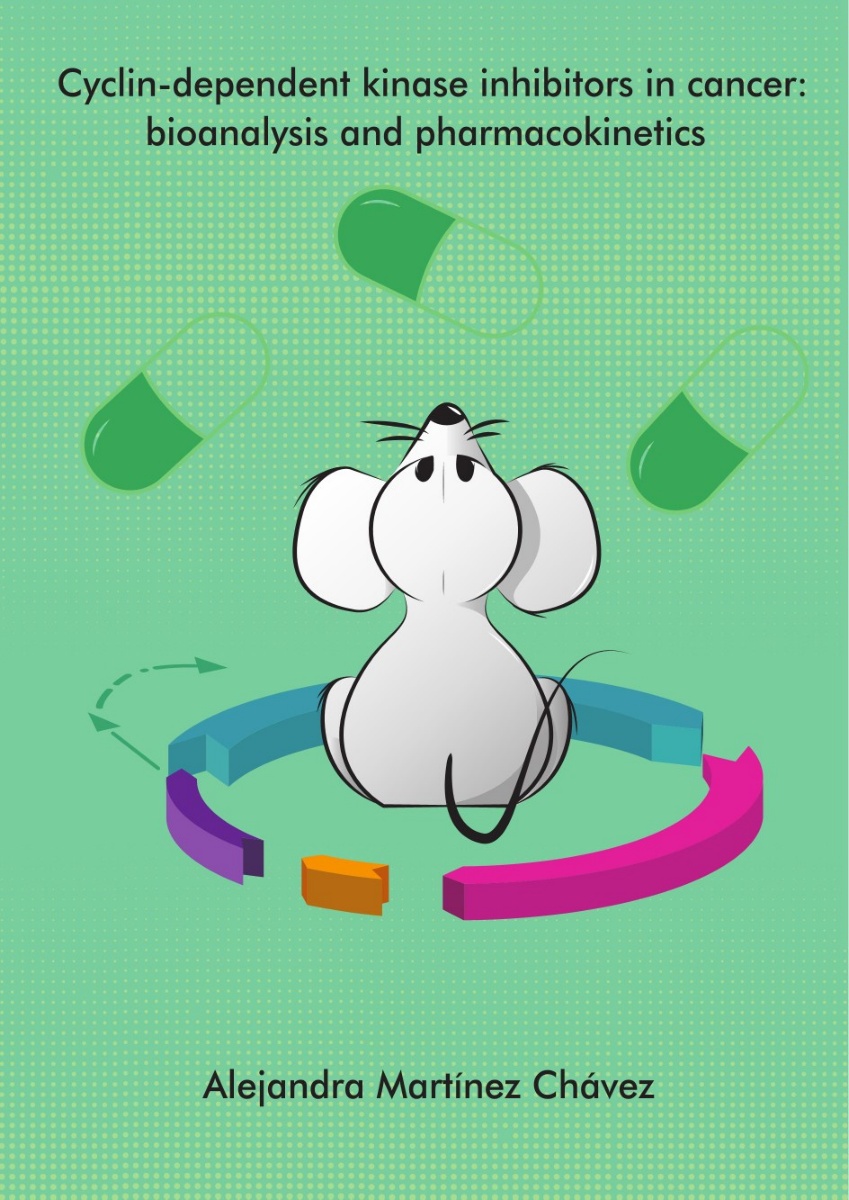
Share this project
Summary
Cancer remains a leading global health problem with expected increases in incidence and mortality for the coming years. New cancer therapies have focused on targeted anticancer drugs, which have demonstrated to have higher efficacy and reduced toxicity compared to traditional cytotoxic drugs. The cyclin-dependent kinases (CDKs) have been regarded as promising targets for cancer, since they can control critical checkpoints in the cell cycle when activated by cyclins. To date, three CDK inhibitors selective for CDK4 and CDK6 have been approved: palbociclib, ribociclib and abemaciclib. These drugs are currently used for the treatment of metastatic or advanced breast cancer, and their efficacy for other malignancies is being investigated. In addition, clinical studies of many other CDK inhibitors with different CDK subclass specificity are ongoing.
This thesis addresses several pharmacological aspects of the CDK inhibitors, from bioanalysis (Part I) to preclinical (Part II) and clinical pharmacokinetics (Part III), focusing mainly on the approved CDK4/6 inhibitors: abemaciclib, palbociclib and ribociclib. However, it also examines milciclib, a promising CDK2 inhibitor that is currently clinically investigated for treatment of some malignancies.
Part I: Bioanalysis of cyclin-dependent kinase inhibitors
As reliable bioanalytical methods are pivotal for an appropriate conduction and performance of preclinical and clinical studies of drugs, part I of this thesis focusses on the development and validation of bioanalytical methods for the quantitative analysis of CDK inhibitors. Full method validation was performed according to the U.S. Food and Drug Administration (FDA) and European Medicines Agency (EMA) guidelines. The bioanalytical methods provided in part I were used to support the pre-clinical investigations conducted in part II of this thesis.
Chapter 1 describes the development and validation of a bioanalytical method for the quantification of three approved CDK inhibitors (abemaciclib, palbociclib and ribociclib) in human and mouse matrices using liquid chromatography-tandem mass spectrometry (LC-MS/MS). This method was fully validated in human plasma and partially validated in mouse plasma and tissue homogenates, including liver, kidney, spleen, brain and small intestine. A fit-for-purpose strategy was followed to evaluate the method performance in the tissue homogenates. This method was linear, accurate and precise for the quantification of abemaciclib, palbociclib and ribociclib in all the biomatrices. The biomatrix stability of the three analytes under several conditions was also examined in this chapter, where palbociclib and ribociclib were found to be unstable in some tissue homogenates, but conditions were modified to increase their storage and processing stability. The applicability of this method was demonstrated in a preclinical pharmacokinetic study of ribociclib, where a new metabolite with the same m/z transition as the parent drug was detected in mouse samples.
In humans, abemaciclib metabolism leads to the formation of three active metabolites (M2, M20 and M18). Their comparable potency with the parent drug and their relative abundance in human plasma make these metabolites clinically important, as they probably contribute to the overall clinical efficacy and safety of abemaciclib. Therefore, the method presented in Chapter 2 incorporates the bioanalysis of these metabolites simultaneously with abemaciclib, using an optimized ultra-high performance liquid chromatography-tandem mass spectrometry (UHPLC-MS/MS) method. A full validation of this method in human plasma was performed, whereas in mouse plasma the method was partially validated. This assay was successfully applied in a preclinical pharmacokinetic study, where abemaciclib and its active metabolites were identified and quantified. Inter-species differences between human and mouse samples were encountered, especially in the formation of M20, where isomers of this compound were detected in mouse plasma, but not in human plasma. This was confirmed by high resolution-mass spectrometry (HR-MS) measurements.
In Chapter 3 a versatile LC-MS/MS assay for milciclib in multiple biomatrices is provided to further support the clinical and preclinical development of milciclib. For this, a wide quantitative concentration range was selected and several biomatrices were included for the method validation, including human and mouse plasma, homogenates of mouse brain, kidney, liver, small intestine, spleen, and tissue culture medium. A full validation in human plasma was performed and a partial validation was done for the other biomatrices. The used sample pre-treatment led to efficient extraction of the analyte, with recoveries between 95–100%. The use of human plasma as a surrogate matrix to quantify milciclib in tissue culture medium and mouse matrices resulted in acceptable accuracy and precision, although tissue culture medium samples required a dilution with human plasma prior the pre-treatment. All performance parameters of the method complied with the acceptance criteria recommended by the guidelines, except for the carry-over, which was slightly above (22.9% of the lower limit of quantification) the recommended percentage (20%). Therefore, additional measures were taken to ensure data integrity. Stability of milciclib in all matrices was additionally evaluated, and in some matrices the analyte was unstable under the tested conditions. Thus, further recommendations on storage and processing were included.
Chapter 4 reports a rapid bioanalytical method for the simultaneous quantification of irinotecan and SN-38 in mouse plasma and tissue homogenates using High-Performance Liquid Chromatography with Fluorescence detection (HPLC-FL). This method was optimized to specifically support preclinical studies of the metabolism of irinotecan into SN-38 by carboxylesterase enzymes. The selectivity, linearity, accuracy and precision of the method in the concentration range of 7.5 to 1500 ng/mL for irinotecan and from 5 to 1000 ng/mL for SN-38 was demonstrated. Lastly, the applicability of this method in a pharmacokinetic study of irinotecan and SN-38 using in vivo mouse models is proven.
Part II: The impact of drug transporters and drug-metabolizing enzymes on the pharmacokinetics of the cyclin-dependent kinase inhibitors
Drug transporters and drug-metabolizing enzymes can influence the disposition of substrate drugs with clinically relevant (pharmacodynamic) consequences. Thus, using in vitro and various genetically modified mouse models, part II of this thesis investigates the role of efflux (ABCB1 and ABCG2) and uptake transporters (OATP1) and cytochrome P450 3A (CYP3A) enzymes in the pharmacokinetics and tissue distribution of CDK inhibitors.
Chapter 5 examines the effects of the efflux transporters ABCB1 and ABCG2 and of CYP3A on the pharmacokinetics of the CDK4/6 inhibitor ribociclib. In vitro, ribociclib was avidly transported by human ABCB1. In vivo, the ribociclib brain penetration was drastically limited by ABCB1 in the blood−brain barrier, but coadministration of elacridar could fully reverse this process. Our results further suggested that ABCB1 could play an important role in the ribociclib elimination. Moreover, this study showed that human CYP3A4 can extensively metabolize ribociclib and strongly restrict its oral bioavailability. The insights obtained from this study may be useful to further optimize the clinical application of ribociclib, especially for the treatment of (metastatic) brain tumors.
Chapter 6 investigates whether abemaciclib active metabolites (M2, M20 and M18) are substrates of the efflux transporters ABCB1 and ABCG2. Additionally, this chapter determines the impact of these transporters and of CYP3A on the pharmacokinetics and tissue distribution of abemaciclib and its active metabolites. In vitro, abemaciclib was efficiently transported by human ABCB1 and mouse Abcg2, and slightly by human ABCG2, and its active metabolites were even better transport substrates of these efflux transporters. ABCB1 and ABCG2 did not affect the plasma exposure of abemaciclib and M20, however, the AUC0-24h and the Cmax of M2 significantly increased in the absence of Abcb1a/1b and Abcg2, where Abcb1a/1b appeared to play a dominant role. In addition, the brain penetration of abemaciclib, M2 and M20 dramatically increased (at least) 25-, 4- and 60-fold, respectively, when both transporters were ablated, and to a lesser extent in single Abcb1 or Abcg2-deficient mice. Similarly, the recovery of abemaciclib and its metabolites was profoundly reduced in Abcb1a/1b;Abcg2-/- mice, but these effects were also diminished in single knockout mice. Our results show that both Abcb1a/1b and Abcg2 cooperatively limit the brain penetration of abemaciclib and its active metabolites, and also that they participate in the hepatobiliary or direct intestinal elimination of these compounds. Moreover, the human CYP3A4 drastically reduced the abemaciclib plasma AUC0-24h and the Cmax by 7.5- and 5.6-fold, respectively, and it showed to be more active in the formation of M2 and M20 compared to the mouse Cyp3a. The insights generated in this study may help to optimize the clinical development of abemaciclib, especially for the treatment of brain malignancies.
Chapter 7 explores the role of the multidrug efflux and uptake transporters ABCB1, ABCG2, and OATP1A/1B, and the drug-metabolizing enzyme CYP3A in milciclib disposition. In vitro, milciclib was transported by mouse Abcg2. The plasma exposure of milciclib was not significantly affected by efflux transporters. The Oatp1a/1b uptake transporter had only a minor impact on the milciclib plasma AUC0-24h and Cmax. Milciclib showed good brain penetration even in wild-type mice (brain-to-plasma ratio of 1.2), but this was further increased by 5.2-fold when both Abcb1 and Abcg2 were ablated, and to a lesser extent in single Abcb1- or Abcg2-deficient mice. The milciclib plasma AUC0-8h increased 1.9-fold in Cyp3a-/- mice, but decreased only 1.3-fold upon overexpression of human CYP3A4. Thus, our data indicate that ABCB1 and ABCG2 cooperatively limit milciclib brain penetration. The low impact of OATP1 and CYP3A could be clinically favorable for milciclib, reducing the risks of unintended drug-drug interactions or interindividual variation in CYP3A4 activity.
Part III: Clinical pharmacokinetics and pharmacodynamics of the cyclin-dependent kinase inhibitors
Finally, in Chapter 8, the clinical pharmacokinetics and pharmacodynamics of the approved CDK4/6 inhibitors (palbociclib, ribociclib and abemaciclib) is reviewed. Here, the pharmacokinetics of these drugs in normal and specific populations is described, as well as some extrinsic factors that affect it, including the food effect and the interaction with other drugs. Similarities among the pharmacokinetics of these drugs included their extensive metabolism by CYP3A4, their brain penetration limited by efflux transporters, and their large interindividual variability in exposure. Furthermore, this chapter highlights the exposure–response and exposure–toxicity relationships. Consistently for all drugs, high exposure is associated with an increased risk of neutropenia, and for ribociclib also to corrected QT prolongation. For abemaciclib, a clear exposure–efficacy relationship has been described, while for palbociclib and ribociclib exposure–response analyses remain inconclusive.
In conclusion, the insights into different aspects of the CDK inhibitors provided in this thesis may be useful to optimize the clinical use of abemaciclib, palbociclib and ribociclib. Additionally, this can potentially contribute to the further development of these drugs and milciclib. Ultimately, this information hopefully could lead to CDK treatments with improved efficacy and safety.