Dixit Guleria
Uniaxial Orientation of Polyethylene Films for Recyclable Flexible Packaging
21 mei 2025
TU Eindhoven
Open Ebook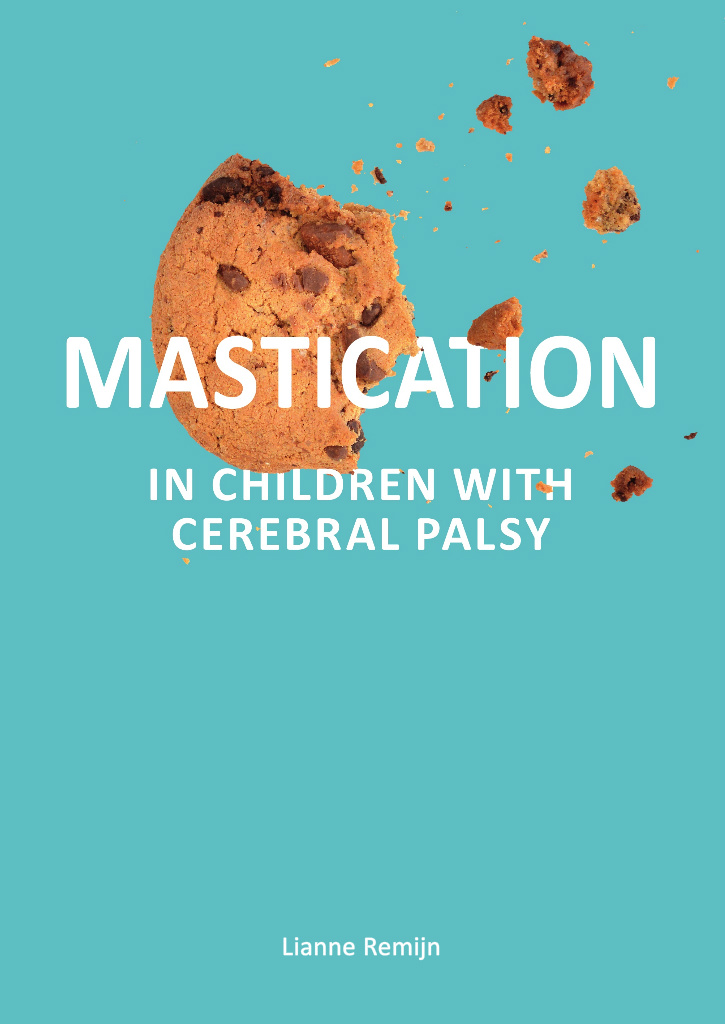
Share this project
Summary
The aims of this PhD thesis are: (1) to describe feeding and swallowing problems, including masticatory problems in children, and their impact on daily life in adolescence and young adulthood in individuals with cerebral palsy (CP); (2) to develop and validate an observation instrument for mastication; (3) to evaluate quantitative instruments for measuring mastication and to establish the contrasts with the observation instrument; and, finally, (4) to test the feasibility of using different instruments to distinguish differences in mastication between children with CP and typically developing children. This PhD thesis aims to contribute to the understanding of the mechanism of mastication in children with CP, to improve clinical reasoning of speech-language therapists (SLT), and to provide tailored interventions for optimizing participation in social life, specifically in mealtimes.
chapter 1 describes the introduction, the purposes, and outline of this thesis. The definition of feeding and swallowing disorders, used in this thesis, is derived from the American Speech-Language-Hearing Association (ASHA): “difficulties gathering food and getting ready to suck, chew, or swallow it”. This includes “difficulty with any step of the feeding process from accepting foods and liquids into the mouth to the entry of food into the stomach and intestines”, resulting in “developmentally atypical eating and drinking behaviors, such as not accepting age-appropriate liquids or foods, being unable to use age-appropriate feeding devices and utensils, or being unable to self-feed”.1 A description of a case from our clinical practice illustrates the complexity of feeding and swallowing problems. The interaction in this case between body functions, related impairments in activities, and the influence of the parents and child factors on the learning process of eating and drinking is presented using the framework of the World Health Organization’s (WHO) International Classification of Functioning, Disability and Health, Child and Youth version (ICF-CY)2. Furthermore, this chapter describes: (i) the different stages in the mastication process, the anatomical structures and sensory-motor processes involved in normal development of mastication as a basis for understanding the pathology on mastication; (ii) characteristics of children with CP; and (iii) observational and quantitative measurements tools of mastication; ultrasound, surface electromyography, and 3D kinematics.
chapter 2 describes a retrospective case study of 29 children (aged 1;00 - 5;07 years;months) with a variety of medical issues with feeding and swallowing problems. The children exhibited various degrees of physical disabilities and they often had behavioral problems, a variety of differences in food intake, varying durations of feeding and swallowing problems, and differences in context variables related to the children and their families. The characteristics of these children were described using the ICF-CY classification, and the increase in qualitative and quantitative oral intake was used as an outcome measure to establish the effect of a 4 to 6-week multidisciplinary in-patient intervention. Based on their food intake, the children were classified into three groups: (i) tube feeding; (ii) selective food refusal by texture; and (iii) unpredictable food refusal. In addition to the characteristics present in all groups (e.g., problems with taste and sensory issues, ingestion, and prolonged and selective eating activities), every subgroup also displayed some specific characteristics. In the ‘tube feeding’ group, the prevalence of problems in energy and drive functions was obvious due to metabolic dysfunctions, medical diagnosis, or a far too low caloric intake. The ‘selective food refusal by texture’ group had relatively more problems with ingestion and control of voluntary movements due to neurologic dysfunctions. The ‘unpredictable food refusal’ group showed a prominent prevalence of problems in the middle ears or tonsils, or in sleeping, and handling stress. The environmental factor of individual attitudes of immediate family members was also noticed as a barrier to eating in this group.
Of the 29 children in the study, 26 made progress in their qualitative and quantitative food intake. Only children with very complicated medical issues, such as metabolic illness (n=3), could not improve their oral intake within the 4 to 6-weeks intervention due to the complexity of their underlying issues. Parents were positive about the multidisciplinary intervention and appreciated the in-patient program. Throughout the intervention, we considered parental opinions and beliefs which contributed to the final positive outcomes. Parents gained insight into their child’s temperament and learned how to cope with conflicts during mealtimes and to avoid the focus on improving oral food intake as quickly as possible. Moreover, the intervention elements could be transferred to the home situation through parental training.
In conclusion, an intervention’s success is not only dependent on the type or presence of a chronic illness or disorder, but also on each child’s personal factors, such as character and coping style, and the environmental factors, such as parental educational style. Therefore, an intervention for feeding and swallowing problems with behavioral, oral-motor and dietary components needs to be individually adapted to each child and family.
chapter 3 continues with exploring the experiences of adolescents and young adults with CP about their eating and drinking in daily life, using semi-structured interviews. Adolescents and young adults need to become increasingly independent from parents and caregivers, and this may be complicated by their disabilities. Moreover, physical growth in puberty influences the motor coordination during activities, such as eating and drinking.
The young people with CP in our study, aged 15 - 23 years, exhibited varying degrees of disabilities related to managing all food textures, and they face practical and emotional problems related to eating and drinking activities. Four main themes were extracted from the interviews: (a) feelings (e.g., shame, frustration, fear, and distress); (b) coping strategies (e.g., adaptation or food avoidance); (c) the influence of the social and physical context (e.g., the accessibility of restaurants or assistance); and (d) concerns about the future.
Some participants had relatively minor oral-motor problems but mentioned more limitations in participating in their social environment related to eating and drinking than did severely impaired individuals with CP. Severely impaired individuals seemed to have fewer problems with accepting help from others or dealing with restrictions than did mildly affected individuals. One striking finding was that all but one of the participants had not recently received either monitoring or intervention for eating and drinking skills.
We conclude that regular multidisciplinary rehabilitation programs with regard to eating and drinking ability are needed for purposes of evaluation, advice, and intervention in order to increase the participation of young people with CP. Such programs should draw on the latest insights and they should involve socially acceptable and age-appropriate food adaptation. Moreover, young people with CP need to be trained in self-management so that they are able to ask for tailored assistance with their environment.
chapter 4 describes the first phase in the development of the Mastication Observation and Evaluation (MOE) instrument. Adequate insight into mastication ability allows us to understand how children process solid foods. This study reported on item selection and item definition, content validity, and intra- and inter-observer reliability of the MOE instrument. Items were retrieved from the literature and discussed by 15 experts in three Delphi rounds. This process resulted into 14 items for which more than 75% of the experts reached consensus. The items were scored on a four-point ordinal scale in which score 1 was the worst performance and score 4 was the best, most mature performance. The four-point scale enabled the respondent to express the extent to which an oral-motor behavior is achieved.
To test the intra- and inter-observer reliability, two experts and five students SLT evaluated video recordings of 20 children (10 children with CP, aged 29 - 65 months, and 10 typically developing children, aged 11 - 42 months) eating pieces of bread and a biscuit. All items showed good to excellent intra-observer agreement (ICC 0.73 - 1.0). The inter-observer agreement was fair to excellent for all items, with the exception of ‘chewing duration’ and ‘number of swallows’.
chapter 5 describes the development of the final version of the MOE instrument using the Consensus-based Standard for the Selection of Measurement Instruments (COSMIN) framework3, and determines the instrument’s internal consistency, inter-observer reliability, construct validity and floor and ceiling effects. Data from three bites of two food textures (bread and biscuit) taken by 59 typically developing children and 38 children with CP, aged 6-48 months, and scored on the 14 item version of the MOE, were used for this study.
Four items from the MOE were excluded due to zero variance in the scoring. One item was removed because it was only useful in the case of biting off a piece of food. The Principal Components Analysis (PCA) showed one factor with eight items, having a weight of >40%. One item loaded below 0.40 in the PCA and was therefore eliminated. The internal consistency of the MOE instrument as determined by Cronbach’s alpha was 0.71 for the two food textures and for both groups of children. The inter-observer reliability calculated using the weighted Gwet’s agreement coefficient, varied from 0.51 to 0.98. Agreement on item ‘lateral tongue movement’ and ‘munching’ was lower than on the other items. The total MOE scores for both groups showed normal data distributions. There were no floor or ceiling effects.
The final version of the MOE contains eight items with four answer options for discrete bites. The MOE instrument: (a) has sufficient internal consistency, (b) can be scored on a 4-point scale with sufficient reliability, (c) is sensitive to changes as a result of the development of mastication in young typically developing children and (d) has maximum item performance scores that are usually reached by the age of 48 months.
However, the reliability of scores on intra-oral movements by observation is not as strong as for the other items. Therefore, training about interpreting of the items and the answer options is highly recommended to optimize the reliability.
chapter 6 shows how the ultrasound technique is used to visualize dynamic tongue movements. This technical report describes the method used to analyze the coronal and sagittal tongue movements with ultrasound measurement. The tongue curves were manually drawn in the one-dimension mode (M-mode) and automatically extrapolated to the real-time Brightness or B-mode. The highest point per frame was considered to be the most active point and used as reference point for the tongue position. The distance of the highest point between two consecutive frames was the base for calculations resulting in the displacement and velocity parameters. Good intra-observer and inter-observer reliability for the manually drawing was established with average ICC scores of 0.84 and 0.81, respectively. Significant differences between trials of adults with CP and controls were identified. In the coronal plane, we found differences for movement frequency and range of vertical tongue movements. Data obtained from sagittal images, apart from vertical frequency, revealed no differences between the groups.
A disadvantage of the ultrasound technique is the difficulty of interpreting some frames due to faint lines caused by air in the oral cavity, poor contact between the transducer and the skin, or problems in detecting the tongue body contour. Moreover, detection of the highest tongue position based on the tongue contour in the B-mode is difficult when the tongue is centrally grooved (i.e., with two high lateral tongue positions) or relatively flat. We are still working on improving the analysis method for the flat tongue position.
Chapter 7 investigates two other quantitative techniques for evaluating mastication in twelve healthy adults. 3D kinematics of mandible movements and surface electromyographic (sEMG) activity of the masticatory muscles were obtained during two sessions consisting of four conditions: two food textures (biscuit and bread) in two sizes (small and large). 3D kinematics was used to determine the following outcome measures in mastication: amplitude of the jaw movements in horizontal; vertical, and anterior directions; frequency of chewing cycles; and chewing cycle duration and velocity of the opening, occlusion, and closing stages. Although these variables were frequently used to evaluate interventions or to make group comparisons, only limited information is available about their reliability and validity. The measurement reproducibility was good to excellent; ICC ranged from 0.71 to 0.98 for all kinematic and sEMG outcome variables. The standard error of measurement, relative error of measurement, and smallest detectable differences of all variables were calculated with a Bland-Altman analysis. The relative standard error of measurement of the bite variables was up to 17.3% for ‘time-to-swallow’, ‘time-to-transport’ and ‘number of chewing cycles,’ but ranged from 31.5% to 57.0% for ‘change of chewing side.’ The relative standard error of measurement ranged from 4.1% to 24.7% for chewing cycle variables and was smaller for kinematic variables than sEMG variables.
In summary, measurements obtained with 3D kinematics and sEMG are reproducible techniques for assessing the mastication process. ‘Chewing cycle duration’ and ‘chewing frequency’ are the best reproducible variables. The published measurement errors and smallest detectable differences may aid in interpreting the results of future clinical studies that use these variables.
chapter 8 is dedicated to exploring the feasibility of the MOE instrument, ultrasound, and 3D kinematics through a study conducted with eight children with spastic CP (mean age 9;08 years;months) and 14 typically developing children (mean age 9;01 years;months). We assessed masticatory movements over five trials with a piece of biscuit. Moreover, we compared the clinical observations from the MOE measurements with the quantitative measurements of ultrasound and kinematic measurements.
The MOE scores ranged from 17 to 31 (median 24) for the children with CP and 28 to 32 (median 31) for the typically developing group. Differences between individual children as determined with the MOE were visualized in mastication profiles. The total MOE score decreased with declining gross motor function in children with CP. When ultrasound and 3D kinematics were used to assess the masticatory movements of children with CP in comparison to those of typically developing children, the results showed:
1. a longer chewing cycle duration (0.84 s and 0.64 s, respectively) with a prolonged opening and occlusion duration of the chewing cycle;
2. a longer time-to-swallow (15.6 s and 8.1 s, respectively) and more chewing cycles (13.8 times and 10.4 times, respectively);
3. a larger anterior mandible movement (10.2 mm and 6.8 mm, respectively), but similar horizontal and vertical mandible movements;
4. a lower frequency of tongue movement in the horizontal direction (0.51 Hz and 0.81 Hz, respectively) and the vertical direction (2.25 Hz and 2.55 Hz, respectively).
In addition, the MOE items ‘jaw movement’ and ‘fluency and coordination’ had the best relationship with the 3D kinematic outcome measures. The best performances on the MOE items ‘lateral tongue movement’ and ‘munching’ aligned with the results of the ultrasound measurements. We conclude that the quantitative measurements complement the data of the MOE instrument on tongue and jaw movements.
chapter 9 provides a comprehensive outline of the main findings of all studies and consequently, the clinical implications for daily practice of SLTs involved in children with mastication problems. A schematic overview of assessments for mastication is presented including a broad inventory of the nutritional status, observational data, qualitative data and quantitative data of the food intake. A preliminary systematic framework for clinical reasoning with regard to mastication problems in children is proposed. Based on this current framework, we provide recommendations for intervention about mastication problems:
• a multidisciplinary approach with the larger perspective on feeding and swallowing;
• observation of mastication including both capacity and performance;
• carefully consideration of the use of quantitative measurement tools;
• attention to the efficiency of mastication in relation to nutritional intake;
• shared decision-making in interventions for mastication problems;
• use of SMARTI (specific, measurable, achievable, relevant, time-bound, and inspiring) formulated intervention goals;
• a lifelong attention to mastication issues, especially in less affected children and young adults with CP.
We suggest for future research:
• to establish the usability of the MOE instrument with various solid foods, other than pieces of bread and biscuit, and for other clinical groups;
• to determine the applicability of the mixing ability test in children with CP to mastication efficiency;
• to improve the analysis method of ultrasound measurements and to establish its usability for visual feedback on tongue movements;
• to improve the framework with evidence for decision-making in mastication problems for health care professionals.