Dixit Guleria
Uniaxial Orientation of Polyethylene Films for Recyclable Flexible Packaging
21 mei 2025
TU Eindhoven
Open Ebook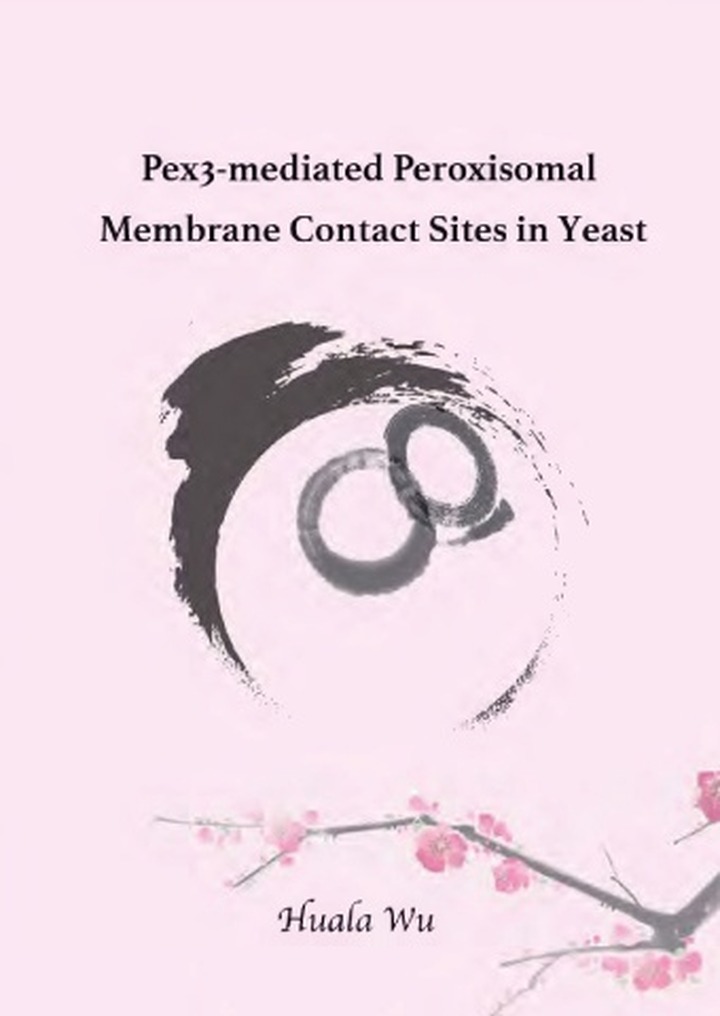
Share this project
Summary
Conclusions and Outlook
Peroxisomes are cell organelles that exist in almost all eukaryotic cells. They are involved in several important cellular processes. As a consequence, defects in peroxisome function or assembly cause severe diseases in human. Peroxisomes consist of a proteinaceous matrix surrounded by a membrane that is composed of proteins and lipids. Peroxisomal components (proteins, lipids) are derived from other subcellular compartments since peroxisomes are unable to synthesize these molecules. Much is known on transport of proteins to the peroxisomal matrix. Much less is known on how lipids and proteins reach the organelle and insert into the peroxisomal membrane.
Lipids can be transported from one membrane to another one via vesicles that are formed from the donor membrane and subsequently fuse with the acceptor membrane. An alternative process is direct transfer of lipids from one membrane to the other at regions where two membranes are tightly associated. These regions are called membrane contact sites (MCSs) (reviewed by Scorrano et al., 2019). MCSs are not only important in lipid transfer between membranes, but also play functions in other processes such as organelle movement, retention, fission and degradation (Scorrano et al., 2019).
So far, relatively little is known on peroxisomal MCSs. The research described in this thesis aimed to identify novel peroxisomal MCSs and to elucidate their composition and function in peroxisome biology. These studies were performed with yeast cells. Yeasts are very simple, unicellular organisms, which are often used as models in research on cell organelles. For our studies we used the yeast Hansenula polymorpha. This yeast is capable to grow on methanol (van der Klei et al., 2006). Because peroxisomal enzymes are essential for the metabolism of methanol, peroxisomes are massively formed when H. polymorpha cells grow on this carbon source. This makes this organism very attractive to study peroxisomes.
Importantly, H. polymorpha contains a single, relatively large peroxisome a few hours after shifting cells from peroxisome-repressing conditions (glucose-containing medium) to peroxisome-proliferation inducing conditions (methanol-containing medium). This property provides an important advantage to study MCSs. Chapter I gives an overview of our current knowledge on peroxisomes in yeast, with emphasis on peroxisome biogenesis, inheritance and MCSs.
Two models of peroxisome biogenesis exist: the growth and division pathway and the de novo formation process, in which peroxisomes are formed from the endoplasmic reticulum (ER). So far, it is still debated which process is the most important one. Budding yeast cells divide asymmetrically. In such cells, organelles including peroxisomes must be segregated properly over mother and daughter cells to ensure that both cells contain a complete set of organelles.
During budding of yeast cells, at least one peroxisome is retained in the mother cell, whereas at least one is transported to the bud. So far two proteins, called Inp1 and Inp2, are known to be involved in these processes. The peroxisomal membrane protein (PMP) Pex3 functions as an anchor for Inp1 on the peroxisomal membrane. Inp1 plays an essential function to retain peroxisomes in mother cells. Inp2 also associates to peroxisomes, where it binds to a myosin motor protein (Myo2), which drives transport of peroxisomes to the buds along actin filaments (Knoblach and Rachubinski, 2016). Recent findings demonstrated that MCSs are very important in peroxisome biology. Several peroxisomal MCSs have been identified so far, but for only a few (such as peroxisome-ER contacts and peroxisome-mitochondrion contacts) resident proteins are known.
In Chapter II, we used several microscopy techniques to show that contacts between peroxisomes and other organelles occur in the yeast H. polymorpha. Rapid peroxisomal proliferation dramatically promotes the formation of large and tight associations between peroxisomes and vacuoles. This is especially evident upon shifting cells from peroxisome-repressing (glucose) to peroxisome-inducing (methanol) growth conditions. By screening the localization of different PMPs fused to green fluorescent protein (GFP), we observed that Pex3-GFP accumulates in big patches on the peroxisomal membrane, at regions where the organelle associates with vacuoles (named VAPCONS). In addition, we showed that artificial overproduction of Pex3 promotes the formation of VAPCONS under conditions where they normally are absent (glucose-containing medium). Taken together, our data strongly suggested that VAPCONS formation is dependent on Pex3.
Chapter III highlights the main findings describes in chapter II. Peroxisomal patches of Pex3-GFP fluorescence were not only observed at VAPCONS, but also at other regions at the peroxisomal surface, often close to the cell cortex. Given the multiple roles of Pex3 including PMP sorting mediated by Pex19 (recently reviewed by (Jansen and van der Klei, 2019)), peroxisome retention mediated by Inp1 (Knoblach et al., 2013) and the selective autophagy depending on Atg36 (in Saccharomyces cerevisiae; Motley et al., 2012) or Atg30 (in Pichia pastoris; Farré et al., 2008) (Fig. 1), we further analyzed these peripheral Pex3 patches (Chapter IV). Fluorescence microscopy studies revealed that Pex3 and Inp1 co-localize in the peripheral patches. Pex3 and Inp1 were previously proposed to anchor peroxisomes to the cortical ER (cER) in the yeast S. cerevisiae (Knoblach et al., 2013; Knoblach and Rachubinski 2019). Correlative light and electron microscopy (CLEM) however showed that the Pex3 and Inp1 containing patches localize to the region where peroxisomes tightly connect with the plasma membrane (PM), indicating that Inp1 and Pex3 likely play a role in peroxisome-PM contact sites (PerPMCS). Deletion of INP1 resulted in the absence of peripheral Pex3 patches and had significant impact on the formation of PerPMCS, but not on peroxisome-ER contacts. Moreover, overproduction of Inp1 extended the contact sites between peroxisomes and the PM. Altogether, our data indicate that the peripheral Pex3 patches, together with Inp1, are required for PerPMCS formation.
In order to identify additional proteins that play a role in the formation of Pex3-dependent peroxisomal MCSs, we performed in vivo pull-down experiments to identify novel proteins that bind to Pex3 (Chapter V). Pex3-complexes were analyzed by liquid chromatography and mass spectrometry. 34 putative Pex3 interacting proteins were identified. Four proteins including Atg30, Emc1, Tsc13 and Vps26 were considered as the most promising candidates. The role of autophagy-related protein 30 (Atg30) and the ER membrane complex subunit 1 (Emc1) was further explored in chapter V. In the yeast P. pastoris the Pex3 binding protein Atg30 has been demonstrated to function in autophagic degradation of peroxisomes (pexophagy) (Farré et al., 2008). Emc1 has been implicated to function in ER-mitochondrion contact sites in S. cerevisiae (Lahiri et al., 2014). To gain insight into the role of Atg30 and Emc1 in peroxisome biology, fluorescence microscopy studies were performed to localize these proteins. This revealed that Atg30 co-localizes with Pex3 on the peroxisomal membrane. However, Atg30-GFP patches did not localize to VAPCONS. As expected, Emc1 localized to the ER and occasionally co-localizes with Pex3, possibly at peroxisome-ER contact sites. Atg30 is not required for VAPCONS formation, because these MCSs still were formed in cells of an ATG30-deletion strain. Interestingly, enlarged peroxisomes were present in atg30 mutant cells, which suggests that Atg30 may function in normal peroxisome biogenesis. However, its role in peroxisome formation needs to be further analyzed.
In emc1 mutants the formation of VAPCONS was delayed after a transfer of cells from glucose to methanol medium. However, deletion of EMC1 did not affect peroxisome size or number, indicating that this protein is not essential for normal peroxisome formation.
Outlook
The research described in this thesis has resulted in the identification of two novel MCSs in H. polymorpha, which both are dependent on Pex3. The first one is required for the formation of VAPCONS, whereas the other is involved in PerPMCS formation. However, many questions remain to be answered.
Lipid trafficking to peroxisomes via VAPCONS?
In chapter II, we suggest that VAPCONS might contribute to membrane expansion during peroxisome biogenesis. Phosphatidylcholine (PC) is a major phospholipid of all membranes. It can originate from phosphatidylethanolamine (PE; Flis et al., 2015). In yeast, PE can be supplied from three different sites, namely the endoplasmic reticulum, mitochondria and Golgi/vacuole (Rosenberger et al., 2009). Therefore, possibly VAPCONS is involved in transport of PE from vacuoles to peroxisomes. However, technically this is difficult because so far suitable assays for in vivo lipid transport are not available.
Function of Inp1-dependent PerPMCS
As mentioned above, Inp1 is essential for the formation of PerPMCS in H. polymorpha (Chapter IV), although it was previously reported to function in peroxisome retention via association of the organelle to the endoplasmic reticulum in S. cerevisiae (Fagarasanu et al., 2005; Knoblach et al., 2013). Importantly, retention of mitochondria involves MCSs with the PM (see the review (Lackner, 2019)). Therefore, PerPMCS might also be required for the retention of peroxisomes. Further studies are required to understand whether the previously indicated contacts with the ER also play a role in peroxisome retention.
Our data (Chapter IV) suggests that the N terminal region of Inp1 binds to the PM. However, whether this binds to a specific PM protein or to lipids is still unknown. Previously, it has been shown that S. cerevisiae Inp1 can be phosphorylated (Oeljeklaus et al., 2016). Possible phosphorylation of Inp1 regulates the formation of PerPMCS. If true, it would be important to identify the kinase involved in Inp1 phosphorylation.
Relationship between PerPMCS and EPCONS as well as VAPCONS
In chapter IV, we showed that Inp1 plays an essential role in PerPMCS rather than in contacts between the ER and peroxisomes. Importantly, in S. cerevisiae EPCONS formation was shown to require the ER proteins Pex30, Pex31, the reticulons Rtn1/2 and Yop1. These ER peroxisome contacts were proposed to be involved in de novo peroxisome formation, instead of in peroxisome retention (David et al., 2013; Mast et al., 2016). Our data indicate that in H. polymorpha cells that contain a single peroxisome, both EPCONS and PerPMCS can be formed at the same time. Most likely PerPMCSs are important for peroxisome retention, whereas EPCONS have another function.
We also discovered that VAPCONS, but not vacuolar Pex3 patches, remained upon overproduction of Inp1, indicating that Pex3 is likely essential for the initial step of VAPCONS formation. Hence, other proteins might be the tethering proteins at VAPCONS. Further studies are required to identify these proteins.
What is the exact function of Atg30 in H. polymorpha?
In Chapter V, we suggested that HpAtg30 might be involved in peroxisome formation as enlarged peroxisomes were observed in cells lacking Atg30. HpAtg30 is homologous to PpAtg30 which has been implicated in pexophagy (Farré et al., 2008). However, pexophagy is not induced at the experimental conditions used in our studies. Therefore, it remains to be established what the function is of ATG30 at conditions that do not induce pexophagy.
Indirect function of Emc1 at VAPCONS
Chapter V revealed that upon shifting emc1 cells from glucose to methanol medium, growth of the pre-existing peroxisomes as well as VAPCONS formation was delayed. However, at later stages peroxisome size and VAPCONS formation were similar in WT and emc1 cells. Possibly, this is related to defects in the sorting of PMPs via the ER, because the ER membrane complex (EMC) has been reported be important for the biogenesis of membrane proteins (Chitwood et al., 2018). Therefore, localization analysis of PMPs in cells lacking EMC1 might contribute to the answer why small peroxisomes occur in these cells. Alternatively, Emc1 may be important for normal vacuole biogenesis. As a consequence emc1 cells may show defects in normal vacuole formation. This possibility is underlined by the observation that in emc1 cells that contain very small peroxisomes, vacuoles were generally not detected.
Concluding Remarks
Summarizing, in this thesis I show two novel functions of Pex3, namely in VAPCONS and PerPMCS formation (Fig. 1). Previously, Pex3 was demonstrated to be required for PMP sorting (together with Pex19) and autophagy (together with PpAtg30 or ScAtg36). These multiple roles of Pex3 raise the question how Pex3 can perform so many functions. Also, how these different functions are regulated and how the various interaction partners are recruited to Pex3. Finally, Pex3 may recruit additional not yet known proteins to the peroxisomal membrane. Hence, we cannot exclude that additional Pex3 functions will be discovered in the future.
PMP sorting: PMP, Pex19, Pex3.
PerPMCS: Inp1, Pex3, PM.
Peroxisome.
Vacuole: VAPCONS, Pex3.
Pexophagy: Atg30/Atg36, Atg11, Pex3.
Autophagosome.
Figure 1. Functions of Pex3 in yeast.
The boxes in dashed lines represent multiple known roles and the related interacting partners of Pex3.