Share this project
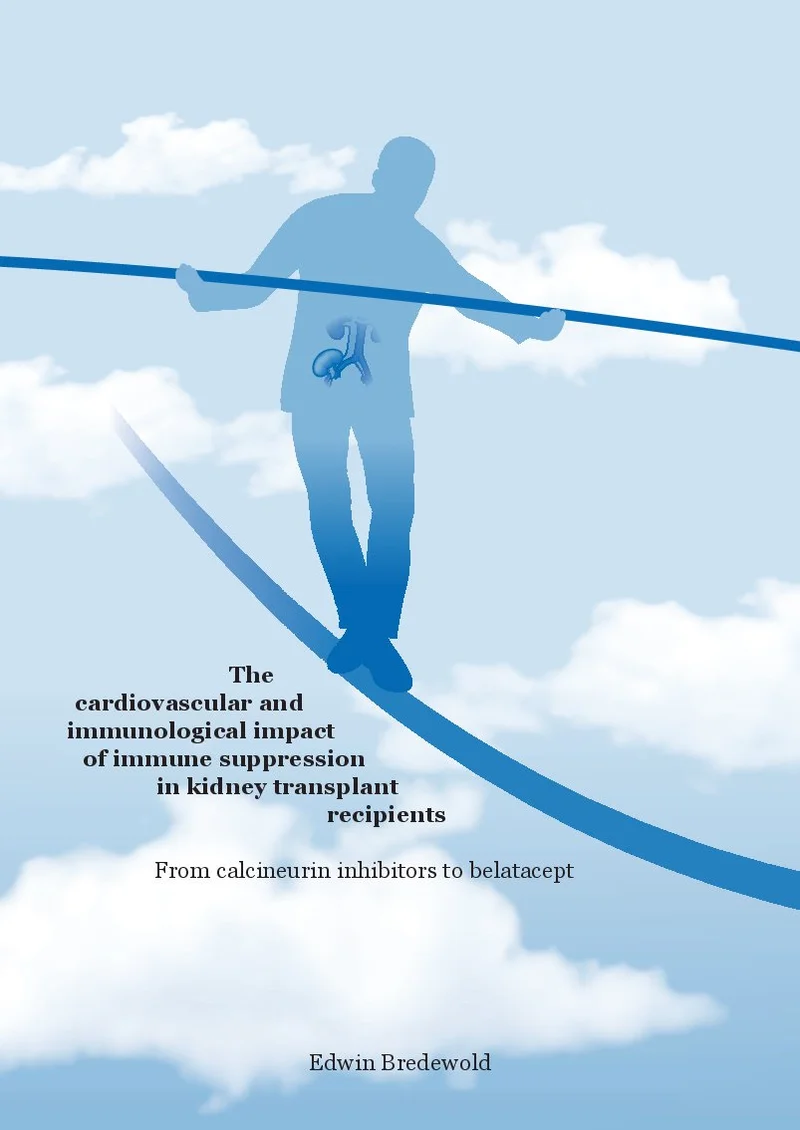
Edwin Bredewold
Universiteit Leiden
Publication date: 26 mei 2026
University: Universiteit Leiden
ISBN: 978-94-6534-349-5
The cardiovascular and immunological impact of immune suppression in kidney transplant recipients
Summary
In the present thesis, differences between belatacept and calcineurin inhibitors (CNI) in kidney transplantation regarding their effect on cardiovascular and immunologic parameters were explored, to help define the place of belatacept in current practice. To achieve this, data derived from two randomized controlled trials (RCT’s) that compared kidney-transplant recipients (KTR) before and after conversion from CNI to belatacept were used. Our findings aimed to provide much-needed information about the clinical utility of belatacept implementing clinical, immunological and vascular effects.
In chapter 2, we describe the results of an RCT on conversion from CNI to belatacept. In a collaboration with researchers from hospitals in Sweden, Norway and Denmark we compared the 7-year risk of developing an endpoint defined within ‘MACE’ (Major Adverse Cardiovascular Endpoint) or all-cause mortality, using a cardiovascular risk-calculator [1]. In 105 patients that were followed-up for one year, we found no difference in the risk-calculation between patients that were converted to belatacept, when compared to patients that remained on a CNI-based regimen. Likewise, we also failed to demonstrate a significant effect of conversion on any of three individual components of the calculator: LDL-cholesterol, renal function and diabetes-risk. A small improvement in diastolic blood pressure was observed in belatacept patients. These data provided some contrast with results of previous trials, in which an improvement in renal function was invariably found [2-4]. Possible explanations discussed in the article are underpowering, a somewhat skewed distribution of GFR between the two randomized groups and a selection bias favouring patients not suffering from CNI-side-effects. However, our findings indirectly support existing guidelines regarding the dosing of tacrolimus (TAC) in transplantation, as these modern doses are probably less toxic than previous CNI-based regimens.
At the time patients were randomized and treated in the trial described in chapter 2, the LUMC was involved in a second international RCT with a comparable design [4]. In-and exclusion-criteria were largely the same, although the endpoints were different. However, the follow-up in the first year was so similar, that it facilitated us to create a larger, homogeneous patient cohort of which the samples could be used for the other research in this thesis.
With the expanded data, we explored whether conversion from CNI to belatacept resulted in alteration of the presence and phenotypic profile of circulating monocytes and lymphocytes, to assess differences in cardiovascular risk as well as immunologic action. We hypothesized that belatacept would result in a decrease and a phenotypic change in circulating cells, indicative of a less inflammatory phenotype. We identified a significant change in a monocyte-subset that is only scarcely described in other literature [5]. In patients converted to belatacept, this cell-type, which is negative for cell-marker CD14 decreased in the circulation while its concentration stayed constant in the CNI-group. In belatacept-treated patients, we saw a parallel decrease in T-lymphocytes, B-lymphocytes and TNF-alfa, with all these changes showing significant correlation in a regression model. On the basis of our findings, we propose a model in which CD14NM, this subset of monocytes behave as an antigen-presenting cell (APC) facilitating proliferation of T-cells and B-cells. In this model, belatacept negatively influences the terminal conversion of CD14-positive monocytes into CD14NM. This effect would then lead to downstream suppression of T-cell-differentiation and proliferation, as well as T-cell mediated stimulation of B-cells. These results are described in detail in chapter 3 [6].
Although belatacept is associated with rejection, especially in the first year after transplantation, multiple studies and pre-clinical research have also indicated that belatacept-treated patients have a decreased likelihood to form donor-specific anti-HLA-antibodies (DSA) compared to both ciclosporin A (CsA) as TAC [4, 7, 8]. Also, since the introduction of belatacept, a caution for EBV-associated lymphoproliferative disease is given to physicians prescribing belatacept to EBV-seronegative transplant recipients. These observations point to a somewhat paradoxical effect of belatacept regarding its immunosuppressive strength. There is an urgent need of biomarkers that reliably indicate if immunosuppression in an individual patient is either suboptimal, with the risk of rejection, or conversely dosed too high, with a risk of infections and cancer.
Torque Teno Virus (TTV) is a non-pathogenic anellovirus that can serve as a marker of immunogenic strength: present in high concentrations in plasma when the host is immunocompromised, and lower when immunity is stronger [9]. We measured the copy number of this virus in samples taken before and after conversion from CNI to belatacept. We found that TTV continually decreases in concentration after transplantation, but that this decline is negated in patients converted to belatacept. It indicates that belatacept, though associated with more rejections in the first year after transplantation, is not necessarily weaker in its immunosuppressive effect. These findings can be found in chapter 4 [10].
In chapter 5, we set out to compare parameters of endothelial dysfunction (ED) in patients converted to belatacept with patients that maintained on a CNI-based immunosuppressive regimen. For that purpose, traditional and novel biomarkers to explore ED in KTR’s after conversion were measured. We used several different markers, to explore the hypothesis that belatacept improved ED compared to CNI. Traditional markers, like angiopoietins, P-selectin and Soluble thrombomodulin were investigated. Twenty micro-RNA’s associated with ED, renal fibrosis, CNI-toxicity and allograft dysfunction, including miR21, miR126, miR155 and miR132 were selected, again hypothesizing that these markers would be influenced by the conversion in immunosuppression [11-14]. Lastly, we employed a novel method, called ‘cell-painting’ to study ED. This essay uses human umbilical vein endothelial cells (HUVEC) that are cultured, and in which stainings are performed to visualize cellular components, like cell wall, mitochondria, nuclei and stress fibres. Images of these cells are then acquired using a high content confocal microscope, and after that they are subjected to computational analysis of features [15]. In our study, we subjected these cells to patient sera, and to dilution series of CNI. To our surprise, we found no effect of the conversion from CNI to belatacept in either the traditional methods or the micro-RNA’s, nor with the cell-painting-assay. The essay did corroborate earlier findings on the effect of CNI on ED, particularly in high doses, and more outspoken for CsA than for TAC. These observations suggest that CNI-toxicity as encountered in clinical practice is not a problem singularly caused by an influence of CNI on endothelial cells, although the design of the study might have been suboptimal to include the patients most heavily affected by it. Secondly, our dilution-series experiments emphasize that assumed knowledge on toxicities of CNI is quite often derived from studies that investigate CNI in doses incomparably higher than used in practice [16]. In addition to the results of chapter 2, the lack of a clear effect of CNI on ED in these broad experiments indirectly lends credence to the contemporary practice of subscribing low-dose TAC in renal transplantation.
See also these dissertations

Jialong Zhu
Smarter or More Inclusive? Inclusive Digital Transition in Smart Cities: Case studies in Chinese and European cities
29 mei 2026
Erasmus Universiteit Rotterdam
Open Ebook
Hongchen Li
Microbubble Oscillations and Microstreaming
21 mei 2026
Erasmus Universiteit Rotterdam
Open Ebook
Manal Ali Ahmad
Gut Microbiota, Gut Peptides, and Hormonal Regulation in Obesity
28 mei 2026
Universiteit Maastricht
Open Ebook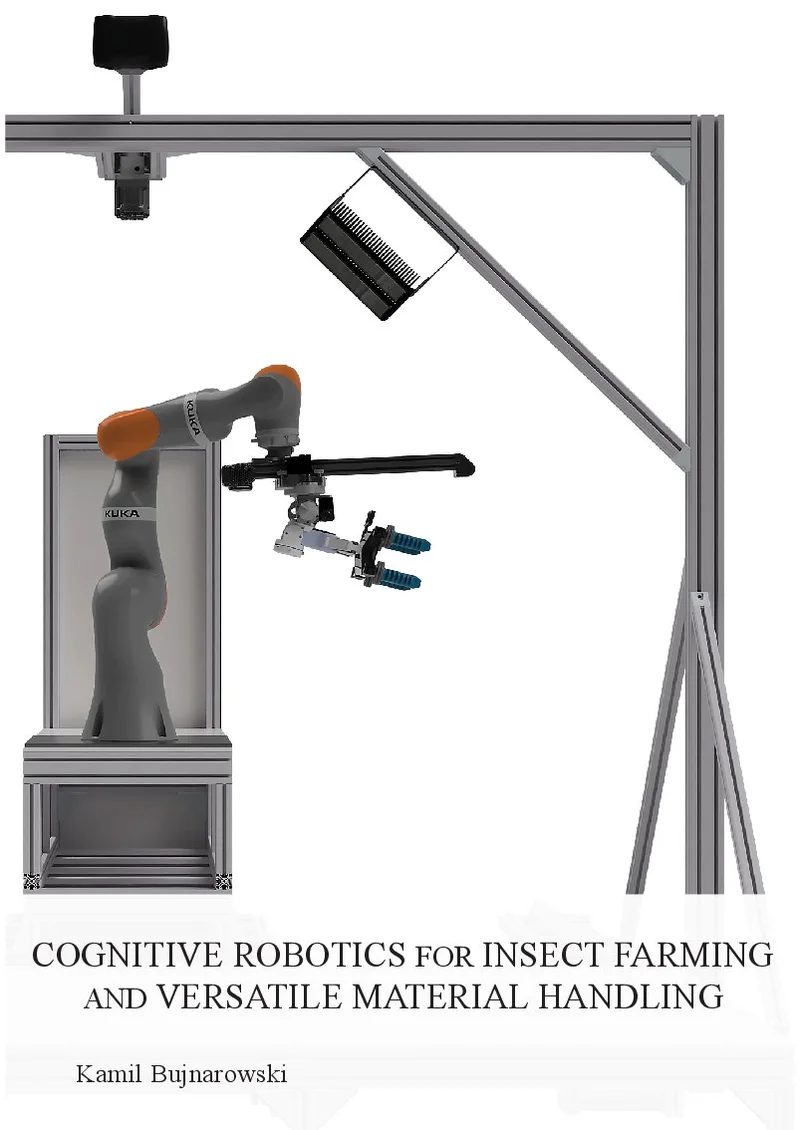
Kamil Bujnarowski
COGNITIVE ROBOTICS FOR INSECT FARMING AND VERSATILE MATERIAL HANDLING
29 mei 2026
Universiteit Maastricht
Open Ebook
Martijn Ernst
Germline Predisposition to Hematologic Malignancies in RUNX1-Familial Platelet Disorder
20 mei 2026
Erasmus Universiteit Rotterdam
Open Ebook
Mirjam Tijhuis
The importance of realistic surface radiation in cloud-resolving models
28 mei 2026
Wageningen University
Open Ebook
Yang Yang
Development and Application of Semi-Analytical Method for Thermal Simulation of Laser Powder Bed Fusion Process
1 mei 2026
Overig
Open Ebook
Natalie Ferro Lozano
Cacao and Arbuscular Mycorrhizal Fungi
11 mei 2026
Wageningen University
Open EbookWe print for the following universities