Linda Remijn Nelissen
Symptomatic treatment of myasthenia gravis
3 september 2026
Universiteit Leiden
Open Ebook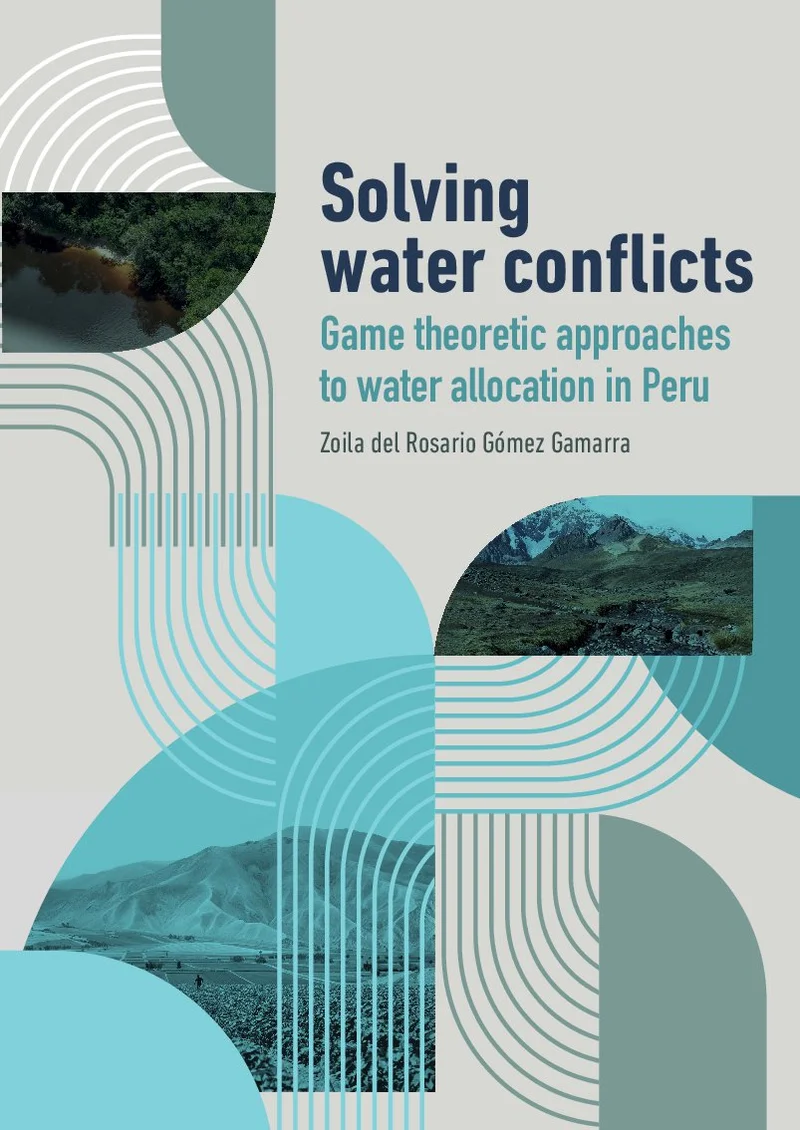
Share this project
Summary
Water scarcity is a long-standing worldwide concern that requires deeper attention. It is an increasing global challenge which threatens economic development, environmental stability and social cohesion. Water resources are shared by multiple users, including households and industry, and exhibit variability in time and space, which is exacerbated by climate change. Additionally, rising pollution affects water scarcity, limiting freshwater for competing users. These pressures can lead to conflicts affecting welfare. Although Latin America suffers little from water stress on a continental scale (UN-Water, 2024), this is different for particular countries and regions across Latin America. While in Mexico water stress is 45.6%, in Brazil it is 1.5% (UN-Water, 2024). In Latin America, water-related conflicts have increased, becoming the fourth region worldwide with more water conflicts in 2023 (Pacific Institute, 2024).
The overarching objective of this thesis is to contribute analyses and solutions to real-world water conflicts by examining the strategic behaviour of the agents under water scarcity and weak governance. This thesis focuses on water allocation and water pollution in Peru. Peru is a relevant country for study in this domain, because its increasing water stress, raising from 5.6% in 2015 to 7.2% in 2021 (UN-Water, 2024), water pollution and conflicts under weak governance. Peru’s heterogenous geography, including coastal areas, highlands and extensive rainforest, shows a mismatch between freshwater availability and the spatial distribution of population and economic activities. Moreover, Peru is among the countries most vulnerable to climate change, where 56% of the glacier area has melted during the last six decades (INAIGEM, 2023).
The thesis addresses four research questions:
1. How can water resources be allocated to surface water and groundwater users when allocation and availability are interdependent? This question addresses an equity-efficiency trade off. (Chapter 2)
2. How can infrastructure investments be designed to solve conflicts and improve welfare? This question explores the potential of investments to transform a conflict into a win-win situation. (Chapter 3)
3. To what extent can side payments mitigate negative externalities and facilitate stable and peaceful outcomes with improved welfare, when weak governance prevails? This question studies conflicts when law enforcement is weak or absent. (Chapter 4)
4. How can a stringent environmental policy and enforcement incentivise clean production and how does it affect the risk of asset stranding? Addressing this question sheds more light on government’s (lack of) incentives to enforce the law. (Chapter 5)
To answer these questions, we use case studies and micro-economic modelling, applying game theory. The cases provide information on agents, their preferences, and their choice options which are the elements to analyse strategic interaction and the role of the institutional framework. The models capture the mechanisms underlying conflictive situations. Although the models are inspired by specific cases, they are general enough to apply to other locations or industries.
The methodological approach for each research question is as follows:
Water allocation and hydro-economic integration (Chapter 2). A cooperative game theory model of sharing emission rights in a river setting (Yang et al., 2025) is modified and extended to analyse the allocation of surface water and groundwater in an integrated way, where groundwater recharge has a critical role. We develop a unified hydro-economic model where water users have claims to both water sources at their location, extending the sequential river sharing literature (Ambec & Sprumont, 2002b; Ansink & Weikard, 2012b). Two allocation rules are proposed: the Proportional Rule (P) and a rule that gives Upstream Priority to Surface Water (U). The model is applied to the Ica valley. The calibration results are consistent with the literature that applies water sharing rules. The findings demonstrate that surface water allocation affects recharge and groundwater availability. Rule P favours recharge and facilitates serving groundwater claims, promoting equity, but leading to water loss. Conversely, Rule U serves surface water claims sequentially, starting from most upstream user. This rule promotes efficiency, limiting water loss but leads to an unequitable distribution. The model demonstrates that when groundwater is more scarce than surface water, recharge becomes critical.
Cooperative agreements and joint infrastructure investments (Chapter 3). To analyse a conflictive water sharing problem, we use a cooperative game approach in an upstream-downstream setting and include joint infrastructure investments to assess its contribution to welfare and cooperation improvements. The agents are two regions characterised by economic, social and cultural asymmetries. A bargaining framework is applied, using the Nash Bargaining Solution (NBS) and the Kalai-Smorodinsky solution (K-S). Both solutions demonstrate that a binding agreement on joint infrastructure investments can improve water allocation and welfare, enhancing cooperation. The cooperative solutions capture the efficiency-equity trade-off associated with water redistribution and benefit-sharing.
Oil pollution conflicts, side payments and pacification (Chapter 4). A sequential game is developed to analyse the strategic interaction between a firm and a community in presence of oil pollution externalities. The model derives the conditions under which side payments and compensations schemes can deter community retaliation and avoid violent conflict, while influencing the firm’s environmental effort decision in the presence of penalties and threats. The magnitude of the side payment is critical. Without side payments, the firm may find profitable to pollute, while the community attacks to achieve compensations. With side payments, the community’s incentives to attack are attenuated such that side payments support peace.
Oil pollution and stranded assets (Chapter 5). A sequential game with incomplete information is used to model the strategic interaction between the government and a firm under uncertainty. The chapter addresses the role of agents’ beliefs in shaping agents’ strategies. Based on beliefs about the other player’s strategy, each agent chooses his action. We derive conditions for assets getting stranded, explaining the government’s incentives to monitor or not and the firms’ decisions to produce clean or not. The model emphasizes that consistent monitoring is essential for shaping firms’ beliefs and ensuring policy credibility. Moreover, a reliable enforcement system demands human, institutional and financial resources to achieve policy goals.
The Peruvian case studies provide insights for modelling water-related conflicts, to understand the strategic interaction between agents under weak governance. The thesis proposes solutions aimed, on the one hand, to improve water allocation based on allocation rules and joint infrastructure investments. On the other hand, to mitigate pollution based on side payments with a credible threat. The role of stringent policy and enforcement is critical to support a coherent and credible institutional design. This can provide incentives to agents’ alignment to policy goals which can alleviate water scarcity, support economic activities, reduce conflicts, and protect vulnerable ecosystems. As a result, welfare and cooperation can be enhanced.
This thesis contributes to the water economics literature by integrating game theory and institutional economics. The microeconomic models capture the agents’ decision-making that responds to the incentives generated by the governance system. The thesis extends on previous literature. In case of water sharing problem, by analysing water allocation of two interdependent water sources, including recharge, and proposing allocation rules, as it was explained previously. The bargaining problem is extended by including joint infrastructure investments. These extensions help to have a better understanding of the allocation problem and find solutions to improve water allocation and mitigate conflicts. In case of water pollution, the extension is on side payments, including a credible threat to solve conflicts.
A general policy implication is that transparency, well-designed allocation mechanisms, and credible enforcement can turn conflicts into opportunities for cooperation to manage water scarcity and conflicts. Water allocation failures and pollution undermine welfare, hinder economic performance, and degrade environmental conditions. Effective policy design requires strengthening coordination between national and subnational authorities and aligning environmental policy goals with enforcement capacity.