Mustafa Can Sati
MILITARY AI TECHNOLOGIES UNDER INTERNATIONAL HUMANITARIAN LAW
29 juni 2026
Universiteit Maastricht
Open Ebook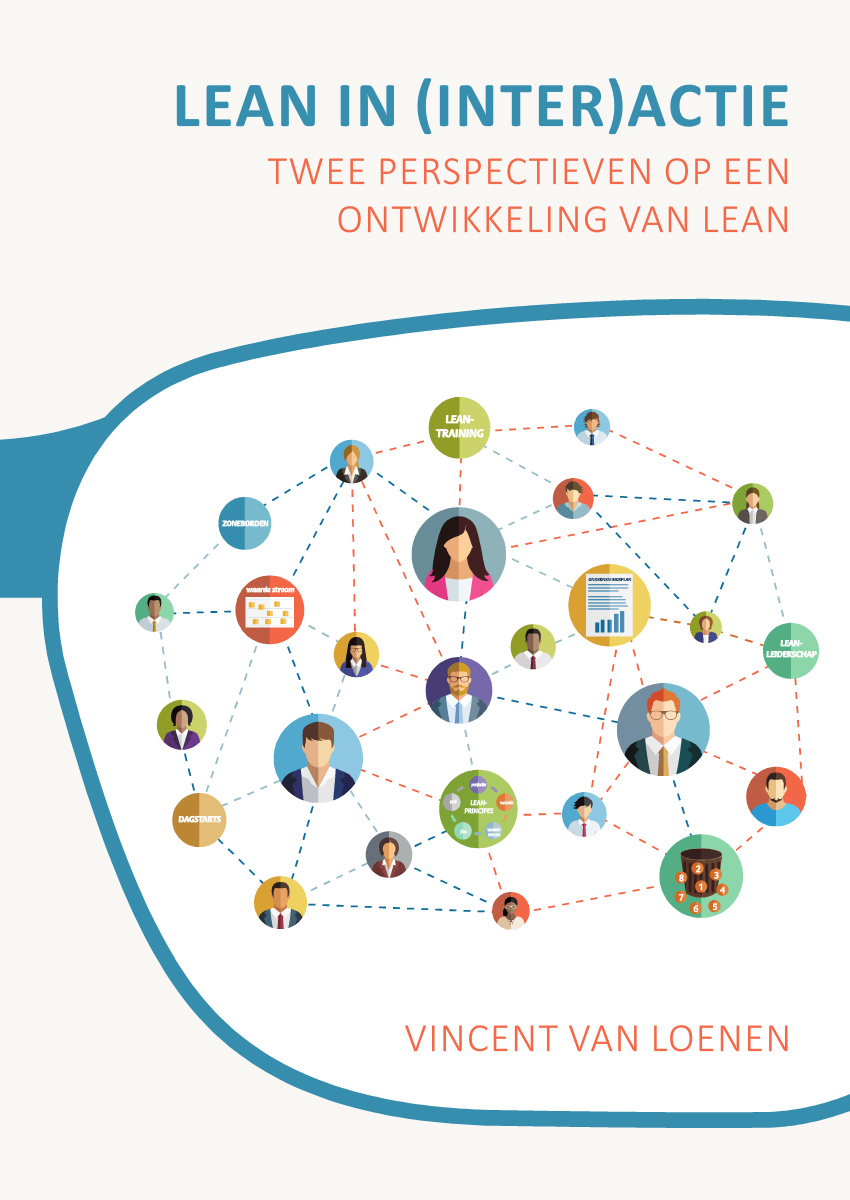
Share this project
Summary
Every year, an abundance of literature is published on the implementation of Lean change programmes. This is hardly surprising, since empirical research material shows that many organisations struggle to incorporate the organisational concept successfully. In many cases, the desired results of Lean change programmes fail to materialise or the implementation is declared unsuccessful. Existing research primarily focuses on factors that influence the success (or failure) of Lean. This type of research tends to assume that a Lean change programme is designed from a central point, can be managed and guided from a distance and has a linear and predictable course - provided managers and change agents manage the influencing factors effectively. Lean is seen as a functional and practical instrument that helps managers to achieve their change objectives. It is said to be service-oriented in terms of reducing inefficiencies, which in turn reduces operational costs. At the same time, Lean is intended to create an organisational culture in which employees continuously improve their own work processes, thus adding increasing value for internal and external customers alike. In reality, Lean change programmes are often implemented top-down, driven by this ‘Lean dream’. Many of the existing studies, therefore, approach Lean from a rational-instrumental perspective. However, this perspective neglects what actually happens in an organisation following the adoption of Lean practices.
In order to gain a better understanding of how Lean is implemented, it is necessary to investigate the development of Lean within a particular organisation. This kind of investigation reveals the mechanisms that underpin a Lean translation process. It focuses on questions such as how actors connect with Lean, how they interpret it, what associations it evokes in them, what Lean encourages them to do, how Lean takes shape and how the context in which it is introduced changes. As far as we know, this type of research is still relatively new.
Process research requires a relational-performative perspective on Lean implementation. In this study, we opted for a perspective offered by the Actor-Network Theory (ANT), which centres on the concept of ‘translation’. The relationships, interactions and associations that various actors enter into with Lean, which is also an actor, are key here. The development of Lean is a network effect. By observing these network effects (or translation), it is possible to gain an insight into how Lean takes shape. This relational-performative approach provides greater clarity as to how Lean is an actor in a network of relationships, connections and interactions that changes and helps to shape the context. The insights obtained can then be used for future implementations of Lean.
Research approach (chapter 3)
The implementation of Lean was investigated in real time at a large Dutch government organisation (Infraorg), which launched a local-level pilot in 2009 and adopted Lean practices organisation-wide in 2012. The field research took place between 2013 and 2016 and consisted of collecting and analysing qualitative data from interviews, observations and document research. We took two perspectives to the



Alessio Belmondo Bianchi di Lavagna